
Indoor Cat Enrichment Ideas: Simple Ways to Make Home More Interesting
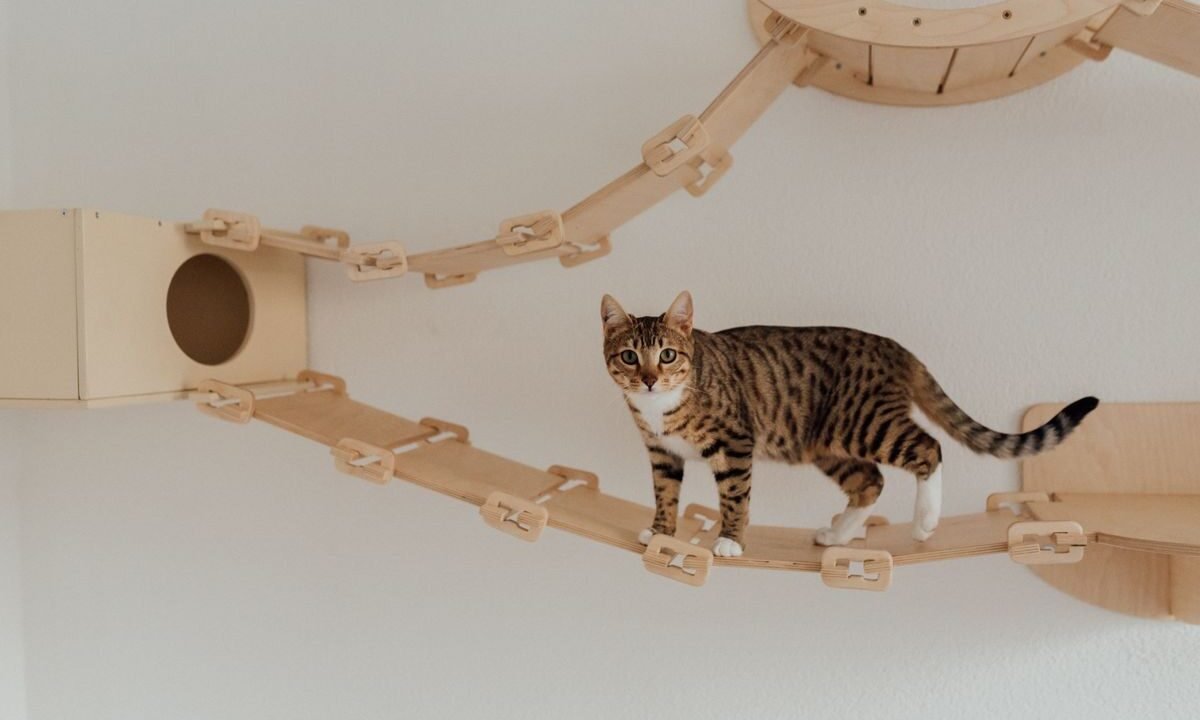
Indoor enrichment is not about keeping a cat constantly busy. It is about giving the cat enough choice and opportunity to do normal cat things: climb, scratch, hide, stalk, watch, forage, rest and decide when to interact.
A home can be physically safe and still feel repetitive if every day offers the same food bowl, the same floor space and the same unused toys. The strongest enrichment plans do not start with buying more products. They start by looking at how the cat actually uses the home.
Begin with the cat’s daily map
Notice where your cat sleeps, watches, scratches, eats, hides and asks for attention. Which rooms are used most? Which areas are avoided? Does the cat have to cross a dog’s path to reach a favourite window? Is the only high perch in a room nobody uses?
This simple map helps you place enrichment where the cat already wants to be instead of scattering objects randomly around the house.
Vertical space can make one room feel much larger
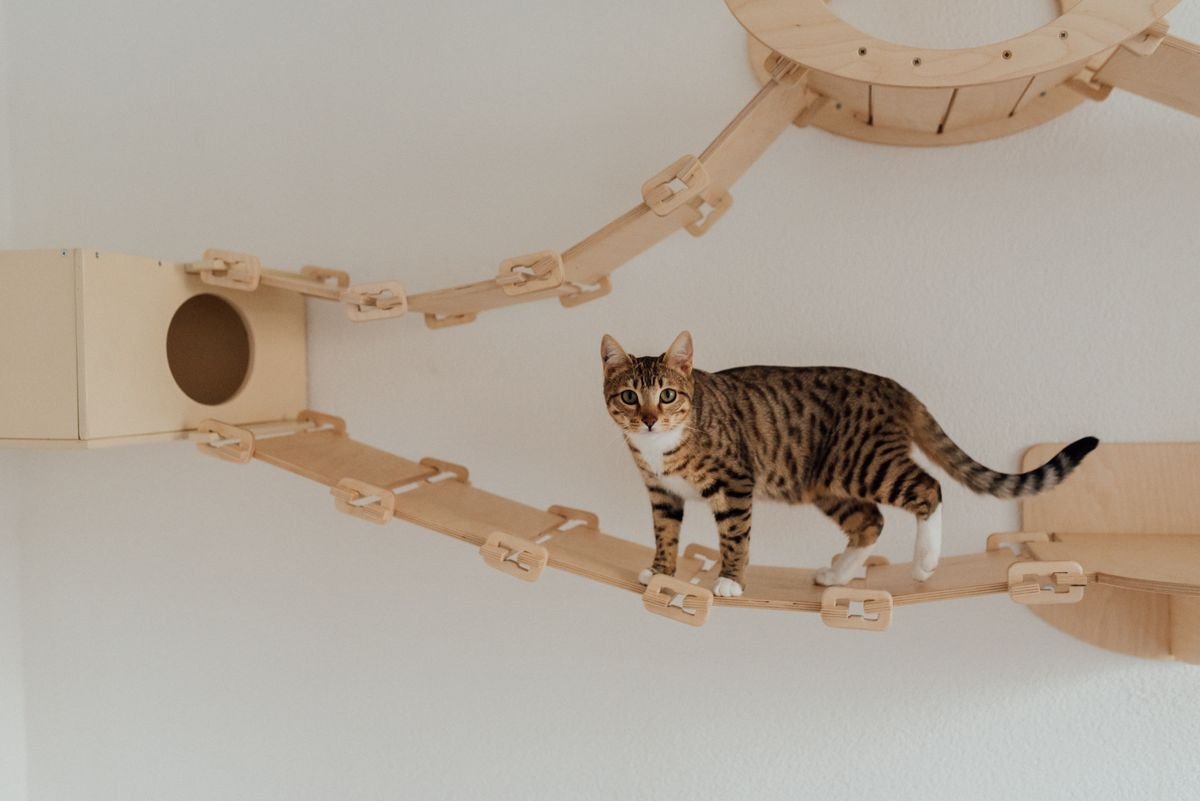
A stable cat tree, shelf route or secure window perch adds usable territory without increasing floor space. Height can provide observation, rest and social distance from people or other pets.
Place vertical options where they lead somewhere useful. A shelf route ending in a dead corner is less valuable than one connecting a resting area, window and family space.
For older cats, add intermediate steps rather than expecting large jumps. Our senior cat home adaptations guide explains how to preserve access when mobility changes.
Scratching belongs in the enrichment plan
Scratching is not simply claw maintenance. Cats scratch to stretch, mark, leave scent and use the body. Offer both vertical and horizontal options if the cat shows interest in both.
Placement matters more than price. Put scratchers near sleeping areas, room entrances and furniture the cat already targets. If the cat scratches the sofa arm, a post hidden in another room may never compete successfully.
Play works best when it looks like hunting
Move wand toys away from the cat rather than into the face. Let the toy disappear behind furniture, pause, reappear and move unpredictably. Give the cat a real chance to catch it.
The Feline Veterinary Medical Association’s indoor-cat welfare guidance emphasizes opportunities for predatory play, climbing and environmental choice.
Our indoor cat exercise guide gives more movement-based ideas, while how much playtime a cat needs explains why age and health matter more than a fixed daily minute target.
Short sessions are often better than marathon play
Many cats prefer several brief hunts across the day. Stop while the cat is still engaged rather than pushing until the cat walks away exhausted or irritated.
Kittens may want more frequent bursts. Senior cats may prefer slower prey movement and shorter sessions. Use the cat’s recovery and willingness as your guide.
Rotate toys instead of leaving everything out
Toys can become part of the background when they sit in the same place for weeks. Keep a few safe favourites available and rotate the rest.
Our cat toy rotation guide explains how to add novelty without removing toys the cat genuinely loves.
Independent play still needs a safety check
Loose string, yarn, ribbon, elastic and feather toys with small detachable parts are better used under supervision. Safer independent options include sturdy balls, some soft toys and well-built tunnels.
Our cat toy safety guide separates supervised hunting toys from items more suitable to leave out.
Food can become part of the activity budget
Instead of serving every calorie in an open bowl, use part of the normal ration in a simple puzzle feeder, scatter feed or small hidden portions.
Start easy. If the cat cannot solve the feeder, enrichment becomes frustration. Our food enrichment guide covers puzzle feeders, wet-food options, foraging and portion control.
Do not make nutrition harder for a cat that is struggling
A sick, underweight, arthritic or dental-pain cat may need easier access to food. Enrichment should never interfere with adequate intake.
If a cat suddenly stops solving a puzzle that was previously easy, consider whether pain or illness changed what the cat can do.
Boxes are useful because they are flexible
Cardboard boxes can become hides, lookout points, ambush spaces and scratching surfaces. Cut safe openings, remove staples and tape, and change the layout occasionally.
You do not need a new commercial toy every week to create novelty.
Use windows carefully
A secure window perch can provide changing visual activity for hours. Make sure screens are strong enough that the cat cannot push through them.
Outdoor cats can make a window stressful rather than enriching. If your cat stares intensely, lashes the tail, vocalises or redirects aggression after seeing another cat outside, change the view or move the perch.
Scent can be enriching without becoming overwhelming
Some cats respond to catnip or silver vine. Others do not. Offer small amounts occasionally and observe the reaction.
Avoid essential oils and concentrated fragrance products around cats. Novelty does not need to involve strong scent.
Rest and hiding are part of enrichment
A cat that can choose between an open bed, a covered hide, a warm spot and an elevated perch has more control over the environment.
Do not measure enrichment only by visible activity. A quiet protected resting place can be just as valuable as a toy.
Multi-cat homes need duplicated resources
One confident cat can monopolise the best perch, food puzzle or window seat. Provide more than one option where possible and place resources so one cat cannot guard the only route.
Separate play sessions can help quieter cats participate without competition.
Enrichment should not create conflict
Food puzzles, high-value toys and favourite beds can become contested resources. Watch how cats behave around them and duplicate or separate items if one cat blocks access.
Older cats still need stimulation
A senior cat may stop leaping high but still enjoy stalking, batting, scent exploration and simple puzzles.
Our senior cat playtime guide explains how to adapt games for arthritis, lower stamina and sensory changes.
Kittens need frequent opportunities, not nonstop entertainment
Kittens often cycle between intense activity and deep sleep. Several short play periods fit that rhythm better than one long session.
See how much playtime a kitten needs for a development-focused routine.
Watch for possible boredom patterns
Repeated attention-seeking, destructive use of the environment, little independent exploration and a daily routine with few opportunities to climb, forage or hunt can suggest under-stimulation.
But boredom is not a diagnosis. Our signs an indoor cat may be bored guide explains where boredom overlaps with pain, stress and illness.
Sudden behaviour change deserves a medical check
A cat that suddenly stops playing, hides more, overgrooms, loses weight, drinks differently or eliminates outside the litter box should not be treated as merely bored.
Health problems can reduce activity or create restless behaviour. Enrichment should support wellbeing, not explain away symptoms.
Do not add another pet just to entertain the first cat
Some cats enjoy feline company; others find it stressful. A second cat is a permanent household member, not an enrichment device.
Improve the current environment first. If you later add another pet, introduce them gradually and provide separate resources.
Use a seven-day enrichment reset
If the home feels stale, change one small thing each day rather than replacing everything at once.
- Day 1: move a scratcher to a better location.
- Day 2: create a cardboard-box hide.
- Day 3: introduce a simple food puzzle.
- Day 4: rotate two toys.
- Day 5: add or improve a window perch.
- Day 6: try a new wand-toy movement pattern.
- Day 7: add a second resting or vertical option.
Notice which changes the cat actually uses. Keep the successful ones and remove the rest.
Judge enrichment by voluntary use
The best activity is the one the cat chooses. A complicated electronic toy that is ignored has less value than a cardboard box the cat returns to every day.
Do not force interaction with a new item. Place it in a useful location and let the cat investigate at its own pace.
Build routines, not clutter
A strong indoor setup usually includes a few reliable elements: vertical space, scratching, hiding, play, food-based activity, secure observation points and multiple resting choices.
You do not need every category in every room. Spread useful resources through the parts of the home the cat actually occupies.
A practical enrichment audit
- Can the cat climb and observe from height?
- Are there scratchers where the cat naturally wants to scratch?
- Is there at least one protected hiding place?
- Does interactive play happen regularly?
- Can part of the normal food ration involve foraging?
- Are toys rotated rather than permanently ignored?
- Does the cat have quiet resting choices?
- Can each cat in a multi-cat home access resources without being blocked?
- Has any sudden behaviour change been medically evaluated?
Indoor enrichment works best when it becomes part of the home rather than a pile of products. Give the cat choices, watch what the cat actually uses, and adjust the environment around normal feline behaviour rather than around what looks impressive to people.
Use enrichment to solve specific household problems
Sometimes the easiest way to design enrichment is to start with a real problem. If the cat wakes the household at 4 a.m., look at evening play and feeding. If the cat scratches one sofa arm, improve scratching options in that exact location. If the cat watches the door and rushes outside, build more rewarding observation and exploration inside rather than simply blocking the door.
Nighttime activity can often be redirected
Cats are naturally more active around dawn and dusk, but household routines can shape when energy peaks. A structured evening sequence—interactive play, a small meal from the normal ration, then quiet time—can help some cats settle more predictably.
Do not expect enrichment to eliminate all nighttime movement. The goal is to give the cat better outlets, not to make feline behaviour fit a human sleep schedule perfectly.
Use furniture placement as enrichment
A chair near a window, a low cabinet beside a shelf or a bench connecting two levels can create a useful route without buying a new cat tree. Look at the home from the cat’s height and ask whether movement between favourite places is easy and interesting.
Create choice around social contact
Some cats want to sit beside people without being touched. Others prefer short periods of petting and then move away. Respecting those choices is part of enrichment because control over interaction reduces stress.
Do not repeatedly pick up a cat that prefers ground-level contact just because handling is considered “bonding.”
Enrichment for cats that live with dogs
Dog-cat homes need escape routes that the dog cannot use. Elevated beds, gated cat-only rooms and feeding stations outside the dog’s reach can make normal cat behaviour possible even when the animals get along well.
If the cat is newly introduced to a dog, our dog and cat introduction guide covers the staged process.
Enrichment for shy cats
A timid cat may benefit more from covered routes, predictable hiding places and quiet play than from a busy activity centre in the middle of the room. Give the cat a way to observe without being exposed.
Enrichment after adoption should start simple
A newly adopted cat already has plenty of novelty. Start with a safe room, familiar litter, hiding, scratching and gentle play. Add more choices as confidence grows.
Our new cat hiding after adoption guide explains how to tell normal settling from a health concern.
Do not mistake overstimulation for a need for more activity
A cat that becomes frantic, bites during play or cannot settle after an intense session may need a calmer pattern rather than more stimulation. Shorter hunts, successful catches and quiet recovery can work better than constant high-speed play.
Seasonal changes can refresh the environment
Weather affects window access, indoor temperature and activity. In winter, add warm resting options and indoor hunting games. In warmer months, secure screened windows and use cooler resting areas. Seasonal change can create novelty without rebuilding the whole home.
Keep enrichment accessible during illness and recovery
A cat recovering from surgery or illness may be temporarily restricted from jumping or vigorous play. Enrichment can shift toward scent exploration, easy food puzzles, gentle batting toys and low-level observation.
Follow veterinary activity restrictions first. Enrichment should fit the recovery plan, not work against it.
Track what works instead of relying on memory
If you are trying several changes, note which ones the cat uses voluntarily. A simple weekly list—window perch used daily, puzzle ignored, horizontal scratcher preferred—can save money and help you design around real preferences.
Enrichment should make the home easier to live in
A good setup often reduces conflict because the cat has more acceptable places to scratch, climb and forage. That does not mean every unwanted behaviour disappears, but it gives the cat clearer alternatives.
What not to do
- Do not force the cat to use new equipment.
- Do not rely on punishment for scratching or nighttime activity.
- Do not leave unsafe string toys out unsupervised.
- Do not add calories on top of the normal diet just because food puzzles are being used.
- Do not assume another cat will cure boredom.
- Do not ignore sudden behaviour change as “just needing more enrichment.”
The strongest enrichment plan is personal
Some cats love climbing and barely touch puzzle feeders. Others are motivated by food, boxes or window watching. Age, mobility, confidence and social environment all change what works.
The goal is not to check every enrichment box. It is to give the individual cat enough choice and opportunity to express normal behaviour safely and comfortably. For the broader new-owner framework that connects enrichment with feeding, litter, grooming and veterinary care, see our Cat Care for Beginners guide.

0 comments