
New Cat Hiding After Adoption: What Is Normal and When to Worry
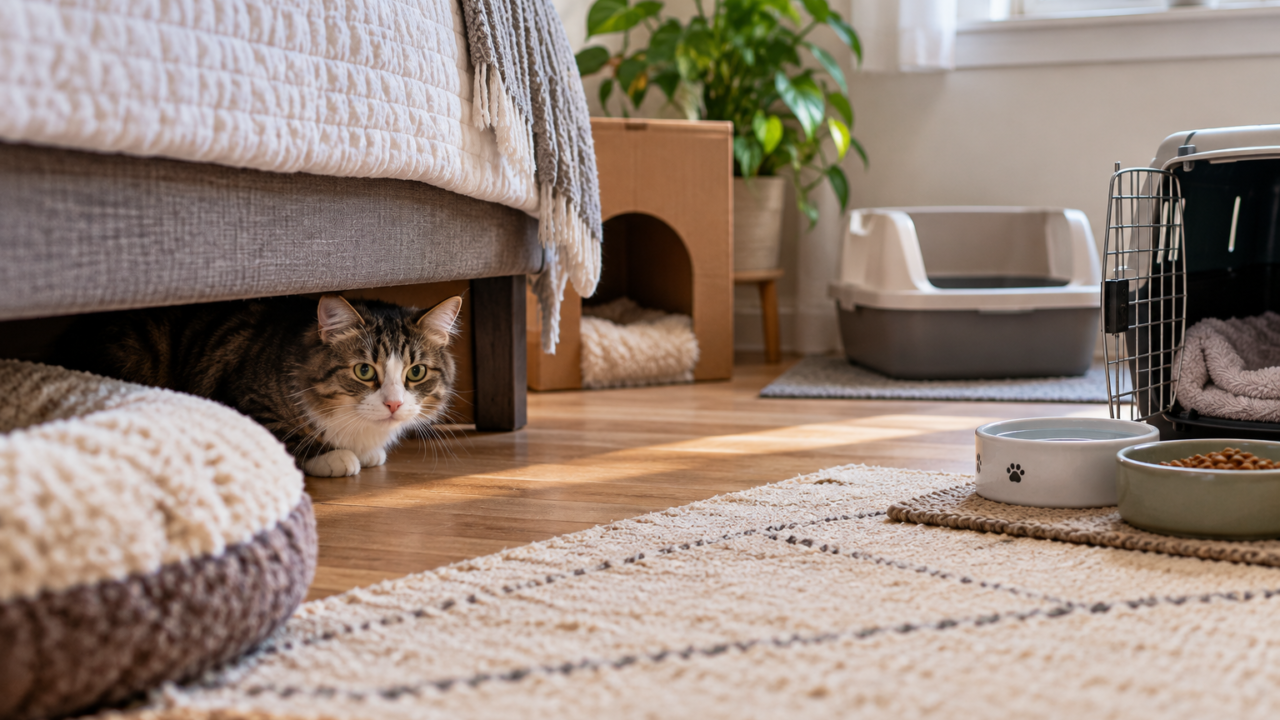
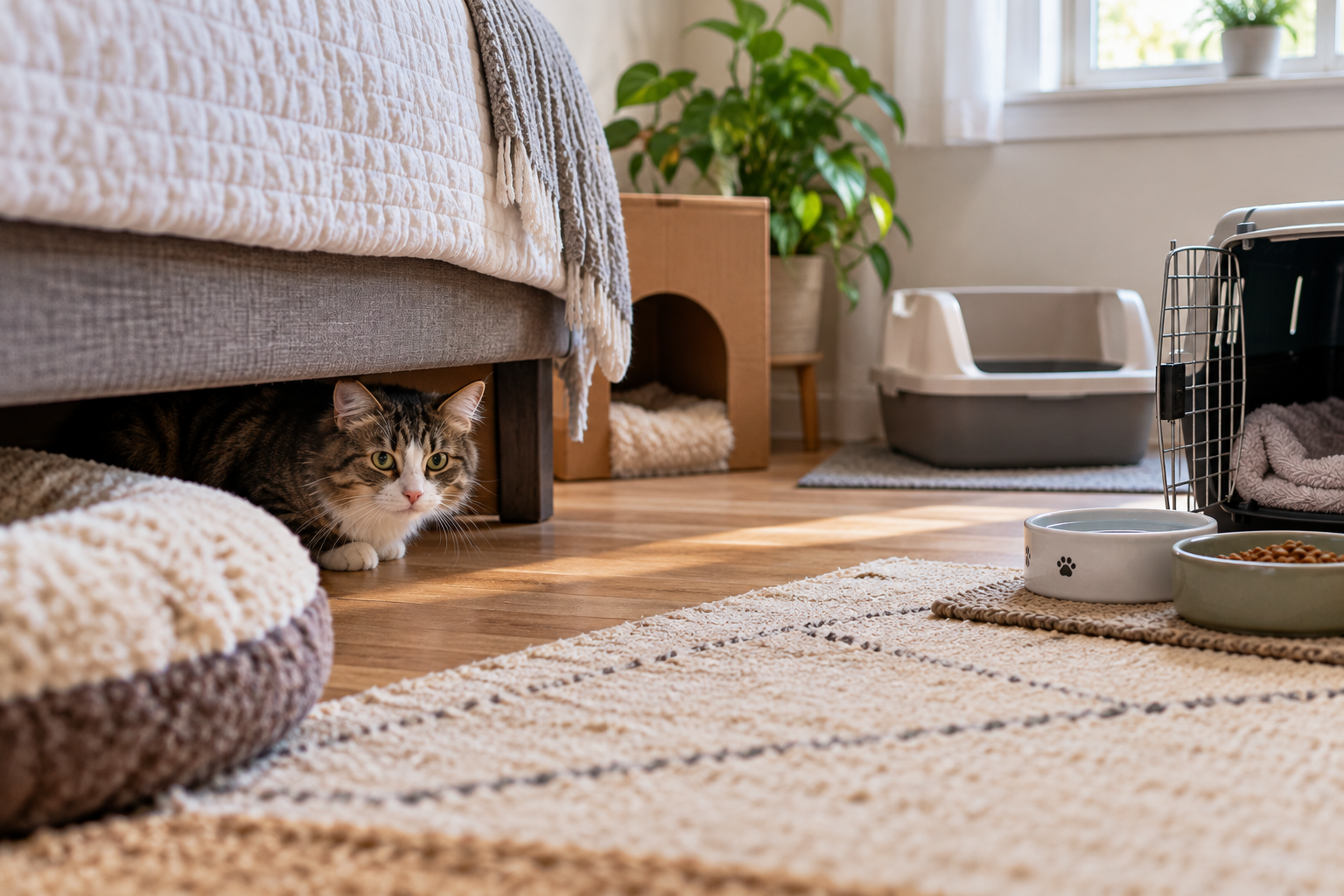
You brought a cat home, opened the carrier and watched them disappear under the bed. That can feel like a terrible start. Often, it is simply the cat choosing the safest strategy available in an unfamiliar place.
Cats Protection notes that many newly arrived cats hide for hours or longer and recommends giving them time rather than repeatedly coaxing them out.
Hiding is information, not rejection
A new home contains unfamiliar smells, sounds, people and routes. The cat does not yet know which spaces are safe. Hiding gives them control while they gather information.
Do not interpret the first day as the cat’s personality. A confident shelter cat can become cautious in a new environment, and a shy cat may take longer to show normal behaviour.
Start with one quiet room
A smaller territory is easier to understand. Set up food, water, litter, a scratcher, resting places and at least one safe hide in the room. Keep litter away from food and water.
Our first-week new cat guide walks through the settling-in period in more detail.
Do not pull the cat out
Dragging a cat from under furniture proves that the hiding place was not safe. Unless the hiding spot itself is dangerous, let the cat stay there.
Sit quietly in the room, read, work or talk softly. Give the cat a chance to observe you without having to respond.
Put essentials nearby—but not inside the hiding place
Cats Protection advises making food, water and litter accessible while avoiding the temptation to push them directly into the hiding spot. The cat should be able to emerge, use resources and retreat again.
Nighttime progress still counts
Some newly adopted cats explore only after the household is asleep. Check whether food has been eaten, water used and litter disturbed. A camera can help you see whether the cat is active when the room is quiet.
Look for small changes, not a dramatic breakthrough
The first signs of settling may be subtle: eating while you remain in the room, grooming in the open, sitting closer to the edge of the hiding place, playing briefly or rubbing against furniture.
Do not flood the room with visitors
Meeting every family member on day one can keep a nervous cat hidden longer. Let the cat build confidence with the core household before adding guests.
Keep children calm and predictable
Children should not crawl under furniture, reach into hiding places or repeatedly check on the cat. Give them a simple rule: if the cat goes away, let the cat be.
Other pets should not have access yet
A resident dog waiting outside the bed or another cat staring from the doorway can make the hiding place feel unsafe. Keep introductions separate and gradual.
When hiding becomes a health concern
Hiding by itself can be normal after adoption. Hiding combined with not eating, not drinking, repeated vomiting, diarrhea, breathing changes, straining, obvious pain or profound lethargy is different.
Cats Protection recommends contacting a veterinarian if you are worried about eating, drinking or toileting, or if hiding continues without signs of improvement.
Pay special attention to food intake
Cats should not go prolonged periods without eating. If a new cat refuses food completely, especially if they are overweight, ill or very young, contact a veterinarian rather than waiting several days for confidence to appear.
Make the room easier to explore
Add a cardboard box, a covered bed and a low perch. Keep pathways clear. Avoid sudden vacuuming, strong fragrances or rearranging the room repeatedly during the first days.
When should the door open to the rest of the house?
Wait until the cat is eating, toileting and moving around the safe room with less tension. Then expand territory gradually. A cat that still spends almost all its time frozen under furniture is telling you it is not ready for more space.
Confidence is the goal, not speed
Some cats settle within a day. Others need a week or more. What matters is that the trend moves toward normal eating, grooming, exploration and interaction.
If your cat is fearful even after the initial settling period, our scared-cat guide explains how to reduce pressure without turning every interaction into a test.
Give the cat a hiding place you can still monitor
A cardboard box, covered bed or open carrier can be a better long-term hide than a dangerous gap behind appliances or inside furniture. If the cat chooses an unsafe hiding place, block access only after providing a safer alternative nearby.
Do not make food the only reason to come out
Using treats to encourage exploration can help, but do not turn every appearance into a lure-and-catch exercise. The cat should learn that leaving the hiding place does not automatically lead to handling.
Quiet companionship can build trust
Sit on the floor, read or work on a laptop without staring at the cat. Slow blinking, soft speech and predictable movement can make your presence easier to assess. Some cats approach faster when nobody is actively trying to interact.
Keep the daily routine boring in a good way
Feed, scoop litter and visit the room at roughly predictable times. Predictability helps the cat learn what happens next and reduces the number of surprises in an already unfamiliar environment.
Watch appetite more closely than affection
A cat can hide and still be settling normally if eating, drinking and toileting continue. A cat that becomes affectionate quickly but stops eating may have a more urgent problem. Health indicators matter more than whether the cat seeks contact.
Use litter-box activity as a progress marker
Normal urination and stool tell you the cat is leaving the hiding place and using resources. Repeated straining, no urine, diarrhea or constipation are not simply stress behaviours and deserve veterinary attention.
Do not expand the territory because the cat came out once
One brave evening does not necessarily mean the whole house is ready. Look for a pattern of normal eating, grooming, play and exploration before opening more rooms.
Open new space gradually
When the cat is ready, allow access to one additional area and keep the safe room available. The cat should be able to retreat voluntarily rather than being carried into unfamiliar rooms.
Visitors can reset progress
A cat that has just begun exploring may retreat after unfamiliar people arrive. That does not mean the earlier progress was lost. Keep guests calm and let the cat decide whether to appear.
Children need simple rules
Ask children not to crawl under furniture, grab the cat, block exits or repeatedly offer hands to sniff. A useful rule is: if the cat walks away, the interaction is over.
Resident pets should be introduced separately
Do not combine settling into the home with an uncontrolled dog or cat introduction. First let the new cat establish the safe room, then begin scent and barrier work. Our new-pet introduction guide explains the broader process.
When hiding becomes a pattern of fear
If the cat eats only at night, never relaxes in the open after an extended settling period, or panics whenever a person enters, more structured fear reduction may help. Our scared-cat guide focuses on reducing pressure.
Keep transport and veterinary planning realistic
A new cat may need a veterinary visit before fully settling. Leaving the carrier open in the safe room can make it part of the furniture rather than a sudden trap on appointment day.
What to tell the veterinarian if you are worried
Report how long the cat has been hiding, whether food and water intake changed, stool and urine output, vomiting, medications, and whether the cat is moving normally when nobody is nearby.
A practical first-week trend
You are looking for movement in the right direction: more normal eating, regular litter use, brief exploration, grooming in the open, play or curiosity, and shorter recovery after household noises. Progress does not have to be fast, but it should gradually become visible.



0 comments