
How Much Playtime Does a Kitten Need? Build a Daily Routine Without Overdoing It
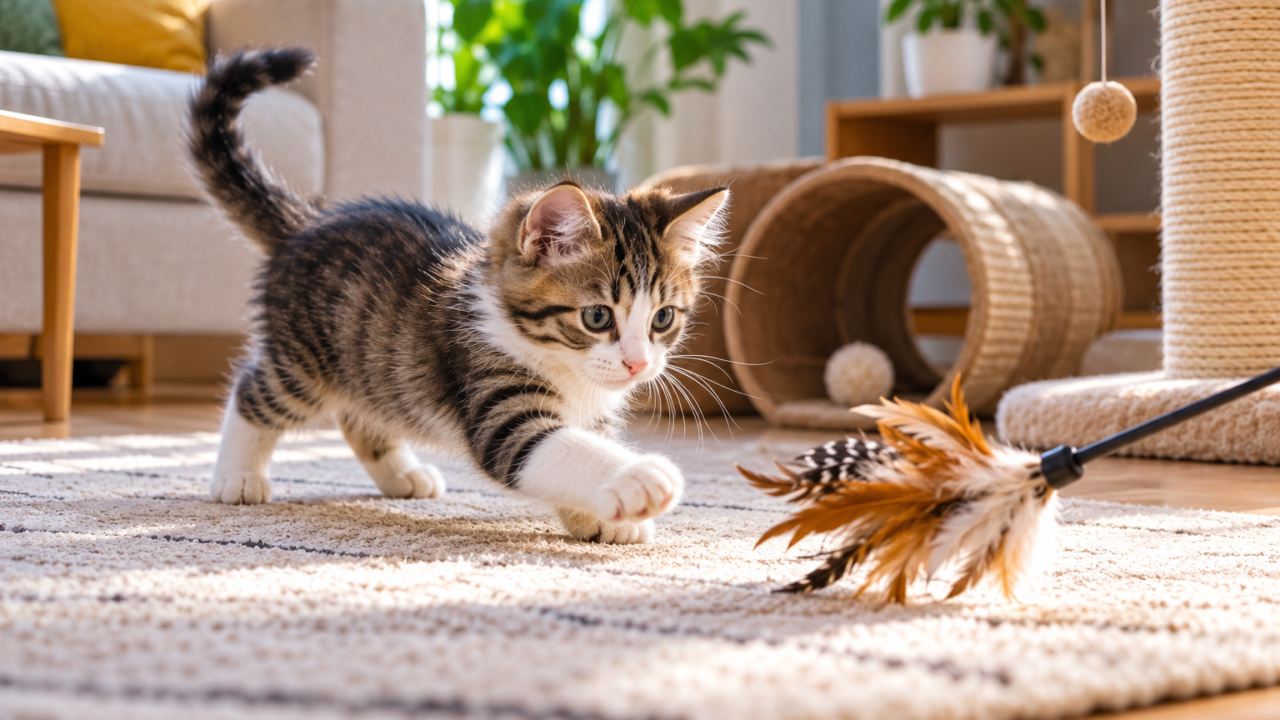
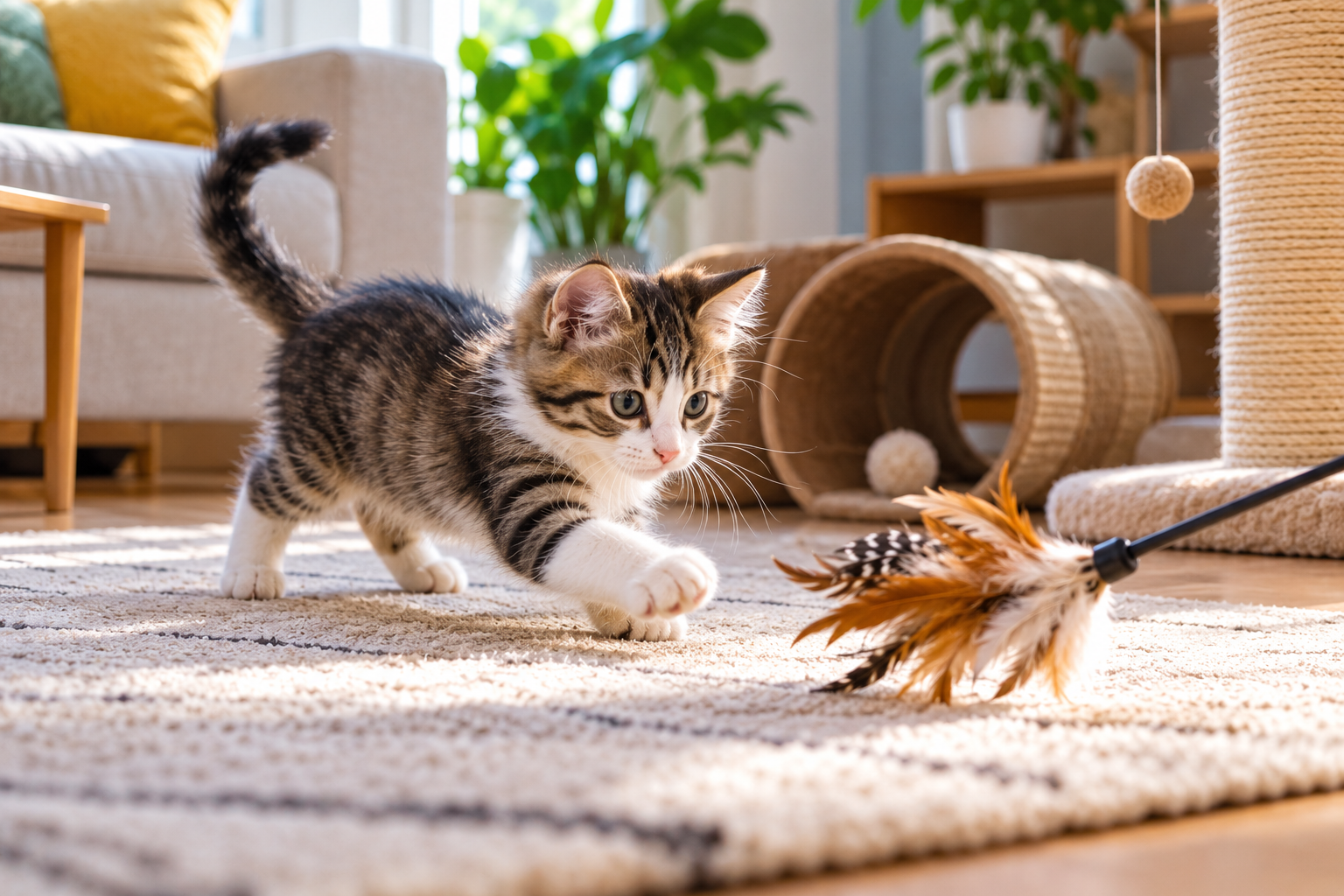
A kitten can look as if it has two settings: asleep and sprinting. That makes it tempting to ask for an exact number of minutes of play each day. In practice, a useful routine is built around several short, successful play sessions rather than one long workout.
Cats Protection notes that play is part of normal kitten development: it helps kittens practise hunting behaviour and develop balance, coordination and confidence. Their advice also favours frequent short sessions over fewer long ones.
Think in short sessions, not a daily quota
A young kitten may happily play for a few minutes, stop, eat, wash and sleep—then wake up ready to go again. That cycle is normal. Instead of forcing a 30-minute session because a timer says so, stop while the kitten is still engaged and physically coordinated.
Several five- to ten-minute sessions scattered through the day will suit many kittens better than a single marathon. Very young kittens may need even shorter bursts. Older kittens can often handle a little more vigorous play.
Use hunting-style play
A fishing-rod or wand toy works well because it lets the kitten stalk, chase and pounce without teaching them that hands are prey. Move the toy away from the kitten, pause behind furniture, let it reappear, then allow a catch.
That last part matters. Endless chasing with no chance to catch can be frustrating. A short hunt that ends successfully often leaves a kitten calmer than frantic waving.
Hands and feet should not become toys
It is funny when a tiny kitten grabs a finger. It is less funny when the same habit belongs to a five-kilogram adult cat. Cats Protection specifically advises using toys that keep play away from hands and feet.
If your kitten attacks ankles, redirect to a toy rather than wrestling back. Consistency now makes adult behaviour easier later.
Let rest stay part of the schedule
Kittens sleep a great deal because growth is demanding. Waking a sleeping kitten to “meet the play target” misses the point. Offer play when the kitten is naturally awake and interested.
A predictable pattern can work well: wake, toilet, play, eat, groom, sleep. You do not need to manufacture this rigidly; simply notice the rhythm your kitten already follows.
Morning and evening energy bursts are normal
Cats are naturally more active around dawn and dusk. If your kitten races through the home before breakfast or late in the evening, schedule one of the more energetic play sessions around that time.
Our adult cat playtime guide explains how this changes as cats mature.
Keep one eye on the kitten’s body, not the clock
Stop or soften the game when the kitten starts panting, becomes clumsy, lies down repeatedly, loses interest or begins biting from over-arousal. A kitten that is still focused but simply pauses to reset may resume after a short break.
Persistent open-mouth breathing, unusual weakness or exercise intolerance should not be dismissed as “playing too hard.” Talk to a veterinarian if activity repeatedly produces concerning signs.
Choose toys that match the job
Use interactive toys for high-energy play, small lightweight balls or mice for solo batting, cardboard boxes for ambush play and sturdy scratchers for stretching and climbing. Rotate toys rather than leaving every item out all the time.
For toy-safety choices, see our safe kitten toys guide.
Supervise string-like toys
Ribbon, yarn, elastic and loose string can be swallowed. Wand toys are useful because they keep hands away from teeth and claws, but put them away after the session if they contain string, wire or feathers that can be chewed off.
Use food after play without adding calories
A small meal after a hunting-style game can fit naturally into a kitten’s rhythm. Count it as part of the normal diet instead of adding extra treats simply because play happened.
What about a kitten who never seems tired?
Very active kittens may need more environmental outlets, not just longer games. Add climbing, scratching, tunnels, boxes and opportunities to explore safely. Our indoor cat enrichment guide gives ideas that do not depend on constant human entertainment.
What if the kitten hardly plays?
Personality varies, but a sudden drop in play matters more than a naturally calm temperament. If a kitten who usually chases toys stops playing and also eats less, hides, limps, vomits or seems unusually sleepy, contact a veterinarian.
A simple routine that actually works
Try one short session before breakfast, another around midday if someone is home, one in the early evening and a calmer game before bed. Adjust from there. The goal is not to hit a fixed number of minutes. It is to give the kitten repeated chances to practise normal behaviour without pushing past fatigue.
Daily play should leave a kitten satisfied, coordinated and ready to rest—not exhausted, frightened or wound up for the next hour.
Play needs change as the kitten grows
A three-month-old kitten and a nearly adult ten-month-old cat may both be called “kittens,” but stamina and coordination change quickly. Reassess the routine every few weeks instead of assuming the same toy intensity and session length will fit throughout the first year.
Use the room itself as part of the game
Move toys around boxes, tunnels, chair legs and scratchers so the kitten stalks and changes direction rather than simply sprinting in a straight line. This adds problem-solving and body control without requiring longer sessions.
Keep climbing challenges age-appropriate
Kittens benefit from climbing, but tall unstable furniture can create fall risk. Use secure cat trees and low platforms while coordination is still developing, and supervise access to unfamiliar high spaces.
Multiple kittens may play hard with each other
Social play between kittens can burn energy, but human-supervised toy play is still useful. It teaches appropriate toy targets, gives each kitten individual engagement and helps you notice if one kitten is becoming less active than the other.
Learn the difference between play biting and over-arousal
A kitten may grab toys with teeth and claws as part of normal hunting play. If the kitten begins redirecting onto hands, pupils stay very dilated, tail lashes and the game becomes frantic, pause and let arousal come down.
Do not use punishment to end rough play
Shouting, tapping the kitten or spraying water can create fear without teaching what to do instead. Stop movement, redirect to an appropriate toy when calm returns and make hands boring.
Provide independent activities between sessions
Safe balls, cardboard boxes, tunnels, scratchers and climbing options reduce the pressure on the owner to provide constant entertainment. String, ribbon and toys with loose parts should be stored when supervision ends.
Use meals to create a natural rhythm
A short hunt-style game followed by part of the kitten’s regular meal can fit well with feline behaviour. This does not require extra treats; simply use calories already included in the daily feeding plan.
Watch for sudden loss of coordination
Normal kitten play can be clumsy, but a kitten that suddenly falls, drags a limb, stops jumping or becomes weak deserves veterinary attention. Do not assume every movement problem is just immature coordination.
A practical day can stay flexible
You might offer active play after waking, another session around a meal, a short afternoon game and a final evening hunt. The exact schedule matters less than repeated opportunities and enough uninterrupted sleep.
What matters more than a minute target
Ask whether the kitten is curious, coordinated, sleeping normally, eating well and able to stop. A healthy play routine should support development, not turn every day into an exercise quota.
0 comments