
Cat Toys: How to Choose Safe Toys for Hunting, Chasing and Independent Play
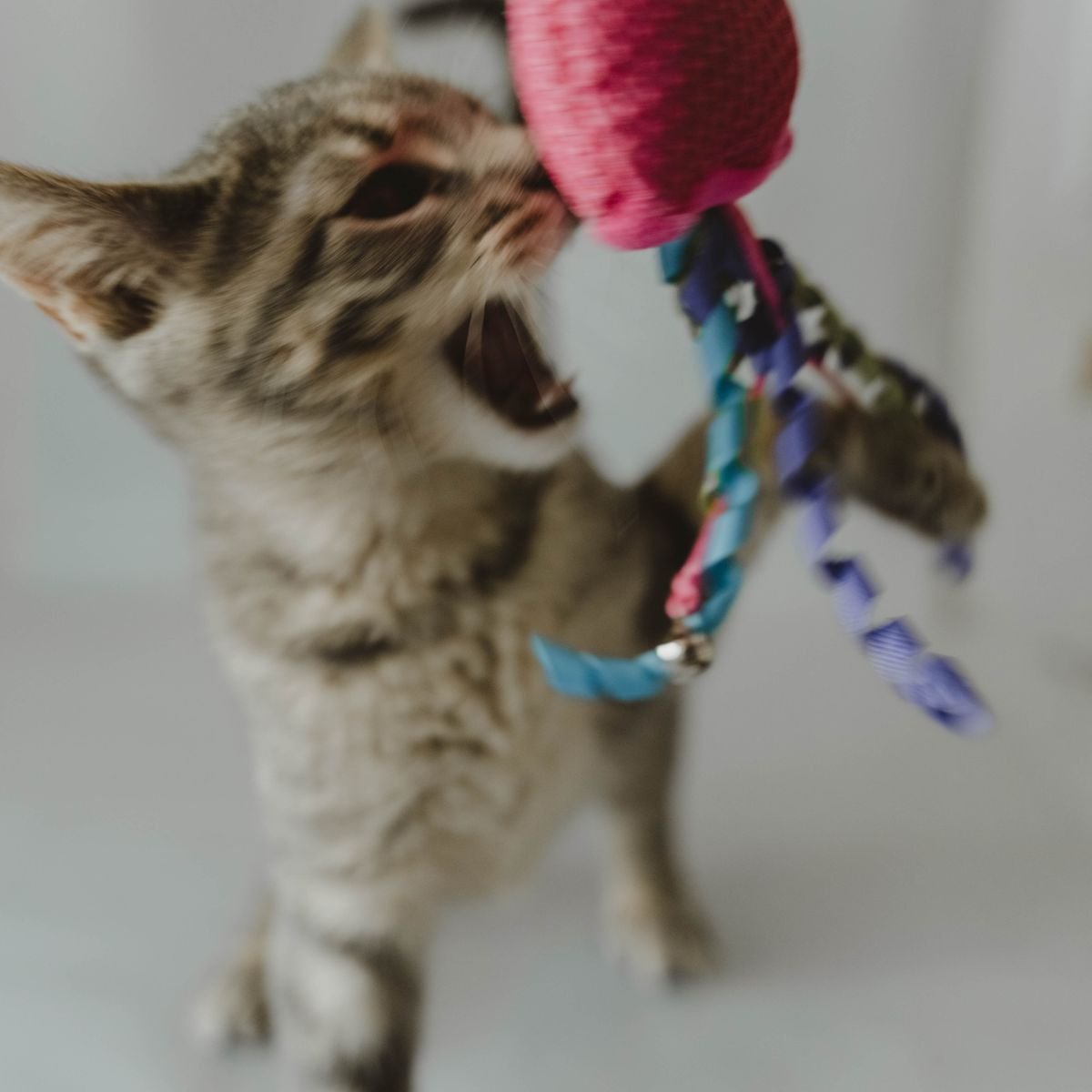
The best cat toys do more than keep a cat busy for a few minutes. They give indoor cats safe ways to stalk, chase, pounce, grab, kick and problem-solve. If you choose toys around those natural behaviors instead of simply buying whatever looks cute, play becomes more useful and usually more interesting to the cat.
Start with the behavior your cat enjoys
Some cats love fast prey-like movement, some prefer wrestling and kicking, and others would rather investigate a cardboard box than an electronic toy. Watch what your cat already does. A cat that ambushes ankles may enjoy wand play, while a cat that carries objects may like small lightweight toys that are safe to pick up.
Wand toys are excellent for shared play
A wand lets you move the toy away from the cat like prey rather than waving it directly in the face. Let your cat stalk, chase and catch it sometimes. Play is more satisfying when the cat gets successful catches instead of chasing something that always escapes.
Small chase toys can support independent play
Light balls, toy mice and sturdy rolling toys can work well for cats that like short bursts of activity. Choose a size that cannot be swallowed and inspect toys regularly for loose eyes, bells, stuffing or plastic pieces.
Kicker toys suit cats that grab and bunny-kick
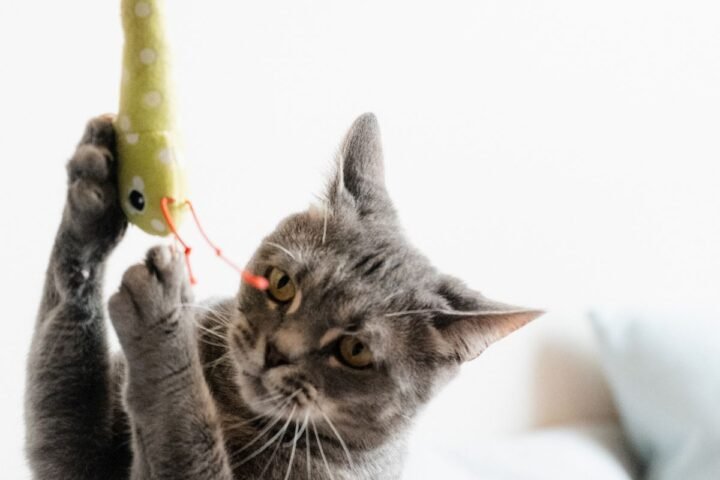
Long soft toys allow a cat to hold an object with the front paws and kick with the hind legs. They can be useful for cats that become overexcited during hand play because they give the cat an appropriate object to wrestle instead.
Boxes and paper bags can be genuinely useful toys
Good enrichment does not have to be expensive. The Cornell Feline Health Center’s safe toy guidance notes that cardboard boxes, paper bags and simple lightweight objects can provide enjoyable play while encouraging natural behavior.
String and ribbon need supervision
Long string, ribbon, yarn, elastic, tinsel and loose feather attachments can become dangerous if swallowed. Cornell specifically advises avoiding toys with strand-like parts or small pieces that can separate and be ingested. Put wand toys away after interactive play rather than leaving strings accessible all day.
Laser toys should not be the only game
A laser can encourage chasing, but the cat can never physically catch the light. If you use one, end the session by directing the cat toward a real toy or small food reward so the chase has a tangible finish.
Rotate toys instead of leaving everything out
Cats can lose interest when the same objects are available every day. Keep a few toys out, store the rest, and rotate them every several days. Cornell also recommends rotation as a simple way to reduce boredom.
Match play to your cat’s age and mobility
Kittens may enjoy quick unpredictable movement, while an older cat with arthritis may prefer slower floor-level games. A toy is only useful if the cat can interact with it comfortably. If your cat has become less willing to jump or chase, our guide to subtle signs of cat arthritis explains what owners can watch for.
Do not use hands as prey
Hand wrestling can seem harmless with a kitten, but it teaches that human skin is an acceptable target. Use a wand, kicker or toss toy instead. Our cat behavior guide explains how play, scratching and stress signals fit into normal feline behavior.
Check toys during your normal cleaning routine
Discard toys with exposed wire, loose thread, cracked plastic, torn seams or detachable pieces. Battery-powered toys should have secure battery compartments, and electrical cords should be inaccessible to chewing.
Match toy size to the cat
A toy that is safe for a large adult cat may be too small for a kitten that tries to swallow everything, while an oversized toy may frustrate a tiny cat that cannot grab it comfortably. Choose objects large enough not to disappear into the mouth but light enough for the cat to move naturally.
Offer different textures
Cats may prefer felt, soft fabric, cardboard, rubber, crinkly material or smooth lightweight balls. Variety can reveal preferences and reduce boredom. Avoid brittle materials that crack into sharp pieces and inspect fabric toys for exposed stuffing or threads.
Use toys to redirect unwanted play
If your cat ambushes feet or grabs hands, keep a wand or toss toy nearby and redirect the chase before the cat makes contact. Rewarding the appropriate target gives the cat a better outlet without turning normal predatory behavior into punishment.
Choose toys around how your cat actually plays
Choose cat toys by function: stalking, chasing, pouncing, kicking, foraging and exploring. A small collection of safe toys used well is more valuable than a basket full of objects your cat ignores.


0 comments