
How to Introduce a Dog and Cat Safely: A Slow Plan That Prevents Chasing
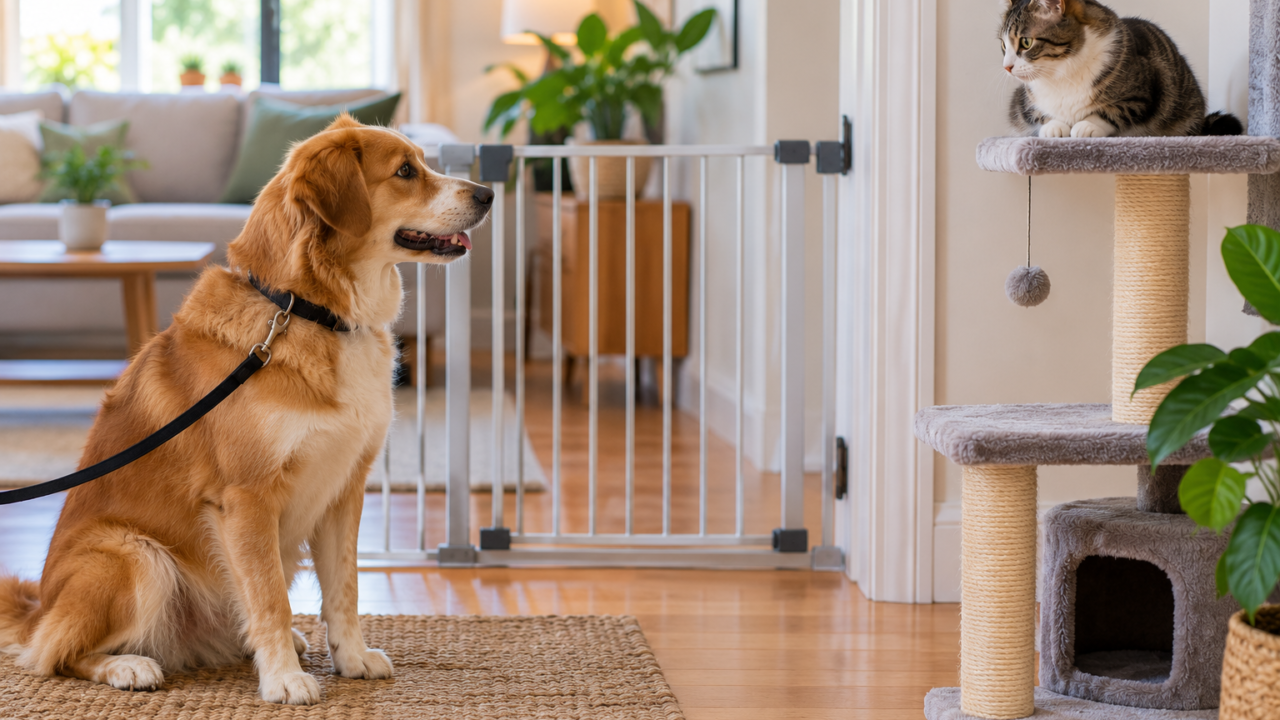
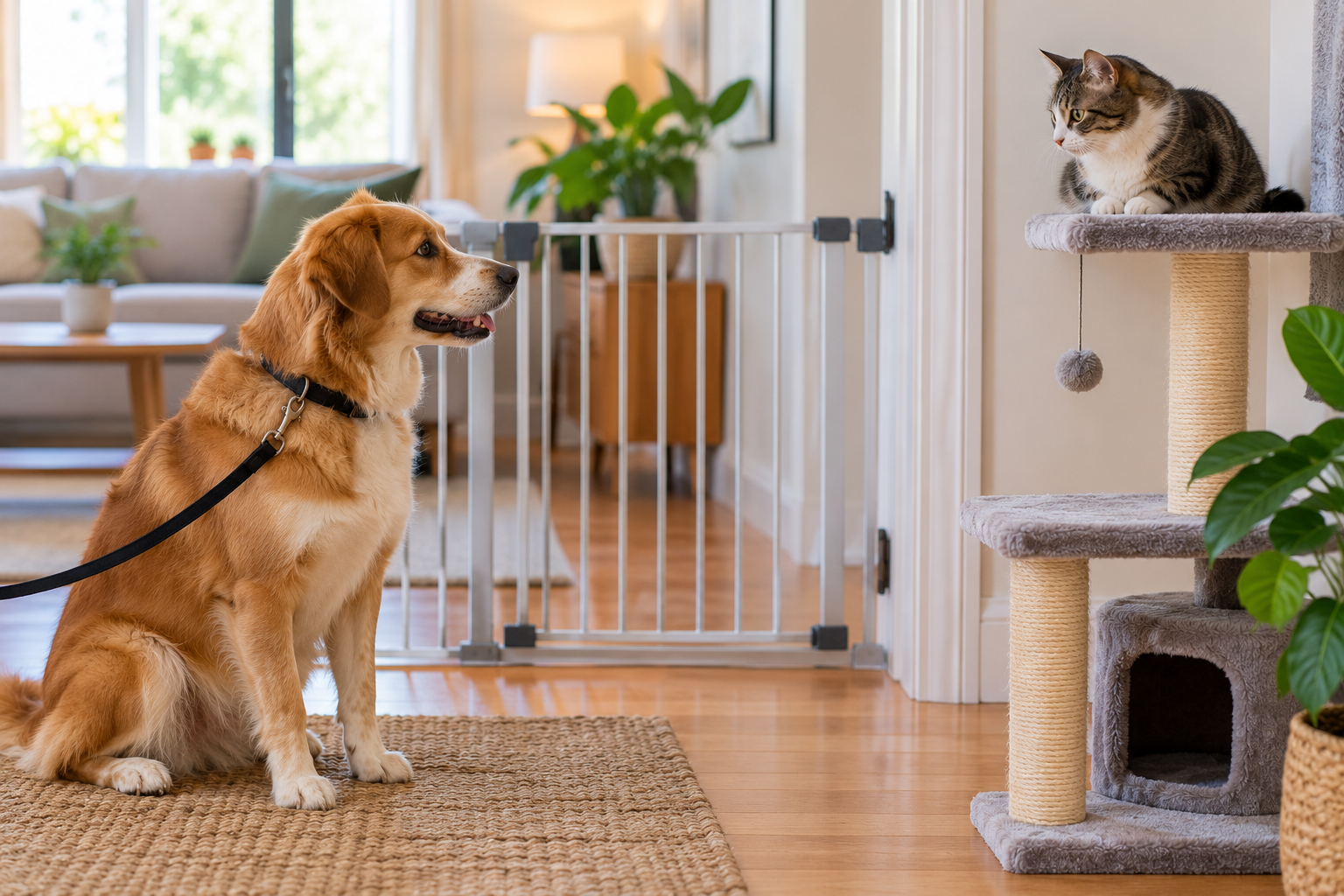
A good dog-cat introduction is deliberately uneventful. You are not trying to create a friendship in one afternoon. You are trying to prevent the first frightening chase, cornering incident or forced face-to-face meeting that makes the next week harder.
The RSPCA recommends gradual introductions with scent first, controlled visual contact and a dog kept calm and under control before the animals share space more freely.
Before they meet, give the cat a room the dog cannot enter
The cat needs food, water, litter, hiding places, scratching and a place to sleep without being watched by the dog. This room is not punishment; it is the cat’s base while both animals learn that the other exists.
Swap scent before you swap space
Exchange bedding or gently rubbed cloths when both animals are relaxed. Let each animal investigate the scent without bringing the other pet into the room.
The RSPCA specifically recommends scent exchange before direct introductions. It is a low-pressure way to make the newcomer less novel.
Use a barrier for the first visual meetings
A sturdy gate, secure screen or controlled pen can let the animals see each other without allowing a chase. The cat should have somewhere high to retreat and should not be trapped against the barrier.
Keep the dog on lead at first
The lead is not there to drag the dog closer. It is there to stop forward movement while you reward calm behaviour. Ask for an easy behaviour the dog already knows, such as sitting or looking back at you.
Distance is useful information
If the dog can eat treats, respond to cues and look away from the cat, the distance may be workable. If the dog freezes, stares, lunges, whines continuously or cannot disengage, move farther away.
If the cat flattens, growls, hides and refuses to reappear, the meeting was too intense. Give more space and return to an earlier stage.
Never test them by letting the cat run
A dog that is calm beside a stationary cat may react differently when the cat bolts. Prevent rehearsals of chasing. Once chasing becomes exciting, it is harder to teach calm coexistence.
Give the cat vertical escape routes
Cat trees, shelves and furniture routes let the cat move without crossing the dog’s path. A cat should not have to sprint past the dog to reach food, water or litter.
Keep food separate
Feed pets in different areas and remove high-value chews or bowls before shared sessions. This reduces conflict and prevents the introduction from becoming tangled with food guarding.
Do not hold the cat for the dog to sniff
Being restrained removes the cat’s ability to create distance. It also puts your hands close to a frightened animal’s teeth and claws. Let the cat choose whether to approach.
When can the dog come off lead?
Only after repeated calm sessions in which the dog can disengage easily and the cat moves without panic. Even then, use a controlled room with escape routes and keep the first off-lead sessions brief.
The RSPCA advises not leaving a dog and cat together unattended until you are confident they are safe together.
What if the dog has strong prey drive?
Do not rely on hope. A dog with a history of chasing or injuring small animals may not be a safe match for a cat without professional assessment and careful management. Some households will need permanent separation.
What if the cat keeps attacking the dog?
Increase distance and restore the cat’s safe zone. Defensive swatting often means the dog is too close, too persistent or blocking movement. Check whether the cat has enough vertical space and separate resources.
Progress is measured in boring moments
You are looking for the dog glancing at the cat and then settling, and the cat walking through the room without freezing. Those small moments matter more than forcing nose-to-nose contact.
For a broader multi-pet framework, see our new-pet introduction guide. If you are specifically introducing two dogs, use our dog-to-dog introduction guide.
Take your time
Some pairs relax within days. Others need weeks. A slow introduction is not a failed introduction; it is often what prevents one frightening incident from defining the relationship.
Start with management before training
A gate, closed door, leash and cat-only retreat prevent the animals from practising the exact behaviours you are trying to avoid. Management is not a failure of training; it is what makes calm learning possible.
Scent work should stay low pressure
Swap bedding or cloths only when both pets are calm. If the dog becomes fixated on the cat’s scent or the cat stops using a bed after it carries dog scent, reduce intensity and try again later.
Feed at a distance that keeps both animals eating
Some introduction plans use food on opposite sides of a door. That can be helpful only if both animals remain comfortable. If the cat will not eat or the dog is too aroused to take food, move farther away.
Use barriers that are physically secure
A baby gate that a dog can knock down or a screen a cat can climb through is not useful management. Test the barrier before the first session and consider a second layer if the dog is large or highly motivated.
Keep visual sessions short
A few calm minutes are enough at first. End while the dog can still disengage and the cat can still move normally. Long sessions increase the chance that one animal becomes tired, frustrated or over-aroused.
Reward looking away
For the dog, one of the most useful behaviours is noticing the cat and then turning attention elsewhere. Reward that choice. It shows the dog can process the cat’s presence without becoming locked on.
Do not confuse stillness with calm
A dog frozen in a forward-leaning stare is not relaxed simply because it is not barking. Likewise, a cat flattened on a perch may be overwhelmed even if it is silent. Read the whole body.
Watch the cat’s movement, not just the dog
A cat that stops visiting normal rooms, avoids litter or only moves when the dog is asleep is telling you the shared environment is still too difficult.
Do not allow the dog to follow every cat movement
Even calm following can become pressure. Interrupt gently and redirect the dog to a mat, chew or cue so the cat can cross the room without being shadowed.
Use vertical space strategically
High shelves and cat trees are useful only if they connect to safe routes. A single tall perch in a dead end can trap the cat above the dog. Think in pathways rather than isolated furniture.
Keep litter and food out of dog-controlled areas
A cat should not have to pass the dog to eat, drink or toilet. Separate resource zones reduce conflict and make it easier to tell whether the cat is coping.
When to try supervised off-lead time
Wait for repeated sessions where the dog can respond to cues, the cat moves without panic and neither animal is fixated. Use a room with escape routes and keep the first session brief.
Use a drag line only with supervision
Some behaviour plans use a lightweight line on the dog during transition. It must never be left on unattended where it can catch on furniture. The purpose is emergency control, not constant restraint.
Do not punish warning signals
Growling, hissing and retreat are information. Punishing them can suppress communication without reducing the underlying fear or arousal.
Reset after a chase
If the dog chases the cat, go back to separation and barriers. Our dog chasing new cat guide explains how to prevent repeated rehearsal.
Know when prey-drive history changes the plan
A dog that has seriously injured small animals should not be treated like a merely overexcited puppy. Professional assessment and long-term management may be necessary, and some pairs may never be safe together freely.
What success looks like over time
Success is ordinary behaviour: the dog can rest while the cat moves, the cat uses resources normally, both animals can disengage, and neither one controls the other’s movement through the home. Friendship is optional; safe coexistence is the goal.



0 comments