
New Cat Scared of the Resident Dog: Help the Cat Feel Safe Before Asking for Contact
A new cat hiding from the resident dog is not failing an introduction. Fear is a sensible response when the cat has entered unfamiliar territory and a larger animal is moving nearby. Your first job is to make the home predictable enough that the cat can eat, sleep and explore without being followed.
Give the cat a dog-free base
Start with a room the dog cannot enter. Put the litter tray, food, water, resting places, a scratcher and a hiding place there. The cat should be able to relax without hearing a dog scratching at the door or waiting outside.
Do not carry the cat toward the dog
A frightened cat needs control over distance. Holding the cat while the dog sniffs removes that control and can turn a cautious animal into a panicked one.
Work with scent before sight
Swap bedding or use a soft cloth to transfer scent when both animals are calm. The RSPCA recommends gradual, controlled dog-cat introductions rather than immediate free contact.
Let the cat observe from height
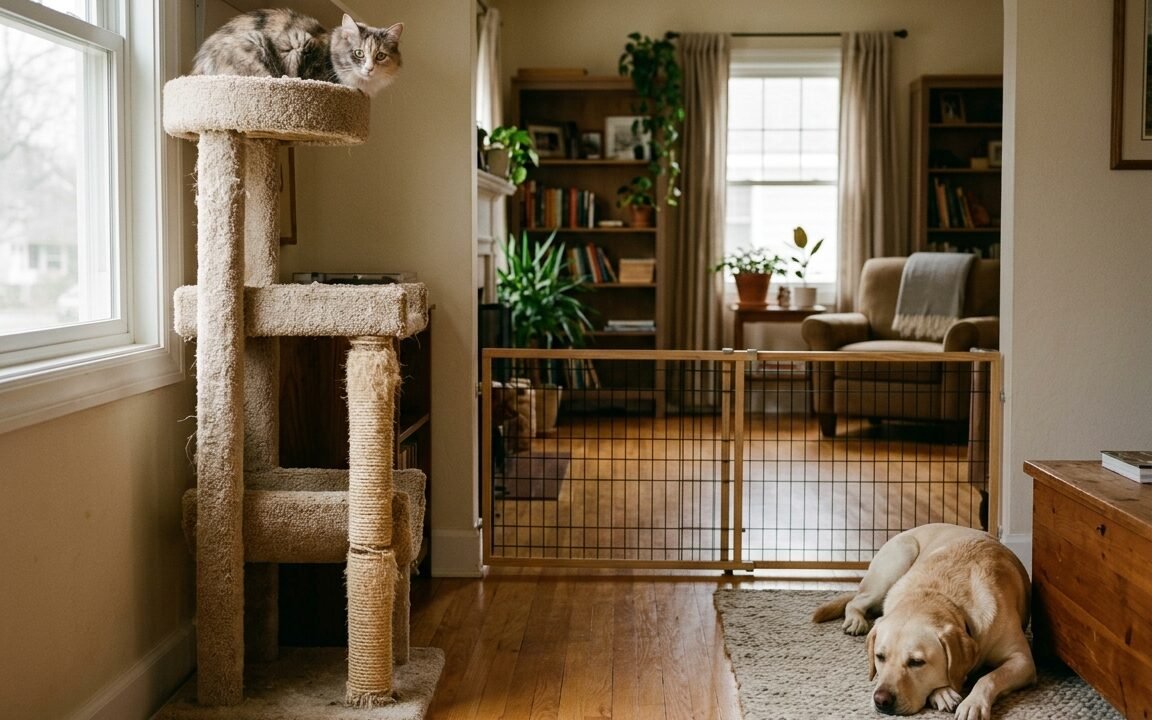
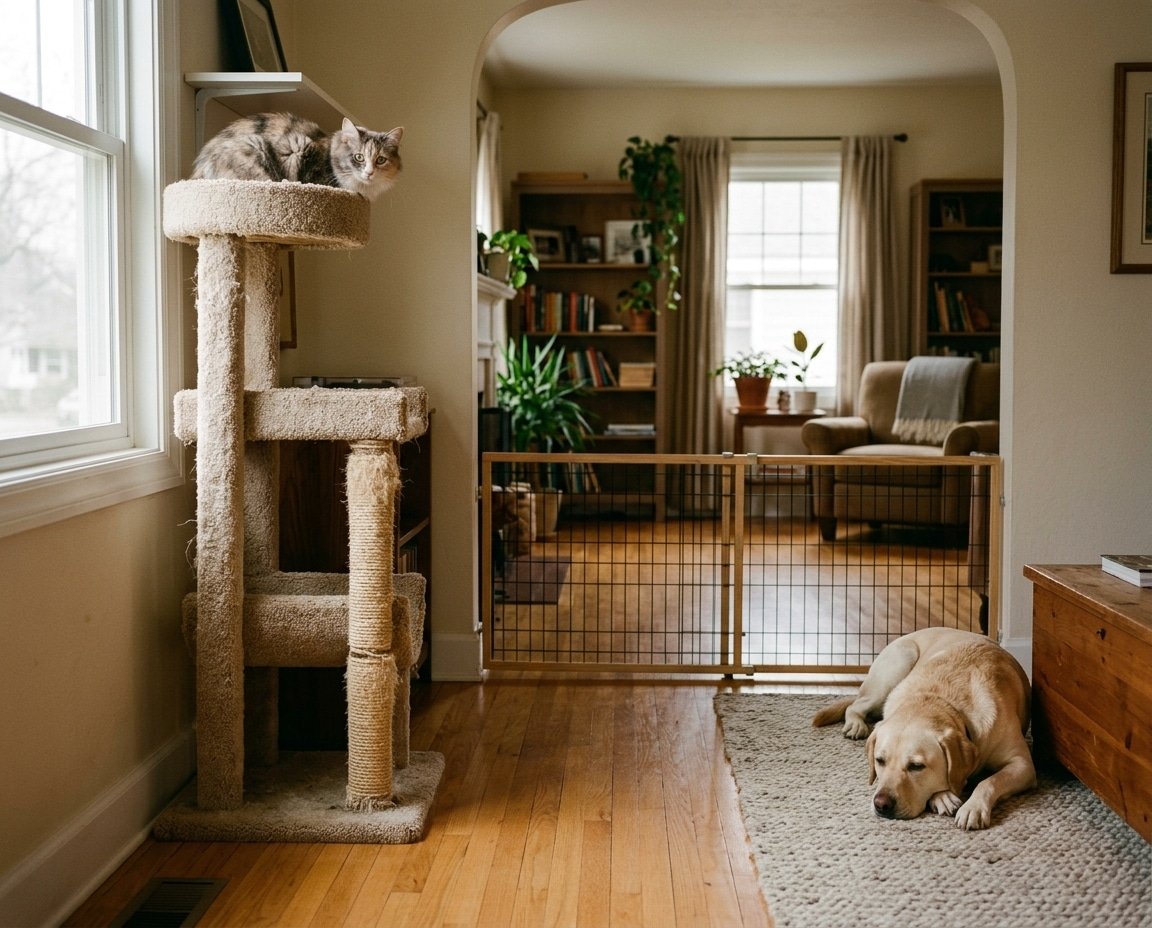
A cat tree, shelf or sturdy furniture route gives the cat a way to watch without being trapped on the floor. Height does not solve every fear problem, but it can make the dog easier to predict.
The dog’s behaviour determines the cat’s progress
If the dog stares, rushes the gate, barks repeatedly or follows every movement, the cat has little reason to relax. Work on the dog at a greater distance first.
Our dog-chasing-new-cat guide explains how to stop repeated chase practice.
Feed on opposite sides of a closed door only if both pets are comfortable
Food can help create a positive association, but a frightened cat may not eat near the door. Start farther away. Move bowls closer over days only if both animals continue eating normally.
Do not measure success by touching
Useful progress can look boring: the cat grooms while the dog is visible; the dog lies down; the cat walks to a perch instead of fleeing; both animals look away from each other.
Keep escape routes open
Never let the dog block the only route back to the cat’s safe room. In shared spaces, provide more than one path where possible and keep litter, water and resting sites out of dog-controlled bottlenecks.
What if the cat hisses?
A hiss is communication. Increase distance instead of punishing it. Punishing warning signals can make the interaction less predictable without making the cat less afraid.
What if the cat will not come out?
If the cat eats, drinks and uses the litter tray when the home is quiet, give more time. If hiding is paired with refusal to eat, vomiting, breathing changes or no normal toileting, contact a veterinarian. Stress and illness can look similar.
For general settling-in guidance, see new cat hiding after adoption.
Do not leave them together because one meeting went well
Calm supervised contact does not automatically mean unsupervised safety. Continue separation when nobody is available to intervene until the pattern has been stable for long enough that both animals behave normally around each other.
Some cats need weeks, not days
The pace should be set by the more worried animal. Expanding access too soon because the dog seems ready can undo the cat’s progress.
When professional help makes sense
Get qualified help if the dog has a history of predatory behaviour, the cat cannot resume normal eating and movement, or encounters repeatedly escalate despite careful management.
The aim is not to make the cat love the dog. The aim is to create enough safety and predictability that the cat can live normally while the dog learns that the cat is part of the household, not something to pursue.
Let the cat control the distance whenever possible
A frightened cat settles faster when retreat remains an option. During visual sessions, do not block the route back to the safe room and do not place the cat on furniture where the dog controls the floor below. The cat should be able to step away without being followed.
Read the cat before deciding to move closer
Loose posture, normal grooming, slow blinking, eating and choosing to stay visible are better signs than simple silence. A cat that freezes, crouches tightly, lashes the tail, flattens the ears or refuses food may be over threshold even if there is no hissing.
Progress should be based on relaxed behaviour, not on how many days have passed.
Read the dog at the same time
A dog can look “quiet” while still being intensely focused. Closed mouth, fixed staring, forward weight, stalking and inability to respond to a familiar cue are reasons to create more distance. Loose movement, sniffing the environment and the ability to look away are more useful signs.
Use short sessions and stop while they are still calm
Five calm minutes can teach more than a 30-minute session that ends with chasing or panic. End before either animal is exhausted. Repetition across several days builds predictability without forcing tolerance.
Do not let curiosity turn into pursuit
If the cat begins moving around more confidently, that may make the dog more interested. Keep the dog controlled until you have seen repeated calm responses to a moving cat, not just a stationary one.
Our dog-chasing-new-cat guide explains how to reset the introduction if pursuit starts.
Keep the cat’s litter area genuinely dog-free
A cat may tolerate the dog in a living room but still avoid a litter tray if the dog can follow or watch there. Use gates, door latches or room layout so toilet access never requires squeezing past the dog.
Separate feeding protects both animals
Feed in different spaces. This removes food competition and stops the dog from learning to rush toward the cat’s bowl. It also lets you monitor whether fear is affecting the cat’s appetite.
Nighttime can reveal whether the cat is coping
A new cat may explore only after the dog is asleep. If food disappears, litter is used and the cat moves around normally overnight, that is useful progress. A camera can help without adding human pressure.
What if the cat swats at the dog?
A defensive swat often means the dog came too close or the cat felt trapped. Increase distance rather than punishing the cat. Repeated swatting tells you the current setup is too difficult.
What if the dog is calm but the cat is still terrified?
Keep working at the cat’s pace. Some cats need more time to learn that the dog is predictable. Scent exchange, visual contact through a barrier and parallel calm routines can continue without moving to direct access.
Do not remove the safe room too early
Even after shared-room sessions improve, keep the cat’s retreat available. Confidence often grows because the cat knows escape is possible. Removing that option can make the home feel smaller and more dangerous.
When a veterinarian should be involved
Fear can suppress appetite and normal toileting, but illness can look similar. Contact a veterinarian if the cat stops eating, vomits repeatedly, has diarrhea, strains in the litter box, loses weight or remains profoundly withdrawn.
When a behaviour professional is worth it
Qualified help is appropriate when the dog has a strong predatory history, the cat cannot move through the home safely, or weeks of careful management produce no improvement. Some households need permanent separation rather than forced coexistence.
What success actually looks like
The goal is not cuddling. Success can be the cat walking through the room while the dog stays relaxed, both animals eating normally, and neither one controlling the other’s access to food, water, rest or litter. Peaceful indifference is an excellent outcome.


0 comments