
Hamster Care Guide for New Owners: Housing, Diet and Daily Care
Hamsters are small animals with surprisingly large welfare needs. A good setup gives them enough floor space to explore, deep bedding to burrow, a wheel that fits their body, hiding places, foraging opportunities, a balanced diet and a quiet routine that respects when they are naturally awake.
Most beginner mistakes come from treating the cage as a container rather than a habitat. The strongest care plan asks a different question: can the hamster actually burrow, forage, run, hide and rest comfortably inside this setup?
Start with enough continuous floor space
Blue Cross recommends a hamster home of at least about 100 cm by 50 cm of floor space and around 50 cm tall, with larger being better. Stacked tiny levels do not replace a wide usable base.
Our hamster enclosure guide explains how to compare tanks, barred cages and large modified bins by usable space rather than marketing labels.
Deep bedding is a core need, not decoration
Hamsters are natural burrowers. Blue Cross recommends roughly 20 cm of suitable bedding so the animal can build tunnels. Use a low-dust, absorbent material that can hold structure.
Avoid fluffy cotton-wool-style nesting products. Fibres can tangle around limbs or create ingestion problems.
Do not flatten every tunnel during cleaning
Hamsters invest time in building burrows and food stores. Constant full clean-outs can remove scent and destroy the environment they created.
Spot-clean soiled areas regularly and preserve some familiar clean bedding during larger cleans when practical.
The wheel must fit the hamster
A wheel should allow the hamster to run with a neutral back rather than curving sharply upward. Use a solid running surface and avoid open wire rungs that can catch feet.
Our hamster wheel size guide explains how to judge fit by posture rather than relying only on package labels.
Exercise balls are not a substitute
Blue Cross advises against exercise balls because the hamster cannot choose to leave, hide, access water or control the environment reliably.
A secure playpen or enriched enclosure gives the animal more choice and fewer collision risks.
Hides should provide real retreat
Offer at least one dark enclosed hide and preferably several options. Cardboard, multi-chamber hides and tunnels can give the hamster places to nest, store food and move without feeling exposed.
Do not lift the roof repeatedly to check whether the hamster is sleeping. A hide should function as a genuinely private area.
Feed a balanced hamster diet
RSPCA hamster-feeding guidance recommends a balanced hamster ration with appropriate fresh foods. Fresh water should always be available.
Our hamster diet guide covers staple food, fresh additions and common feeding mistakes.
Introduce fresh foods gradually
Sudden diet changes can upset digestion. Offer small amounts and remove uneaten fresh food before it spoils.
Remember that hamsters cache food. Check hidden stores for fresh items rather than assuming an empty dish means everything was eaten.
Use scatter feeding for normal foraging
Part of the daily ration can be scattered through clean bedding or hidden in cardboard tubes and simple enrichment items.
This encourages searching and food-carrying behaviour instead of making every meal appear in one bowl.
Cheek pouches are normal—but they can develop problems
Hamsters use cheek pouches to carry food. One-sided swelling, bad odor, pawing at the mouth or a pouch that never seems to empty can suggest impaction or injury.
Our hamster cheek-pouch guide explains what to watch.
Water bottles need daily checks
A bottle can look full while the ball bearing is stuck. Test the tip regularly and position it at a height the hamster can reach comfortably.
A ceramic water bowl can work in some setups, but it should be stable and protected from bedding contamination.
Respect the sleep cycle
Hamsters are mostly active at night. Repeatedly waking a sleeping hamster for handling can be stressful and can increase defensive biting.
Schedule interaction around the hamster’s natural waking period when possible. Our hamster behavior guide explains normal activity patterns and common misunderstandings.
Handling should be gradual
Give a new hamster time to settle before frequent handling. Let the animal approach your hand, take treats and investigate at its own pace.
When lifting, use cupped hands close to a surface. Avoid grabbing from above, which can feel threatening.
If your hamster is fearful, use our hamster trust-building guide.
Syrian hamsters should live alone
Syrian hamsters are solitary and should not be housed together. Chinese hamsters are also generally kept alone.
Some dwarf hamsters may sometimes remain in stable same-sex groups formed early in life, but they do not require companionship and fighting can become serious. Owners should be prepared to separate animals permanently if conflict appears.
Do not house different hamster species together
Species differ in size, social behaviour and needs. Mixed-species housing creates unnecessary risk.
Use enrichment that supports normal behaviour
Useful enrichment includes deep bedding, tunnels, cardboard, hides, forage opportunities, safe chew materials, a sand bath where appropriate and a properly sized wheel.
Our hamster toy guide focuses on activities that support movement and exploration rather than decorative clutter.
Sand baths need the right material
Many hamsters enjoy a sand area for grooming. Use a safe, low-dust sand product intended for small animals or reptiles where appropriate, not fine bathing dust that can irritate the respiratory system.
Temperature matters
Keep the enclosure away from direct sunlight, radiators and cold drafts. Sudden temperature drops can contribute to torpor-like states in some hamsters.
Our hamster torpor guide explains how to distinguish cold-related inactivity from normal sleep and illness.
Cleaning should protect health without erasing the habitat
Remove wet bedding, spoiled food and dirty nesting material as needed. Larger cleans should preserve some familiar clean bedding so the enclosure still smells recognizable.
Avoid strong scented cleaners and rinse surfaces thoroughly.
Check food caches during cleaning
Hamsters naturally store food. Dry staple food can be left when clean and safe, but fresh items should not sit hidden long enough to spoil.
Watch body weight over time
A gram scale can reveal a gradual change before it becomes obvious through the coat. Weigh under similar conditions and record the trend.
Our hamster weight-loss guide explains how to interpret a downward pattern.
Know the early illness signs
Hamsters can hide illness. Reduced appetite, weight loss, hunched posture, abnormal breathing, diarrhea, eye discharge, lumps, limping or unusual inactivity deserve attention.
Our hamster health problems guide is the main health hub, while hamster signs of pain covers subtle behaviour changes.
Wet tail is an emergency pattern
Persistent diarrhea, a soiled rear, lethargy and poor appetite can become serious quickly, particularly in young Syrian hamsters.
Use our wet tail guide and contact a veterinarian promptly.
Dental problems can stop a hamster eating normally
Hamster incisors grow continuously. Drooling, food dropping, visibly overgrown teeth or a preference for soft food can indicate dental trouble.
Our overgrown incisors guide explains what to check and why home clipping is risky.
Breathing changes need prompt attention
Open-mouth breathing, wheezing, clicking or persistent fast breathing at rest is not something to monitor casually.
See our hamster breathing guide for urgent signs.
Find a small-mammal veterinarian before an emergency
Not every clinic treats hamsters. Save the contact details of a clinic experienced with small mammals in advance.
Our hamster vet transport guide explains how to prepare a secure carrier.
What new owners should check every day
- Is the water source working?
- Is the hamster eating and storing food normally?
- Are droppings and urine roughly normal?
- Is the bedding dry?
- Is the wheel turning freely?
- Is the hamster moving normally during the active period?
- Are there signs of fighting if more than one dwarf hamster is housed together?
What to review every week
- Body weight trend.
- Condition of teeth and nails during normal handling.
- Wheel stability and size.
- Depth and cleanliness of bedding.
- Food stores for spoiled fresh items.
- Condition of hides, chews and tunnels.
A strong hamster setup is built around behaviour
Good hamster care is not complicated when the enclosure supports what hamsters naturally do. Give the animal room to move, bedding deep enough to burrow, a wheel that fits, appropriate food, quiet sleep and enough choice to hide, forage and explore.
The more the habitat does the work, the less you need to “entertain” the hamster through constant handling.
Set up the enclosure before the hamster comes home
Prepare bedding, hides, wheel, food and water in advance so the hamster does not arrive to a half-finished habitat. A settled enclosure reduces the amount of rearranging and handling during the first few days.
Give a new hamster time to settle
For the first day or two, focus on food, water and quiet observation. Avoid repeatedly lifting hides or trying to handle the hamster immediately. Let the animal learn where the nest, food and water are before adding more interaction.
The first week should be predictable
Keep feeding, lighting and room activity fairly consistent. Sudden full-cage cleans, repeated visitors and frequent handling can make a new hamster harder to settle.
Use the first week to learn the hamster’s routine
Notice when the hamster wakes, which foods disappear first, where food is stored and which areas of the enclosure are used for toileting. Those patterns help you maintain the habitat without disrupting it unnecessarily.
Cleaning frequency depends on the enclosure
Large well-bedded enclosures often need less frequent full cleaning than tiny cages because waste is distributed over more space. Spot-clean wet or soiled areas and remove spoiled fresh food while preserving clean nesting material where possible.
Do not remove every scent during a full clean
A completely scent-free enclosure can be stressful. Retain some clean familiar bedding and return hides or tunnels in recognizable locations unless there is a health reason to disinfect everything.
Use safe nesting material
Plain unscented paper-based nesting material works well for many hamsters. Avoid fluffy fibrous nesting products that can wrap around limbs or be swallowed.
Cardboard is one of the most useful enrichment materials
Toilet-roll tubes, plain boxes and cardboard hides can be chewed, explored and replaced cheaply. Remove glossy coatings, staples, tape loops and unsafe adhesives.
Chewing is normal
Safe wood and cardboard provide normal gnawing opportunities. Persistent bar chewing, however, can also suggest inadequate space, frustration or poor enclosure design.
Wheel use should look comfortable
Watch the hamster from the side. The back should stay close to neutral, and the wheel should not wobble or jam with bedding. A hamster that suddenly stops using a previously favoured wheel may be painful or unwell.
Do not use wire floors
Solid flooring is safer for feet. Wire or mesh floors can contribute to foot injury and do not provide the stable surface hamsters need for normal movement.
Protect the enclosure from household hazards
Keep it away from cigarette smoke, aerosol sprays, strong cleaning fumes and loud speakers. Do not place it where another pet can sit directly against the cage and harass the hamster.
Dogs and cats should not have unsupervised access
Even a calm household pet can frighten or injure a hamster. Use secure lids, stable placement and physical separation. Predator presence can be stressful even without direct contact.
Room lighting should follow a normal day-night cycle
Do not keep the enclosure under bright artificial light all night. Hamsters need predictable darkness and quiet during their active period.
Travel needs preparation too
For moving house or veterinary visits, use a secure ventilated carrier with familiar bedding and no high accessories. Protect the hamster from heat and cold during transport.
Know what a healthy routine looks like
A healthy hamster should eat, drink, produce normal droppings, groom, move comfortably and show species-appropriate activity during the waking period. Individual personalities differ, so learn the baseline rather than expecting every hamster to act the same.
Do not wait for dramatic illness
Subtle changes matter. A hamster that stops storing food, avoids the wheel, drinks much more, becomes hunched or loses weight deserves closer attention even if the animal still accepts treats.
Budget for veterinary care
Hamsters are inexpensive to buy compared with many pets, but veterinary care can still cost significantly. Before adopting, identify a small-mammal clinic and plan for consultation, diagnostics and medication if illness occurs.
Do not buy a hamster as a low-effort child’s pet
Hamsters can be wonderful family pets, but adults should remain responsible for housing, cleaning, health monitoring and veterinary decisions. Their nocturnal routine can also conflict with a young child’s preferred interaction time.
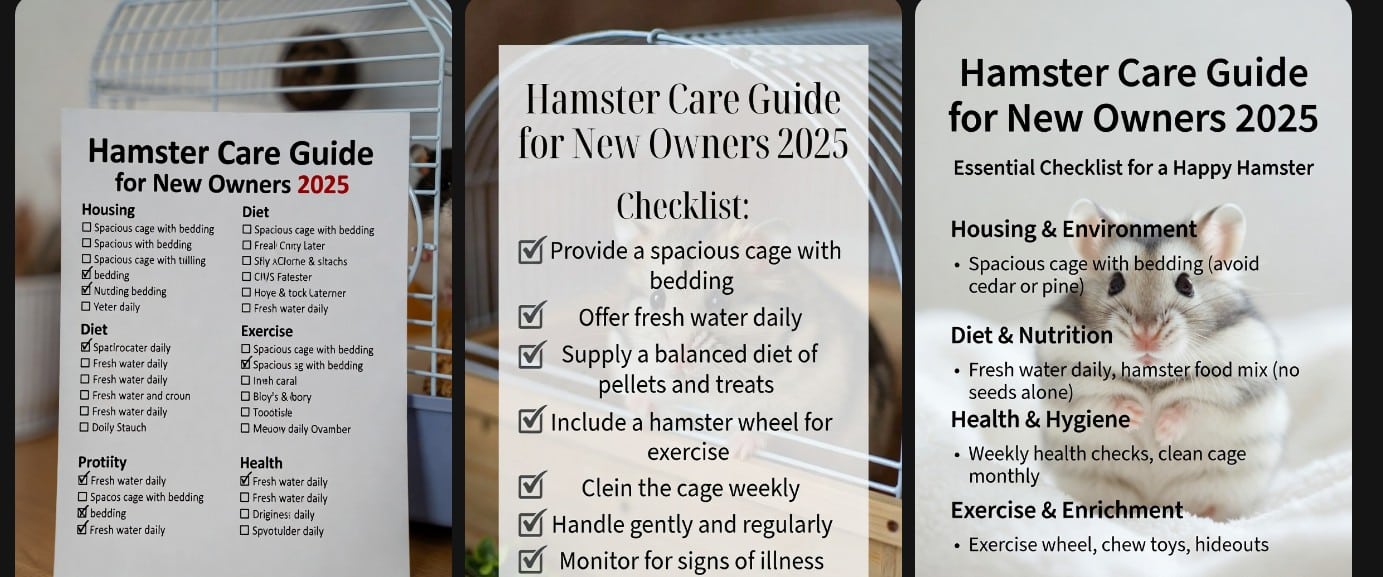
A simple new-owner setup checklist
- large continuous floor area;
- deep low-dust bedding;
- secure dark hides;
- solid correctly sized wheel;
- safe nesting material;
- balanced hamster food;
- reliable water source;
- foraging and chewing opportunities;
- stable room temperature;
- contact details for a small-mammal veterinarian.
The best care is quiet and consistent
Hamsters do not need constant handling or endless novelty. They need a stable habitat that supports natural behaviour, predictable care and an owner who notices when something changes.


0 comments