
Hamster Toys and Enrichment: Wheels, Tunnels, Digging and Foraging

Hamsters do not need constant novelty. They need reliable opportunities to perform normal behaviors: running, digging, hiding, chewing, foraging and exploring.

Solid running wheel
Choose a wheel large enough that the hamster can run without sharply arching the back.
Tunnels and hides
Cardboard tubes and enclosed hides support exploration and retreat.
Deep bedding
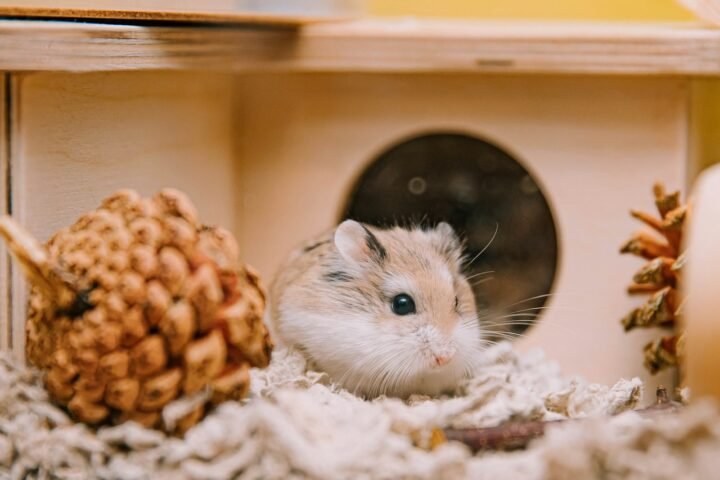
Burrowing substrate is one of the most important forms of enrichment. Blue Cross recommends deep bedding and a secure multi-chamber-style hide.
Scatter feeding
Hide some of the daily dry ration around the enclosure instead of placing every meal in a bowl.
Safe chewing
Provide appropriate chew materials such as plain cardboard and safe untreated wood.
Dig boxes and sand baths
These add texture and behavioral variety when filled with suitable low-dust substrates.
Supervised playpen
A secure playpen can provide extra exploration when the hamster is awake. Blue Cross advises against exercise balls because they restrict choice and access to resources.
Avoid clutter
If toys block wheel access, reduce usable floor area or prevent burrowing, remove some. Enrichment should expand behavioral choice rather than shrink it.
Enrichment should cover several behaviors
A good setup is not a pile of toys. It gives the hamster ways to run, burrow, hide, chew, forage, dig, investigate and retreat.
The wheel is exercise equipment, not the whole enrichment plan
RSPCA recommends a large axle-free wheel with a safe running surface, but wheel use should sit alongside deep bedding and opportunities to explore.
Wheel size should be judged by posture
The hamster should be able to run with the back reasonably straight rather than sharply curved. Adult Syrians usually need much more wheel space than the small wheels included in starter cages.
A solid running surface is easier on feet
Avoid open wire rungs that can trap toes or force an unnatural step. Check the wheel regularly for wobble, sharp edges and urine buildup.
Deep bedding is one of the highest-value forms of enrichment
Blue Cross recommends deep bedding so hamsters can burrow. That opportunity often matters more than another plastic accessory.
Multi-chamber hides support nesting and food storage
A dark stable hide can let the hamster separate sleeping, food storage and toilet areas. Ensure entrances fit the animal comfortably with full cheek pouches.
Cardboard tunnels are cheap and replaceable
Plain cardboard gives exploration and chewing opportunities. Cut narrow tubes open for large Syrians if there is any risk of squeezing.
Scatter feeding turns food into activity
Use part of the normal ration around the enclosure instead of adding treats solely for enrichment. This encourages natural searching behavior.
Dig boxes add texture
A stable container with a safe low-dust substrate can give the hamster another place to investigate. Remove it if the material becomes wet or contaminated.
Sand baths serve a different purpose from dusty powders
Use a suitable sand rather than fine dust. The area should be large enough for normal rolling and grooming, and it needs regular spot cleaning.
Chewing materials should be simple and safe
Plain cardboard and safe untreated wood can be useful. Avoid painted, varnished or fragranced craft wood unless you know the material is suitable for small pets.
Playpens can add supervised exploration
Use a secure escape-proof area while the hamster is awake. Provide hides and familiar objects so the space is not simply an exposed empty floor.
Exercise balls are not a good substitute
Blue Cross advises against hamster balls because they restrict the animal’s ability to explore with normal senses and remove access to resources or hiding places.
Rotate, do not overwhelm
Change one or two small items while leaving core resources stable. Constant full redesign removes familiar scent and can make the environment less predictable.
Watch which enrichment the hamster actually uses
One animal may spend hours burrowing while another prefers foraging and wheel running. Use observation to decide what deserves more space.
Do not block important routes
Toys should not obstruct water, wheel access, nest entrances or ventilation. More objects are not automatically more enriching.
Inspect every item for wear
Chewed edges, cracked plastic, loose fittings and damp cardboard can turn a previously safe object into a hazard.
Use boredom signs carefully
Repeated escape attempts, bar biting or frantic climbing can suggest the environment needs improvement, but sudden behavior change can also reflect illness. Look at the whole picture.
Enrichment should not depend on constant shopping
Many useful activities come from the enclosure itself: deep bedding, cardboard tunnels, scatter feeding and rearranging a small forage item. Expensive electronic toys are not automatically more valuable.
Novelty works best in small doses
Swap one object or change one forage challenge while leaving the core layout familiar. Changing everything at once can remove scent cues and make the hamster spend time rebuilding security rather than exploring.
Make climbing low and forgiving
Hamsters may climb, but they are not built for tall exposed structures. Keep routes low over deep bedding and remove items that create long drops onto hard surfaces.
Watch for trapped toes and limbs
Wire ladders, rough mesh and narrow gaps can catch feet. Smooth stable surfaces and appropriately sized openings are safer.
Use cardboard before plastic when a chewable item is intended
Plain cardboard is easy to replace and inspect. If plastic is heavily chewed, remove the item before sharp edges or swallowed fragments become a concern.
Foraging can replace extra treats
Hide part of the normal ration rather than adding new snacks for every activity. The hamster gets the behavioral challenge without unnecessary calories.
Enrichment can reveal health changes
A hamster that stops using a favorite wheel, tunnel or dig area may be telling you something about pain, weakness or illness. Sudden loss of normal activity deserves attention.
Use the hamster’s choices to rank enrichment
If the wheel is ignored but the dig box is used constantly, that does not mean the setup is failing. Keep the wheel available and safe, but give more space to the activities the hamster actually values.
Enrichment should not make cleaning impossible
Objects that trap urine, hide spoiled fresh food or cannot be inspected easily should be simplified. Good enrichment still needs to be hygienic and observable.
Change one thing at a time
If you add three new items at once, you may not know which one the hamster likes or avoids. Small changes produce better feedback.
Reader takeaway
The strongest enrichment setup is behavior-based: deep bedding for burrowing, a correctly sized wheel for running, hides for security, forage opportunities for searching and safe textures for digging and chewing. Toys are useful only when they support those needs.
When space is limited, prioritize the wheel, deep bedding, secure hides and forage opportunities before adding novelty items. Those core resources support daily behavior more reliably than another decorative toy. They should come first in every setup, especially when floor space is limited or shared by large accessories and hides safely.
If you are deciding between another toy and improving bedding depth, wheel fit or hiding space, fix the core need first. The best enrichment usually improves normal behavior rather than simply adding another object to the enclosure.
Enrichment works best when it supports the enclosure rather than crowding it. Our Hamster Care Guide for New Owners explains the wider housing and routine framework; when you want low-cost ideas that preserve space, use the DIY hamster enrichment guide, and when you are comparing wheels, hides, sand baths and other functional items, continue with the hamster cage accessories guide.


0 comments