
Hamster Teeth Too Long: Signs of Overgrown Incisors and When Trimming Is Needed
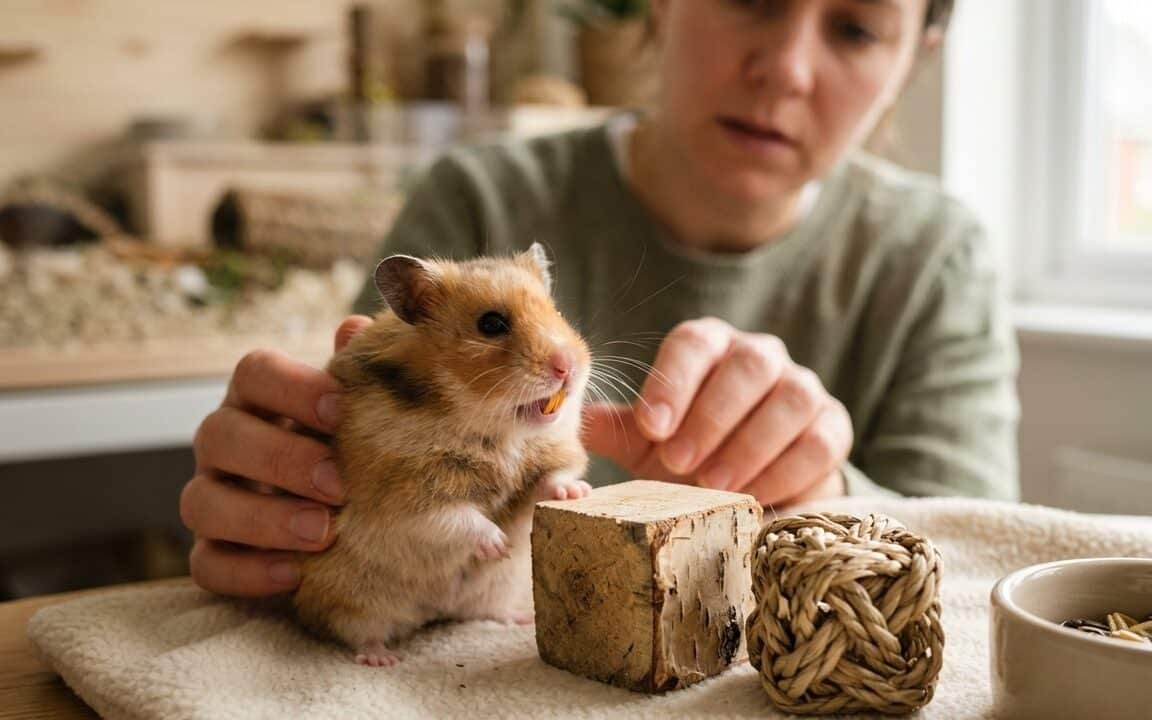
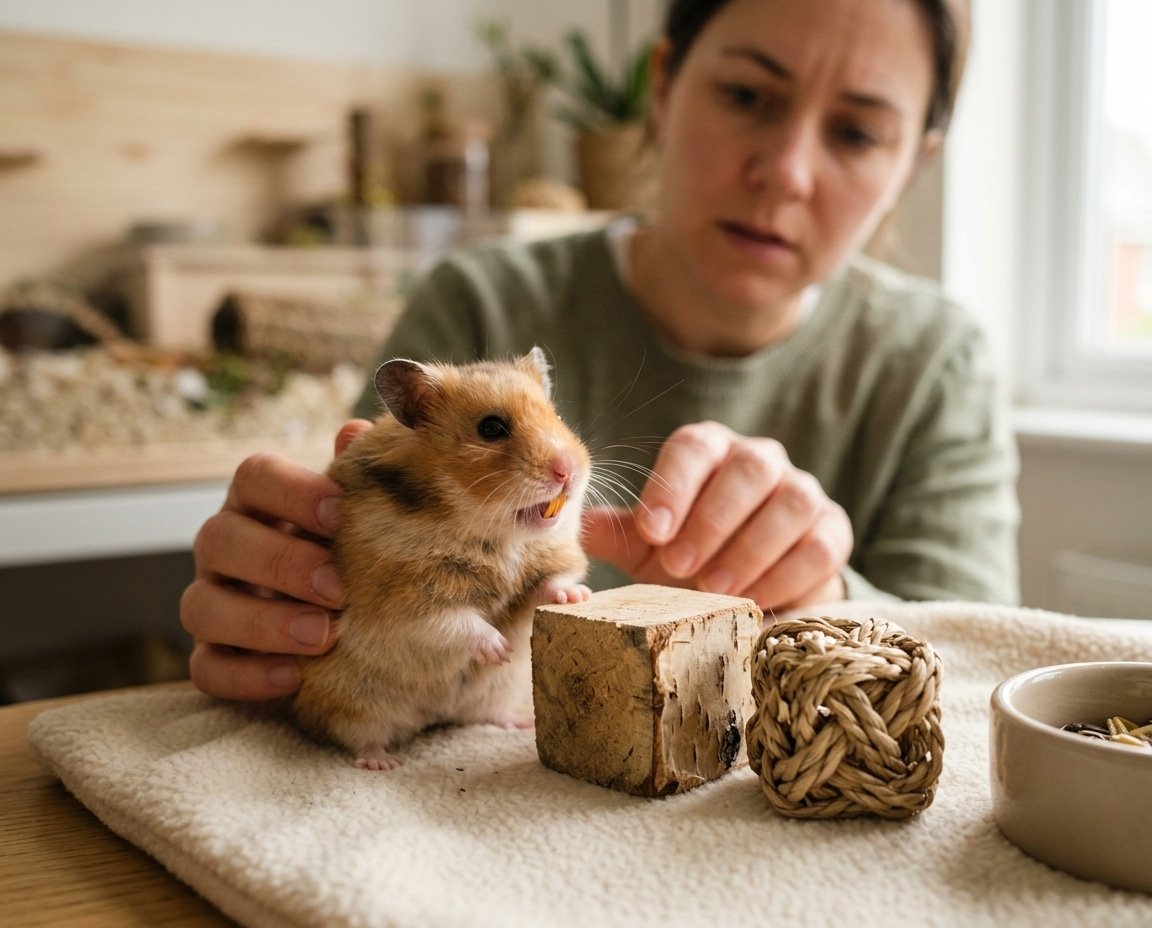
Hamster front teeth grow continuously. In a healthy hamster, chewing and correct tooth alignment allow the upper and lower incisors to wear against each other. When that balance fails, the teeth can become long enough to interfere with eating, injure the lips or palate, and cause weight loss.
Merck recommends regular dental checks because overgrown incisors can lead to drooling, poor appetite and weight loss. If a tooth is visibly curving, the hamster is dropping food or the mouth cannot close normally, this is no longer just a chew-toy problem.
What normal hamster incisors look like
Hamster incisors are naturally prominent and often yellow-orange rather than white. That colour alone does not mean the teeth are dirty or diseased. More important is whether the upper and lower incisors meet in a way that allows normal wear.
Healthy teeth should not curve dramatically into the lips, tongue or roof of the mouth. The hamster should be able to pick up, gnaw and chew normal food without repeated dropping or obvious discomfort.
Early signs of overgrowth are often seen at mealtime
A hamster may walk to the bowl and appear interested but then take much longer to eat. You may see food picked up and dropped, chewing on only one side, or a sudden preference for soft foods.
These changes matter because appetite can look “normal” from a distance while actual intake is falling.
Wet fur around the mouth is a warning sign
Drooling can wet the chin, chest or front paws. It may happen because the hamster cannot close the mouth comfortably or swallow normally. Mouth pain, cheek-pouch problems and other dental disease can cause similar signs, so a veterinary mouth examination is important.
Weight loss may be easier to measure than dental pain
Fur can hide body condition. If you suspect a dental problem, weigh the hamster on a gram scale and record the result. A downward trend strengthens the case that normal eating has been disrupted.
Our hamster weight-loss guide explains how to track weight consistently.
Why hamster teeth become overgrown
One common reason is malocclusion: the upper and lower teeth do not meet correctly. If they cannot rub against one another during chewing, normal wear stops.
Overgrowth can also follow a broken tooth. When one tooth is lost or shortened, the opposing tooth may no longer have anything to wear against and can lengthen quickly. Jaw injury, abnormal tooth position and other oral disease can also change alignment.
Chew toys are useful, but they are not a treatment for malocclusion
Safe wooden chews and suitable hard foods support normal gnawing behaviour. They are worthwhile enrichment for healthy teeth. But a hamster with an incisor already curving into soft tissue will not fix the problem by receiving more wood.
If alignment is abnormal, the tooth may need professional trimming or burring on a recurring schedule.
Do not clip overgrown teeth with household nail clippers
This is one of the most important safety points. Incisors can crack or split when clipped. A fracture may extend toward the root, cause pain or create a sharp edge that injures the mouth.
A veterinarian can assess tooth alignment, look for injury or infection and shorten the tooth using appropriate equipment. The goal is not just to make the tooth shorter; it is to restore function without causing additional damage.
What about filing the teeth at home?
Home filing is also risky because restraint, heat and accidental injury to the lips or tongue are concerns. If a hamster needs repeated dental correction, ask the veterinarian to show you what is happening anatomically and how often professional treatment may be required.
Cheek-pouch problems can accompany dental trouble
A hamster with painful or abnormal teeth may not empty food from the pouches normally. One cheek may stay swollen, food may smell bad or the hamster may paw at the mouth.
Our hamster cheek-pouch guide covers impaction, injury and warning signs.
What if only one incisor looks too long?
That can happen after a broken opposing tooth or when alignment is uneven. One-sided overgrowth is still important because it tells you normal wear has been disrupted.
Do not wait for the second tooth to “catch up.” The longer tooth can continue growing into soft tissue.
What if the tooth looks broken?
A broken incisor may regrow if the root remains healthy, but the opposing tooth can overgrow while you wait. A veterinary check helps determine whether the break exposed deeper tissue, whether infection is present and whether the opposite tooth needs temporary management.
When poor appetite becomes urgent
If the hamster cannot eat normal food, is drooling heavily, looks weak, loses weight or stops producing normal droppings, do not wait for a routine appointment. Small animals can lose condition quickly.
Our hamster not-eating guide explains what to check when food intake changes.
Offer familiar food while arranging care
Do not suddenly replace the whole diet with sugary treats. Keep the usual balanced food available. If chewing hard food is clearly difficult, ask the veterinarian whether temporarily softening the regular diet is appropriate.
The point is to maintain nutrition without masking the underlying dental problem.
Do not assume every tooth problem comes from lack of chewing
Owners sometimes blame themselves because the hamster “must not have had enough chews.” But alignment, injury and genetics can matter even in a well-set-up enclosure. More enrichment is good husbandry, but it cannot correct every structural problem.
How often should you inspect hamster teeth?
You do not need to force the mouth open every day. Instead, make dental awareness part of routine health observation. Watch how the hamster picks up food, note drooling, and look at the front teeth during calm handling when possible.
If your hamster has had overgrowth before, the veterinarian may recommend a more frequent check schedule because recurrence is common when the underlying alignment problem remains.
What a vet may examine
The front incisors are only part of the picture. A veterinarian may assess jaw alignment, oral soft tissues, cheek pouches, body weight and signs of infection or trauma. If the mouth cannot be examined safely while the hamster is awake, additional handling or sedation may be considered depending on the situation.
Bring useful observations to the appointment
Note whether the hamster is dropping food, eating more slowly, refusing hard items, drooling, losing weight or developing cheek swelling. If you have gram weights from previous weeks, bring them.
A photo of the incisors can help show progression, but do not force the mouth open just to obtain one.
Can diet prevent overgrown incisors?
A balanced hamster diet and opportunities to gnaw support normal dental wear. But there is no special food that guarantees prevention when teeth are misaligned.
Choose safe chew items and avoid extremely hard objects that could crack teeth. Normal gnawing should be part of enrichment, not an attempt to grind a deformed tooth back into position.
Watch the rest of the hamster, not just the mouth
Dental pain can show up as reduced activity, hunched posture, irritability or reluctance to be handled. Our hamster pain-signs guide covers broader changes worth taking seriously.
The practical takeaway
Overgrown hamster incisors are a functional problem, not a cosmetic one. The teeth should meet and wear in a way that lets the hamster eat comfortably. Warning signs include dropping food, drooling, weight loss, cheek swelling and a tooth visibly curving out of position.
Chew toys are useful for normal gnawing, but they do not correct established malocclusion. Avoid home clipping with nail clippers. If the teeth are overgrown or the hamster is struggling to eat, veterinary assessment and professional trimming are the safer route.


0 comments