
Hamster Losing Weight: How to Track the Change and What It Can Mean
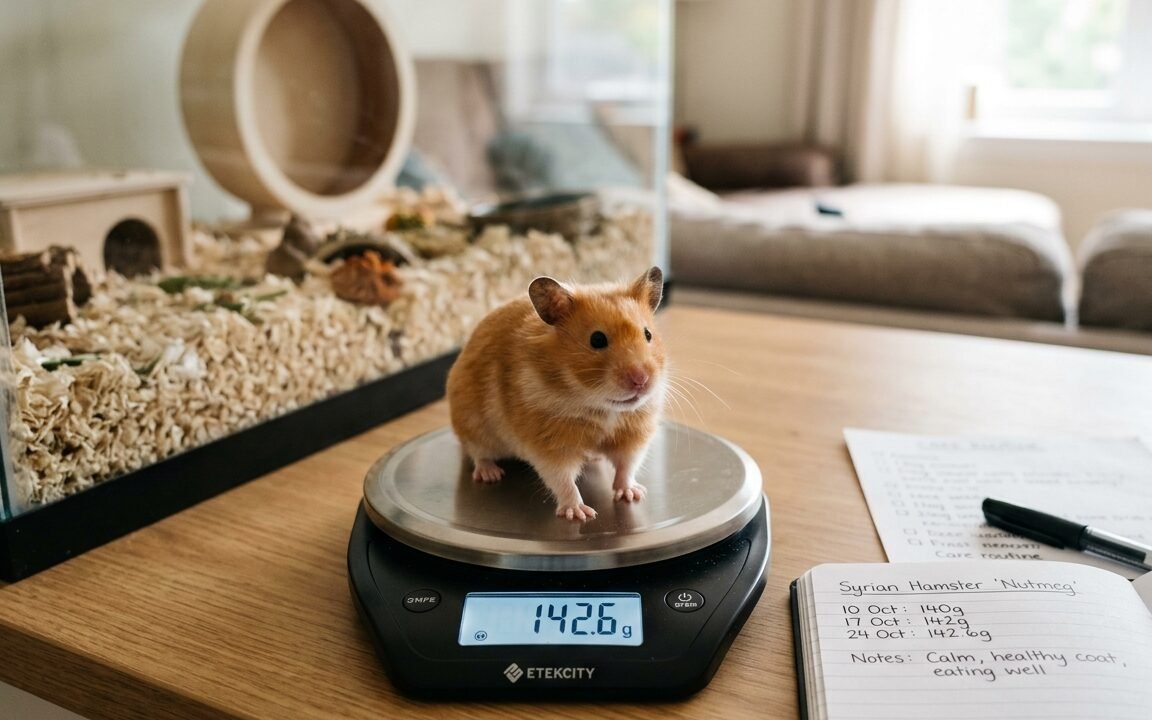
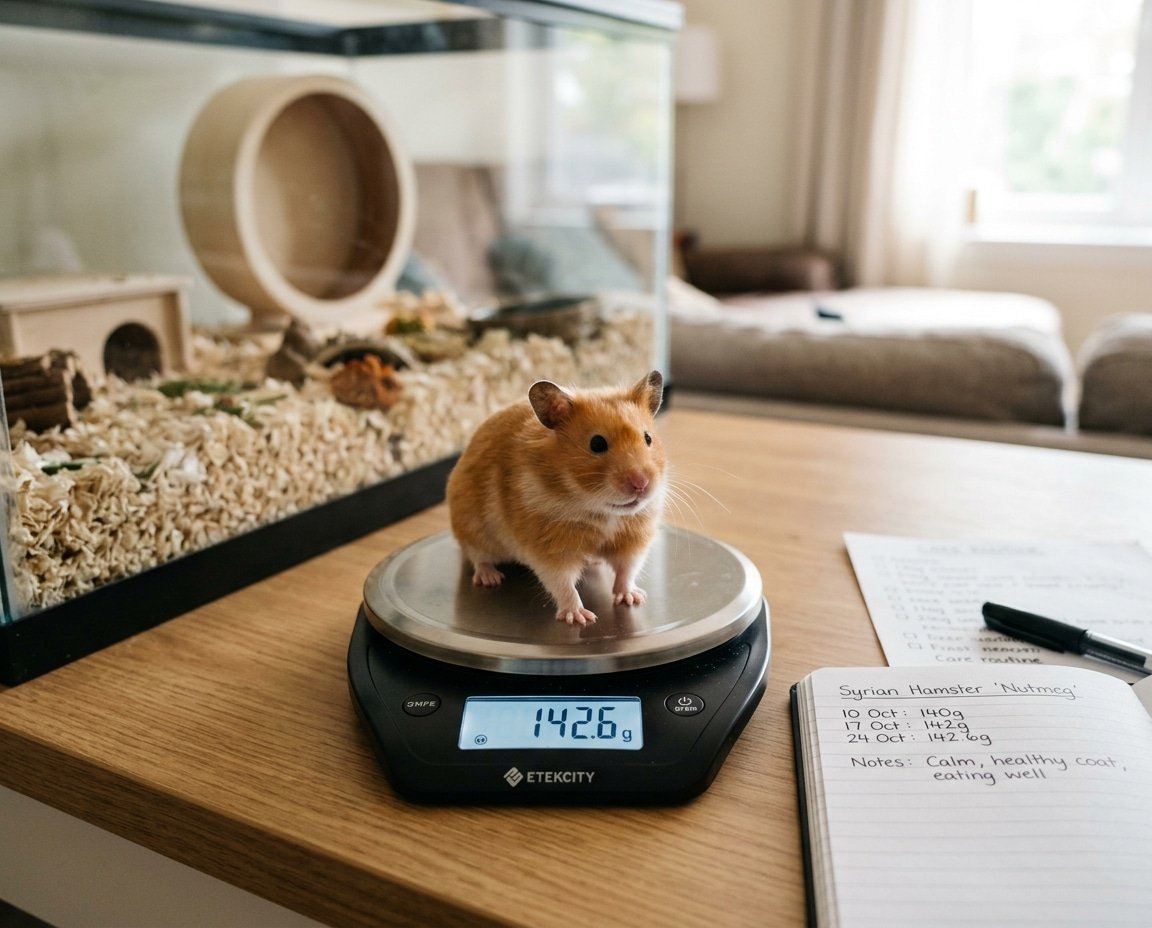
Hamsters can lose a noticeable proportion of their body weight before the change looks dramatic under the fur. A simple gram scale can therefore be one of the most useful monitoring tools in the home.
Merck includes weight loss among the early signs that a hamster may be sick. The number matters, but the trend matters more.
Use the same scale and roughly the same time
Place a small container on the scale, tare it to zero, then let the hamster step inside with a small familiar treat if needed. Record the number in grams.
Weighing at roughly the same point in the day reduces noise from food stores and recent drinking.
Do not overreact to one tiny fluctuation
A gram or two can vary with food, water and bowel contents. What deserves more attention is a repeated downward trend, especially when the hamster is also eating less or behaving differently.
Look at food intake and chewing
Weight loss can begin because less food is going in. Check whether the hamster is avoiding hard foods, dropping pieces, drooling or showing signs of dental discomfort.
If appetite has clearly fallen, see our hamster not eating guide.
Watch water and urine
In older hamsters, kidney and other systemic disease can cause weight loss along with increased thirst or a wetter enclosure. Merck notes that degenerative kidney disease can occur in older Syrian hamsters and may be associated with weight loss and increased drinking.
Diarrhea changes the urgency
Weight loss plus diarrhea or wet fur around the tail can indicate serious gastrointestinal disease. Young hamsters can deteriorate quickly. Our wet tail guide covers the emergency signs.
Check for lumps and abdominal change
A hamster can lose overall body condition while still having a visible swelling. Gently observe rather than repeatedly squeezing the abdomen. For new masses, see our hamster lumps guide.
Older age is not a diagnosis
Some older hamsters lose muscle and body condition, but a steady decline should still be evaluated rather than dismissed as inevitable aging.
Bring the weight record to the vet
A short list of dates and gram weights can help show whether the change was sudden or gradual. Add notes about appetite, droppings, drinking and activity if you have them.
Weight tracking is useful because it turns “I think my hamster looks thinner” into a measurable change. If the trend is downward and unexplained, that is enough reason to arrange veterinary assessment.
Build a baseline while the hamster is healthy
The most useful weight record starts before there is a problem. Weigh periodically under similar conditions and write the number down. Then a future drop is easier to distinguish from normal variation.
Use a container to reduce escape risk
Place a small familiar container on the scale, tare it to zero and let the hamster step inside. Keep the scale close to the floor or another secure surface so a sudden jump does not become a fall.
One gram does not mean the same thing in every hamster
A one-gram change is proportionally larger in a tiny dwarf hamster than in a large Syrian. That is why percentage change, trend and clinical signs matter more than one universal threshold.
Look at the speed of loss
A slow downward drift over several weeks and a sharp drop over two days are different patterns. Both can matter, but rapid loss generally deserves faster veterinary attention.
Appetite changes are only part of the story
Some hamsters lose weight because they are eating less. Others may have systemic disease that changes metabolism, hydration or muscle mass. Weight loss is therefore not automatically a diet problem.
Dental disease is easy to miss
Overgrown incisors, broken teeth or cheek-pouch problems can reduce effective intake even when the hamster still approaches food. Watch for drooling, food dropping or a preference for soft items.
Increased thirst plus weight loss is useful information
Merck notes that older Syrian hamsters with kidney disease may show weight loss and increased drinking. A noticeably wetter enclosure or bottle emptying faster than normal should be reported to the veterinarian.
Diarrhea can change weight quickly
Fluid loss and reduced intake can cause rapid decline. A wet rear, lethargy or diarrhea in a young hamster deserves prompt care rather than repeated home diet changes.
Respiratory disease can suppress appetite and activity
A hamster that is breathing hard may eat less because movement and chewing are tiring. If weight loss occurs with rapid or noisy breathing, use our hamster breathing guide and seek veterinary advice.
Lumps can coexist with overall weight loss
A visible mass can make one part of the body look larger while the rest of the hamster loses condition. Do not rely on appearance alone. Track weight and have new lumps assessed.
Older age should not end the investigation
Older hamsters may lose muscle, but progressive weight loss can also reflect disease. Age may change what treatment is appropriate; it should not be used to explain every decline without assessment.
Check food storage habits
A hamster may continue carrying food to the nest but eat less of it. When you clean the enclosure, note whether the cache is growing unusually large or whether hard foods are being left behind.
Do not try to “fatten up” an unexplained loss blindly
Adding large amounts of high-fat treats can unbalance the diet and may delay diagnosis. If the hamster needs extra calories, a veterinarian can advise based on the underlying cause.
Record other signs beside the weight
Useful notes include appetite, water intake, droppings, activity, breathing, coat condition and any swelling. A pattern across several signs is more informative than a number alone.
When weight loss is urgent
Seek prompt care when the drop is rapid, the hamster stops eating, diarrhea develops, breathing is difficult, the hamster becomes very weak or there is a new large swelling.
Bring the scale record to the appointment
Dates and gram weights help the veterinarian see the trajectory. If you changed scales, note that too because different household scales can read slightly differently.
Monitor recovery using the same method
After treatment starts, weigh under the same conditions. Stabilisation may be a good sign even before weight is regained. Continued loss despite treatment is a reason to contact the clinic again.
Weight tracking does not diagnose disease, but it turns a vague impression into objective information. In a small animal that can hide illness, that can be valuable enough to prompt care earlier.
Muscle loss can hide beneath a stable-looking coat
Long or dense fur can make a hamster look unchanged even while the body becomes thinner. When weighing, also notice whether the spine, hips or shoulders feel more prominent during normal gentle handling. Do not repeatedly squeeze the body to assess condition.
Hydration can affect the number on the scale
Dehydration may contribute to a sudden drop, while fluid retention can sometimes mask tissue loss. That is another reason the scale should be interpreted alongside drinking, urine, droppings and the veterinarian’s physical examination.
Use the same container and scale each time
Changing bowls or scales can create artificial differences that look like weight change. Keep the setup consistent and, if you replace the scale, overlap measurements for a few days if possible so you know whether the new device reads differently.


0 comments