What's in This Bird Guide
Tip: Click any section to jump directly there.
Save for reference or share with pet sitters
🔄 Updated: This guide was last reviewed on January 1, 2026 for accuracy.
I still remember the first time I saw an osprey in action. I was kayaking on a calm lake when a large, dark silhouette circled overhead, hovered with remarkable precision, then plunged feet-first into the water with a dramatic splash. Moments later, it emerged with a fish firmly in its grasp, a perfect demonstration of nature’s engineering. That experience sparked my fascination with these remarkable birds, and I’ve spent years studying and observing them across different habitats.
The osprey, known scientifically as Pandion haliaetus, is one of nature’s most specialized hunters. Often called “fish hawks” or “sea hawks,” these birds have carved out a unique niche in the raptor world. What sets them apart isn’t just their fishing skills—it’s their incredible adaptations, global reach, and inspiring conservation story that continues to captivate birdwatchers and scientists alike.
In this guide, I’ll share what I’ve learned from years of observation and research, combining scientific facts with personal insights from encounters with these magnificent birds. Whether you’re a seasoned birder or simply curious about nature’s wonders, you’ll discover why ospreys are considered masters of their aquatic domain.
Key Facts About the Osprey
| Feature | Details |
|---|---|
| Scientific Name | Pandion haliaetus |
| Common Names | Osprey, Sea Hawk, Fish Hawk |
| Primary Diet | Almost exclusively live fish |
| Wingspan | 150–180 cm (5–6 feet) |
| Lifespan | 15–20 years in the wild |
| Conservation Status | Least Concern (remarkable recovery) |
The Osprey’s Incredible Fishing Adaptations
What makes ospreys such successful fishers? Over millions of years, they’ve evolved specialized features that make them perfectly suited for their aquatic lifestyle. Watching them hunt is like watching a master angler at work—every aspect of their anatomy serves a purpose.
Specialized Features for Fishing Success:
- Reversible outer toes – Unlike other raptors, ospreys can pivot their outer toes backward, creating a unique grip with two toes in front and two behind. This gives them exceptional control when grasping slippery fish.
- Barbed foot pads – Tiny spines called spicules on the bottoms of their feet provide extra traction, helping them hold onto wriggling prey even while flying.
- Waterproof plumage – Their feathers are coated with special oils that repel water. This prevents them from becoming waterlogged after diving, allowing them to take off again immediately.
- Closing nostrils – Special flaps seal their nostrils shut during dives, preventing water from rushing into their respiratory system.
- Exceptional vision – Forward-facing eyes with excellent depth perception allow them to judge distances accurately, even when looking through water’s surface refraction.
From my observations at various lakes and coastal areas, ospreys typically dive from heights of 10-40 meters (30-130 feet). They hover briefly, adjusting their position with slight wing movements before plunging feet-first. Their success rate varies by location and conditions, but experienced adults can catch fish in about one out of every four attempts—impressive considering the challenges of catching live, moving prey in a dynamic environment.
The Cornell Lab of Ornithology notes that ospreys are the only North American raptor that eats almost exclusively live fish, making them unique among birds of prey.
Global Distribution: A Truly Worldwide Raptor
One of the most remarkable things about ospreys is their near-global distribution. I’ve seen them in North America, Europe, and Australia—each population adapted to its specific environment but sharing the same fundamental characteristics.
Where Ospreys Thrive:
- North America – Common along coasts, rivers, and lakes from Alaska to Florida
- Europe – Breeding populations in Scotland, Scandinavia, and increasingly across the continent
- Australia – Found along coastlines and major river systems
- Asia and Africa – Various populations in suitable aquatic habitats
What’s particularly interesting is their migration patterns. Ospreys breeding in colder regions undertake incredible journeys. Those nesting in Scotland, for example, fly over 3,000 miles to winter in West Africa. Juvenile ospreys make this journey alone, guided purely by instinct—a testament to their remarkable natural programming.
According to tracking studies cited by the Royal Society for the Protection of Birds, some ospreys follow precise migratory routes year after year, demonstrating incredible navigational abilities.
Nesting Habits: Loyalty and Long-Term Commitment
Osprey nesting behavior reveals another fascinating aspect of their lives: remarkable site fidelity and pair bonding. Through my observations and conversations with conservationists, I’ve learned that ospreys often return to the same nesting sites year after year, sometimes with the same mate.
Notable Nesting Behaviors:
- Site fidelity – Many ospreys return to the same nest site annually, adding to their nest each year until it becomes massive (some reach over 2 meters/6 feet across)
- Adaptable locations – While they naturally nest in dead trees or on cliffs, ospreys have adapted to use artificial platforms, utility poles, and other human-made structures
- Cooperative parenting – Both parents participate in nest building, incubation, and feeding of young
- Long-term use – Some nests are used for decades, passed down through generations
This adaptability has been crucial to their conservation success. In many areas where natural nesting sites were scarce, conservation organizations have installed artificial platforms that ospreys readily adopt. I’ve seen these platforms in action—simple structures that provide safe nesting sites away from predators and human disturbance.
The Osprey’s Inspiring Conservation Comeback
The osprey’s story is one of the great conservation successes of our time. In the mid-20th century, populations plummeted due to DDT pesticide use, which caused eggshell thinning and breeding failure. By the 1970s, ospreys had disappeared from many areas where they were once common.
But their recovery has been remarkable. Through DDT bans, habitat protection, and targeted conservation efforts, osprey populations have rebounded dramatically. Here’s what made the difference:
- DDT bans – The removal of this pesticide allowed eggshells to regain normal thickness
- Artificial nesting platforms – Provided safe breeding sites in areas where natural sites were limited
- Public education – Increased awareness led to better protection of nesting sites
- Legal protections – Laws like the Migratory Bird Treaty Act provided crucial safeguards
The National Audubon Society reports that osprey populations have increased by approximately 2.5% per year between 1966 and 2015 in North America—a significant recovery for a species that was once in serious decline.
Observing Ospreys: Tips from Experience
If you’re interested in observing ospreys yourself, here are some tips from my years of birdwatching:
- Timing is key – Early morning and late afternoon are often the best times to see ospreys fishing, as fish are more active near the surface
- Look near water – Focus on lakes, rivers, coastal areas, and reservoirs with healthy fish populations
- Listen for calls – Ospreys have distinctive, high-pitched, whistling calls that can alert you to their presence
- Watch for hovering – Their characteristic hovering behavior before diving makes them easier to spot than other raptors
- Respect distance – Use binoculars or a spotting scope to observe nests without disturbing the birds
Many wildlife refuges and nature centers have observation areas specifically designed for watching ospreys. These can be excellent places for beginners to see these birds in action without needing specialized equipment or knowledge.
Cultural Significance and Symbolism
Beyond their biological significance, ospreys have captured human imagination for centuries. Different cultures have attributed various meanings to these impressive birds:
- Native American traditions – Some tribes see ospreys as messengers between water and sky, symbols of vision and focus
- Fishing communities – Coastal peoples have long associated ospreys with fishing success and maritime life
- Modern symbolism – Today, ospreys often represent environmental resilience and successful conservation
Their dramatic fishing dives and impressive migrations make them powerful symbols of nature’s wonders—reminders of the incredible adaptations that enable life to thrive in diverse environments.
Why Ospreys Matter: Ecological Importance
Ospreys serve as important indicators of ecosystem health. Because they feed almost exclusively on fish and are sensitive to pollution and habitat quality, their presence (or absence) tells us important things about aquatic environments:
- Water quality indicators – Healthy osprey populations often indicate clean water with good fish stocks
- Habitat health – Their nesting success reflects the overall health of aquatic ecosystems
- Conservation flagships – Their dramatic recovery inspires broader conservation efforts
By protecting ospreys and their habitats, we’re also protecting the complex web of life that depends on healthy aquatic ecosystems—from microscopic organisms to the fish ospreys eat to the other wildlife that shares their environment.
Frequently Asked Questions
How can I tell an osprey from an eagle?
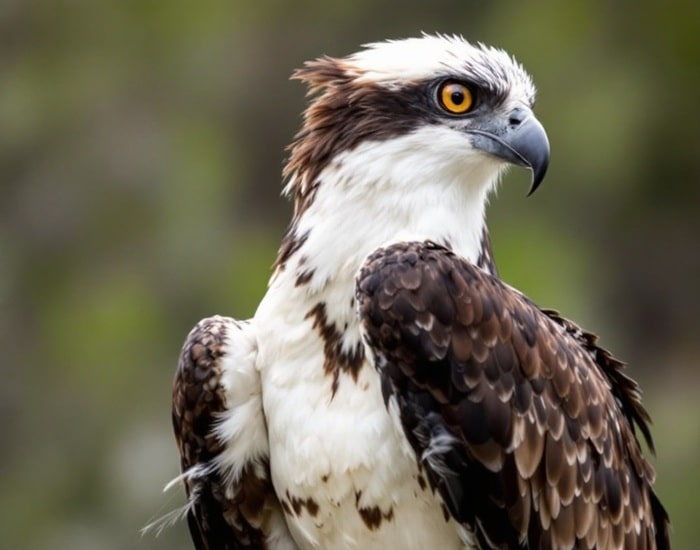
Ospreys are smaller than bald eagles, with a wingspan of 5-6 feet compared to eagles’ 6-8 feet. Ospreys have a distinctive dark eye stripe and mostly white underparts, while adult bald eagles have completely white heads and tails. Ospreys also hover before diving, while eagles typically don’t.
Do ospreys mate for life?
Ospreys often form long-term pair bonds and may mate with the same partner for many years, but they’re not necessarily “mates for life” in the absolute sense. If one member of a pair doesn’t return from migration, the other will find a new mate.
How can I help osprey conservation?
You can support ospreys by: 1) Supporting organizations that protect aquatic habitats, 2) Keeping waterways clean by reducing pollution, 3) Respecting nesting areas by maintaining distance during breeding season, and 4) Reporting nest disturbances to local wildlife authorities.
What time of year is best to see ospreys?
This depends on your location. In temperate regions, spring and summer (breeding season) are best. In migration corridors, look during the spring and fall migration periods. In warmer climates, they may be present year-round.
Why do ospreys sometimes drop their fish?
Ospreys occasionally drop fish if the fish is too heavy, if they’re attacked by other birds (like eagles trying to steal their catch), or if they need to adjust their grip during flight. This is a natural part of their fishing behavior.
Final Thoughts: Why Ospreys Capture Our Imagination
I’ll never forget the afternoon I spent watching an osprey family at a remote lake in Maine. For hours, I observed as the parents took turns fishing, delivering meals to their growing chicks, and fiercely defending their nest against intruders. As the sun set, painting the sky in oranges and purples, one of the adults perched on a dead pine tree overlooking the water—a silent sentinel against the fading light. In that moment, I understood why these birds have captivated humans for centuries.
Ospreys are more than just impressive birds; they’re living lessons in resilience. Think about it: they nearly vanished from many regions due to pesticide pollution, yet through dedicated conservation efforts, they’ve made one of the most remarkable comebacks in wildlife history. Their story gives me hope that when we commit to understanding and protecting nature, recovery is possible.
What I find most inspiring is how ospreys bridge different worlds. They’re creatures of both air and water, equally at home soaring over oceans as they are plunging beneath the surface. They migrate across continents yet return faithfully to the same nesting sites. They’re fierce hunters yet devoted parents. In many ways, they embody the balance and interconnectedness that characterize healthy ecosystems.
Whether you’re fortunate enough to witness an osprey’s dramatic dive firsthand or simply appreciate them through photos and stories, these birds remind us of nature’s incredible adaptability. They’ve survived ice ages, adapted to human-altered landscapes, and recovered from near-extinction—all while maintaining their essential nature as master fishers of the skies.
If you’re interested in learning more about how different bird species adapt to their environments, you might enjoy our exploration of how smaller birds like the ruddock have evolved different survival strategies. Each species has its own remarkable story of adaptation.
My advice to fellow nature lovers: Next time you find yourself near a lake, river, or coastline, pause for a moment. Look up. Scan the horizon. Listen for that distinctive high-pitched call. You might just be rewarded with a glimpse of one of nature’s most perfectly designed hunters—a reminder that wonder still exists in our increasingly busy world.
The osprey’s continued presence in our skies isn’t just a conservation success story—it’s an invitation. An invitation to pay attention, to appreciate, and to protect the wild spaces that make such moments of connection possible.