
PetMeds Dog Food: What the Retailer Sells and How to Evaluate It
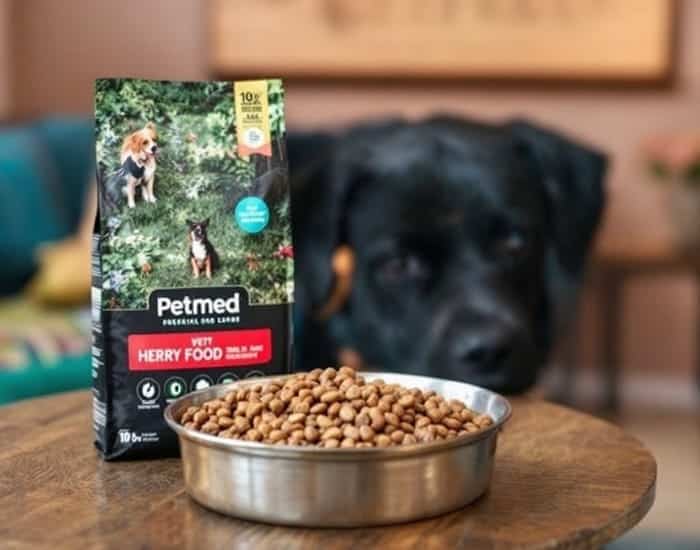
“PetMeds dog food” can sound like the name of a food brand, but that is misleading. PetMeds is a pet-health retailer and pharmacy that sells food from multiple manufacturers. The useful question is therefore not whether “PetMeds food” is good, but whether the specific product you are considering is nutritionally appropriate for your dog.
PetMeds is a retailer, not a single formula
PetMed Express describes PetMeds as a company that delivers medications, food, health services and other pet products directly to consumers. That means the nutrition, manufacturing and quality-control questions belong to the manufacturer of each individual food—not to the retailer name alone.
Start with the nutritional-adequacy statement
The AAFCO consumer guide recommends checking whether a food is complete and balanced for the intended species and life stage. A treat, topper or supplement is not nutritionally interchangeable with a complete diet.
Match the life stage
- Puppy: look for a growth or appropriate all-life-stages statement.
- Large-breed puppy: verify the food is suitable for growth of large-size dogs when applicable.
- Healthy adult: an adult-maintenance diet may be appropriate.
- Pregnancy/lactation: energy and nutrient needs are different again.
Compare calories, not just bag size
Two foods with similar package prices can have different calorie densities. Compare how many calories the dog needs per day and how much of each product supplies that amount. This is more useful than judging value by dollars per pound alone.
Ask who formulates the food
The WSAVA nutrition resources encourage owners to look at the company’s nutritional expertise, quality-control procedures, research, manufacturing information and ability to provide detailed nutrient data.
Retail ratings are not nutrition evidence
Star ratings and customer reviews may tell you whether people liked shipping, packaging or palatability. They do not prove nutritional adequacy, digestibility or medical suitability.
Check current safety information
Pet-food recalls and advisories can change after an article is published. For U.S. products, check the FDA’s current animal-food advisories rather than relying on an evergreen statement that a brand has “never been recalled.”
When a veterinary diet matters
Dogs with kidney disease, urinary disease, pancreatitis, food-responsive illness or another diagnosed condition may need a therapeutic diet. Do not substitute a retail formula simply because the front label sounds similar.
PetsFilled’s evaluation rule
We do not claim laboratory testing, feeding trials or veterinary endorsement unless that work is actually documented. For any food sold through PetMeds or another retailer, we evaluate the current label, nutritional adequacy, manufacturer transparency and the individual dog’s needs.
PetMeds is a retailer, not one food manufacturer
As of 2026, PetMeds lists dog foods from many manufacturers, including Acana, Blue Buffalo, Canidae, Diamond, Eukanuba, Farmina, Hill’s, Natural Balance, Nulo, Orijen, Purina, Royal Canin, Taste of the Wild and others. The quality, formulation team, manufacturing process and evidence base therefore differ from product to product. A review of “PetMeds dog food” should focus on how to evaluate foods sold through the retailer, not pretend PetMeds makes one unified formula.
Use filters as a shopping aid, not medical advice
Retail filters for puppy, senior, digestive care, weight management or other categories can narrow the catalog, but they do not diagnose the dog’s needs. A digestive-care label does not tell you why a dog has diarrhea, and a weight-management label does not determine an ideal calorie target.
Prescription diets need veterinary involvement
PetMeds sells veterinary diets alongside ordinary retail foods. Those products are designed for specific medical contexts and should not be swapped in because their description sounds healthier. The diagnosis, nutrient profile and monitoring plan matter.
Compare the exact manufacturer, not the storefront
If two foods are sold on the same PetMeds page, they may still differ substantially in formulation expertise, life-stage suitability, calorie density, feeding research and quality-control systems. Evaluate the company responsible for making the food.
Read the current label even when you reorder
Recipes, package sizes and feeding directions can change. A repeat purchase deserves the same quick label check, especially if the dog has a medical condition or previous food sensitivity.
Autoship convenience can hide over-ordering
Automatic delivery is useful when the dog’s intake is stable, but calorie needs can change with weight loss, growth, aging or reduced activity. Review the schedule and daily portion periodically instead of letting the same shipment cadence run indefinitely.
Price comparisons should use daily feeding cost
A higher-priced bag may last longer if the food is more calorie-dense, while a cheaper bag can cost more per day if larger portions are required. Compare calories per cup and the dog’s actual daily need.
Customer reviews are best for practical details
Reviews may reveal whether kibble size changed, whether packaging arrived damaged or whether a dog found the food palatable. They cannot establish that the diet is nutritionally superior or medically appropriate.
Check return and storage realities
Large bags may appear economical, but food quality can deteriorate if an opened bag is stored poorly for months. Buy a size that can be used within a reasonable period and store it in the original bag inside a clean sealed container when possible.
Current availability should not drive unnecessary switching
If a well-tolerated diet is temporarily out of stock, ask the veterinarian how closely a substitute needs to match, particularly for dogs on therapeutic or highly restricted diets. Rapidly rotating through unrelated foods can create new gastrointestinal problems.
Use the FDA and manufacturer for safety-sensitive questions
A retailer page can show what is for sale, but recalls and advisories are better checked through the FDA and the manufacturer responsible for the product. Keep the lot number if a safety concern arises.
PetMeds currently carries a wide food catalog
The retailer lists dozens of brands across dry food, puppy food, premium food and veterinary diets. That breadth is useful for shopping, but it reinforces why “PetMeds food” is not one nutritional category.
Filter labels can overlap
A food can appear under digestive care, premium, puppy or veterinary categories at the same time. Those retail categories are navigation tools rather than a nutritional hierarchy.
Compare manufacturers on the same questions
For each brand, ask who formulates the diet, what life stage it targets, whether it is complete and balanced, how quality control is handled, and whether the company can provide detailed nutrient information.
Use retail convenience without outsourcing judgment
Autoship, reviews and broad selection can make purchasing easier, but the owner still needs to verify the exact formula and whether it fits the individual dog.
Keep the product lot and manufacturer contact information after opening a new bag. If odor, texture, packaging or the dog’s response changes unexpectedly, you will have the details needed to report the issue accurately instead of relying on the retailer order history alone.
Separate shopping convenience from nutrition quality
A broad catalog, fast shipping or autoship can make PetMeds convenient, but those features do not make one listed food nutritionally better than another. The real comparison still happens at the formula, manufacturer and dog level.
Keep the final choice tied to the individual dog’s life stage, calorie needs, medical history and tolerance rather than to retailer ranking or popularity.
For a retailer-neutral framework, see our dog food safety and label guide. If you are comparing one current manufacturer specifically, our Natural Balance review shows how to separate company claims from independently verifiable facts.



0 comments