
Calming Aids for Dogs: What May Help and What Evidence Is Limited
Owners searching for “natural remedies” for dog anxiety are often looking for something safe they can try without immediately using prescription medication. Some non-drug aids are reasonable adjuncts, but none should be presented as a guaranteed treatment for panic, separation anxiety, pain or severe phobias.
Start by identifying the trigger
A dog afraid of fireworks needs a different plan from a dog panicking when left alone or a senior dog pacing because of pain or cognitive change. Record when the behavior happens, what occurs immediately beforehand and how long recovery takes.
Pheromone products
Dog-appeasing pheromone products are marketed as environmental calming aids. Evidence is mixed across settings, so treat them as a low-pressure adjunct rather than a standalone cure.
Music and background sound
Some kennel studies have found behavioral changes consistent with relaxation during certain music exposure, but results are not universal. Our dog and music evidence review explains the limits of those studies.
Pressure garments
Some dogs appear more settled in a well-fitted pressure wrap; others dislike wearing one. Introduce it before a stressful event and stop if the dog freezes, struggles or shows increased distress.
Supplements
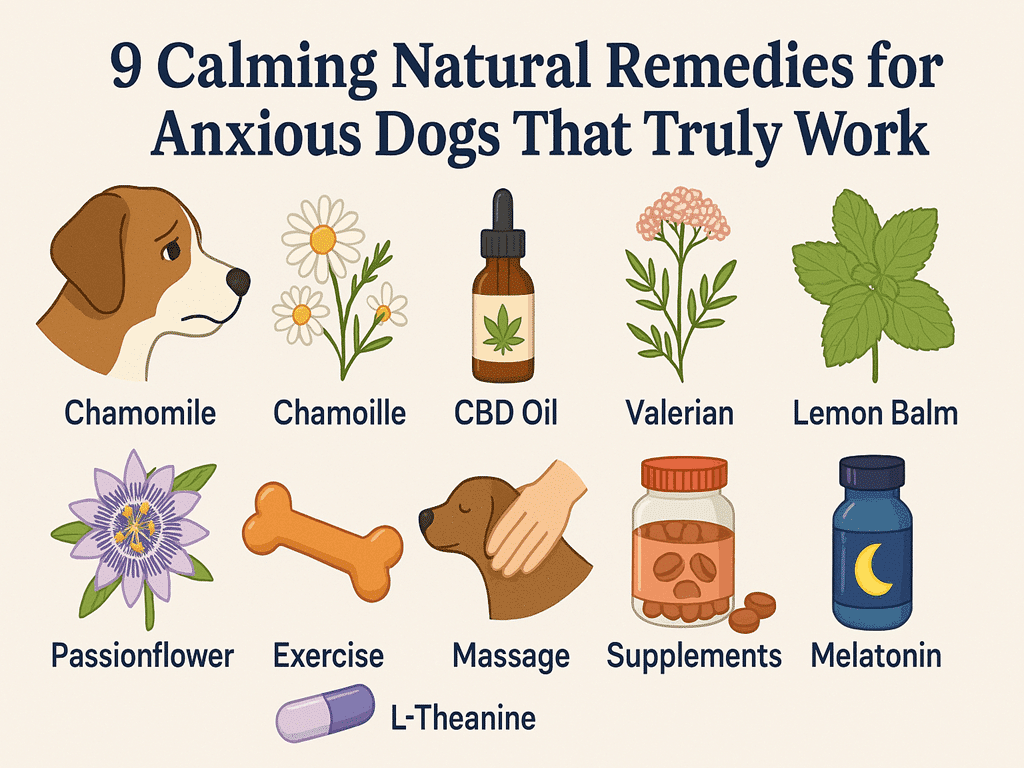
Products containing ingredients such as L-theanine, alpha-casozepine or other calming compounds vary in evidence and quality. “Natural” does not mean interaction-free. Tell your veterinarian about every supplement, especially if the dog takes other medication.
Exercise and sniffing
Appropriate movement and sniffing can support general wellbeing, but trying to exhaust a fearful dog is not anxiety treatment. Some anxious dogs need more rest and lower environmental intensity, not harder exercise.
Safe retreat
A familiar quiet room, covered resting area or open crate can help during predictable noise events if the dog already chooses that location. Do not shut a panicking dog into an unfamiliar confined space.
Reward-based behavior work
The American Veterinary Society of Animal Behavior supports reward-based training. Gradual exposure at a tolerable intensity can help with specific triggers; flooding the dog at full intensity can worsen fear.
When medication belongs in the conversation
A dog with severe distress may benefit from prescription situational or daily medication alongside behavior modification. That is not a failure of “natural” care. Our dog anxiety medication guide explains the veterinary role.
This article focuses on adjunctive calming aids. For diagnosis, trigger logging and a complete treatment framework, use our main dog anxiety guide.



0 comments