
Osprey Nesting Platforms: When They Help and How Conservation Works

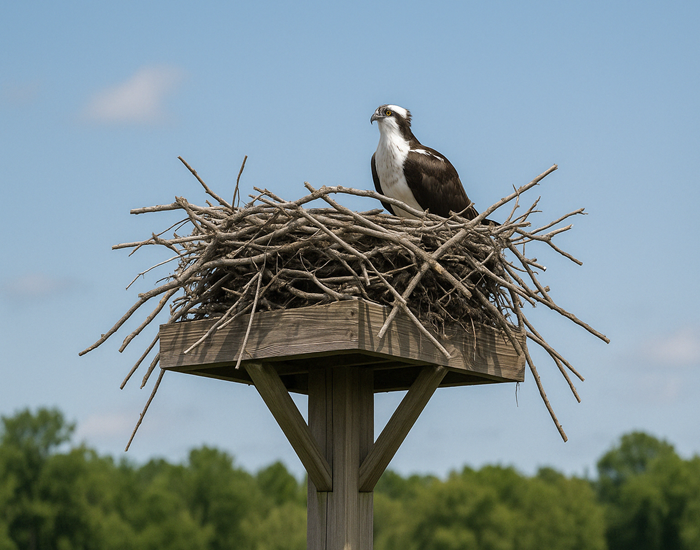
Artificial nesting platforms can be valuable for ospreys, but the conservation benefit comes from where and how they are used, not from putting a pole beside any body of water. Ospreys naturally favor open, elevated nest sites near dependable fish habitat, which is why well-placed platforms can work so well.
Why platforms became important
Ospreys readily nest on human structures, including utility poles, channel markers and purpose-built platforms. The Cornell Lab notes that artificial platforms became an important part of recovery in areas where natural nesting sites had declined or populations had disappeared.
A platform needs the right surroundings
Useful sites are generally open, elevated, relatively secure from ground predators and close enough to productive fishing water. A platform placed far from suitable prey or in a heavily disturbed location may add little value.
Utility poles create a special problem
Ospreys may choose electrical infrastructure because it offers height and open approach paths. That can create electrocution, outage and fire risk. Platform relocation projects should therefore involve utility companies or wildlife professionals rather than improvised structures near power lines.
Platforms need maintenance
Large stick nests can become very heavy over successive seasons. Loose hardware, rotting wood or unstable poles can become hazards. Periodic inspection should happen outside sensitive nesting periods and follow local wildlife rules.
Fishing line and plastic can become deadly nest material
Cornell specifically notes entanglement from baling twine and discarded plastic line as a modern osprey hazard. Conservation around a nesting site should include removing fishing line and litter from surrounding shorelines—not just maintaining the platform itself.
Do not approach an active nest
Ospreys can tolerate human landscapes, but tolerance is not permission to climb or work near an occupied nest. Follow local wildlife laws and consult the responsible land manager before any maintenance.
Platforms are one tool, not the whole recovery story
The rebound of ospreys in many regions also reflects reduced exposure to persistent pesticides such as DDT and improved legal protection. Platforms helped replace nesting opportunities; they did not solve every ecological problem.
If you are seeing birds arrive seasonally at a platform, our osprey migration guide explains when adults and juveniles move. For feeding ecology, see why fish dominate the osprey diet.
0 comments