
Osprey Diet: Why Fish Dominate and How Ospreys Catch Them
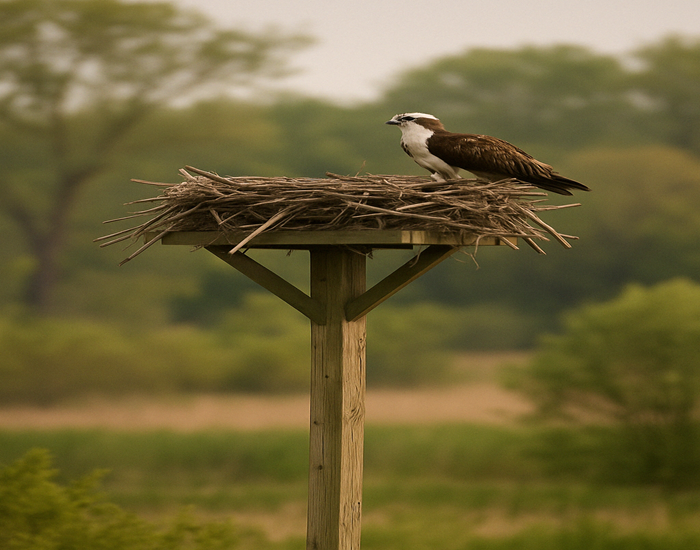
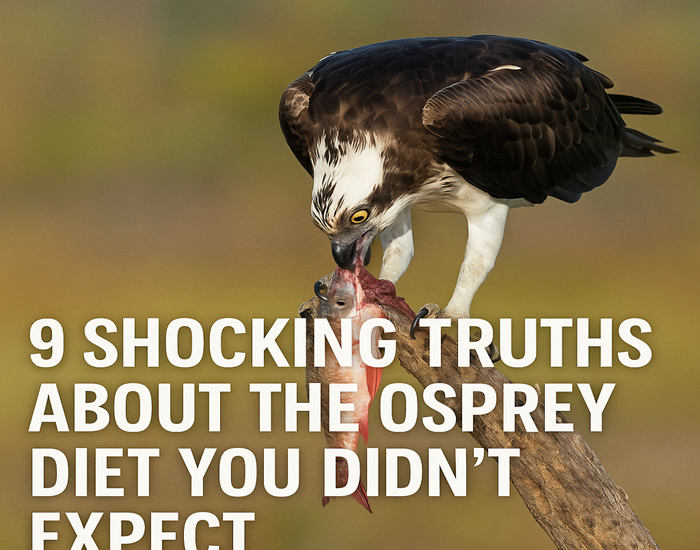
Fish are not just one item on an osprey’s menu—they are the reason the bird’s anatomy and hunting behavior look the way they do. In North America, the Cornell Lab reports that live fish make up about 99% of the osprey diet, with other prey recorded only rarely.
What kinds of fish do ospreys eat?
Ospreys are opportunistic within the fish niche. They take species that are available near the surface and small enough to carry. Freshwater and saltwater fish can both be used, depending on whether the bird is hunting over a lake, reservoir, river, estuary or coast.
Why they hunt near the surface
Ospreys plunge feet-first but do not pursue fish deep underwater like diving seabirds. Cornell notes that they generally hunt fish accessible within the upper portion of the water column. Clearer water and surface-schooling fish can therefore improve hunting opportunities.
Built for gripping slippery prey
Several features help an osprey handle fish: strong curved talons, rough gripping surfaces on the feet, and a reversible outer toe that allows a two-forward/two-back grip. After capture, an osprey often rotates the fish to face forward in flight, reducing drag.
Do ospreys ever eat something else?
Rare records include birds, snakes, small mammals, amphibians or carrion, but those exceptions should not be presented as a normal mixed diet. Ospreys are far more specialized on fish than most other raptors.
What determines hunting success?
Water clarity, fish depth, wind, wave conditions and the bird’s experience can all matter. An osprey may circle, hover briefly or hunt from a perch before committing to a dive.
Food supply affects breeding
Nesting habitat needs more than a tall pole or tree. A successful territory also requires accessible fish within practical commuting distance. That is why our nest-platform guide treats surrounding habitat as part of the conservation equation.
Watching feeding behavior
Look from a distance near open water rather than approaching nests. A bird repeatedly carrying fish in one direction during breeding season may be provisioning a mate or chicks.
For the broader species picture—identification, range and behavior—see our osprey natural-history guide.
0 comments