
Ragdoll Cat Breed Guide: Temperament, Grooming, Health and Fit
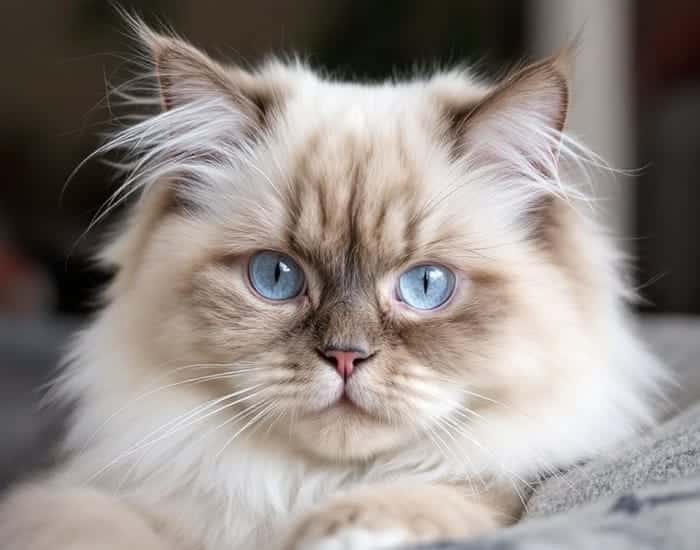
The Ragdoll is a large, blue-eyed, semi-longhaired cat developed in California in the 1960s. Breed organizations commonly describe Ragdolls as affectionate and relatively easy-going, but individual cats still vary in confidence, activity, sociability and tolerance of handling.

Size and maturity
Ragdolls are among the larger recognised cat breeds. TICA lists adult females at roughly 10–15 pounds and males around 15–20 pounds, while both TICA and CFA describe the breed as slow to mature. Full adult size may take several years.
That does not mean a large Ragdoll should look round or heavily padded. Use body condition rather than breed size alone. You should be able to feel the ribs beneath a light covering and see some waist definition. Ask your veterinarian to show you what a healthy body condition feels like on a large-framed cat.
Coat color can also continue developing as the cat matures. Keep dated weight records alongside body-condition observations so a naturally large frame does not conceal gradual fat gain. The breed ranges describe typical adults; they are not target weights for every individual cat.
Temperament
Many Ragdolls are sociable and enjoy being near people, but the breed name should not create an expectation that every cat likes being carried or will “go limp.” Respect the individual cat’s body language and allow it to leave interactions.
Grooming
The semi-long coat benefits from regular combing to remove loose hair and tangles. Check behind the legs, around the neck and along the belly, where mats may be less obvious. Nail care and dental care are also part of routine maintenance.
Play and enrichment
Ragdolls still need daily opportunities to chase, climb, scratch and solve simple food or play problems. A calm adult cat can become overweight if activity and food intake are not balanced.
Health considerations
The Cat Fanciers’ Association notes that hypertrophic cardiomyopathy has been identified in the breed. If buying from a breeder, ask what health screening is performed and request documentation rather than relying on broad claims such as “health guaranteed.”
Are Ragdolls hypoallergenic?
No. All cats produce allergens. If allergy is a concern, read our Ragdoll allergy guide before adopting.
Indoor versus outdoor life
Any cat allowed to roam freely faces traffic, disease, parasite and injury risks. Enclosed outdoor access or a secure catio can provide stimulation with fewer uncontrolled hazards. See our outdoor-safety guide.
Is a Ragdoll right for you?
Consider grooming time, veterinary costs, indoor space, allergy risk, other pets and whether you want a cat that is often socially engaged with the household. Choose the individual animal, not just the breed description.
Temperament is a tendency, not a guarantee
Ragdolls are widely described as affectionate, sociable and relatively calm, but those are breed tendencies rather than a personality contract. CFA specifically notes that the famous “go limp when held” reputation is not typical of every modern Ragdoll.
One Ragdoll may enjoy laps and carrying; another may prefer sitting beside people. Respecting the individual cat’s signals is more useful than trying to make the cat conform to the breed name.
Activity and play
Calm does not mean inactive. TICA notes that Ragdolls still enjoy play, scratching furniture designed for cats, toys and interaction. Daily movement is important because a large, food-motivated indoor cat can gain weight gradually without the change being obvious under a plush coat.
Use wand play, balls, food puzzles, climbing opportunities and short hunting-style games. If the cat becomes less active because of pain, age or illness, adjust food portions rather than assuming the previous amount will always remain appropriate.
Grooming the semi-long coat
Ragdolls have a semi-long coat that generally needs regular combing. TICA and CFA both recommend routine combing, especially during seasonal shedding. Pay particular attention under the front legs, around the belly and other high-friction areas where tangles can form.
Do not rely only on brushing over the surface. Run a comb through the coat to the level of the undercoat without pulling the skin. If a mat is tight against the skin, avoid household scissors and use professional help where needed.
Weight management deserves special attention
CFA specifically warns that Ragdolls can be prone to excess weight gain. The combination of a naturally large frame, dense coat and calm temperament can make slow weight gain easy to miss.
Measure food, count treats and reassess portions when activity changes. A high number on the scale is not automatically obesity in a Ragdoll, but neither should breed size be used to explain away excess body fat.
HCM is the main inherited health issue to ask breeders about
Hypertrophic cardiomyopathy (HCM) is a disease in which the heart muscle becomes abnormally thick. Both TICA and CFA identify HCM as an inherited concern in Ragdolls.
TICA notes that a DNA test exists for a known Ragdoll-associated HCM mutation. A DNA result is useful information, but it is not the same as a lifetime guarantee that a cat will never develop heart disease. Ask breeders what testing they perform, which cats are tested, and how results influence breeding decisions.
Do not accept vague “health tested” claims
Ask for actual documentation. A responsible breeder should be able to explain the difference between routine veterinary examination, genetic testing and other health screening. “Vet checked” and “health guaranteed” are not substitutes for knowing which conditions were screened and what the results were.
Feeding a Ragdoll
Choose a complete and balanced cat food appropriate for life stage and health status. Ragdolls do not require a special diet simply because of breed name.
Calories per cup or can matter more than package claims. Measure portions and monitor weight trend and body condition. If the cat is gaining weight despite normal portions, review treats, activity and total calories before switching diets randomly.
Water and urinary habits
Fresh water should always be available. Some cats prefer multiple bowls or fountains. A sudden increase in thirst, larger urine clumps, straining or reduced urination is health information rather than a breed quirk and should be investigated.
Indoor life and outdoor access
Ragdolls can enjoy a rich indoor life when the home provides climbing, scratching, hiding and play. If outdoor access is important to you, enclosed or supervised options reduce some of the uncontrolled risks of traffic, fights, toxins, parasites and becoming lost.
Our Ragdoll outdoor-safety guide covers that decision separately so this breed page can stay focused on overall fit and care.
Allergies and the “hypoallergenic” myth
Ragdolls are not hypoallergenic. Cat allergens are produced in saliva and skin secretions and are carried on fur and dander. Coat length does not make a breed allergy-free.
If allergy is a serious household concern, use our Ragdoll allergy guide before adopting and consider speaking with an allergist.
If you are still comparing breeds rather than evaluating a Ragdoll specifically, use the How to Choose a Cat Breed guide to compare temperament, coat care, health and household fit across breeds.
Questions to ask before choosing a Ragdoll
- Can I manage weekly grooming and seasonal coat care?
- Can I monitor body condition carefully in a large-framed cat?
- What HCM testing has been performed on the parents?
- Am I comfortable with a cat that may be social without necessarily liking constant carrying?
- Can I provide daily play and enrichment?
- Can I afford routine veterinary care, dental care and emergency treatment?
0 comments