
Eurasian Magpie (Pica pica): Identification, Behavior and Intelligence
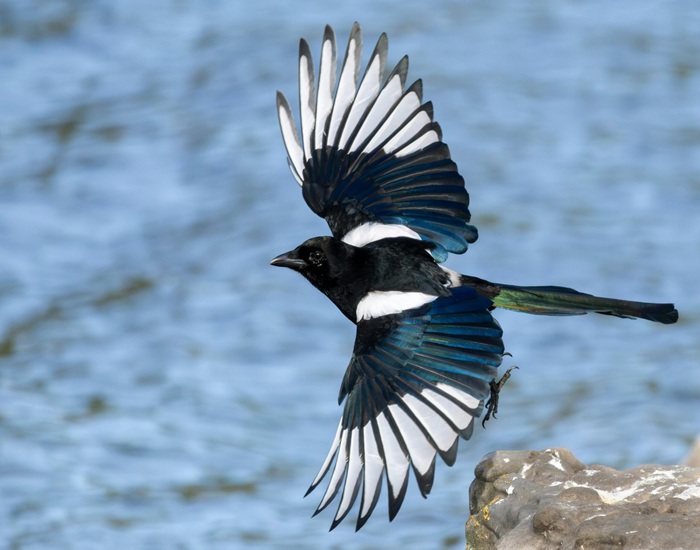
The Eurasian Magpie (Pica pica) is instantly recognizable in much of Europe: long tail, black-and-white body and glossy feathers that can flash blue, green and purple in good light. Its reputation, however, is often more dramatic than its actual behavior.
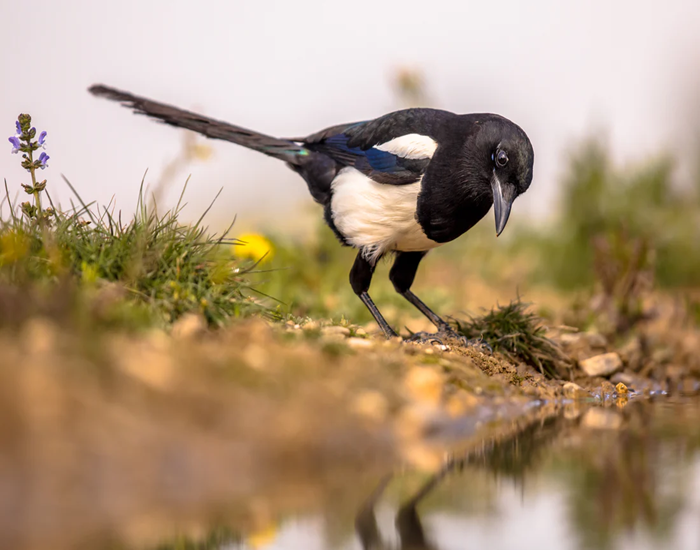
Identification
The RSPB describes Magpies as black-and-white corvids with a long tail and iridescent wing and tail feathers. Their loud chattering call is often heard before the bird is noticed.
What do Magpies eat?
They are omnivores and scavengers. Insects, seeds, fruit, carrion, scraps, eggs and small animals can all be used. That broad diet is one reason Magpies do well in farmland, parks and urban areas.
Do Magpies really steal shiny objects?
The popular image of a Magpie compulsively stealing jewelry is exaggerated. Individual birds investigate novel objects, but “shiny-object theft” should not be treated as a defining biological trait.
How intelligent are they?
Corvid cognition is an active research area. A well-known 2008 experiment published in PLOS Biology reported mark-directed behavior in some Eurasian Magpies exposed to mirrors, which the authors interpreted as evidence consistent with mirror self-recognition. That finding is interesting, but one experiment should not be inflated into the claim that Magpies think exactly like humans.
Social behavior
Breeding pairs defend territories, while non-breeding birds may form larger gatherings. Calls can serve alarm, contact and territorial functions depending on context.
Nesting
Magpie nests are large stick structures, often with a roof-like dome. They can appear conspicuous before leaves fully emerge in spring.
Are Magpies harmful to songbirds?
Magpies can take eggs and nestlings, but predation is one part of a much larger ecological picture. Habitat quality, weather, food availability and many predator species influence songbird populations. A single garden observation should not be turned into a population-level conclusion.
Why the plumage looks more colorful than “black and white”
The dark areas of a Magpie can reflect blue, green and purple depending on light. Those iridescent colors are easier to see at close range or in sunlight and can disappear entirely under flat gray skies.
The long tail changes flight style
Magpies often look buoyant and slightly uneven in flight because the long tail contributes strongly to steering. On the ground, the tail also makes the bird look much larger than its body alone.
Territory and group behavior vary through the year
Breeding pairs may be strongly territorial, while non-breeding birds can gather in larger social groups. Winter gatherings and communal activity should not be mistaken for the behavior of a nesting pair in spring.
Food caching
Magpies may hide food for later use. Caching demands memory of place and timing, but it should not be exaggerated into claims that the bird is planning months ahead in the same way a person would.
Alarm behavior can reveal predators
Repeated harsh calls and close attention to one tree or hedge can signal the presence of a cat, raptor or other threat. Other birds may respond too, creating a mixed-species mobbing event.
Young Magpies look less polished
Juveniles can show shorter tails, duller feather quality and clumsier movement. They may remain near adults while learning to forage. A young bird on the ground is not automatically abandoned.
Why nest predation is easy to overinterpret
Watching a Magpie take one egg is emotionally memorable, but population ecology is measured across many nests and many causes of failure. Weather, habitat, food, cats, squirrels and other predators can all contribute.
Urban success does not mean the species is “taking over” everywhere
Magpies do well in many human-modified landscapes, but local visibility and national population trend are different questions. A species can be common in one suburb and less abundant elsewhere.
How to observe intelligence without setting traps
Watch natural foraging, object handling and social interactions rather than deliberately creating dangerous puzzles or food conflicts. The most useful observations are the ones that leave behavior unchanged.
Keep cultural reputation separate from biology
Magpies appear in folklore as thieves, omens and tricksters. Those stories are culturally important, but they should not be presented as evidence that the species has a fixed moral personality.
Magpies can recognize regular human routines
Birds living around gardens and parks learn when people are likely to leave food, walk dogs or disturb nesting areas. That learning can make them appear unusually attentive to specific households.
Roadside feeding creates danger
Carrion and discarded food can draw Magpies onto roads. Their opportunism helps them exploit human environments, but traffic remains a major hazard.
Pairs cooperate around nesting
Both adults contribute to breeding activities, and pair coordination becomes especially visible when one bird alarms while the other remains near the nest.
Season changes how visible groups are
Non-breeding gatherings can be conspicuous in winter, while territorial pairs dominate spring observations. Social behavior therefore looks different depending on the month.
Garden management can reduce conflict
Secure food waste, protect vulnerable nest boxes appropriately and avoid leaving large amounts of pet food outdoors. Removing attractants is more effective than treating Magpies as inherently troublesome.
Magpies use both ground and tree canopy
They forage on lawns, roadsides and fields but also move confidently through shrubs and trees. That vertical flexibility helps them exploit urban and farmland habitats.
Food storage is usually short-term and opportunistic
A bird may hide surplus food and return later, especially when resources are abundant. The behavior is useful without needing to be described as long-range planning.
Nest structure can be conspicuous in winter
Large domed stick nests are easiest to notice before leaves emerge. Old nests may remain visible even when they are no longer occupied.
Human conflict often starts with food availability
Unsecured rubbish, pet food and feeding stations can attract Magpies repeatedly. Changing those resources is more effective than blaming the bird for taking advantage of them.
Intelligence does not make conflict inevitable
Smart, adaptable birds can learn to exploit human resources, but they can also learn when a site stops providing food. Secure waste and remove repeated rewards rather than escalating conflict.
Observation across seasons changes the picture
A winter gathering, a spring pair and a family group in summer can all involve the same local population. Seasonal context prevents misleading generalizations about “how Magpies behave.”
Calls carry social information
Different vocalizations occur in alarm, contact and aggressive contexts. Learning the broad differences can make field observation much more informative than watching plumage alone.
Human attitudes shape conflict more than biology alone
Magpies are often judged through folklore before behavior is observed. Starting with what the bird is actually doing—feeding, nesting, alarming or scavenging—produces a more accurate picture.
Context, season and local food availability explain much of the variation people notice in Magpie behavior from one place to another, including differences in group size, feeding, nesting, vigilance, territoriality and boldness across the year and between local habitats, gardens, farmland and urban spaces in different seasons, weather conditions and stages of the breeding cycle over time in real populations and local habitats each year.
When judging Magpie behavior, separate what you actually observed from what folklore led you to expect. That simple habit produces a much more accurate understanding of the bird.
For another adaptable corvid that looks completely different, see our Carrion Crow guide.
0 comments