Save for reference or share with pet sitters
What’s in This Dog Guide
Tip: Click any section to jump directly there.
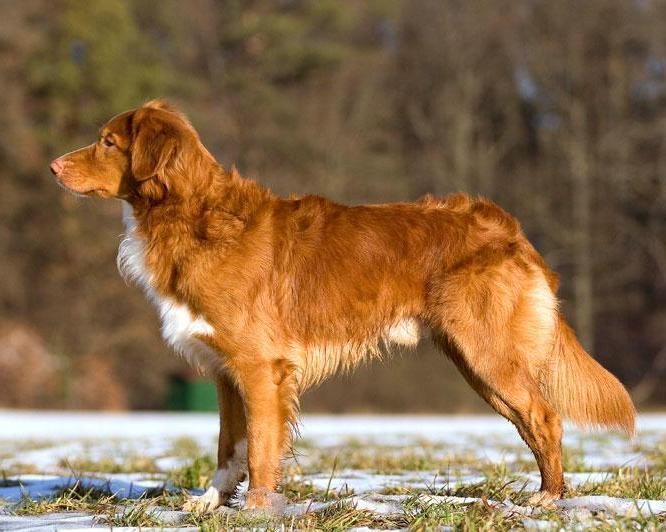
The Nova Scotia Duck Tolling Retriever: Nova Scotia Duck Tolling Retriever Ultimate Guide to the “Toller” – The definitive Nova Scotia Duck Tolling Retriever guide. Uncover 5 critical truths about their intense energy, unique “scream,” and demanding care needs. Expert advice on health, training, and whether this brilliant “decoy dog” is right for you.
The Nova Scotia Duck Tolling Retriever
The “Little Red Decoy Dog” – Canada’s Cleverest Canine Athlete
🚨 Critical Alert: Is a Toller Right For You?
Prone to Separation Anxiety
They are true “velcro dogs.” Leaving them alone for 4+ hours regularly can trigger destructive behaviors and distress.
Demands a “Job”
Bred to work, they need a purpose. Without a structured outlet (sports, advanced training), they will invent their own (destructive) jobs.
The “Toller Scream”
A unique, high-pitched vocalization of excitement. Not for noise-sensitive households or apartment living without serious training.
Specific Genetic Health Risks
Prospective owners must verify parental health screenings for PRA, Addison’s, and hip dysplasia with breeders.
📊 Breed Overview & Key Statistics
👨⚕️ Professional Insight from a Canine Behaviorist
“The Toller is a masterclass in canine intelligence and drive, but it is not a beginner’s dog. In practice, I often see them develop neurotic behaviors like shadow chasing or obsessive barking when under-stimulated. Their unique ‘tolling’ heritage means they are programmed for intense, interactive play—not passive companionship. The most successful Toller households treat them like canine athletes: with scheduled training, structured play, and clear off-switch conditioning. For foundational techniques, our guide on how to train a dog is essential reading before bringing one home.”
— Michael Torres, Certified Professional Dog Trainer-KSA, Behavior Consultant
🎯 The Toller Temperament: Beyond “Energetic & Smart”
🚫 COMMON MISCONCEPTIONS
- “Just a small Golden Retriever” – FALSE. Their drive, vocalization, and independence levels are vastly different.
- “They’ll entertain themselves” – FALSE. A bored Toller is a destructive Toller. They require directed interaction.
- “Good for first-time active owners”</strong –> RISKY. Their sensitivity and intelligence can overwhelm novices. Experience with high-drive breeds is a major advantage.
- “The scream is just excited barking” – UNDERSTATED. It’s a distinctive, piercing vocalization that requires dedicated training to manage.
✅ TEMPERAMENT REALITIES
- Extremely handler-sensitive – They tune into your emotions. Anger/frustration during training shuts them down.
- Inventive & problem-solving – Will figure out puzzles, latches, and how to get what they want.
- Possessive drive – High love for toys/fetch. It can lead to resource guarding if not properly managed.
- Selectively social – Often reserved with strange dogs vs. universally friendly. Early, positive socialization is critical.
- “Off-switch” must be trained – They won’t naturally settle after exercise without being taught the skill.
🏥 Genetic Health: The Non-Negotiable Screening Checklist
🧬 Mandatory Health Tests for Reputable Breeders
According to the Orthopedic Foundation for Animals (OFA) and the NSDTR Club (USA), every breeding dog should have clearances for:
1. PRA (Progressive Retinal Atrophy)
DNA test (Optigen). A degenerative eye disease causing blindness. Carrier-to-carrier breedings should be avoided.
2. Hip Dysplasia
OFA or PennHIP evaluation. X-rays scored by specialists to ensure healthy joint formation.
3. Addison’s Disease
No definitive pre-breeding test exists, but knowing family history is crucial. An endocrine disorder that is serious and manageable with lifelong medication.
📈 Lifetime Health Management & Costs
| Stage | Key Health Focus | Estimated Annual Cost |
|---|---|---|
| Puppy (0-1 yr) | Vaccinations, spay/neuter, initial hip x-rays | $1,200 – $2,000 |
| Adult (2-7 yrs) | Annual wellness, joint supplements, dental care | $800 – $1,500 |
| Senior (8+ yrs) | Bi-annual bloodwork, advanced imaging, arthritis management | $1,500 – $3,000+ |
Total Lifetime Estimate (12-14 years): $18,000 – $35,000+. This underscores the importance of both understanding pet costs and purchasing from health-tested lines to avoid major genetic expenses.
⚙️ The Toller “Job Description”: Exercise & Mental Work
✅ THE IDEAL DAILY ROUTINE (Minimum)
Meeting a Toller’s needs is about quality and variety, not just duration.
30-45 min: High-Intensity Cardio
Running, hiking, swimming, or intense fetch. Gets the heart rate up.
20-30 min: Dedicated Mental Work
Training new skills, nose work, puzzle toys. Tires their brain.
15-20 min: Structured Play
Rules-based fetch, flirt pole, and retrieving drills. Channels drive.
Enforced “Off-Switch” Time
Calm settling in a crate or on a mat after activity. A trained skill.
Consequences of an Inadequate Routine: Destructive chewing, obsessive behaviors (licking, spinning), nuisance barking, hyperactivity indoors, and attempts to escape. This is a primary cause of Tollers being surrendered to breed-specific rescues.
🚫 ACTIVITIES TO AVOID OR MANAGE
- Unstructured Dog Park Visits: Their selective social style and high arousal can lead to conflicts. Use controlled playdates instead.
- Exercise Right After Meals: As a deep-chested breed, they are at risk for bloat (GDV). Wait 60-90 minutes after eating for vigorous activity.
- Repetitive, Unsupervised Fetch: Can escalate obsessive behavior and cause joint stress. Keep sessions short and intermix commands.
- Punishment-Based Training: Their sensitivity means they shut down. Use positive reinforcement exclusively. Our training guide covers effective methods.
The Final Verdict: Is a Toller Your Canine Soulmate?
👍 THE IDEAL TULLER OWNER
- Experienced with high-drive sporting/herding breeds
- An athlete or outdoor enthusiast (runner, hiker, swimmer)
- Involved in dog sports (agility, obedience, rally, dock diving)
- Works from home or has a flexible schedule
- Values canine intelligence over easy companionship
- Has a securely fenced yard and lives near water/trails
- Committed to a 12-14 year lifestyle partnership
👎 A TULLER IS LIKELY A MISMATCH IF YOU…
- Want a low-energy, “Netflix and chill” companion
- Are away from home 8+ hours a day
- Live in an apartment without a detailed activity plan
- Are a first-time dog owner (exceptions are rare)
- Have cats, rabbits, or other small pets
- Are noise-sensitive or have close neighbors
- Seek a naturally calm dog like a Lhasa Apso
The Nova Scotia Duck Tolling Retriever is a masterpiece of canine specialization—a brilliant, energetic, and deeply affectionate partner for the right person. They are a lifetime commitment to activity, engagement, and partnership.
Next Steps: If you’re still interested, contact the Nova Scotia Duck Tolling Retriever Club (USA) for a list of reputable breeders who perform all health testing. Attend a dog sport event to meet Tollers in action. There is no room for compromise with this breed.
❓ Nova Scotia Duck Tolling Retriever FAQ
Your most common questions about the “Little Red Decoy Dog” – answered by experts
🐕 General & Breed Questions
1. Is a Nova Scotia Duck Tolling Retriever a good first dog?
Generally not recommended for first-time owners. While they’re highly trainable and eager to please, their combination of traits presents significant challenges:
🚫 Challenging Traits
- Extreme exercise requirements (60-90+ min/day)
- High intelligence that requires constant engagement
- Prone to separation anxiety
- Strong will and potential for stubbornness
- Unique vocalization (“Toller scream”)
✅ Better First-Time Choices
Consider these more suitable breeds for beginners:
- Cavapoo – Lower energy, highly adaptable
- Lhasa Apso – More independent, less demanding exercise
- Golden Retriever – More forgiving of training mistakes
Exception: A very active, dedicated first-time owner who has researched extensively, can commit to professional training, and has a lifestyle matching the breed’s needs might succeed. However, this is the exception rather than the rule.
2. How are Tollers different from Golden Retrievers?
While both are retrievers, they differ significantly in several key areas:
| Trait | Nova Scotia Duck Tolling Retriever | Golden Retriever |
|---|---|---|
| Size | 35-50 lbs, 17-21 inches | 55-75 lbs, 21-24 inches |
| Energy Level | Extremely High (60-90+ min intense) | Moderate-High (30-60 min moderate) |
| Vocalization | Unique “Toller scream” when excited | Standard barking, less frequent |
| Social Style | Selectively social, often reserved | Universally friendly, “golden” temperament |
| Trainability | Very high, but can be manipulative | Very high, eager to please |
| Sensitivity | Very sensitive to correction | Moderately sensitive |
The Bottom Line: Golden Retrievers are often called “easygoing,” while Tollers are “intense.” Think of it as the difference between a friendly lab partner and a driven athlete who needs constant challenge.
3. What exactly is the “Toller scream,” and can it be controlled?
The “Toller scream” is a unique, high-pitched vocalization that’s a cross between a howl and excited barking. It’s not aggression or distress—it’s pure, overflowing excitement.
🔊 When You’ll Hear the Toller Scream
- When anticipating a favorite activity (car ride, fetch session)
- During intense play or when overly excited
- When “talking back” during training sessions
- When greeting family members after separation
✅ How to Manage the Scream
- Don’t reward it: Never give attention (even negative) when screaming.
- Teach an alternative behavior: Train a “quiet” command or have them fetch a toy instead.
- Pre-empt excitement: Ask for a sit/stay before opening the car door or throwing the ball.
- Increase impulse control training: Work on “wait,” “leave it,” and calm settling.
- Ensure needs are met: A tired Toller is generally a quieter Toller.
Can it be eliminated? No. This is a breed trait. However, with consistent training, most owners can reduce the frequency and intensity to manageable levels. For foundational training techniques, see our guide on how to train a dog.
🏠 Living Situation & Lifestyle
4. Can a Toller live in an apartment?
Yes, but with major caveats and significant commitment. It’s challenging but possible if you meet these non-negotiable conditions:
MUST HAVE
- Access to a dog park within 10 10-minute walk
- Daily 60-90+ min outdoor exercise
- Indoor mental stimulation plan
- Soundproofing/understanding neighbors
- Strict potty training schedule
IDEAL SUPPORTS
- Ground floor with patio access
- Nearby hiking trails or beaches
- Doggy daycare 2-3x/week
- Active dog sport community
- Work-from-home flexibility
The Reality: Most Tollers in apartments do best with professional athletes, work-from-home professionals, or retired active individuals who can dedicate substantial daily time to their needs. For urban dwellers seeking less demanding breeds, consider our guide to Japanese dog breeds, some of which adapt better to smaller spaces.
5. How long can I leave my Toller alone?
Maximum recommended: 4-6 hours for a well-adjusted adult. Tollers are prone to separation anxiety and are true “velcro dogs” who bond intensely with their families.
⏰ Gradual Alone-Time Training Schedule
| Puppy (8-16 wks) | 30 min – 2 hours max | Crate training essential |
| Adolescent (4-12 mo) | 2-4 hours max | Exercise before leaving critical |
| Adult (1-7 yrs) | 4-6 hours max | With proper conditioning |
| Senior (8+ yrs) | 4-6 hours max | May need more frequent potty breaks |
🛡️ Separation Anxiety Prevention Strategies
- Create positive associations: Special toy/treat only when alone
- Exercise before departure: A tired Toller is more likely to rest
- Desensitize departure cues: Pick up keys/shoes without leaving
- Use calming aids: Adaptil diffusers, calming music
- Consider a companion: Another dog might help (not guaranteed)
- Professional help: For severe cases, consult a certified behaviorist
If you work 8+ hour days, You’ll need doggy daycare, a dog walker mid-day, or a work arrangement that allows you to be home. This breed is not suitable for people with long, inflexible work hours.
🐾 Behavior & Training
6. Are Tollers good with cats and other small pets?
Proceed with extreme caution and realistic expectations. Their high prey drive from their “decoy dog” heritage makes cohabitation risky.
⚠️ HIGH RISK SITUATIONS
- Adult Toller + new cat: Very difficult, often unsuccessful
- Any small mammals: Rabbits, guinea pigs, rodents = prey
- Birds: Their original job was to attract/lure waterfowl
- Outdoor cats: Movement triggers chase instinct
✅ BEST CASE SCENARIO
- Toller puppy + resident cat: Best chance if raised together
- Very cat-confident cat: One that won’t run
- Extensive management: Baby gates, separate zones
- Professional guidance: Work with a behaviorist
Key Management Strategies:
- Never leave unsupervised – Even if they seem fine for months
- Create escape routes – High places for cats to retreat
- Reinforce “leave it” command – Essential for safety
- Provide separate safe zones – For both animals
The Verdict: If you have or want small pets, a Toller is likely not the right breed for you. Their instincts are strong and deeply ingrained. For a more predictable family pet with other animals, consider breeds known for lower prey drives.
7. What’s the best way to train a Toller?
Tollers require a specific training approach that leverages their intelligence while managing their sensitivity and drive.
🎯 ESSENTIAL TRAINING PRINCIPLES
Positive Reinforcement Only
Treats, praise, play. Never punishment.
Mental Challenge
They need to think, not just obey.
Short Sessions
5-15 min max, multiple times daily.
Make it a Game
Turn training into play.
📋 CRITICAL TRAINING PRIORITIES
- Impulse Control: “Leave it,” “wait,” “settle” – non-negotiable basics
- Reliable Recall: Especially around water or wildlife
- Crate Training: For safety and alone-time management
- Socialization: Positive exposure to various people, dogs, environments
- Off-Switch Training: Teaching them to relax after activity
Recommended Training Path: Start with puppy classes, then move to intermediate obedience. Consider sport training (agility, nose work, rally) by 6-12 months to channel their drive. For more on training intelligent breeds, see our Belgian Malinois training guide for similar principles.
8. Do Tollers bark a lot?
They’re not constant barkers, but they are vocal communicators. Their vocal repertoire includes:
| Vocalization | When It Happens | Management Tips |
|---|---|---|
| “Toller Scream” | High excitement, anticipation | Train calm greetings, impulse control |
| Alert Barking | Strangers at door, unusual sounds | Teach “quiet” command, reward silence |
| Play Barking | During fetch, tug, or with other dogs | Brief timeouts if excessive |
| “Talking”/Groaning | When content, settling down | Normal behavior, no correction needed |
| Boredom Barking | Left alone, under-stimulated | Increase exercise/mental stimulation |
Noise Level Rating: 7/10 (where 1=quiet Basenji, 10=constantly vocal Beagle). They’re more vocal than most retrievers but less than true “alert” breeds. Proper training and meeting their needs can reduce nuisance barking by 60-80%.
🩺 Health & Care
9. What health tests should I ask a breeder for?
This is non-negotiable. Reputable breeders will have performed and provide documentation for all of the following:
📋 MANDATORY HEALTH CLEARANCES
1. Hip Dysplasia
Test: OFA or PennHIP x-rays
Result needed: “Excellent,” “Good,” or “Fair” rating
2. PRA (Eye Disease)
Test: Optigen DNA test
Result needed: “Clear” or “Carrier” (not “Affected”)
3. Annual Eye Exam
Test: CERF/CAER exam
Result needed: Current normal exam
4. Addison’s Awareness
Test: Family history review
Result needed: No close relatives affected
🚩 RED FLAGS FROM BREEDERS
- “My dogs are healthy, no tests needed.”
- “I don’t believe in those tests.”
- “The tests are too expensive.”
- Cannot provide official documentation
- Breeding dogs under 2 years old (before full health clearance)
- Multiple litters available immediately
Where to Find Reputable Breeders: Start with the Nova Scotia Duck Tolling Retriever Club (USA) breeder referral. Expect to be interviewed thoroughly and be placed on a waiting list (6-18 months is normal).
10. How much grooming do Tollers need?
Moderate to high maintenance, especially during shedding seasons. Their double coat requires consistent care.
🪒 GROOMING SCHEDULE
| Brushing | 2-3x/week (daily during shedding) |
| Bathing | Every 4-8 weeks |
| Nail Trimming | Every 2-4 weeks |
| Ear Cleaning | Weekly (more if swimming) |
| Teeth Brushing | Daily (ideal) or 3-4x/week |
🛠️ ESSENTIAL GROOMING TOOLS
- Undercoat rake – For removing loose undercoat
- Slicker brush – For top coat and finishing
- Greyhound comb – For checking for mats
- Deshedding tool – During heavy shedding periods
- Dog-specific shampoo – To preserve coat oils
- High-velocity dryer – For thorough drying after baths/swimming
Shedding Reality: They shed moderately year-round with heavy “blowouts” of their undercoat 2x/year (spring and fall). During these 2-3 week periods, you’ll need to brush daily. Invest in a good vacuum and use furniture covers if you’re particular about dog hair.
11. How much does a Toller cost per year?
Estimated annual cost: $2,500 – $4,500+ for a healthy dog with proper care. Here’s the breakdown:
| Expense Category | Low Estimate | High Estimate | Notes |
|---|---|---|---|
| High-Quality Food | $600 | $900 | Premium kibble or raw diet |
| Routine Vet Care | $400 | $800 | Exams, vaccines, preventatives |
| Training/Activities | $500 | $1,500+ | Classes, sports, daycare |
| Grooming/Supplies | $300 | $600 | Tools, professional grooming |
| Toys/Equipment | $200 | $500 | They destroy toys quickly |
| Pet Insurance | $500 | $900 | Highly recommended |
| TOTAL ANNUAL | $2,500 | $5,200+ | Varies by location, lifestyle |
First-Year Additional Costs: Initial purchase ($1,500-$3,000+ from reputable breeder), puppy supplies ($500-$1,000), spay/neuter ($300-$700), initial training classes ($200-$500). Total first-year investment: $4,700-$9,200+.
Emergency Fund: Always maintain $2,000-$5,000 available for unexpected veterinary expenses. Consider pet insurance from day one. For more on budgeting, see our article on the real cost of pet ownership.
🐶 Adoption & Ownership
12. Should I get a male or female Toller?
Individual personality matters more than gender, but there are subtle trends reported by breeders and owners:
♂️ MALE TOLLERS
- Size: 18-21 inches, 40-50 lbs
- Reported Temperament: Often more outwardly affectionate, “clownish.”
- Training: May be slightly more eager to please
- Marking Behavior: May lift leg indoors if not trained
- With Other Dogs: Potential for same-sex aggression (intact males)
♀️ FEMALE TOLLERS
- Size: 17-20 inches, 35-45 lbs
- Reported Temperament: Often more independent, “focused.”
- Training: Can be slightly more stubborn/selective
- Heat Cycles: Twice yearly unless spayed
- With Other Dogs: Often more tolerant of both sexes
Spaying/Neutering Considerations: Most owners spay/neuter between 6-18 months. Recent research suggests waiting until physical maturity (12-18 months) for joint health benefits, but discuss timing with your vet, considering behavioral factors.
Best Choice Strategy: Meet both parents if possible. Discuss litter temperament trends with the breeder. Spend time with individual puppies to assess personality rather than choosing based solely on gender.
13. Are there Toller rescue organizations?
Yes, but Tollers in rescue are relatively uncommon compared to more popular breeds. When they do enter rescue, it’s typically due to owners underestimating their needs.
🏠 PRIMARY RESCUE ORGANIZATIONS
- NSDTRC-USA Rescue – Official breed club rescue network (USA)
- Toller Rescue Inc. – Dedicated Toller rescue organization
- Regional All-Breed Rescues – Occasionally have Tollers (check Petfinder)
- Canadian Resources – Since it’s a Canadian breed, check rescues in Canada
🔄 WHAT TO EXPECT WITH RESCUE
- Application Process: Thorough screening, home visit, references
- Common Reasons in Rescue: High energy, separation anxiety, not getting along with existing pets
- Adult Dogs: Most rescue Tollers are 1-5 years old
- Health/Behavior: Varies; some have known issues, others are well-adjusted
- Cost: $300-$600 adoption fee (includes vetting)
- Trial Periods: Most rescues offer foster-to-adopt arrangements
Rescue Advantages: You’re giving a home to a dog in need, the dog’s personality is already apparent, often already house-trained, and you bypass the challenging puppy phase.
Rescue Challenges: May come with behavioral issues that need addressing, unknown genetic history, and limited availability (you may wait months for a suitable match).
Still Have Questions About Tollers?
The Nova Scotia Duck Tolling Retriever is a specialized breed that deserves careful consideration. For more detailed information on specific topics, explore our related guides:
Disclaimer: This FAQ is based on expert consensus, breed club guidelines, and owner experiences. Individual dogs may vary. Always consult with breeders, veterinarians, and trainers for advice specific to your situation.
📚 Authoritative Sources & Further Reading
- American Kennel Club Official Breed Standard
- Nova Scotia Duck Tolling Retriever Club (USA) – Breeder Referral & Health Info
- OFA Breed Health Statistics & Testing Databases
- AVMA Resources on Canine Hip Dysplasia
- Compare with Other Active Breeds on Petsfilled.us
- NIH Study on Canine Exercise Requirements & Behavior