What's in This Dog Guide
Tip: Click any section to jump directly there.
Save for reference or share with pet sitters
🔄 Updated: This guide was last reviewed on December 30, 2025 for accuracy.
Staffy vs Pitbull: The Definitive 2025 Breed Comparison & Owner’s Guide | Must-Read for Prospective Owners
Deciding between a Staffordshire Bull Terrier (Staffy) and an American Pit Bull Terrier (Pitbull) is one of the most important choices a potential dog owner can make in 2025. These powerful, loyal, and often misunderstood breeds share common ancestry from 19th-century bull-and-terrier crosses but have evolved into distinct companions with unique physical traits, temperaments, energy levels, and care needs.
This comprehensive, evidence-based guide goes beyond superficial looks and stereotypes. Drawing from the latest temperament testing data (including American Temperament Test Society results showing both breeds scoring ~87% pass rates, higher than many popular breeds), kennel club standards, veterinary insights, and real-owner experiences, we provide an unbiased deep dive into their history, genetics, personalities, health, training, and lifestyle fit.
Our team at Petsfilled.us combines years of hands-on experience with bully breeds, consultations with certified trainers and veterinarians, and thorough research from authoritative sources like the AKC, UKC, and ATTS. The goal? To empower you with trustworthy, practical knowledge, so you can confidently choose the right breed for your family and commit to being the best possible owner for these remarkable, loving dogs.
Whether you’re a first-time owner debunking myths or an experienced handler seeking the perfect athletic partner, this 2025-updated resource covers everything you need for an informed, responsible decision.
Clearing the Confusion: Staffy, Pitbull, and the “Bully Breed” Family
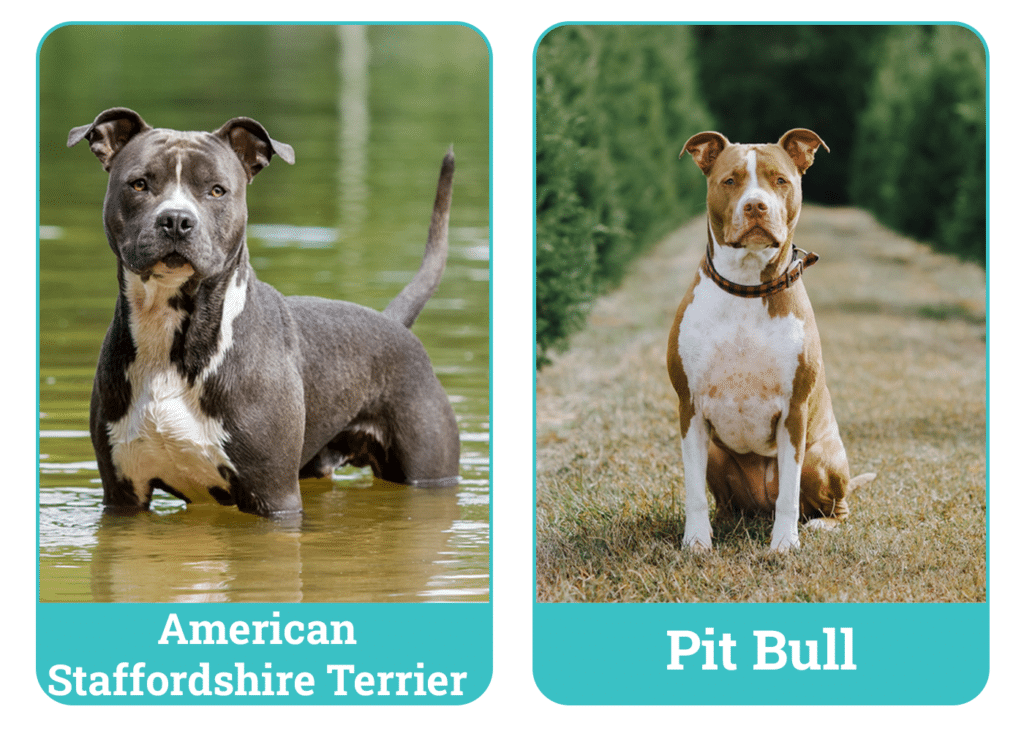
Before diving into the comparison, it’s critical to define the players. The term “Pitbull” is often used as a catch-all. Still, it specifically refers to the American Pit Bull Terrier (APBT), a breed recognized by the United Kennel Club (UKC) but not the American Kennel Club (AKC). The Staffordshire Bull Terrier is a separate, distinct breed recognized by kennel clubs worldwide, including the AKC.
They are both part of the broader “bully breed” family, which includes the American Staffordshire Terrier (AmStaff), the American Bulldog, and others. This guide focuses specifically on the Staffy vs. the American Pit Bull Terrier, as this is the most common point of confusion for seekers. For a deep dive into another specific breed, you can explore our complete Staffordshire Bull Terrier breed guide.
Side-by-Side Comparison: Staffy vs Pitbull at a Glance (Updated 2025)
| Aspect | Staffordshire Bull Terrier (Staffy) | American Pit Bull Terrier (Pitbull) |
|---|---|---|
| Primary Recognition | AKC, The Kennel Club (UK), FCI | UKC, ADBA |
| Size & Build | Compact, stocky, broad-chested. Height: 14-16 inches. Weight: 24-38 lbs (males typically heavier). | Athletic, muscular, more streamlined/leggy. Height: 17-21 inches. Weight: 30-65 lbs (wider variation). |
| Head & Appearance | Distinctively broad skull with pronounced cheek muscles; shorter muzzle; “Staffy smile.” | Broader variation; often longer muzzle and leaner athletic build. |
| Temperament | Highly affectionate, people-oriented “nanny dog.” Renowned for child tolerance and family bonding. | Confident, eager-to-please, resilient with “gameness.” Loyal and enthusiastic companions. |
| Energy & Exercise | High. Needs 60-90 minutes daily, including play and mental stimulation. | Very High. Requires 90-120+ minutes of intense activity; excels in sports like agility and weight pull. |
| Trainability | Intelligent, eager to please, but can be stubborn; thrives on positive reinforcement. | Highly trainable, food-motivated; strong drive makes them excel in advanced obedience. |
| Key Distinction | Bred primarily as a companion post-blood sports era, intensely human-focused. | Bred for versatility (farm work, sports); higher athletic drive and perseverance. |
Deep Dive: Origins, History, and Breed Development in 2025 Context
Understanding their past is key to understanding their present. Both breeds trace roots to 19th-century Britain, from crosses of Old English Bulldogs and terriers for bull-baiting and later dogfighting. After blood sports were banned in 1835, breeding paths diverged significantly.
The Staffordshire Bull Terrier’s Journey to the Family Heart
When blood sports were outlawed in England in 1835, breeders began selecting for traits that made a loyal, dependable family companion. The Staffy was refined in the Staffordshire region, earning the nickname “nanny dog” for its renowned patience and affection with children.
It was officially recognized by The Kennel Club (UK) in 1935, cementing its status as a show and family dog. This focused breeding for temperament is a core reason for the Staffy’s consistent, people-pleasing nature.
The American Pit Bull Terrier’s Path of Versatility
Immigrants brought these bull-and-terrier dogs to America, where they were valued not only for their strength but also for their unmatched versatility. They served as all-around farm dogs, herding livestock, hunting game, and guarding homesteads. This history was selected for intelligence, work ethic, and resilience.
While the American Pit Bull Terrier was the foundation breed for the AKC’s American Staffordshire Terrier (AmStaff), the UKC-recognized APBT line was maintained with a focus on working ability and the original type.
Beyond the Muscle: Temperament, Personality, and the Truth About Aggression
This is the most critical—and most misrepresented—section of any Staffy vs Pitbull discussion.
Staffordshire Bull Terrier Temperament
The UK Kennel Club breed standard describes the Staffy as “affectionate, especially with children, courageous, intelligent, and trustworthy.” They are profoundly human-centric, forming deep bonds with their families and often seeking physical contact. Their “courageous” trait manifests as boldness and confidence, not aggression.
They can be comical, stubborn, and are known for their wide “Staffy smile.” Early and ongoing socialization is non-negotiable to ensure a well-rounded dog. Learn the foundational principles with our expert guide on how to train a dog.
American Pit Bull Terrier Temperament
The UKC standard calls the APBT a dog that is “eager to please and brimming with enthusiasm.” They are known for their high pain tolerance and zest for life, a trait called “gameness.” When raised with structure, positive training, and ample exercise, they are loving, loyal, and excellent companions. They are highly trainable and excel in obedience, agility, and weight pull. However, their genetic history means they may exhibit dog selectivity or same-sex aggression, requiring responsible management.
Debunking the Aggression Myth with Data
It is a scientific fact that breed is a poor predictor of individual behavior. According to the American Temperament Test Society (ATTS), which evaluates stability, shyness, aggressiveness, and friendliness, both breeds score very well:
- American Pit Bull Terrier: 87.6% pass rate (960 tested)
- American Staffordshire Terrier: 85.7% pass rate (770 tested)
These scores are comparable to or higher than many popular breeds like Border Collies (79.2%) or Dachshunds (81.7%). Responsible ownership—not breed—is the key factor. A crucial part of this is understanding canine body language; learn to recognize stress signals like “whale eyes” in dog behavior.
Life with Your Dog: Training, Exercise, and Home Life
Training Philosophy: Positive Reinforcement is Paramount
Both breeds are intelligent, sensitive, and can be strong-willed. They do not respond to harsh or punitive methods, which can damage trust and provoke defensiveness. Positive reinforcement training—using rewards like treats, praise, and play—is the only effective and ethical approach. Consistency, patience, and early socialization from puppyhood are the pillars of success. Once you’ve mastered the basics, challenge their minds with unique tricks to teach your dog.
Exercise Needs: Channeling Energy Positively
- Staffy: Requires a minimum of 60 minutes of daily activity. They thrive on brisk walks, fetch, tug-of-war (with rules), and interactive play.
- Pitbull: Pitbull exercise needs 90 minutes or more of vigorous exercise. They are ideal candidates for running, hiking, advanced obedience, and dog sports like agility or flirt pole work.
Without proper outlets, their energy will turn into destructive boredom.
Living Situation & Safety
Both can adapt to apartment living if and only if their substantial exercise needs are met daily. A home with a securely fenced yard is highly recommended. Due to breed stereotypes and potential predatory instincts, never allow them to roam off-leash in unsecured areas. For safe outdoor freedom, consider the benefits of installing a wireless dog fence as a containment solution.
Health, Lifespan, and Proactive Care
Generally healthy but prone to some breed-specific conditions, proactive care is essential for a long life.
Common Health Concerns
- Shared Issues: Hip dysplasia, skin allergies, demodectic mange, and certain heart conditions.
- Staffy-Prominent: Hereditary cataracts, LUX patella (knee dislocation).
- Pitbull-Prominent: Higher prevalence of knee ligament (CCL) tears due to athletic build.
Reputable breeders test for these conditions. A high-quality diet is foundational for health; if skin issues arise, explore our recommendations for the best dog food for skin allergies.
The Importance of Preventive Veterinary Care
Annual check-ups are not optional. Regular vet visits are crucial for vaccinations, parasite prevention, dental care, and early detection of silent issues. This proactive approach saves money and heartache in the long run. Understand all the reasons why regular vet visits are a cornerstone of responsible ownership.
Average Lifespan: With excellent care, a Staffy lives 12-14 years, and a Pitbull 12-15 years.
The Owner’s Profile: Who Should Choose Which Breed?
This isn’t about which dog is “better,” but which is a better match for you.
Choose a Staffordshire Bull Terrier if you:
- Want a medium-sized, intensely affectionate “shadow” who lives for family time.
- They are prepared for moderate-to-high exercise but also enjoy couch cuddles.
- Want a dog with a historically strong reputation for being good with children (always supervised).
- You are a committed owner, but may be a first-time bully breed owner.
Choose an American Pit Bull Terrier if you:
- Lead an extremely active lifestyle and want a canine partner for sports or adventures.
- Are you an experienced dog owner who can provide firm, consistent, and positive leadership?
- Understand and can manage potential dog-to-dog reactivity.
- We are looking for a highly trainable, driven, and resilient companion.
The Ethical Pathway: Adoption vs. Reputable Breeder
Many wonderful Staffies and Pitbulls fill shelters, desperately needing responsible homes. Adoption is a noble choice that saves a life. Be fully prepared for potential behavioral challenges from a past you may not know by understanding the real cost of adopting a pet.
If you choose a breeder, do your due diligence. A reputable breeder:
- Health tests all breeding stock (OFA hips, heart, eyes).
- Focuses on temperament and follows breed standards.
- Welcome to meet the puppy’s parents.
- Asks you as many questions as you ask them.
- Has a lifelong take-back clause in its contract.
Avoid puppy mills, pet stores, and backyard breeders at all costs.
Comprehensive FAQ: Top Staffy vs Pitbull Questions (2025)
Is a Staffordshire Bull Terrier a type of Pitbull?
No. They are separate, distinct breeds with different breed standards and histories, though they share common ancestors. The term “Pitbull” correctly refers only to the American Pit Bull Terrier.
Which breed is more aggressive?
Neither breed is inherently human-aggressive. Data from temperament tests shows they are as stable or more stable than many popular breeds. Aggression is far more influenced by individual genetics, upbringing, training, socialization, and owner responsibility than by breed label.
Are they good family dogs with kids?
Both can be excellent with children when properly socialized and raised with them. The Staffy has a famed “nanny dog” history. CRITICAL NOTE: No dog, regardless of breed, should ever be left unsupervised with young children. Children must be taught to respect the dog’s space. Proper dog hygiene and care routines also help teach gentle handling.
What is the best diet for a Staffy or Pitbull?
Both need high-quality, protein-rich diets to support their musculature and energy. Choose a formula appropriate for their life stage. Explore options like the best fresh dog foods or the best wet dog foods for premium nutrition. Always avoid toxic items; know the foods dogs should never eat.
Do they face breed-specific legislation (BSL)?
Yes, unfortunately. Many cities, counties, and even countries have laws that restrict or ban ownership of “pit bull-type” dogs, which often incorrectly include Staffordshire Bull Terriers. It is imperative to check your local laws before acquiring either breed. Responsible ownership and advocacy are key to fighting these ineffective and unfair laws.
Final Verdict: A Lifelong Commitment
The Staffy vs Pitbull decision reveals two extraordinary breeds that offer immense love and loyalty in exchange for dedicated, knowledgeable ownership. The Staffordshire Bull Terrier is your compact, family-obsessed comedian. The American Pit Bull Terrier is your athletic, driven partner-in-crime.
Your success lies not in picking a label, but in embracing a lifelong commitment to training, socialization, exercise, veterinary care, and responsible stewardship. By making an informed choice and dedicating yourself fully, you will gain one of the most rewarding companions imaginable.