Hamster
Hamster Sneezing: Dust, Respiratory Infection and When to See a Vet
Hamster sneezing can come from dust or irritation, but persistent sneezing with discharge, breathing changes or poor appetite needs veterinary attention.

Pet care library
Page 2 of this topic archive.
Hamster sneezing can come from dust or irritation, but persistent sneezing with discharge, breathing changes or poor appetite needs veterinary attention.
Hamster hair loss can come from rubbing, mites, fungal infection, diet problems or underlying disease. Learn what the pattern can tell you,…
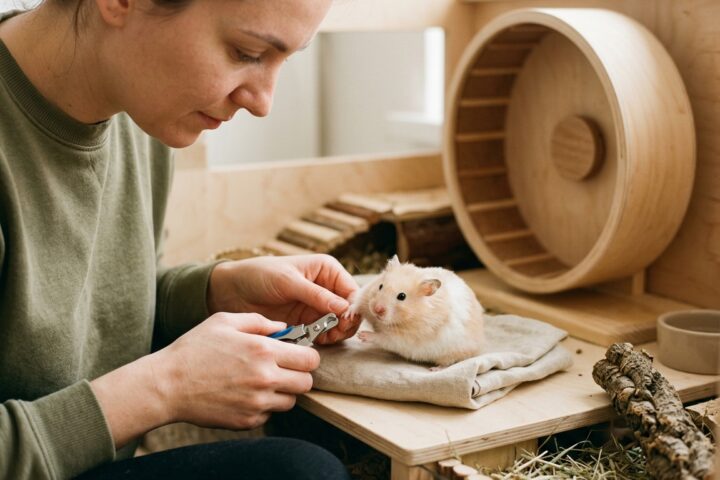
Hamster nails can overgrow when they do not wear naturally. Learn what normal claws look like, when trimming may help, and why…
Hamster incisors grow continuously. Learn how to spot overgrowth, what causes it, why home clipping is risky, and when a veterinarian should…
A limping hamster may have a strain, fracture, foot injury or another painful problem. Learn what to check, what not to do,…
A swollen or watery hamster eye can come from irritation, injury, infection or dental problems. Learn what you can safely check and…
Fast breathing after brief activity may settle quickly, but labored or persistent breathing can signal serious illness. Learn what to watch and…
Unexpected hamster weight loss can be an early illness sign. Learn how to weigh accurately, what changes matter and which accompanying symptoms…
A hamster that stops eating may be ill, in pain or unable to chew. Learn what to check, what not to force,…
Hamsters often hide illness and pain. Learn subtle warning signs such as posture, appetite, movement and behavior changes and when to contact…