
Hamster Nails Too Long: How to Tell When Claws Need Trimming
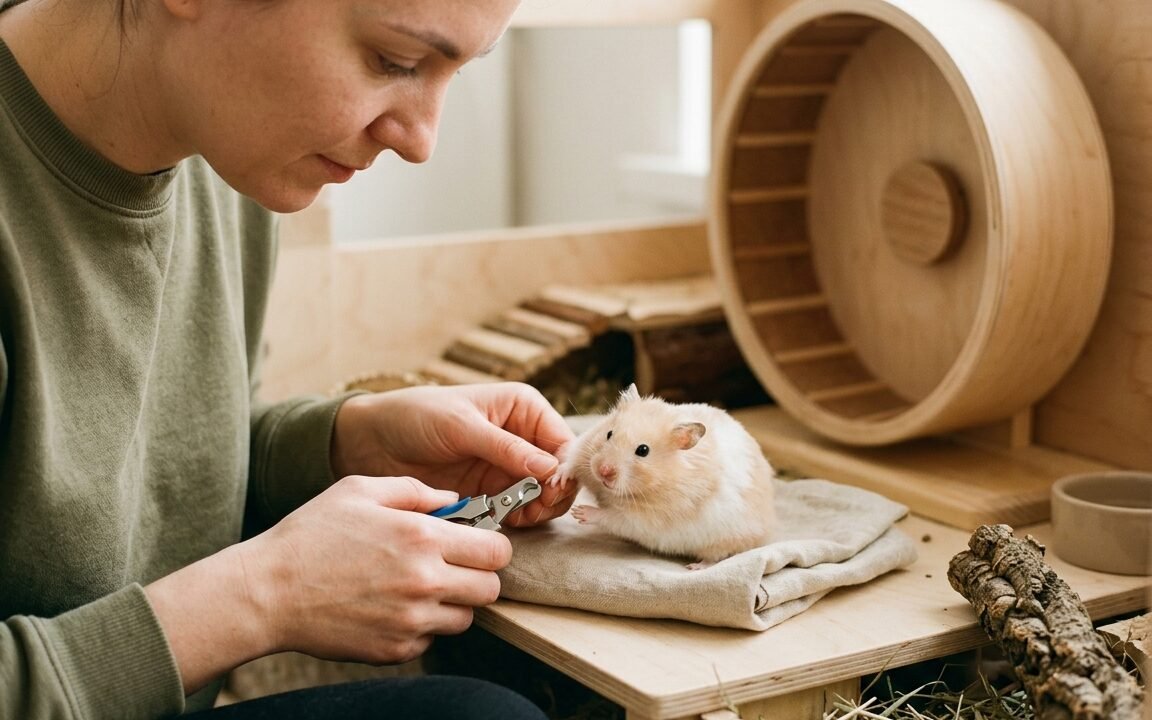
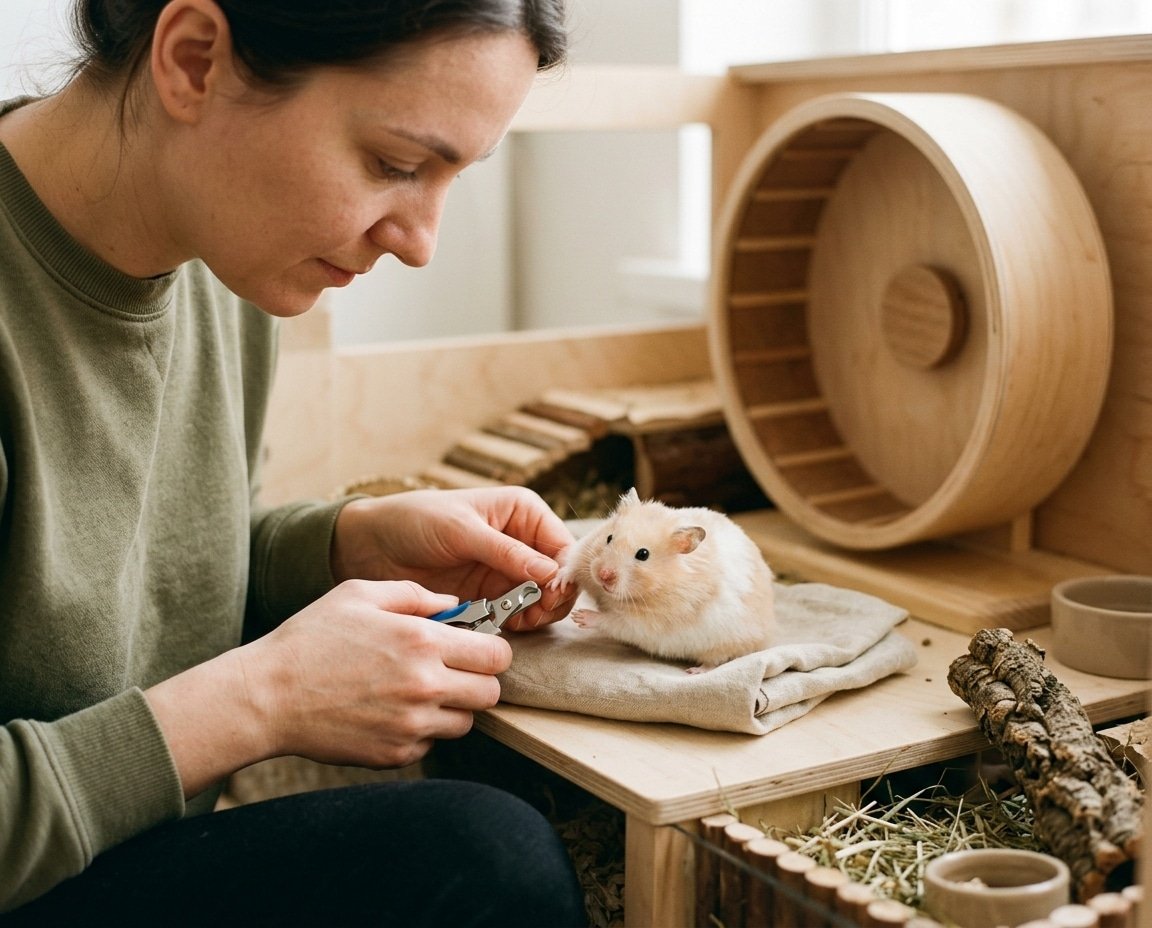
Hamster nails are meant to be visible, so “long” does not automatically mean abnormal. The concern is when claws begin to curl, snag, twist the toes or change the way the hamster walks. At that point, nail length is no longer cosmetic—it can affect comfort and movement.
Merck’s professional hamster guidance recommends checking the feet for sores and overgrown or broken nails during examination. The practical goal at home is to notice overgrowth early without turning grooming into a stressful restraint session.
Use walking posture as your first clue
Watch the hamster cross a flat, solid surface. If the nails contact the floor normally and the toes sit straight, visible length may still be acceptable. If the claws hook sideways, catch on fabric or force the toes to splay, they may need attention.
A hamster that suddenly walks differently should not be assumed to have “long nails” until injury and pain are considered too.
Why some hamsters wear nails down naturally
Digging, climbing on safe natural materials and moving across textured surfaces can create gradual nail wear. Hamsters that are younger and more active may maintain claw length better than older or less mobile animals.
That does not mean you should deliberately make the enclosure abrasive. Normal activity should wear nails gently, not grind them against harsh surfaces.
Do not use sandpaper or rough wheel surfaces
Sandpaper-lined wheels and excessively abrasive platforms can damage footpads and create sores. Foot health matters more than shortening the claws.
Use normal safe textures such as smooth stone in part of the enclosure, untreated wood and appropriate digging substrate, but keep the main walking surfaces comfortable.
Long nails can be a mobility clue
If claws used to remain normal and then begin overgrowing, ask whether the hamster has become less active. Pain, age-related change, illness or an enclosure setup that discourages movement can all reduce natural wear.
Our hamster pain-signs guide covers subtle activity and posture changes worth noting.
Check all feet, not just the longest claw
One nail may snag or overgrow while the others remain normal. Compare both front and back feet. Look for redness, swelling, broken nails, scabs or a toe held at an unusual angle.
If one foot is painful or the hamster is limping, use our hamster limping guide and consider veterinary assessment.
When trimming is reasonable
Trimming may be appropriate when nails are clearly curling, snagging or affecting stance. If the claws are merely visible but the hamster walks normally and nothing catches, aggressive shortening is unnecessary.
The aim is comfortable function, not making every claw look identical.
The quick is the part you must avoid
Each nail contains a blood vessel and nerve called the quick. In pale nails it may be easier to see; in dark nails it can be difficult. Cutting into the quick is painful and causes bleeding.
If you are not confident identifying the safe tip, ask an exotic-animal veterinarian or experienced small-mammal professional to demonstrate the technique.
Why restraint matters as much as the clip
A technically perfect nail trim can still become unsafe if the hamster is struggling. Small limbs are easy to twist, and a frightened hamster may leap suddenly.
If the hamster will not tolerate calm positioning, stop. Veterinary staff can often trim nails quickly and safely during a health check.
Do not chase the hamster around the enclosure with clippers
Repeated capture attempts create stress and make future handling harder. Prepare the tool, lighting and surface before you pick the hamster up. Keep the session short and return the hamster to the enclosure if stress increases.
Clip only the excess tip
If home trimming has been demonstrated to you, remove only the curved excess beyond the quick. Do not attempt to create a blunt “human-style” nail shape. The safest trim is conservative.
With very long nails, several small trims over time may be safer than trying to shorten dramatically in one session.
What if a nail starts bleeding?
Apply gentle pressure with clean gauze. A styptic product recommended for small-animal nail trimming may help with minor bleeding. If bleeding continues, the nail is badly torn or the toe looks injured, contact a veterinarian.
Do not repeatedly apply harsh household powders or chemicals to the foot.
Broken nails are different from overgrown nails
A nail torn near the base can be painful and may bleed. Check whether the toe is swollen or whether the hamster avoids using the foot.
Broken nails may need veterinary care, especially when the injury is deep, contaminated or paired with limping.
Should you trim nails on a schedule?
Not necessarily. Some hamsters may never need regular trimming, while others need occasional help. Check function rather than following a fixed calendar.
During routine handling, look at foot position and claw curvature. That is enough to catch many problems early.
Senior hamsters may need more frequent checks
Older hamsters often move less and may stop climbing or digging as much. Reduced natural wear can allow nails to lengthen. Arthritis or other pain can also change gait.
If nail overgrowth appears alongside weight loss, poor appetite or reduced activity, do not treat it as an isolated grooming issue.
Enclosure design can support normal wear
A spacious setup with deep bedding, safe climbing opportunities and a correctly sized wheel encourages normal movement. Our hamster enclosure guide covers floor space, bedding, wheel fit and ventilation.
The goal is not to build a nail-filing cage. It is to create an environment where healthy movement happens naturally.
Do not confuse nail overgrowth with curled toes
Toe position can change because of injury, congenital problems or pain. If the foot looks abnormal even after nails are trimmed, veterinary assessment is appropriate.
What to record if you need veterinary help
Note whether the change is affecting one foot or several, whether the hamster is limping, and when the nails last looked normal. A clear photo can be useful if the hamster will sit still without forced restraint.
Also mention changes in wheel use, climbing or general activity.
Prepare before you attempt a trim
If a veterinarian or experienced professional has shown you how to trim safely, prepare everything before handling the hamster. Use bright lighting, a stable non-slip surface and a small pair of appropriate clippers. Have clean gauze and a suitable styptic product available in case a nail is accidentally nicked.
Do not begin while the hamster is highly active, frightened or trying to escape. A calm, brief session is safer than trying to finish every nail at once.
You do not have to trim all four feet in one session
If the hamster becomes restless after one or two nails, stop. A partial successful session is better than turning nail care into a prolonged struggle. You can return to the remaining claws another day if trimming is genuinely needed.
After trimming, watch how the hamster walks
Normal movement should look easier, not more painful. Check for bleeding, toe swelling or new limping during the next several hours. If the hamster starts favouring a foot after a trim, inspect the nail and contact a veterinarian if the problem persists.
When repeated overgrowth deserves a health check
If nails require frequent trimming despite an appropriate enclosure, ask whether reduced mobility is contributing. Chronic pain, age-related change or illness can reduce digging and running enough to change natural claw wear. Nail overgrowth can therefore be useful information about the hamster’s overall activity level, not just a grooming inconvenience.
The practical takeaway
Hamster nails are too long when they interfere with normal movement, curl, snag or distort toe position—not simply because they are visible. Safe natural activity may provide enough wear for many hamsters, while others need occasional trimming.
Avoid sandpaper surfaces and aggressive clipping. If you cannot clearly see the quick, the hamster will not tolerate calm handling, or the foot is painful or injured, let a veterinarian or experienced professional handle the trim.
0 comments