
Hamster Limping or Not Using a Leg: Injuries, Fractures and What to Do
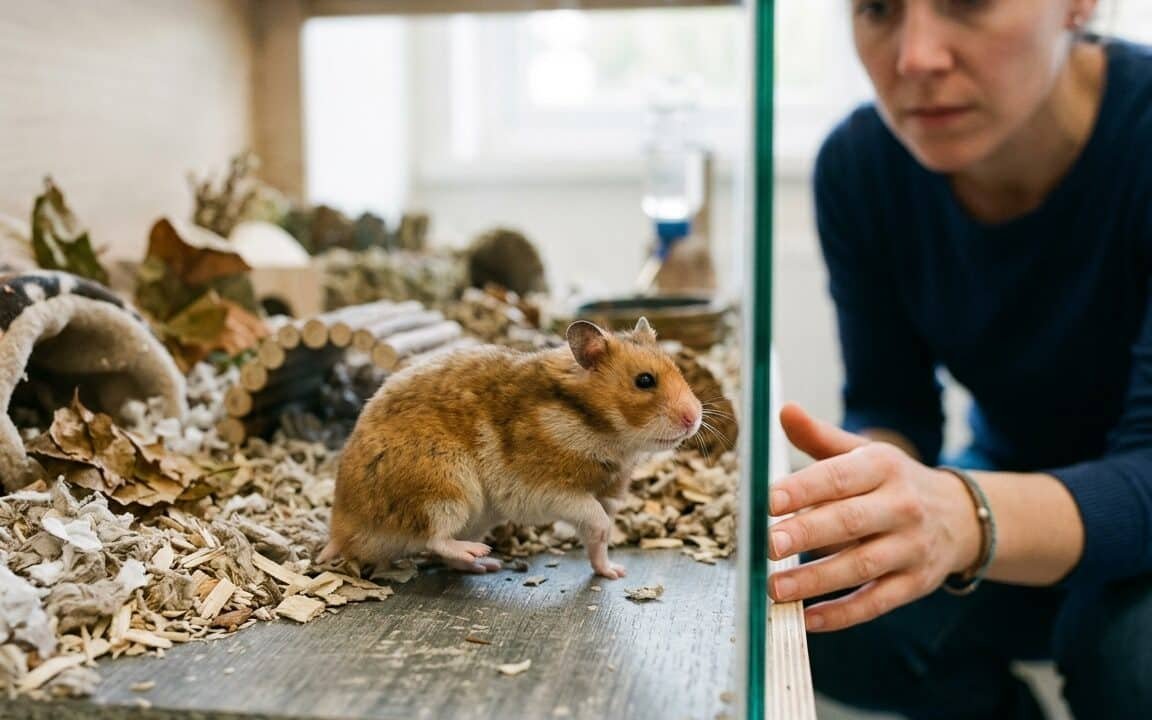
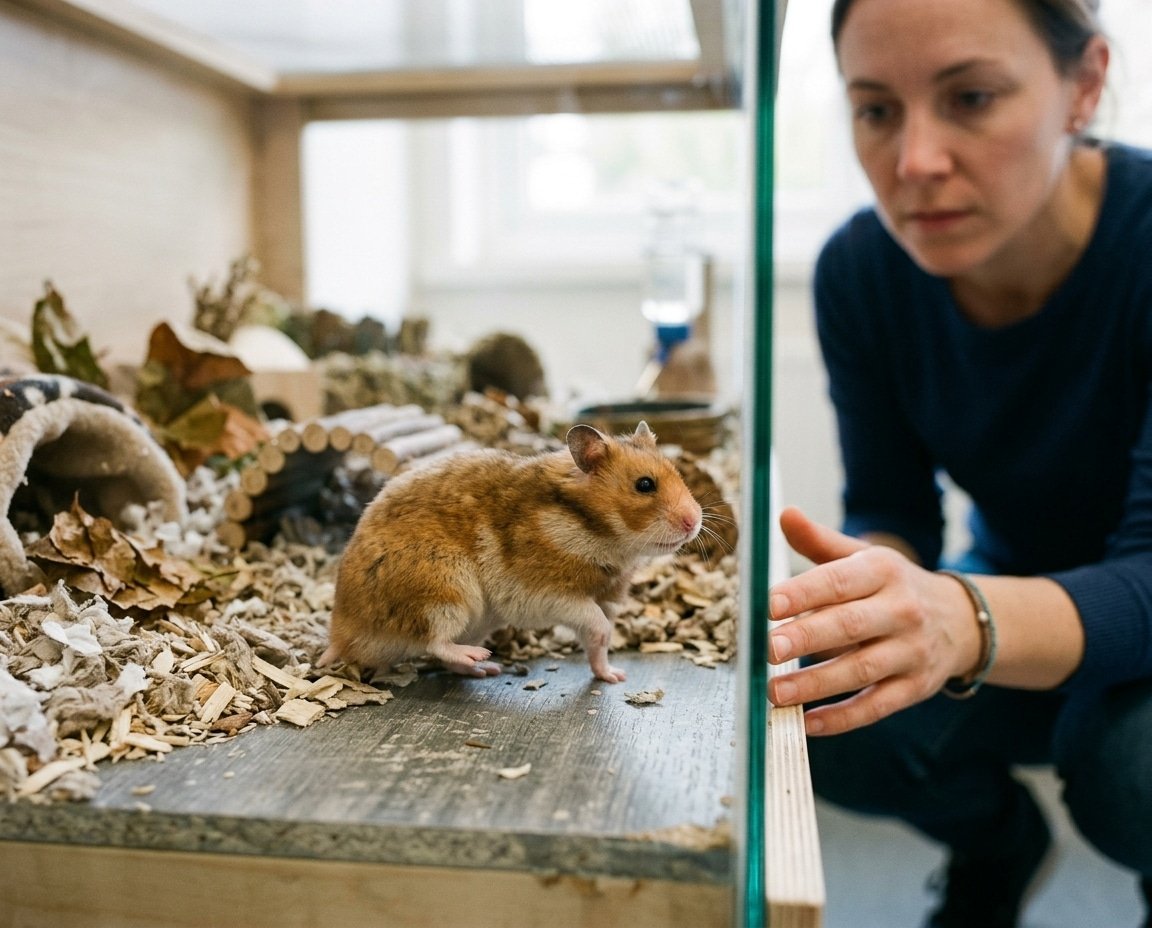
A hamster that suddenly limps, holds a leg up or stops using one limb should be treated as painful until proven otherwise. Small rodents can injure themselves in falls, wheel accidents, cage gaps, rough handling or fights, and fractures are not always obvious from appearance alone.
Merck Veterinary Manual notes that limping in hamsters can come from strains or broken bones. The safest response is not repeated testing of the leg. It is to reduce movement, look for obvious hazards, and arrange veterinary assessment when the limp is significant, painful or persistent.
Start by changing the enclosure, not by manipulating the leg
If the hamster is climbing, running on a wheel or crossing high platforms, temporarily simplify the setup. Keep food, water and a hide close together on one level. Remove ladders, steep ramps and high fall points. This is not a permanent housing recommendation; it is a short-term way to reduce the chance of worsening an injury while you arrange veterinary care.
Do not repeatedly pick the hamster up to flex the limb or see whether it “still works.” Painful animals often resist handling, and forcing a joint through a range of motion can worsen some injuries.
Look at how the hamster is using the leg
There is a useful difference between mild favouring of a limb and complete non-use. A hamster that takes weight but walks unevenly may have a minor strain, sore foot or nail problem. A hamster that holds the leg completely off the ground, drags it, or cannot move normally deserves faster attention.
Watch from outside the enclosure first. Note whether the problem is in a front or back leg, whether the hamster can grip, and whether the gait changes after rest.
Check for swelling, an abnormal angle or an open wound
A leg that looks enlarged, twisted or held at an unusual angle may be fractured or dislocated. An open wound raises the risk of infection. Do not try to straighten the limb, massage swelling or build a home splint from tape and sticks.
Improvised splints can cut off circulation, rub the skin or hold a fracture in the wrong position. A veterinarian can decide whether immobilisation is appropriate and whether pain relief or other treatment is needed.
Inspect the foot and toes too
Not every limp comes from the upper leg. Look for a torn nail, swollen toe, sore footpad, cut, scab, or hair/thread wrapped around a toe. Fine fibres can tighten around a small toe and reduce circulation.
If something is deeply embedded or tightly constricting the toe, do not dig at it aggressively. A vet is better equipped to remove it without causing additional trauma.
Review the enclosure for the cause
Ask what the hamster was doing before the limp appeared. Wire wheels, open rungs, unstable ramps, high platforms and narrow gaps can catch feet or encourage falls. A solid-surface wheel and stable platforms are safer choices.
Also check for sharp plastic edges, exposed wire, broken ceramic items and heavy accessories that can shift. If the hamster shares an enclosure, fighting is another possible source of injury and may require immediate separation.
A fall can injure more than a leg
A hamster that fell from furniture, a countertop or a tall cage structure may also have spinal, head or internal injuries. Watch for weakness, dragging the hindquarters, trouble righting, rapid breathing, unusual quietness or collapse.
Those signs make the situation more urgent even if the leg itself does not look dramatic.
Do not give human painkillers
Hamsters are very small, and dosing errors are easy. Some human medications are unsafe for small mammals. Do not give ibuprofen, acetaminophen, aspirin or leftover medication from another pet unless a veterinarian has specifically prescribed it for this hamster.
Pain relief is important, but the correct drug and dose depend on body weight, hydration and the suspected injury.
Make food and water easy to reach
A hamster in pain may reduce intake simply because moving to the usual bottle or food area hurts. Lower the water bottle if needed and place food near the resting area. Keep the layout simple enough that the hamster does not need to climb.
If appetite is falling too, see our hamster not eating guide. Poor intake alongside an injury can make a small animal deteriorate faster.
Track body weight during recovery
If the hamster tolerates it, a gram scale can help you notice whether reduced mobility is being accompanied by weight loss. A single number matters less than a downward trend.
Our hamster weight-loss guide explains how to weigh consistently without turning the process into repeated stressful handling.
How long can a mild limp be watched?
If the hamster is bright, eating, drinking, using the limb and the limp is very mild, you may have a short window to observe while keeping activity low. But “watching” should mean checking for improvement, not leaving the hamster in a painful state for days.
If the limp persists, worsens, returns repeatedly, or the hamster stops bearing weight, veterinary assessment is the safer choice.
Signs the problem is more urgent
- the hamster will not bear weight at all;
- the leg looks crooked, unstable or very swollen;
- there is bleeding or an open wound;
- the hamster drags the limb or hindquarters;
- the foot or toes are cold, dark or severely swollen;
- the hamster cannot reach food or water normally;
- there is rapid breathing, collapse or severe weakness;
- the hamster stops eating or loses weight;
- pain behaviour is obvious or increasing.
Could it be arthritis rather than an acute injury?
Older hamsters can become less mobile over time. A gradual change in gait, reduced climbing or reluctance to use a wheel may be different from a sudden traumatic limp. Even so, age is not a diagnosis. Pain, foot disease, tumors and neurological problems can also alter movement.
If the change is gradual, note when it began and whether one leg is affected more than another. Bring that timeline to the vet.
What about a hamster that limps only after using the wheel?
Check wheel size, surface and stability. A wheel that is too small, wobbles, catches bedding or has unsafe gaps can change how the hamster runs. Our hamster wheel size guide explains how posture and wheel design affect safe running.
Do not simply remove exercise permanently. Once the injury is assessed, the long-term goal is a safe environment that still allows normal movement.
Transport with as little extra movement as possible
Use a small secure carrier with familiar bedding and no high climbing objects. Keep the carrier stable in the car and protect the hamster from heat and cold. Avoid putting a wheel or hard accessories in the carrier during transport.
Our hamster vet transport guide covers carrier setup, temperature and travel safety.
What information helps the vet?
Write down when the limp started, whether there was a fall or known accident, which limb is affected, whether the hamster is eating normally, and whether the problem is improving or getting worse. A short video of the hamster walking can be useful because animals sometimes move differently in the clinic.
If you changed the cage after the injury, describe the original setup too. That can help identify a repeatable hazard.
How to reduce the chance of another injury
After recovery, review the enclosure rather than assuming the accident was random. Use a solid wheel, stable platforms, secure ramps and enough bedding to reduce the impact of minor falls. Avoid very high drops and narrow gaps that can trap feet.
Handle close to a surface, especially with quick or nervous hamsters. A hamster that jumps from hands should not be carried high above the floor.
The practical takeaway
A limp is a sign, not a diagnosis. The cause might be a mild strain, a broken bone, a nail injury, a sore foot, a neurological problem or another painful condition. Your job at home is to reduce movement, remove obvious hazards, make resources easy to reach and watch for whole-body warning signs.
Do not repeatedly test the leg or give human pain medication. If the hamster is not using the limb, looks painful, has swelling, is losing appetite or shows any neurological or breathing change, get veterinary help promptly. For other subtle pain clues, use our hamster pain-signs guide.


0 comments