
Hamster Hair Loss: Common Causes, Skin Clues and When to See a Vet
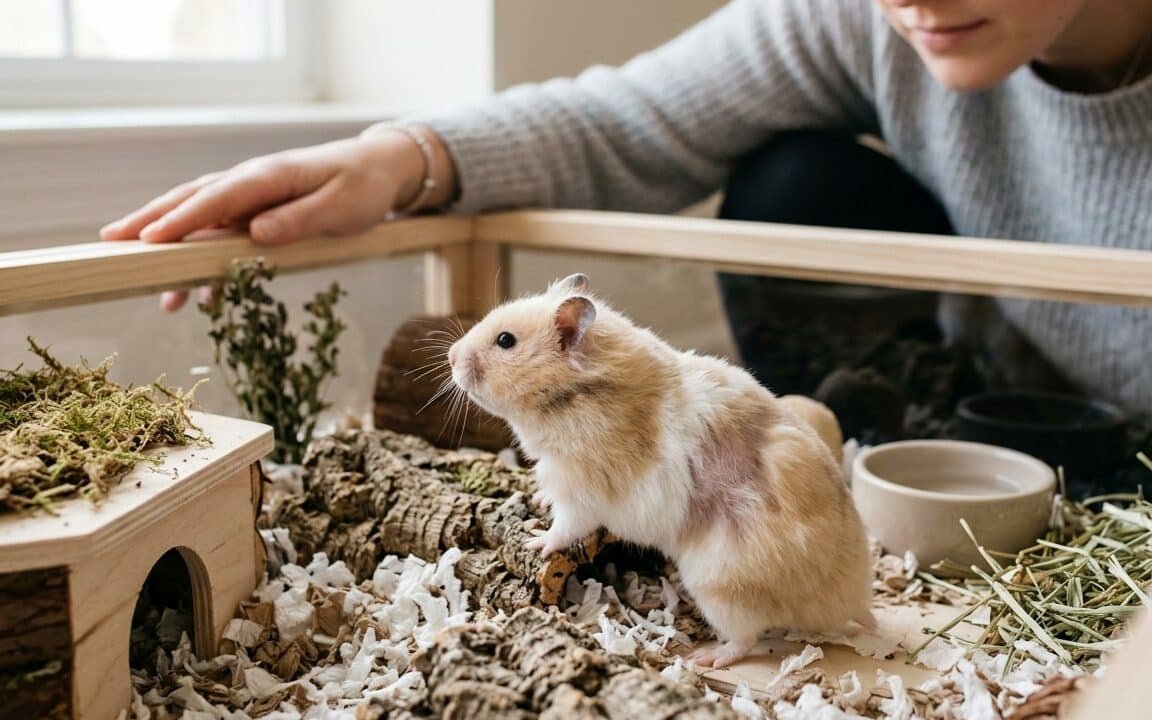

Hamster hair loss can look dramatic, but the missing fur itself is only the visible part of the problem. The useful question is what the skin and the rest of the hamster are doing at the same time.
A small rubbed patch over one hip, itchy crusted areas over the back, symmetrical thinning in an older hamster and bald skin paired with weight loss do not point to the same cause. Looking at the pattern, the skin underneath and any changes in appetite, drinking or activity gives a veterinarian a much better starting point than simply describing “a bald spot.”
Start by looking at the skin, not just the missing fur
Part the coat gently around the thinning area. Note whether the skin looks normal, red, flaky, crusty, moist or thickened. Check whether the hamster is scratching, chewing at the area or rubbing against one particular object in the enclosure.
Do not scrape, pick at crusts or apply creams while you are inspecting. A clear photo taken in good light is often more useful than repeated handling.
The pattern of hair loss can narrow the possibilities
Hair loss may be focal, widespread or roughly symmetrical. A single worn patch can happen from repeated friction against a wheel stand, hide entrance or cage edge. Multiple itchy patches raise more concern for skin disease or parasites. Gradual symmetrical thinning without much itching can point the investigation in a different direction.
Merck’s hamster disease guidance notes that alopecia can be linked to rubbing, poor protein intake, fur chewing, mites, ringworm, hormonal disease, kidney disease and lymphoma. That range is why treatment should be based on the cause rather than on the appearance alone.
Rubbing can create a very local bald patch
Some hamsters repeatedly squeeze through one narrow tunnel, rub against a low wheel support or push along the same enclosure edge. If the skin looks otherwise healthy and the hair loss sits exactly where the body contacts that surface, friction is worth considering.
Check the setup for sharp edges, cramped openings and rough contact points. Do not remove all enrichment unnecessarily; fix the specific source of rubbing and watch whether the patch stops expanding.
Mites often cause more than simple thinning
Hamsters can carry Demodex mites, and heavier infestations may produce patchy hair loss with scaling, redness or itching. Merck describes demodectic hair loss especially over the back, hind limbs and face.
Mites cannot be diagnosed reliably just by looking at the coat. A veterinarian may need a skin scraping or other examination. Do not use dog, cat or livestock mite treatments unless a veterinarian has prescribed the product and dose for the hamster.
Ringworm is possible even though it is not the most common explanation
Fungal skin infection can cause bald, flaky, crusty or reddened patches. Ringworm matters because it can spread between animals and people.
If the skin is circular, scaly or crusted, or if another pet or person in the household has a suspicious skin lesion, mention that when you call the clinic. Wash hands after handling and avoid sharing bedding or grooming items between animals until the cause is clearer.
Diet problems belong on the list, but do not assume every bald patch is nutritional
Merck includes inadequate protein intake among possible causes of hamster hair loss. That does not mean the answer is to add random high-protein treats or supplements.
Review the staple diet first. A balanced hamster food should make up the core of the ration, with fresh extras used appropriately rather than replacing the formulated diet. Our hamster diet guide explains how to build that foundation.
Fur chewing can come from the hamster or a cage mate
Incompatible hamsters may chew one another’s fur, and self-barbering can occur when the skin is irritated or the animal is stressed. Look for broken hair shafts rather than smooth complete baldness and watch interactions if more than one dwarf hamster is housed together.
Syrian hamsters should live alone, so any co-housing in Syrians is already a welfare concern regardless of hair loss.
Older hamsters can develop hair loss for medical reasons
Age does not automatically explain a thinning coat. Kidney disease, hormonal disease and some cancers can be associated with alopecia, especially when other changes appear at the same time.
Pay attention to increased drinking, a wetter enclosure, weight loss, poor appetite, abdominal enlargement or reduced activity. Our hamster weight-loss guide explains why trends on a gram scale can be more useful than appearance alone.
Hair loss plus increased thirst deserves more attention
Merck notes that kidney disease in older hamsters can be associated with weight loss, extra thirst and increased urination. If the bottle is genuinely emptying faster and the enclosure is wetter, record that information.
Before assuming increased drinking, check for a leaking bottle. A slow drip can mimic excessive water intake surprisingly well.
Hair loss plus a lump or rapid decline needs veterinary assessment
Some skin and systemic cancers can cause coat changes. Do not squeeze lumps or repeatedly manipulate a thin-skinned bald area to see whether anything is underneath.
If you find a new mass, note its position and approximate size. Our hamster lumps guide explains what information is useful before the appointment.
Look for scratching, but also for the opposite problem
Itching can point toward parasites or skin inflammation, but a hamster that is weak or painful may groom less and develop a rough, thin-looking coat without much scratching.
That is why the whole animal matters. Appetite, posture, normal wheel use and activity during the usual waking period all help put the coat change in context.
Check the enclosure for moisture and contamination
Persistently damp bedding can irritate the skin and worsen existing problems. Look under the water bottle, inside the sleeping area and in regular toilet corners.
Remove wet substrate and correct leaks, but avoid completely stripping the enclosure unless there is a medical reason to disinfect it. Preserving some clean familiar bedding reduces stress.
Do not bathe the hamster to treat hair loss
Water bathing can chill and stress a hamster and does not treat mites, fungal disease, hormonal problems or kidney disease. If the coat is contaminated with a harmful substance, contact a veterinarian for cleaning advice.
Avoid human creams and essential oils
Products designed for human skin may be unsafe if licked or absorbed, and oily products can trap dirt against irritated skin. Essential oils should not be used on a hamster’s skin or added to the enclosure.
What a veterinarian may check
The examination may include skin scraping for mites, fungal testing, inspection for wounds or parasites, body-condition assessment and a review of diet and enclosure setup. If the pattern suggests systemic disease, blood work, urine testing or imaging may be considered.
The important point is that different causes can look similar from the outside. Testing prevents the hamster from being treated repeatedly for the wrong problem.
When a bald patch can be watched briefly
A very small patch caused by an obvious rubbing point may be reasonable to monitor after the source is removed, provided the skin looks healthy and the hamster is eating, drinking, moving and behaving normally.
Take a photo on day one so you can compare rather than relying on memory. If the patch grows, becomes red or crusted, or additional areas appear, arrange a veterinary check.
When to call the vet sooner
Contact a veterinarian promptly when hair loss is spreading, the skin is inflamed, crusted or bleeding, the hamster scratches persistently, or the coat change comes with reduced eating, weight loss, increased drinking, breathing changes, lumps or unusual inactivity.
If the hamster seems painful, our hamster pain-signs guide explains subtle posture and behaviour changes worth taking seriously.
What to record before the appointment
- when the hair loss first appeared;
- whether it is one patch or several;
- whether the hamster is scratching or rubbing;
- skin colour, scaling or crusting;
- recent weight measurements;
- food and water intake;
- new bedding, food or enclosure items;
- whether another hamster is housed in the same enclosure.
Prevention is mostly good husbandry and early observation
A spacious enclosure, low-dust dry bedding, a balanced diet, species-appropriate housing and regular health checks reduce some avoidable problems. They cannot prevent every skin or internal disease.
Our hamster care guide covers the daily setup, while the hamster health hub links hair and skin changes with other warning signs such as appetite, weight, breathing and movement.
Hamster hair loss is most useful when treated as a clue, not a diagnosis. Look at the skin, notice what else has changed and get veterinary help when the patch is spreading, inflamed or part of a broader decline.


0 comments