
Bird Sitting at the Bottom of the Cage: What It Can Mean and When It Is an Emergency
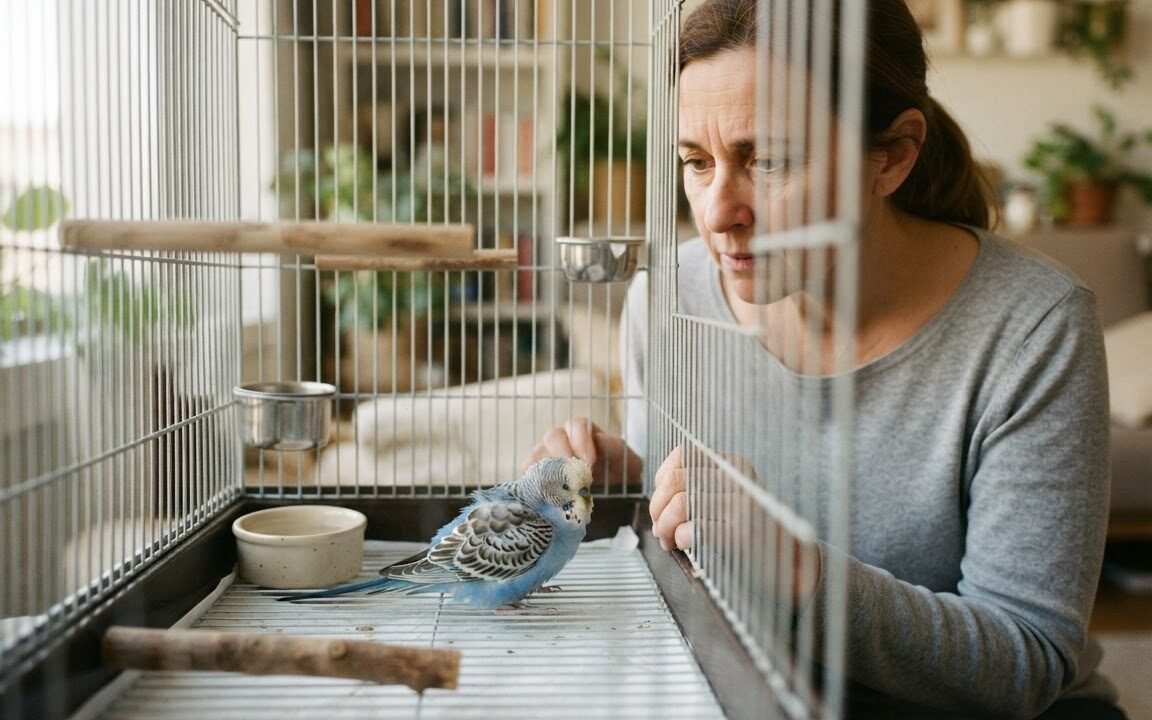
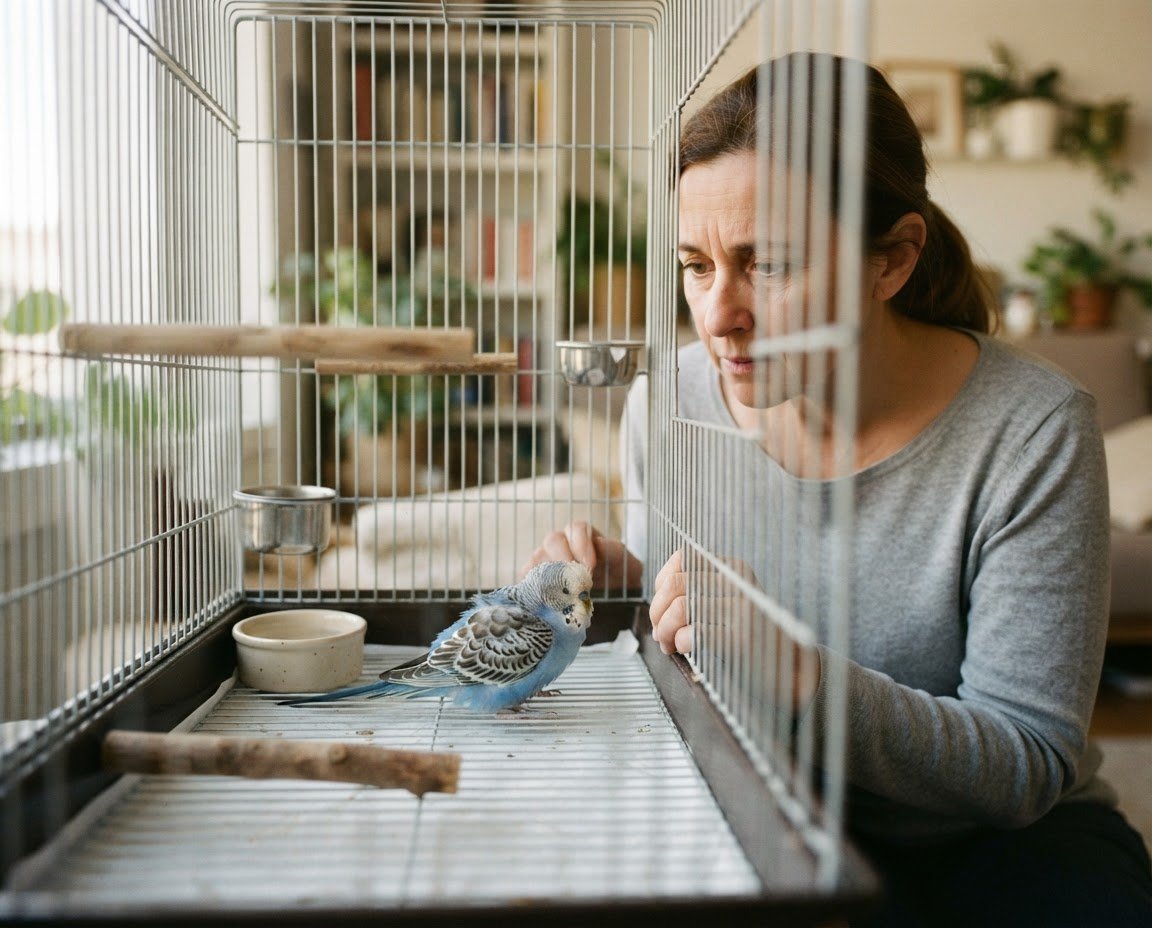
A bird that suddenly starts sitting on the bottom of the cage deserves attention, especially if that is not part of its normal behaviour. Healthy birds usually spend much of their time perched. Choosing the floor repeatedly can mean the bird is weak, painful, unable to balance, struggling to breathe or too unwell to climb.
There are harmless exceptions, such as a bird exploring dropped food or bathing in a shallow dish. The difference is whether the bird is alert and moving normally or remaining low because something is wrong.
Start by asking whether the bird can perch normally
Offer a low stable perch only if the bird is alert and safe to test. If the bird tries to perch but falls, grips weakly or immediately returns to the cage floor, treat that as an illness sign.
Do not repeatedly place a weak bird back onto a high perch. Falling can create a second injury.
Weakness is one of the main concerns
A sick bird may conserve energy by sitting low. VCA lists sitting low, weakness and inability to perch among important signs of illness in birds.
Look for other changes such as fluffed feathers, closed eyes, reduced vocalisation or slower responses.
Appetite is an immediate clue
A bird sitting on the floor and not eating needs prompt attention. Small birds can deteriorate quickly when intake drops.
Our bird not eating guide explains how to confirm reduced intake and why waiting can be risky.
Check the droppings near the bird
Fewer droppings, marked wateriness, blood or a sudden change in colour can help show whether the bird is eating or dealing with gastrointestinal or systemic illness.
See our bird droppings guide for what to record.
Breathing difficulty can force a bird lower
A bird working hard to breathe may stop climbing and remain at the bottom. Watch for open-mouth breathing, pronounced tail bobbing, wheezing, clicking or visible chest and abdominal effort.
Our bird breathing problems guide explains why these signs are urgent.
Balance problems can look like weakness
Neurological disease, injury, toxin exposure or severe systemic illness can affect balance. A bird may sway, miss the perch, lean to one side or fall repeatedly.
Remove high perches and hard objects while arranging veterinary care.
Foot or leg pain may keep a bird on the floor
A bird with a painful foot, injured leg or severe joint problem may avoid gripping. Check for obvious swelling, redness or inability to bear weight without forcing the limb.
Do not apply a home splint unless an avian veterinarian has instructed you.
Egg binding is an important emergency in females
An egg-laying bird may sit low, strain, appear weak, breathe harder or show abdominal enlargement.
Our egg-binding guide covers warning signs and why abdominal massage is unsafe.
Cold can make a weak bird worse
Keep an ill bird in a stable, comfortably warm environment unless overheating is part of the problem. Warmth should be indirect and controlled.
Do not place the cage directly on a hot pad where the bird cannot move away.
Overheating can also drive a bird low
A hot bird may pant, hold the wings away from the body or become weak. Move the bird to a cooler, well-ventilated area and contact a veterinarian. Do not use ice or sudden cold-water immersion.
Toxin exposure belongs on the checklist
PTFE fumes, smoke, aerosols, heavy metals, plants and medications can all cause rapid illness.
If floor sitting began after a known fume or toxin exposure, use our bird-safe home guide and contact an avian veterinarian immediately.
A collision can cause hidden injury
A bird may strike a window or wall and then sit quietly on the cage floor. Even if there is no visible bleeding, internal or neurological injury can be present.
Keep movement limited and arrange veterinary assessment.
Do not assume a bird is “just tired” if the behaviour is new
Birds do rest, but normal rest usually occurs on a preferred perch. A bird that suddenly abandons normal perches and stays on the floor should be treated differently.
Weight can reveal whether decline started earlier
Feathers can hide weight loss. If the bird can be weighed without adding major stress, a falling trend can confirm that the problem did not begin today.
Our bird weighing guide explains a low-stress routine.
Do not force food into a weak bird
A bird that cannot perch, is breathing hard or is neurologically abnormal can aspirate food or liquid.
Assisted feeding should be guided by an avian veterinarian.
Make the cage safer while you arrange care
Remove high perches and place food and water within easy reach. Use a clean towel or paper liner on the floor so the bird has stable footing and you can monitor droppings.
Separate cage mates if they are disturbing the bird
A sick bird may be pecked, crowded or prevented from resting. Temporary separation can reduce stress and make intake easier to monitor.
When a short observation may be reasonable
If the bird briefly goes to the floor to retrieve food, explore or play and then returns to normal perching and behaviour, the episode may not be concerning.
The key is whether floor sitting becomes persistent or appears with other illness signs.
When to call an avian veterinarian promptly
Persistent floor sitting, reduced appetite, fluffed posture, abnormal droppings, weakness, poor balance or new foot pain deserves veterinary assessment.
When it is an emergency
Open-mouth breathing, collapse, repeated falling, seizures, active bleeding, severe weakness, suspected toxin exposure or an egg-laying female that is straining and unable to perch requires urgent care.
Our bird emergency warning-signs guide and bird first-aid guide explain immediate next steps.
What to tell the veterinarian
- when the bird first started sitting on the cage floor;
- whether it can perch at all;
- appetite and body weight;
- dropping changes;
- breathing signs;
- possible fall, collision or toxin exposure;
- sex and egg-laying history;
- any recent medication or diet change.
Birds do not usually choose the cage floor for prolonged rest when they are feeling well. Persistent floor sitting should be treated as a useful warning sign, especially when it appears with weakness, appetite loss, breathing changes or poor balance.
Check whether the bird is choosing the floor or stuck there
A healthy bird may hop down to forage and then return to a perch. A sick bird may remain on the floor because climbing has become difficult. Watch whether the bird can move upward voluntarily without repeated falls.
Make food and water reachable without forcing movement
While you arrange veterinary care, lower dishes so the bird does not need to climb. Keep them away from droppings and make sure cage mates cannot block access.
Persistent floor sitting overnight is not a normal sleep setup
Most companion birds choose a perch for sleep. A bird that begins sleeping on the cage bottom after previously perching normally should be assessed for weakness, pain or balance problems.
Look for one-sided weakness or poor grip
A bird may stand unevenly, keep one foot lifted or fail to grip with one side. That can point toward injury, pain or neurologic disease and is useful information for the veterinarian.
Do not move the bird back onto a high perch to test it
If the bird cannot stay perched, repeated testing only increases fall risk. Make the cage safer and transport the bird for assessment.
Recovery should include normal perch use
After treatment, the bird should gradually regain normal balance, appetite, activity and perch use according to the veterinary plan. Continued floor sitting is a reason to update the clinic.
0 comments