
Bird Not Eating: Appetite Loss, Warning Signs and When It Is an Emergency
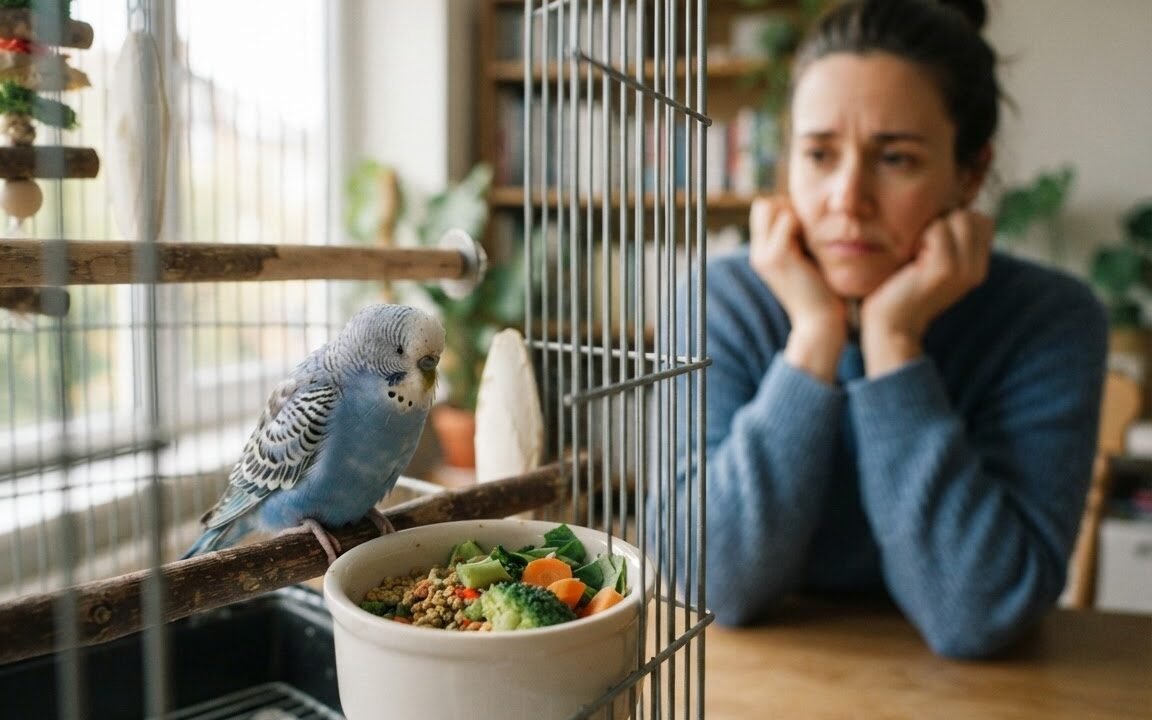
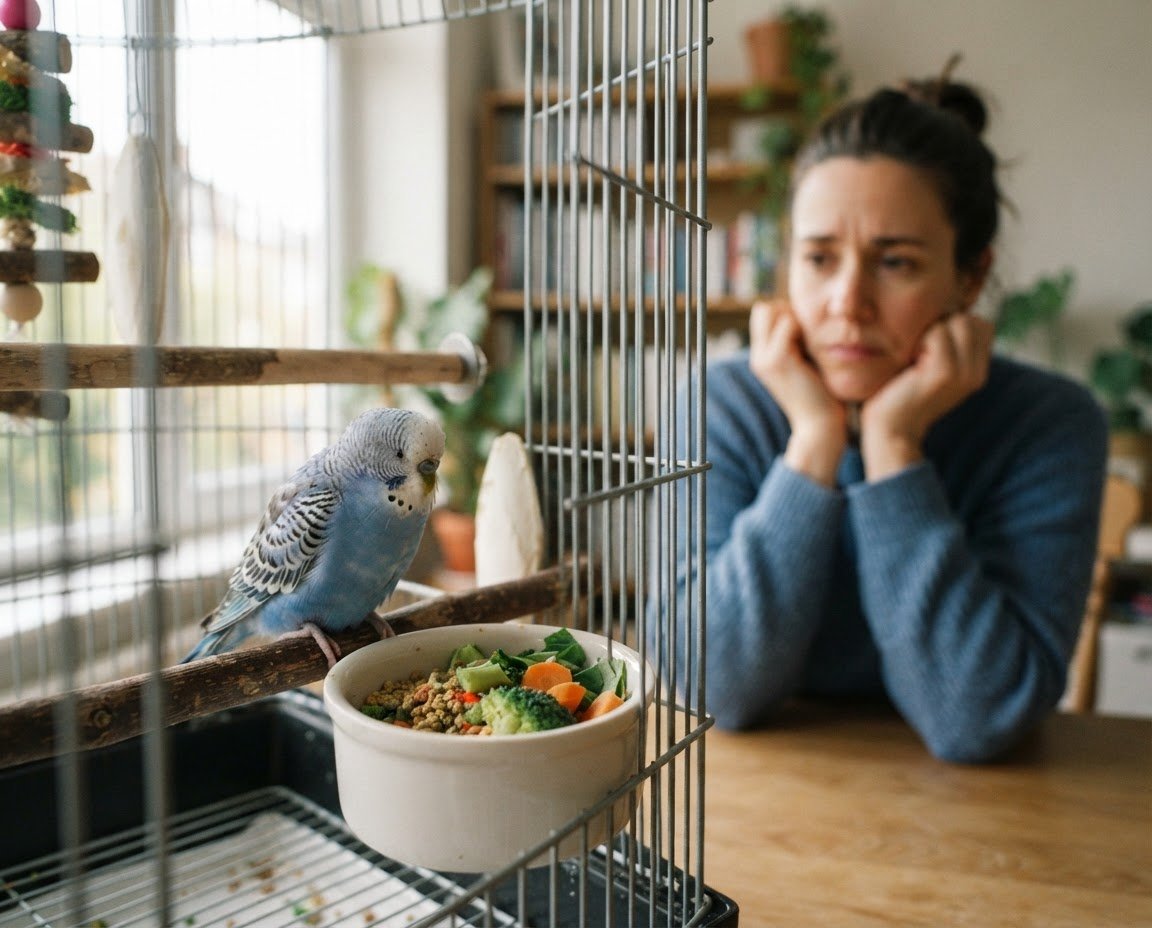
A bird that is not eating normally deserves attention sooner than many owners expect. Birds can hide illness for days or weeks, and by the time appetite falls enough to be obvious, the underlying problem may already be significant.
The first challenge is confirming that the bird is truly eating less. Seed husks can make a bowl look full, pellets can be crushed and dropped, and a social bird may sit at the food dish without swallowing much.
Watch actual intake, not just the bowl
Observe whether the bird cracks and swallows food, whether pellets disappear rather than crumble, and whether fresh food is actually consumed.
Check the cage floor and food dish for discarded pieces. A bird can appear to be “eating” while taking in very little.
Droppings can show reduced intake early
Fewer or smaller droppings can suggest that less food is moving through the digestive tract. A dramatic change in colour or water content can add more information.
Our bird droppings guide explains what to monitor.
Weight turns a vague concern into a measurable trend
Use a gram scale and weigh under similar conditions. Feathers can hide loss until it becomes substantial.
Our bird weighing guide explains a low-stress home routine, while bird losing weight covers how to interpret a downward trend.
Appetite loss plus lethargy is especially concerning
VCA states that anorexia and lethargy in birds can indicate severe illness requiring immediate avian veterinary attention. Birds often conceal disease until they can no longer compensate.
A bird sitting fluffed, sleeping much more, avoiding interaction or staying low in the cage should not be monitored casually when eating has also decreased.
Do not wait 24–48 hours for a bird to “get hungry”
Birds do not have the same reserves as people or larger mammals. Waiting for spontaneous recovery can allow dehydration, weakness and metabolic problems to worsen.
Call an avian veterinarian when a meaningful appetite change persists or is paired with any other illness sign.
Diet conversion can look like appetite loss
A bird switched abruptly from seed to pellets may not recognise the new food as edible. The bowl can be full while the bird is effectively fasting.
Diet conversion should be gradual and body weight should be monitored. Do not remove all familiar food simply to force acceptance of a new diet.
Young or recently weaned birds need special caution
A juvenile may beg, explore food and still fail to consume enough calories. Poor weight gain or weight loss during weaning needs prompt avian guidance.
Dental and beak problems can interfere with eating
Overgrown, injured or painful beaks can make food manipulation difficult. Watch for dropping food, chewing only on one side or avoiding hard items.
Do not trim a beak at home.
Crop disease can reduce appetite
Crop infection, delayed emptying or obstruction can make a bird reluctant to eat. A crop that remains full unusually long, bad odor from the mouth or repeated regurgitation deserves veterinary assessment.
Vomiting changes the urgency
A bird that is not eating and is also vomiting can deteriorate quickly. Our bird vomiting vs regurgitation guide explains the difference and the red flags.
Breathing problems can suppress eating
A bird struggling to breathe may stop eating because the effort of movement and swallowing becomes difficult.
Open-mouth breathing, marked tail bobbing, wheezing or wet breathing is urgent. See our bird breathing problems guide.
Pain can reduce appetite without obvious injury
Foot pain, fractures, abdominal disease, reproductive problems and internal illness can all reduce food intake. A bird may simply become quieter and eat less before another symptom becomes obvious.
Egg-laying females deserve faster assessment when appetite drops
Straining, sitting low, abdominal enlargement or weakness can indicate egg binding.
Our egg-binding guide explains why this can become life-threatening.
Toxins are another possibility
PTFE fumes, heavy metals, plants, medications and household chemicals can all cause illness and appetite change.
If a bird stops eating after a known exposure, bring product information to the clinic. Use our bird-safe home guide for common hazards.
Do not force-feed a weak bird without instruction
A bird that is weak, vomiting, neurologically abnormal or struggling to breathe can aspirate food or liquid placed into the mouth.
Tube feeding and assisted feeding are medical techniques. They should be used only after assessment and instruction from an avian veterinarian.
Do not rely on favourite treats as proof the bird is fine
A sick bird may nibble a seed or take one treat while consuming far less overall. Look at normal diet intake, droppings and body weight.
Keep familiar food available while arranging care
Do not make a major diet change while the bird is already eating poorly. Keep familiar foods accessible unless the veterinarian advises otherwise.
Make food easy to reach
A weak bird may struggle to climb to the usual dish. Place food and water lower and closer temporarily, while maintaining hygiene.
Warmth can support some sick birds, but it is not a cure
A stable comfortably warm environment may help an ill bird conserve energy, but overheating is dangerous. Follow avian-veterinary advice, especially when breathing is abnormal.
Separate a sick bird when needed
In multi-bird homes, temporary separation can reduce competition and allow you to measure food intake and droppings more accurately.
Keep the separated bird close enough for social reassurance when appropriate, unless the veterinarian recommends isolation for infection control.
What a veterinarian may investigate
Because appetite loss is nonspecific, evaluation may include a physical exam, crop assessment, fecal testing, blood work, imaging and tests for infectious disease depending on species and signs.
VCA notes that birds with significant anorexia may require hospitalization, fluids, assisted feeding, oxygen or injectable medication depending on the cause.
When a brief phone call is enough to start
If the bird skipped one favourite food but is eating the normal diet, active, maintaining weight and producing normal droppings, the issue may be minor.
If you are uncertain whether intake is truly down, call an avian clinic and describe exactly what you are seeing.
When to arrange veterinary care promptly
Contact an avian veterinarian when the bird is clearly eating less than normal, especially if the change persists across more than one feeding period or is paired with weight loss, altered droppings, vomiting, increased sleeping or reduced interaction.
When it is an emergency
A bird that is not eating and is also collapsing, struggling to breathe, unable to perch, repeatedly vomiting, having seizures or becoming profoundly weak needs urgent care.
Use our bird emergency warning-signs guide and bird first-aid guide while preparing transport.
What to record before the appointment
- when normal eating changed;
- what foods are actually being swallowed;
- recent body weights;
- number and appearance of droppings;
- vomiting or regurgitation;
- breathing changes;
- possible toxin exposure;
- recent diet conversion;
- medications or supplements.
A bird not eating is not a diagnosis, but it is an important warning sign. Confirm actual intake, check weight and droppings, and act faster when appetite loss appears with lethargy or other illness signs. In birds, waiting for the problem to become unmistakable can mean waiting too long.
Keep a short food log when intake is uncertain
For a day, note what was offered and what was actually eaten rather than estimating from the bowl. This is especially useful in multi-bird homes where one bird may be consuming food intended for another.
Watch whether the bird still approaches food but cannot manage it
A bird that repeatedly picks up food and drops it may have a beak, oral or swallowing problem rather than simple loss of appetite. That distinction is useful to tell the veterinarian.
Recovery should be measured, not assumed
After treatment begins, keep monitoring body weight, droppings and actual intake. A bird may look brighter before normal nutrition has returned. Continued weight loss or reduced droppings is a reason to update the clinic even if the bird seems more alert.
0 comments