
Rainy-Day Puppy Activities: An Indoor Routine That Does Not Overstimulate
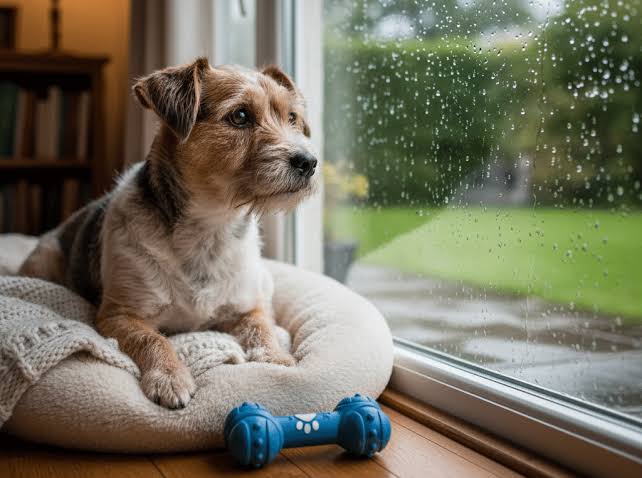
A rainy day does not require turning the living room into an all-day puppy gym. Young dogs need opportunities to sniff, learn, chew, explore and move, but they also need frequent sleep and calm periods. A better goal is to alternate short activities with rest rather than trying to exhaust the puppy indoors.
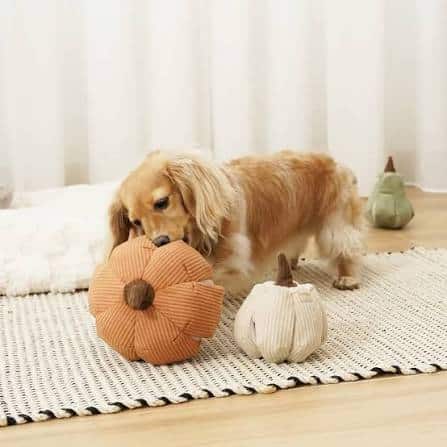
Indoor activity is most useful when it teaches skills that will still matter after the weather improves. A few minutes of recall practice, calm handling, food search or settling on a mat can be more valuable than an hour of chaotic chasing through the house.
A simple rainy-day rhythm
Think in cycles: toilet break, short activity, food or chewing, then rest. Puppies do not need constant entertainment between naps.
Morning: take the puppy outside for a toilet break, use part of breakfast in a sniffing game, practise one easy cue and then encourage a nap.
Midday: take another toilet break, work on name response or recall across the room, then offer calm chewing or quiet time.
Afternoon: try a cardboard-box search, gentle tug, handling practice or a short indoor exploration session.
Evening: lower the excitement. Use a lick mat, a simple “find it” game or a calm toy, then give the puppy time to settle.
1. Use breakfast as a sniffing game
Instead of feeding the entire meal from a bowl, scatter part of the puppy’s measured food over a clean floor or snuffle mat. Start in a small area so the puppy succeeds easily.
Sniffing is mentally engaging without requiring high-impact exercise. It is also easy to stop after a few minutes, which helps prevent the session from becoming overstimulating.
2. Practise name response
Say the puppy’s name once. When the puppy looks toward you, mark the moment with calm praise or a clicker if you use one, then reward. Repeat only a few times.
This is simple, but it builds the foundation for recall and attention around distractions later. Stop while the puppy is still interested.
3. Play short recall games across a room
Two people can sit a few feet apart and take turns calling the puppy. Reward arrival generously. Keep the distance short and the mood light.
Do not repeatedly call if the puppy is distracted. Make it easier by shortening the distance or using a quieter room.
4. Teach a mat or bed cue
Reward the puppy for stepping onto a mat, then for standing or sitting there, and eventually for settling. This gives you a useful behavior for visitors, cooking and future calm family time.
The American Veterinary Society of Animal Behavior supports reward-based training approaches rather than aversive methods. Our puppy training guide explains the same approach in more detail.
5. Create a cardboard-box search
Place a few open boxes on the floor and drop kibble into one or two. Let the puppy investigate. Remove staples, tape, plastic and labels first.
This is only appropriate if the puppy explores without swallowing cardboard. If the puppy immediately eats the box, switch to a sturdier puzzle feeder.
6. Play gentle tug with rules
Tug can be an excellent indoor game when the toy is long enough to keep teeth away from hands and the puppy can release calmly. Keep sessions short and pause if the puppy becomes frantic or starts redirecting onto clothing or skin.
A simple pattern is “take,” a few seconds of tug, “drop,” then restart. Reward release by making the game continue rather than by wrestling the toy away.
7. Practise cooperative handling
Rainy days are useful for teaching that brief touch predicts good things. Touch one paw, reward, and stop. Briefly touch an ear, reward, and stop. Handle the collar gently, reward, and stop.
This is not the time for forceful restraint. The goal is to build comfort with grooming and veterinary handling in tiny, successful steps.
8. Use a food toy without adding many calories
Take part of the normal meal and put it into a stuffed toy, slow feeder or lick mat. Add water if you need a softer texture. Avoid turning every enrichment session into peanut butter, cheese and treats.
Our food enrichment guide gives safe ideas that keep normal food at the center of the activity.
9. Play “find the toy”
Let the puppy watch you place a favorite toy partly behind a chair, then encourage a search. Later, hide it more completely. This is a useful non-food game for puppies that enjoy toys.
10. Build a tiny indoor exploration course
Arrange stable household objects so the puppy can walk around a chair, step over a low object placed flat on the floor or move between two boxes. Keep everything low and non-slip.
This is exploration, not jumping practice. Puppies are still developing physically, so avoid repeated stairs, high jumps or slippery races.
11. Work on calm chewing
Chewing can help a puppy settle, but choose items appropriate for the puppy’s size and chewing strength. Supervise new chews and remove anything that splinters, breaks into swallowable pieces or becomes small enough to choke on.
12. Practise settling while nothing happens
One of the most useful rainy-day activities is deliberately boring. Sit nearby while the puppy rests on a bed or mat. Reward calmness occasionally, then let the puppy sleep.
Dogs do not need to learn that humans provide nonstop stimulation. Learning to switch off is a real life skill.
Do not replace sleep with entertainment
Puppies sleep a great deal because growth and learning are tiring. Overtired puppies can become mouthy, frantic, zoomy and difficult to settle. Owners sometimes interpret that behavior as proof the puppy needs more exercise, then accidentally make the cycle worse.
If the puppy has already had movement, toileting, food and a little training, try a quiet rest period instead of adding another exciting game.
Keep toilet training consistent even in bad weather
Rain is inconvenient, but a young puppy still needs regular outdoor opportunities. Use an umbrella, sheltered area or short trip rather than allowing the puppy to practise indoor accidents whenever the weather is unpleasant.
Take the puppy out after waking, after eating or drinking, after active play and at other times when accidents commonly happen. Reward outdoor toileting immediately after the puppy finishes.
If accidents suddenly increase after previous progress, our puppy potty training regression guide explains when to reset the schedule and when a veterinary check may be appropriate.
What if the puppy hates the rain?
Do not drag a frightened puppy into overwhelming weather. Use very short, calm outings and reward investigation. A covered toilet area can help if available. Some puppies dislike heavy rain, wind or water hitting their face more than they dislike being outdoors generally.
Focus on the practical goal: enough outdoor opportunity to toilet, then return inside. Confidence can be built gradually in milder conditions.
Safety checks for indoor play
- Remove strings, small toy parts and household objects that can be swallowed.
- Use non-slip surfaces for active games.
- Block stairs if the puppy is likely to race up and down unsafely.
- Supervise cardboard and fabric activities until you know the puppy will not ingest them.
- Keep electrical cords, medication, cleaning products and human food out of reach.
The FDA’s household pet safety guidance is a useful reminder that rainy days can increase exposure to indoor hazards simply because the puppy is inside more.
How much indoor activity is enough?
There is no universal number of minutes because puppies differ by age, breed, health and temperament. Watch the individual. Productive activity leaves the puppy able to settle afterward. If each session produces more frantic behavior, reduce the intensity and increase quiet time.
Several short sessions spread through the day are usually easier for a puppy to handle than one long marathon.
Bottom line
A good rainy-day puppy routine alternates toileting, brief mental or physical activity and plenty of rest. Use meals for sniffing and problem-solving, practise useful life skills, keep games low-impact and resist the urge to entertain the puppy continuously. The goal is not to exhaust a young dog. It is to help the puppy learn, explore safely and settle well even when the weather keeps everyone indoors.


0 comments