
Puppy Food Labels Explained: Growth, Large Breeds, Calories and Feeding
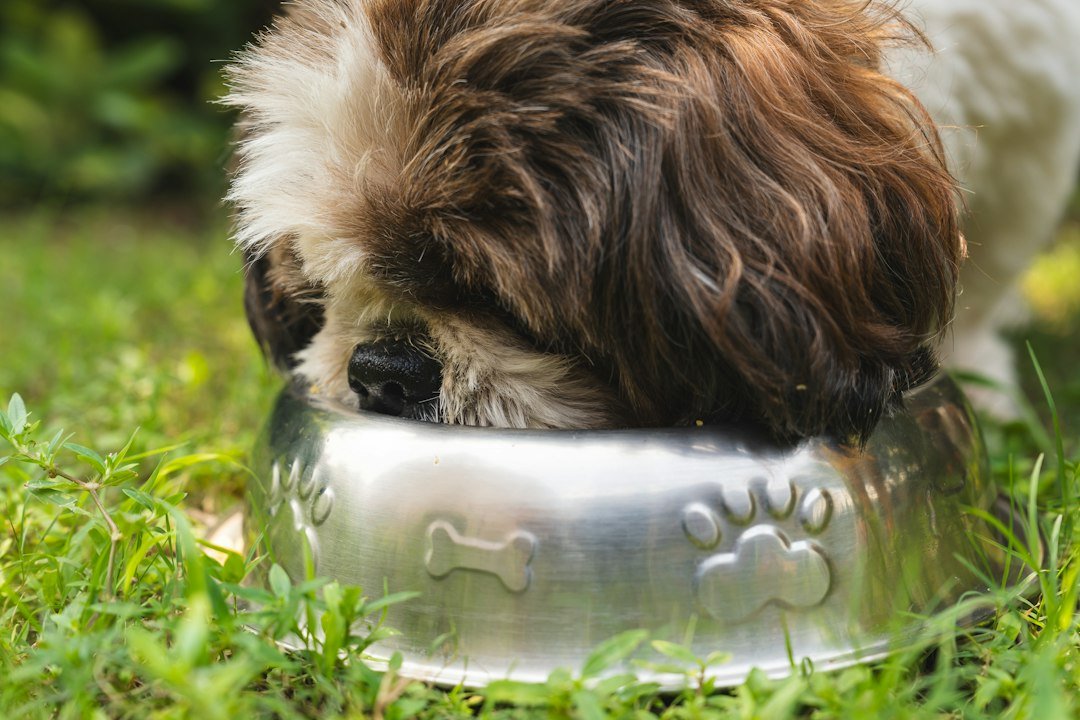
Puppy-food packaging is full of claims—“premium,” “natural,” “high protein,” “large breed,” “grain-free” and more—but the most important information is often in smaller print. A good puppy food should be nutritionally appropriate for growth, fed in enough quantity to support steady development, and adjusted so the puppy grows without accumulating excess body fat.
This guide explains how to read puppy-food labels, interpret growth and large-breed statements, compare calorie density, avoid unnecessary supplementation, and know when to transition toward adult feeding.
Start with the nutritional-adequacy statement
The AAFCO consumer guidance says the nutritional-adequacy statement is the key label section for determining whether a food is complete and balanced for the intended species and life stage.
For puppies, look for a statement indicating that the food is formulated for growth or, where appropriate, all life stages. A product intended only for adult maintenance is not the right base diet for a growing puppy.
Large-breed puppies need an extra label check
Large and giant puppies have particular growth considerations. Merck’s feeding guidance notes that large- and giant-breed puppies should receive a complete growth diet specifically formulated for large-size dogs.
Read the entire adequacy statement. For puppies expected to reach roughly 70 lb/32 kg or more as lean adults, the statement should indicate suitability for growth of large-size dogs.
Why controlled growth matters
More food does not create a healthier puppy. Merck notes that overfeeding during growth increases growth rate and is not desirable for skeletal development. The goal is steady, controlled development with an appropriate body condition.
Use our dog body-condition score guide to monitor rib coverage, waist and abdominal tuck while the puppy grows.
Calories matter as much as ingredients
Two puppy foods can both be nutritionally complete yet provide very different calories per cup or gram. A calorie-dense food requires a smaller portion.
Use the feeding chart as a starting point, then adjust according to growth rate and body condition. Puppies should be weighed regularly so excessive or inadequate gain is recognized early.
Protein percentage is not a simple quality ranking
A higher crude-protein number does not automatically make one puppy food superior. Growth depends on an appropriate balance of amino acids, energy, fat, minerals, vitamins and trace nutrients.
A complete growth food is designed around the whole nutrient profile, not one headline percentage.
Do not compare wet and dry food by crude percentages alone
Wet food contains much more water, so crude protein and fat percentages on the guaranteed analysis cannot be directly compared with dry kibble. Moisture changes the apparent percentages.
For meaningful comparisons, look at nutrients on a dry-matter or calorie basis when detailed comparison is necessary.
Calcium and phosphorus need balance
Growing bones require appropriate mineral nutrition, but more calcium is not better. Merck specifically warns that supplementing calcium, phosphorus or vitamin D beyond what is present in a complete growth diet is rarely necessary and can be inappropriate.
This matters especially in large-breed puppies, where excessive mineral intake can disrupt the intended nutrient balance.
Do not add supplements casually
If the puppy is eating a complete growth diet, routine multivitamins, calcium powders and “bone-building” supplements are usually unnecessary unless prescribed for a specific medical reason.
Always tell your veterinarian about supplements, chews and toppers because they can change the nutrient balance and calorie intake.
How often should puppies eat?
Merck recommends several meals per day during early growth. Puppies from weaning to about six months are often fed three meals daily, while many puppies from six to twelve months move toward two meals. Very small puppies may need more frequent feeding.
Meal timing should still be individualized to the puppy, household and any medical needs.
Small-breed puppies may need extra meal frequency
Very small puppies have limited stomach capacity. Merck notes that small-breed puppies may need to be fed more than three times per day. A very young toy-breed puppy that becomes weak, trembly, unusually sleepy or unwilling to eat needs prompt veterinary attention rather than an internet feeding hack.
Dry, wet or mixed puppy feeding
Puppies can grow normally on an appropriate complete dry food, wet food or combination. The format matters less than nutritional adequacy, calorie control and the puppy’s ability to eat the food comfortably.
Our wet dog food guide explains how complete canned foods differ from toppers and supplemental products.
Training treats can quietly distort the diet
Puppies learn through frequent reinforcement, which can mean many rewards each day. Use part of the measured puppy-food ration for routine training when practical and keep higher-value treats very small.
Treats and chews should not displace a large share of complete growth nutrition.
What does “all life stages” mean?
A food labeled for all life stages must be nutritionally adequate for growth as well as adult maintenance, so it can be more nutrient-dense than an adult-maintenance food. That does not mean it is automatically ideal for every puppy or every adult dog.
Use the specific adequacy statement and feeding directions, especially for large-breed growth.
What about grain-free puppy food?
“Grain-free” is an ingredient description, not a measure of nutritional quality. There is no blanket nutritional requirement for healthy puppies to avoid grains.
Choose a diet because it is complete and appropriate for growth, not because of a marketing trend.
How to evaluate the manufacturer
The WSAVA nutrition resources recommend looking beyond the package design and asking who formulates the food, what nutrition expertise the company uses, what quality-control processes are in place and whether detailed nutrient information is available.
How to compare two puppy foods
Use this order:
- Correct growth adequacy statement
- Large-breed suitability if relevant
- Calories per cup, can or gram
- Manufacturer nutrition expertise and quality control
- Practical factors such as availability, cost and palatability
- How the individual puppy actually grows and tolerates the food
How to change puppy food
When a healthy puppy changes foods, a gradual transition over several days can reduce avoidable digestive upset. Increase the new food while decreasing the old food.
If the puppy has persistent diarrhea, repeated vomiting, blood in stool, poor growth or marked appetite loss, contact a veterinarian rather than repeatedly switching foods.
When should a puppy switch to adult food?
Do not use one birthday for every breed. Merck notes that small and medium dogs may complete skeletal maturity earlier than large and giant breeds, which can take considerably longer.
Continue feeding complete growth nutrition until the puppy is approaching skeletal maturity. Use expected adult size, growth trend and veterinary guidance rather than switching because the dog “looks grown.”
Large-breed puppies should not be pushed to adult size quickly
Owners sometimes increase food because they want a large puppy to look bigger sooner. That is not a healthy goal. Slow, steady development is preferable to accelerated weight gain.
For a breed-specific example, see our Great Dane feeding guide.
Keep a puppy growth record
Record body weight, food amount and body condition regularly. Photos taken from the same angles can also help you see gradual changes.
If growth suddenly stalls or accelerates, review the feeding amount and speak with the veterinarian rather than making large calorie changes without context.
Common puppy-food label mistakes
- Choosing by front-of-bag claims before reading the adequacy statement
- Assuming more protein always means better food
- Adding calcium to a complete growth diet
- Ignoring calories per cup
- Using adult maintenance food too early
- Overfeeding large-breed puppies to make them grow faster
- Letting treats replace too much complete puppy food
Bottom line
The most useful puppy-food label information is not the marketing headline. Start with the growth adequacy statement, check large-breed suitability where relevant, compare calories, avoid unnecessary mineral supplements and monitor growth over time.
The best puppy diet is the one that supports steady development, healthy body condition and reliable digestion without encouraging excessive growth or body fat.
Use expected adult size to choose the right puppy-feeding path
Large and giant puppies need more careful growth management than a generic puppy chart suggests. Our Great Dane feeding guide shows how controlled growth applies to a giant breed, while the Labrador feeding guide covers large-breed growth and weight control. For variable-size crosses, the Goldendoodle feeding guide explains why expected adult size matters before choosing a growth formula.
For the full framework covering meal portions, treats, adult transitions and body-condition adjustments, use the complete dog feeding guide.



0 comments