
Goldendoodle Food Guide: Calories, Growth, Weight and What to Feed
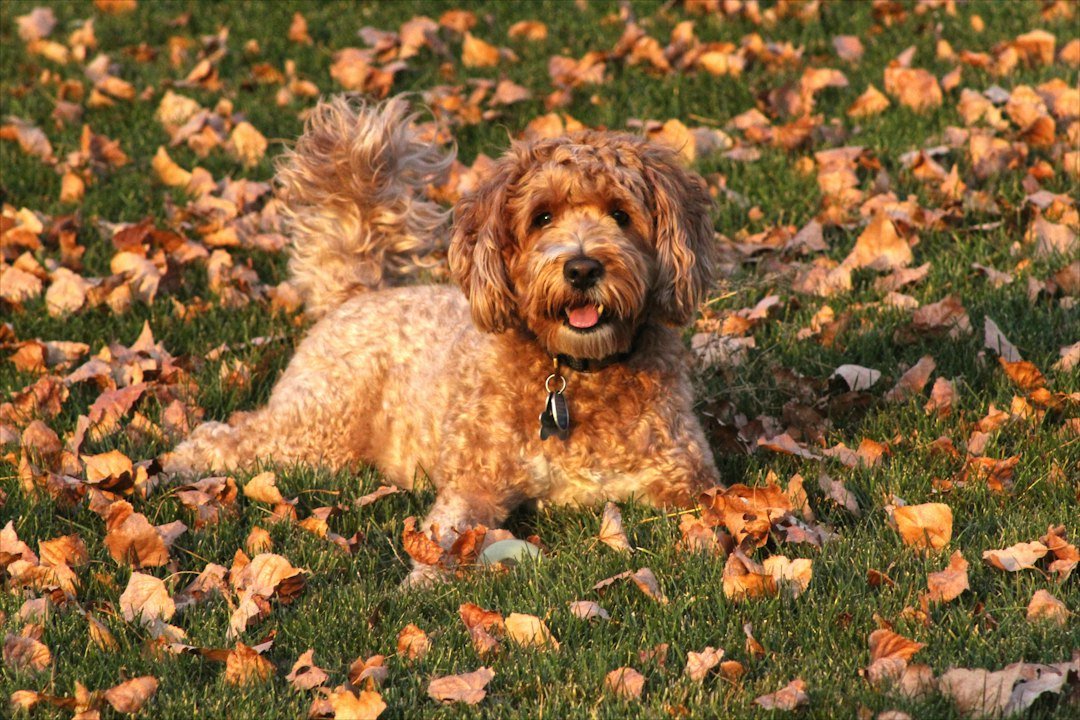
Goldendoodles vary far more in adult size and build than many established breeds because they are crosses between Golden Retrievers and Poodles of different sizes. That matters for feeding. A miniature Goldendoodle and a standard Goldendoodle should not be given the same calorie target simply because they share the same name.
The useful approach is to feed the dog in front of you: choose a complete-and-balanced food for the correct life stage, estimate calories from current size and activity, and adjust from body condition, weight trend, stool quality and overall health.
Start with the nutritional adequacy statement
The front of the bag may advertise “doodle,” “skin and coat,” “high protein” or “natural,” but the most important label detail is the nutritional adequacy statement. AAFCO advises selecting food for the animal’s species, life stage and condition, and using feeding directions as a starting point rather than a fixed prescription.
Goldendoodle size changes the feeding plan
Goldendoodles can be small, medium or large depending on the parents. That variation affects total calorie needs, kibble size preference and whether a growing puppy needs a diet appropriate for large-size dogs. Do not rely on a generic chart labeled only “Goldendoodle.”
Use the puppy’s expected adult size, current growth pattern and veterinary assessment. If the puppy is expected to reach a large adult size, choose a growth diet whose adequacy statement is appropriate for large-size dogs.
Do not force fast puppy growth
Fast growth is not the goal. Merck’s feeding guidance notes that slower, controlled growth is preferable to rapid growth and that puppy weight gain should be monitored and feeding adjusted. Overfeeding does not create a stronger frame; it mainly increases body fat.
For label-reading help, see our puppy food labels guide.
How many calories does a Goldendoodle need?
There is no single answer. Merck notes that energy requirements vary substantially even among animals of the same weight. Age, activity, neuter status, environment and lean body mass all influence calorie needs.
Start with the food label or a veterinary calorie estimate, then adjust from the dog’s response. A dog gaining excess weight needs fewer calories; a healthy dog losing weight may need more food or a medical evaluation.
Use body condition, not appetite, as the guide
Many dogs will happily eat more than they need. WSAVA and AAHA emphasize body-condition and muscle-condition assessment as part of nutritional management. Our dog body-condition score guide explains how to check rib coverage, waist and abdominal tuck.
Protein: enough matters more than extreme numbers
A complete growth or adult maintenance diet should provide adequate protein for the intended life stage. Healthy Goldendoodles do not need a bodybuilding-style high-protein diet simply because they are active or athletic.
When a dog does sustained work or high-volume sport, calorie density and overall nutrient balance become more important. Our active-dog nutrition guide explains how workload changes feeding needs.
Fat and calorie density
Fat is energy-dense. That can help a highly active dog maintain weight, but it can also make weight gain easy in a moderately active pet. Choose the food’s energy density to match real activity, not the breed’s reputation for being energetic.
Sensitive stomachs
Some owners report recurring soft stool, gas or food sensitivity in doodle-type dogs. Those symptoms are not proof of one breed-specific digestive defect. Fat level, fiber, treat load, abrupt food changes, parasites and gastrointestinal disease can all contribute.
See our sensitive-stomach dog-food guide before cycling through multiple foods without a plan.
Food allergy versus environmental allergy
Itching, ear disease and paw licking are often blamed on food, but environmental allergy, fleas and infection are common alternatives. A structured elimination diet under veterinary guidance is more useful than repeatedly switching retail proteins.
Wet, dry or mixed feeding?
All can work if the total diet is complete and calories are controlled. Dry food is convenient for measuring and training. Wet food adds moisture and may increase palatability. Mixed feeding is reasonable if you calculate the combined calories.
How often should you feed?
Young puppies generally need several meals each day. Many healthy adults do well with two measured meals. Use our dog feeding guide for a practical framework for portions, treats and meal frequency.
Training treats and enrichment
Goldendoodles are often highly trainable and food-motivated, which can lead to a steady stream of rewards. Those calories add up. Use tiny treats or part of the daily ration for training and puzzle feeders.
Dental health still matters
Do not choose food only by kibble size and assume that ordinary kibble cleans teeth. AAHA notes that dental diets with proven design and appropriate dental products can help reduce plaque or calculus, but routine oral care and veterinary dental assessment remain important.
Homemade and raw diets
Home-prepared feeding can be done well, but it should be formulated to meet all essential nutrient requirements. Growing puppies are especially vulnerable to calcium, phosphorus and vitamin-mineral imbalance. Raw feeding adds pathogen risk to the pet and household.
When to reassess the diet
- Unexpected weight gain or loss
- Persistent diarrhea, vomiting or excessive gas
- Loss of muscle condition
- Chronic itching or recurrent ear problems
- Poor appetite
- Exercise intolerance
- A change from puppy to adult life stage
Bottom line
The best Goldendoodle food is not a single breed-branded recipe. It is a complete diet chosen for the dog’s life stage, expected adult size, activity and health, then adjusted from body condition and weight trend. Because Goldendoodles vary so much in size, individualized portions matter more than a one-size-fits-all breed chart.
How to compare two Goldendoodle foods without getting lost in marketing
Compare the foods in this order: nutritional adequacy, calories, whether the formula fits the expected adult size and life stage, manufacturer expertise and quality control, then practical factors such as texture, cost and how the dog actually does on it. Ingredient lists can be useful for identifying a known ingredient during a veterinary diet trial, but they are a poor way to rank complete foods by overall quality.
When should a Goldendoodle switch from puppy to adult food?
There is no one birthday that fits every Goldendoodle because adult size varies so much. Smaller dogs tend to mature earlier than larger dogs. Use growth rate, expected adult size and veterinary guidance rather than switching simply because the dog reaches a calendar milestone. Switching too early can remove growth nutrition before it is appropriate; staying on a calorie-dense puppy food too long can make weight control harder.
Does coat type change nutritional needs?
Curly, wavy and straighter coats may differ in grooming needs, but there is no evidence-based requirement for a different base diet purely because a Goldendoodle has a particular coat texture. Poor coat quality can result from inadequate nutrition, parasites, skin disease, allergy or grooming problems. If the dog eats a complete food and the coat suddenly changes, investigate the cause rather than immediately adding supplements.
Fish oil and skin supplements
Omega-3 fatty acids can be useful for selected dogs, but dose matters. Complete foods may already contain EPA and DHA, and adding concentrated oil changes both calories and fat intake. Ask the veterinarian whether supplementation is appropriate and what dose fits the dog.
How to tell if the portion is right
Record the dog’s body weight and body-condition score, then keep the food amount stable long enough to see a trend. If body condition rises above ideal, reduce measured calories modestly and reassess. If the dog loses condition despite apparently adequate intake, check food measurement accuracy and consider a veterinary evaluation before simply adding large portions.
What if several people feed the dog?
Household inconsistency is a common reason portions become inaccurate. Put the entire day’s ration into one container each morning. Every meal, training reward and puzzle-feeder portion comes from that container. When it is empty, the day’s measured food is finished. This simple system prevents accidental double-feeding.
Food changes after neutering or activity changes
Energy needs can change after neutering, injury, seasonal changes or a reduction in exercise. The food itself may not need to change immediately; often the first adjustment is simply the measured calorie amount. Reassess body condition over the following weeks rather than assuming the old portion will remain correct forever.



0 comments