PetsFilled Us
You Are Reading
The Osprey in Shakespeare: Natural Sovereignty & Coriolanus Bird Symbolism
4
Shakespeare

The Osprey in Shakespeare: Natural Sovereignty & Coriolanus Bird Symbolism

The Osprey in Shakespeare: Natural Sovereignty & Coriolanus Bird Symbolism

Osprey in Shakespeare | The Osprey in Shakespeare: Majestic Raptor’s Natural Sovereignty

Introduction to Shakespeare’s Avian World

Within the rich tapestry of Shakespeare’s plays and poetry, birds of Shakespeare serve as powerful symbols, metaphors, and characters in their own right. From the nightingale’s lament to the lark’s morning song, Shakespeare’s avian references reveal profound insights into human nature. Among these feathered creatures, the osprey (Pandion haliaetus) makes a singular but significant appearance in Coriolanus, embodying themes of sovereignty, magnetic attraction, and natural dominance that resonate with modern bird enthusiasts and literary scholars alike.

Shakespeare’s writing demonstrates not just literary genius but remarkable ornithological observation—a testament to Elizabethan England’s connection with the natural world. The osprey’s unique characteristics made it particularly fascinating to early modern audiences, who attributed almost mythical qualities to this impressive raptor, much like the fascination surrounding proper cockatoo care and responsible parrot ownership today. For more on Shakespeare’s feathered references, explore our guide to the ruddock bird loved across Britain.

The Osprey in Shakespeare: Natural Sovereignty & Coriolanus Bird Symbolism

The Osprey’s Singular Shakespearean Appearance

Coriolanus: A Character Mirroring Nature’s Sovereignty

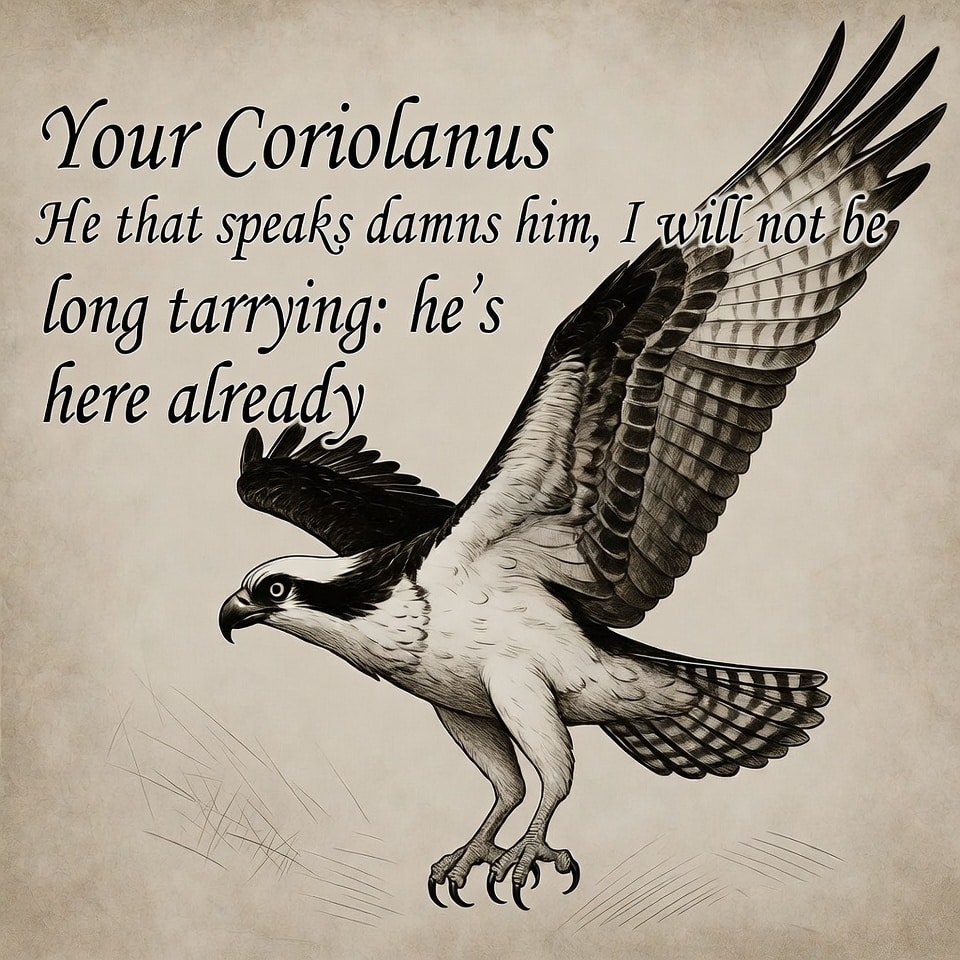
In Shakespeare’s Roman tragedy Coriolanus, written between 1605 and 1608, the osprey in Shakespeare appears in a powerful metaphor spoken by Aufidius in Act IV, Scene 7, a moment preserved in historical archives at the Folger Shakespeare Library:

“I think he’ll be to Rome
As is the osprey to the fish, who takes it
By sovereignty of nature.”

This compact simile captures the essence of both the osprey’s hunting prowess and Coriolanus’s character. Just as fish were believed to surrender themselves to the osprey’s natural authority, so too would Rome yield to Coriolanus’s inevitable conquest. The metaphor hinges on early modern beliefs about the osprey’s almost supernatural fishing abilities—a notion explored in contemporary natural histories that fascinated Shakespeare’s audience. For those interested in animal behavior, this relates to understanding whale eyes and dog behavior in canines as another form of animal communication.

Shakespeare’s Broader Avian Symbolism

While the osprey appears only once in Shakespeare’s works, the playwright references numerous other birds throughout his canon. The nightingale bird symbolizes love and melancholy in Romeo and Juliet, while the turtle dove birds represent faithful love. Understanding these avian references provides deeper insight into Elizabethan culture and natural philosophy, much like understanding different bird behaviors helps modern pet owners. For those interested in bird ownership, Shakespeare’s attention to avian detail reveals how deeply birds have always been woven into human culture and storytelling, similar to how dogs feature in our article on unique tricks to teach your dog.

The Osprey in Early Modern Natural History

Contemporary Descriptions and Misconceptions

Elizabethan and Jacobean naturalists documented the osprey Pandion haliaetus with a mixture of accurate observation and fanciful speculation. According to the British Library’s collection of early modern natural histories, these documents reveal how people of Shakespeare’s time interacted with and understood wildlife—a precursor to today’s pet care philosophies and wildlife conservation efforts.

One particularly curious belief involved the osprey’s anatomy. Many Elizabethans believed ospreys possessed one foot like a hawk for grasping and another resembling a goose for swimming, as documented in Project Gutenberg’s digital archive of early natural histories. This misconception attempted to explain their proficiency in both aerial and aquatic environments. While anatomically inaccurate, this belief highlights the osprey’s unique status as a bird equally at home in sky and water—a marvel of nature that captivated Shakespeare’s contemporaries, much like the Aegean cat breed fascinates modern cat enthusiasts.

Ornithological Reality: The True Nature of Pandion Haliaetus

The Osprey in Shakespeare: Natural Sovereignty & Coriolanus Bird Symbolism

Anatomy and Adaptations for Fishing

Modern ornithology reveals the osprey bird as even more remarkable than Elizabethan naturalists realized. According to the Cornell Lab of Ornithology, ospreys possess specialized adaptations that make them exceptional fishermen:

  • Reversible outer toes allow them to grasp fish with two toes forward and two backward
  • Nasal valves that close during dives to prevent water inhalation
  • Exceptional visual acuity capable of spotting fish from 100 feet in the air

These adaptations represent a pinnacle of piscivorous evolution, making the osprey uniquely suited to its ecological niche. For modern bird owners, understanding such specialized adaptations can provide insight into how different bird species have evolved for specific lifestyles, much like understanding different dietary needs outlined in our guide to the best dog food for skin allergies.

Global Distribution and Conservation Status

Shakespeare’s contemporaries would have encountered ospreys throughout Britain during breeding season. Today, we understand the osprey as a truly global species, found on every continent except Antarctica. The Audubon Society notes that after severe population declines due to DDT pesticide use in the mid-20th century, conservation efforts have led to remarkable recoveries in many regions through nesting platform installations and habitat protection, similar to conservation efforts for New Zealand’s ground-dwelling parrot.

For modern bird enthusiasts, observing ospreys represents a connection to the natural world that Shakespeare himself would have recognized. Just as proper bird care requires understanding specific needs, appreciating ospreys’ demands requires knowledge of their ecological requirements and conservation status. This connection between historical appreciation and modern conservation mirrors the responsible pet adoption practices we advocate in our article about the real cost of adopting a pet.

Shakespeare’s Rainbow: Connecting Avian and Meteorological Imagery

Meteorological References in Shakespeare

In her painting and accompanying essay for Birds of Shakespeare, artist Missy Dunaway connects the osprey with another natural phenomenon Shakespeare referenced: the rainbow. This connection is both visually striking and thematically appropriate, as both ospreys and rainbows capture attention through their dramatic appearances in nature, similar to how certain most affectionate cat breeds naturally draw human attention.

Shakespeare mentions rainbows four times in his works, twice in contexts of violence or distress. These meteorological references demonstrate how Shakespeare used natural phenomena to amplify emotional moments and thematic concerns, creating a rich tapestry of natural symbolism that enhances his dramatic works, much like understanding the science of cat behavior enhances our appreciation of feline companions.

Symbolic Connections Between Osprey and Rainbow

Both ospreys and rainbows share characteristics that would have appealed to Shakespeare’s symbolic sensibilities, creating powerful visual and thematic connections in his works, as analyzed by scholars at the Royal Shakespeare Company:

  1. Sudden Appearance: Both manifest dramatically in their respective elements
  2. Visual Spectacle: Each commands immediate visual attention
  3. Transient Majesty: Both represent fleeting moments of natural wonder
  4. Duality: Each combines beauty with potential danger or violence

This symbolic pairing demonstrates how Shakespeare’s natural references often work in interconnected networks, with different elements reinforcing similar themes. For those interested in pet behavior and animal symbolism, such connections reveal how humans have always found meaning in the natural world around them, similar to the cultural significance explored in our piece about Japanese dog breeds.

Coriolanus as Osprey: Psychological and Dramatic Analysis

The Magnetism of Natural Authority

Aufidius’s osprey metaphor in Coriolanus operates on multiple levels within the play’s psychological landscape, as discussed in critical analyses from JSTOR’s Shakespeare scholarship database. The comparison between Coriolanus and the osprey reveals:

Character Revelation: The comparison reveals Coriolanus’s essential nature—his inherent, almost instinctual dominance that requires neither persuasion nor diplomacy, much like certain dog breeds exhibit innate protective or herding behaviors without training, as explored in our Belgian Malinois training guide.

Dramatic Irony: While Aufidius believes Coriolanus will effortlessly take Rome “by sovereignty of nature,” the play ultimately reveals the limitations of this natural authority when confronted with political complexity—a lesson relevant to understanding both human and animal behavior in various contexts, including insights from cat training 101.

Contemporary Relevance of the Osprey Metaphor

Shakespeare’s osprey symbolism remains relevant to modern discussions of leadership, charisma, and natural authority. Just as Elizabethans believed fish surrendered to the osprey’s natural dominance, contemporary audiences recognize certain individuals—and even certain pet personalities—that seem to command attention through innate qualities rather than learned behaviors.

This understanding of natural authority can even apply to pet training, where recognizing and working with an animal’s innate tendencies often yields better results than attempting to completely reshape their natural behaviors, similar to principles discussed in our guide on how to train a dog effectively.

Comparative Avian Symbolism in Shakespeare

The Osprey Among Shakespeare’s Birds of Prey

Shakespeare employs various birds of prey to symbolize different aspects of power, aggression, and nobility in his dramatic works, according to ornithological-literary studies cited by the University of Oxford’s English faculty:

  • Eagles: Represent imperial power and height (used for Caesar, Jupiter, and monarchy)
  • Falcons: Symbolize nobility, hunting, and trained aggression
  • Kites: Often represent scavenging, opportunism, and a base nature
  • Osprey: Unique in representing specialized, natural sovereignty over a specific domain

This differentiation demonstrates Shakespeare’s precise use of ornithological symbolism, with each raptor serving distinct metaphorical purposes. For those interested in bird species and their cultural meanings, Shakespeare’s works provide a fascinating historical perspective on how different birds have been perceived and symbolized throughout history, much like the cultural perceptions discussed in our article about food names for dogs.

Water Birds in Shakespeare’s Symbolic Ecology

The osprey belongs to Shakespeare’s collection of water-associated birds, each with particular symbolic resonance in his plays and poetry. Understanding this avian symbolism enriches our appreciation of Shakespeare’s natural references and their dramatic functions:

  • Swan: Beauty, poetry, and dying song
  • Heron: Solitude and fishing (explored in our grey heron facts article)
  • Duck: Commonness and vulnerability
  • Osprey: Specialized mastery and natural authority

These symbolic associations demonstrate how closely Shakespeare observed and incorporated the natural world into his literary creations—a practice that modern nature writers and pet bloggers continue today when discussing different animal species and their characteristics, similar to our exploration of budgerigar birds.

Elizabethan Osprey Lore and Modern Ornithology

Folk Beliefs Versus Scientific Understanding

Elizabethan osprey lore represents a fascinating intersection of observation, folklore, and speculation that reveals how pre-scientific cultures understood the natural world, according to research compiled by the Bodleian Libraries:

Shared Elizabethan Beliefs:

  • Fish surrender to ospreys without resistance
  • Ospreys possess magnetic or dazzling qualities
  • Their very presence affects fish behavior

Modern Scientific Understanding:

  • Fish don’t surrender but are caught through speed and precision (per Smithsonian Institution research)
  • Ospreys have specialized adaptations but no supernatural powers
  • Their fishing success rate is approximately 70% (remarkable but not infallible)

This progression from folklore to science mirrors our broader understanding of animal behavior and ecology while preserving the wonder these magnificent birds inspired in Shakespeare’s time. Today, organizations like the Royal Society for the Protection of Birds continue to study osprey behavior, contributing to both scientific knowledge and conservation efforts, similar to studies referenced in our article about the osprey diet explained.

Artistic Representations: From Elizabethan Theater to Modern Painting

Visualizing Shakespeare’s Osprey

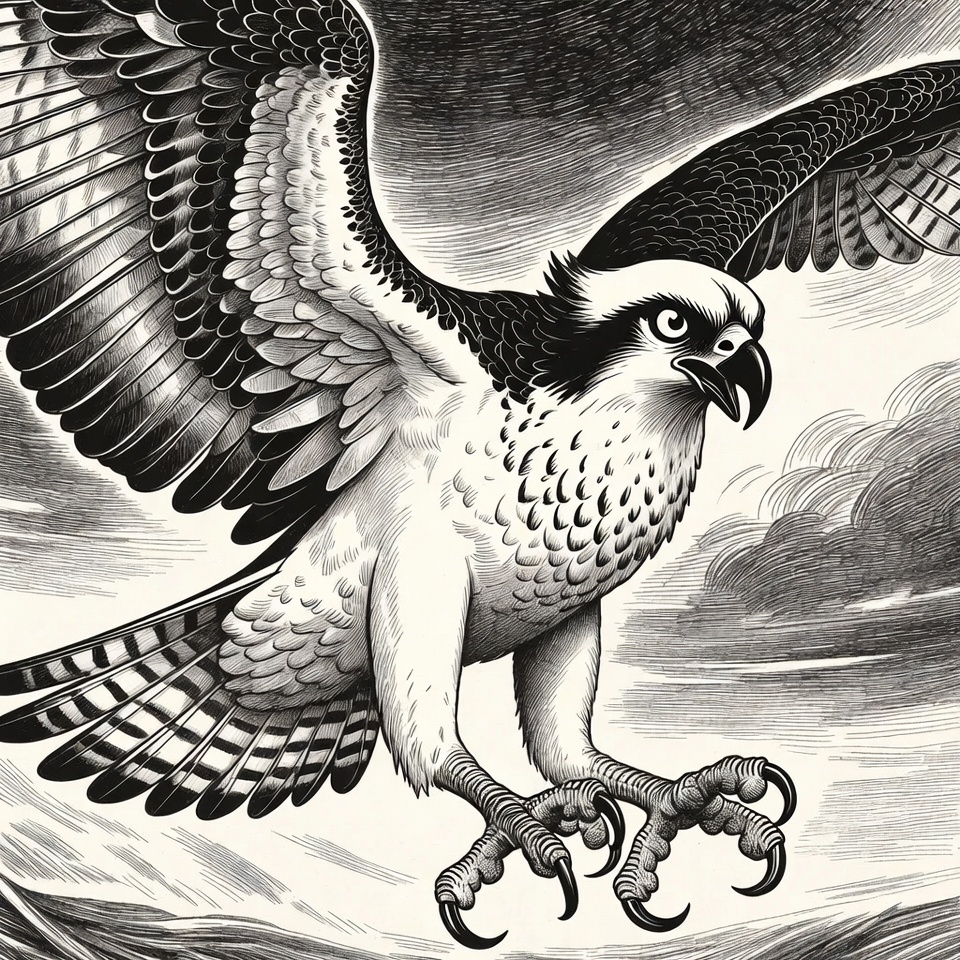
The osprey’s dramatic qualities have inspired artists across centuries, from Elizabethan stage designers to contemporary wildlife painters. Missy Dunaway’s painting for Birds of Shakespeare captures the bird’s majestic presence while incorporating the rainbow imagery Shakespeare associated with visual spectacle and natural wonder, much like artistic representations in our feature on Corvus corone.

Historical representations of Coriolanus often emphasize the martial and noble aspects of the character, but rarely visualize the osprey metaphor directly. This makes modern artistic interpretations particularly valuable for visualizing Shakespeare’s natural references and helping audiences connect literary symbols with actual creatures, similar to how illustrations enhance our article about the barnacle goose.

The Challenge of Representing Avian Symbolism

Creating visual art based on literary birds presents unique challenges that parallel the challenges of pet photography or wildlife illustration, as discussed in resources from the Victoria and Albert Museum:

  1. Balancing anatomical accuracy with symbolic representation
  2. Conveying metaphorical meanings through visual elements
  3. Connecting specific birds to their literary contexts
  4. Evoking the historical understanding of natural history

For those interested in avian art or pet portraiture, understanding these challenges enhances appreciation for works that successfully bridge accurate representation and artistic interpretation, similar to appreciating the photography in our winter care tips for pets.

Conservation and Cultural Legacy

The Osprey in Shakespeare: Natural Sovereignty & Coriolanus Bird Symbolism

From Shakespeare’s England to Modern Preservation

Shakespeare’s England featured richer wildlife populations than today, with ospreys breeding more widely across Britain, according to environmental history research from Cambridge University. The species suffered dramatic declines in subsequent centuries, making their recent recovery through conservation efforts particularly meaningful.

Modern osprey conservation involves strategies that pet owners might recognize from responsible pet care practices:

  • Nesting platform installations (providing appropriate habitat, explored in our osprey nesting platforms guide)
  • Habitat protection (creating safe environments)
  • Pollution reduction (maintaining health)
  • Public education and engagement (responsible ownership principles)

These efforts ensure future generations can experience the natural wonder that inspired Shakespeare’s powerful metaphor, much like responsible pet adoption ensures animals find safe, loving homes, as discussed in our article about the benefits of adopting a senior cat.

The Osprey in Contemporary Culture

Beyond Shakespeare, the osprey continues to captivate modern audiences through various cultural channels, as documented by the BBC Natural History Unit. Their remarkable fishing prowess features prominently in wildlife documentaries, while their conservation success stories inspire environmental advocacy. This enduring fascination suggests the osprey’s symbolic power—so effectively tapped by Shakespeare—remains potent in modern consciousness.

For pet owners and animal enthusiasts, the osprey’s story offers inspiring lessons in wildlife appreciation, conservation responsibility, and the enduring connections between humans and the natural world—themes central to the mission of responsible pet care and animal advocacy, similar to principles explored in our guide to creating the perfect cat-friendly home.

Conclusion: The Enduring Power of Shakespeare’s Natural World

Shakespeare’s single osprey reference in Coriolanus encapsulates the playwright’s remarkable ability to distill complex human realities through natural observation, according to literary analysis from Harvard University’s Shakespeare scholars. The metaphor works because it connects a specific bird’s observable behavior with profound human truths about power, nature, and authority—a testament to Shakespeare’s deep engagement with the natural world.

For modern readers and audiences, engaging with Shakespeare’s natural references offers multiple rewards that extend beyond literary appreciation:

  1. Historical Insight: Understanding Elizabethan natural philosophy and observation
  2. Literary Appreciation: Recognizing Shakespeare’s precise symbolic craftsmanship
  3. Ecological Awareness: Connecting historical perspectives with modern conservation
  4. Cultural Continuity: Tracing enduring human fascination with the natural world

As we continue to study and preserve species like the osprey, we maintain a living connection to the natural world that inspired Shakespeare’s enduring genius. The osprey’s dramatic recovery from near-extinction in many regions offers hope that future generations will continue to experience the “sovereignty of nature” that so captivated Shakespeare and his contemporaries—and that continues to inspire responsible pet ownership and wildlife appreciation today, principles we advocate in our comprehensive 10 essential tips for first-time bird owners.

About Author

Smith Sam brings research expertise to the PetsFilled team, specializing in pet behavior and naming trends. With a background in scientific communication, Smith translates animal behavior research into practical guidance for pet owners.

At PetsFilled, Smith leads naming trend analysis and contributes to comprehensive pet care guides. Their work involves analyzing naming data from shelters nationwide, researching name choices' impact on training, and interviewing veterinary behaviorists.

All articles undergo PetsFilled's editorial review and are vetted by our veterinary advisory board.