
Pet Hamster Species: Syrian, Chinese, Roborovski, Campbell’s and Winter White

Pet shops often use the word “breed,” but the common pet hamsters are better understood as different species. That distinction matters because size, handling style and social housing are not the same across all hamsters.

Syrian hamster
The largest common pet hamster. Syrians are solitary as adults and should be housed alone.
Chinese hamster
Small and more mouse-like in body shape, with a relatively longer tail than most pet hamsters. They are also generally kept singly.
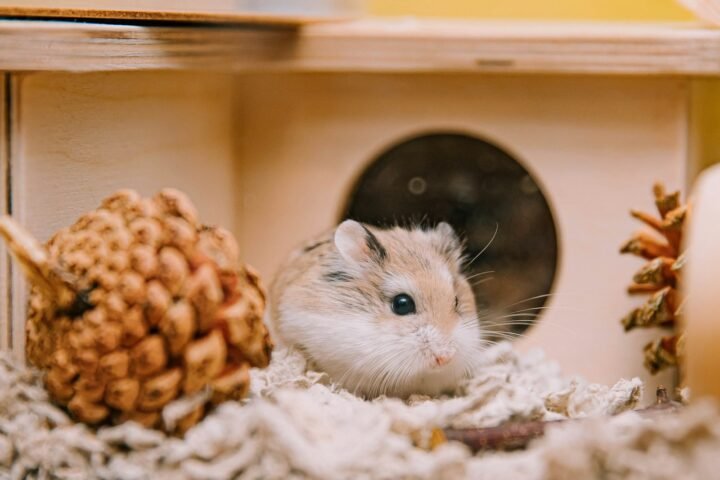
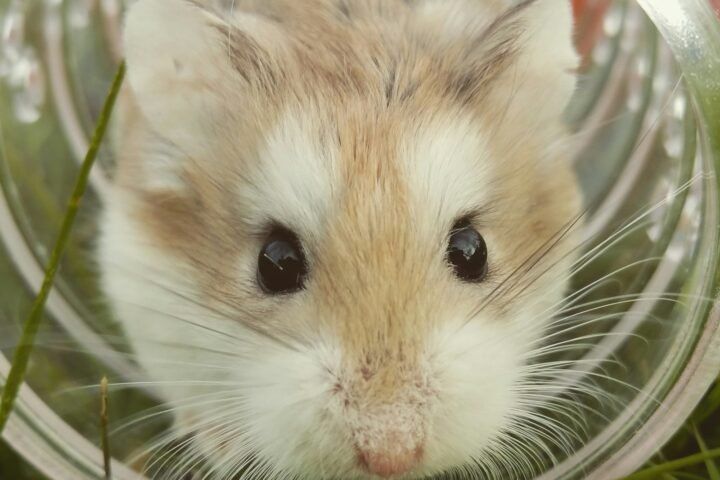
Roborovski dwarf hamster
Very small, fast and often better suited to observation than frequent handling.
Campbell’s dwarf hamster
A small dwarf species with variable coat colors in captivity. Social housing can be risky and requires careful monitoring.
Winter white dwarf hamster
Another dwarf species, historically known for seasonal coat changes in wild conditions. Pet lines can be difficult to distinguish from Campbell’s because hybridization has occurred in captivity.
Blue Cross lists Syrian plus four dwarf-type pet hamsters, while the RSPCA specifically warns that Syrian and Chinese hamsters are not naturally sociable with other hamsters.
Do not mix species
Different hamster species should not be housed together. Even same-species dwarf groups can become aggressive and may need immediate separation.
Choose by care fit, not appearance
Consider adult size, handling tolerance, enclosure setup and whether you want an animal mainly to observe or interact with.
“Breed” is the popular search term, but species is more accurate
People often search for “hamster breeds,” but the Syrian, Chinese, Roborovski, Campbell’s Russian dwarf and winter white dwarf hamsters are not simply color varieties of one domestic species. They belong to different species with different natural histories and some important differences in size, social behavior and handling.
RSPCA notes that there are many hamster species worldwide and identifies these five as the common pet types. Using the correct species matters more than the label on a pet-shop cage card.
Quick comparison before choosing
Swipe horizontally to view the full table.
| Species | Relative size | Typical handling style | Social housing |
|---|---|---|---|
| Syrian | Largest common pet hamster | Often easiest for beginners once tame | House alone |
| Chinese | Small, slender body | Can become calm but may be quick | House alone |
| Roborovski | Very small | Extremely fast; often better for observation | Usually safest individually for ordinary pet homes |
| Campbell’s dwarf | Small | Fast but can tame well | Group housing can fail; separation must be possible |
| Winter white dwarf | Small | Often manageable with patient handling | Group housing can fail; separation must be possible |
Syrian hamster: the largest common pet species
Syrian hamsters are often recommended to first-time owners because their larger body can make gentle handling easier once the hamster is comfortable with people. Their size also means accessories need to be genuinely large enough: wheel diameter, tunnels, hides and door openings should accommodate the adult animal with full cheek pouches.
Adult Syrians are strongly territorial. RSPCA advises that Syrian hamsters should live alone. Keeping two together because they appeared peaceful as juveniles can lead to serious fighting as they mature.
Syrian coat varieties are not separate species
Long-haired, short-haired, satin and different-colored Syrians may be sold under descriptive names. Those are coat or color varieties within the Syrian hamster, not separate species with fundamentally different care requirements.
A “teddy bear hamster” is generally a marketing or pet-shop term for a long-haired Syrian, not another biological type.
Chinese hamster: not simply another dwarf hamster
Chinese hamsters have a more elongated, mouse-like body and a visibly longer tail than the other common pet hamsters. They are small and agile, which can make handling feel different from handling a Syrian.
RSPCA includes Chinese hamsters with Syrian hamsters in the group that should be housed alone. Do not assume every small hamster should live with another hamster because the shop calls it “dwarf.”
Roborovski hamster: tiny, fast and fascinating to watch
Roborovskis are among the smallest commonly kept pet hamsters and are famous for speed. Many individuals can become accustomed to their owners, but they are often more rewarding for people who enjoy watching natural behavior than for someone who expects frequent cuddling.
The enclosure still needs substantial floor area and deep bedding. A smaller animal does not mean a tiny cage is acceptable.
Campbell’s Russian dwarf hamster
Campbell’s hamsters are compact dwarf hamsters found in a range of colors in captivity. They can be quick but often become manageable with patient, low-stress handling.
Some welfare guidance allows carefully managed same-sex dwarf groups formed early in life, but RSPCA warns that even compatible dwarf hamsters can later fall out and may need permanent separation. For ordinary pet homes, keeping one hamster per suitable enclosure removes that conflict risk.
Winter white dwarf hamster
Winter whites are named for seasonal coat changes seen under natural conditions in some wild populations. Pet animals do not necessarily change to a white winter coat, especially under stable indoor lighting and because captive lines differ.
Campbell’s and winter white hamsters can be difficult to distinguish visually, and hybridization in the pet trade has complicated identification further. If exact species matters to you, ask the breeder for documented lineage rather than relying on color alone.
Hybrid dwarf hamsters complicate pet-shop labels
Some hamsters sold as Campbell’s or winter whites may have mixed ancestry between those two closely related dwarf species. That means internet appearance guides can give false confidence.
For an owner, the practical response is to focus on the individual hamster’s size, health and behavior while using a suitably large enclosure and appropriately sized equipment.
Which hamster is easiest to handle?
For many beginners, a calm Syrian is physically easier to handle because of its larger body. But species does not guarantee temperament.
A well-socialized dwarf hamster may be calmer than a poorly handled Syrian. Age, previous handling, stress level and the way the owner approaches the hamster all matter.
Which hamster is best for children?
No hamster should be treated as a child’s responsibility alone. RSPCA emphasizes that hamsters have complex needs and adults should remain responsible for their care.
Because hamsters are most active in the evening and at night, they may be asleep during the hours a young child most wants to interact. Waking a hamster repeatedly for daytime handling can create stress and increase the chance of defensive biting.
Which hamster is best if you mostly want to observe?
Roborovskis can be excellent for owners who enjoy watching fast, natural activity in a well-designed enclosure. Their small size and speed can make frequent handling more challenging.
A rich habitat with deep bedding, foraging and a correctly sized wheel can make observation highly rewarding even when the animal does not enjoy being held.
Which hamster needs the largest accessories?
Syrians need larger wheels, hides and tunnel openings because of their adult body size. But all species need a genuinely spacious enclosure.
Do not scale the entire habitat down just because the hamster is a dwarf species. Floor area supports movement, burrowing and enrichment regardless of body size.
All species need deep bedding
Hamsters are burrowing animals. Deep substrate allows them to construct tunnels, nests and food stores. The bedding zone is not optional decoration; it is part of normal behavior.
Use low-dust, absorbent material and avoid fluffy strand-like nesting products that can wrap around limbs or be dangerous if swallowed.
All species need a properly sized wheel
The wheel should let the hamster run without a strongly arched back. Solid running surfaces are safer than wire mesh.
RSPCA describes a good-quality, solid wheel as one part of normal exercise, while also stressing that the wheel should not be the only enrichment available.
All species need quiet daytime rest
Hamsters are mainly active at dusk and during the night. The enclosure should be in a quiet, dry location where daytime sleep is not constantly interrupted by people, televisions, vacuuming or other pets.
Predator pets can create stress
Cats and dogs may stare at or paw at a hamster enclosure even when they cannot reach the hamster. RSPCA notes that predator scent and presence can be stressful.
Keep the enclosure physically secure and positioned where the hamster is not continually exposed to another pet’s attention.
Do not house different hamster species together
Different species should not share an enclosure. They communicate differently, vary in size and can injure one another.
Even with dwarf hamsters of the same species, social housing requires careful management and a backup enclosure because fighting can emerge suddenly.
Fighting is not harmless play
RSPCA specifically warns owners not to dismiss fights as play-fighting. Chasing, biting, wounds or one hamster being excluded from food or hides can escalate quickly.
If hamsters fight, separate them safely and permanently rather than repeatedly attempting reunion after injury.
Appearance is a poor reason to choose a species
A long-haired Syrian may look especially appealing, or a Roborovski may look irresistibly tiny, but the better question is whether you can support that animal’s activity pattern, enclosure needs and handling style.
Ask these questions before choosing
- Do I want frequent handling or mainly observation?
- Can I provide a large enclosure with deep bedding?
- Can I fit the correct wheel and hides for this species?
- Am I comfortable with an animal active mainly at night?
- Can I keep the hamster away from predator pets and loud disturbance?
- If I am considering dwarf companions, do I have a second full enclosure ready if they fight?
- Do I have access to a veterinarian who treats small mammals?
Do different species need different diets?
The basic nutritional pattern is similar: use a complete hamster diet and provide fresh water, then use suitable fresh foods and treats in modest amounts. Species-specific medical issues may change an individual diet, so avoid building the feeding plan from social-media lists alone.
Scatter feeding part of the dry ration can support normal foraging and reduce reliance on one food bowl.
Life expectancy should not be the deciding factor
Hamsters are relatively short-lived pets, commonly living only a few years. Individual lifespan varies with species, genetics, health and care.
Choose the species whose care style fits your household rather than trying to maximize life expectancy from broad averages.
What good breeders or rescues should be able to tell you
Ask the exact species, approximate age, sex, health history, previous housing, handling experience and current diet. If the hamster came from a group, ask whether there has been any aggression.
If a seller cannot identify whether the hamster is Syrian, Chinese or one of the dwarf types, treat other specific claims about ancestry cautiously.
Pet-shop names that can confuse new owners
Terms such as teddy bear hamster, black bear hamster or fancy hamster usually describe coat, color or marketing categories within Syrian hamsters. They do not create new biological species.
Similarly, “Russian dwarf” may be used loosely for Campbell’s, winter white or hybrid animals. Ask for the scientific or clearly defined common species name when possible.
A species comparison is only the beginning
Once you choose a hamster, welfare depends more on the habitat and daily routine than on the name. Deep bedding, hiding, foraging, a correct wheel, low-stress handling and prompt veterinary care matter across the common pet species.
Choose by the lifestyle you can support
If you want the easiest handling experience, a calm Syrian may suit you better than a very fast Roborovski. If you mainly enjoy watching natural behaviour, a small active dwarf species can be rewarding. The better match is about care fit, not which hamster looks most unusual in a photograph.
Do not buy two because the shop says they are “friends”
Young dwarf hamsters may be displayed together, but social stability can change as they mature. If you choose more than one dwarf hamster, you must be prepared to separate them permanently at short notice if aggression develops.
For Syrian and Chinese hamsters, the safer rule is simple: one hamster per enclosure.
That choice also makes feeding, health monitoring and behavior tracking easier because changes belong to one known animal.
For a Syrian-specific guide, see our Syrian hamster care guide. For first-time setup, use our new hamster owner guide.

0 comments