
Signs Your Indoor Cat Is Bored: What to Watch and How to Add Better Enrichment
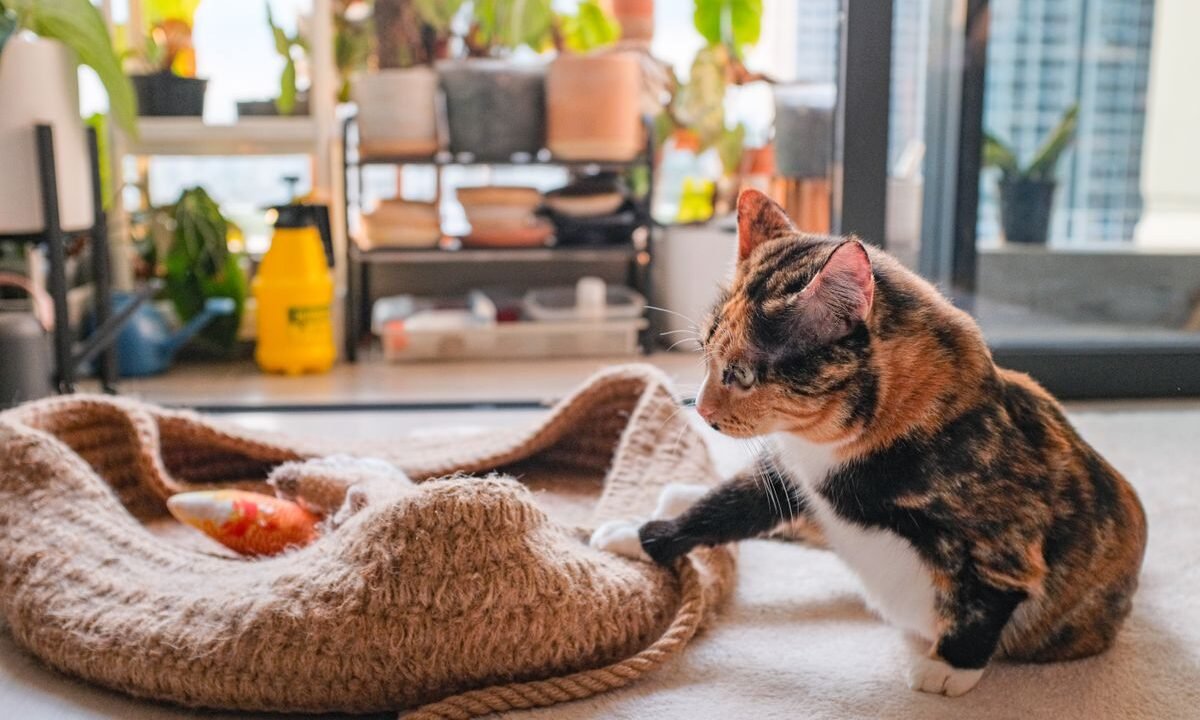
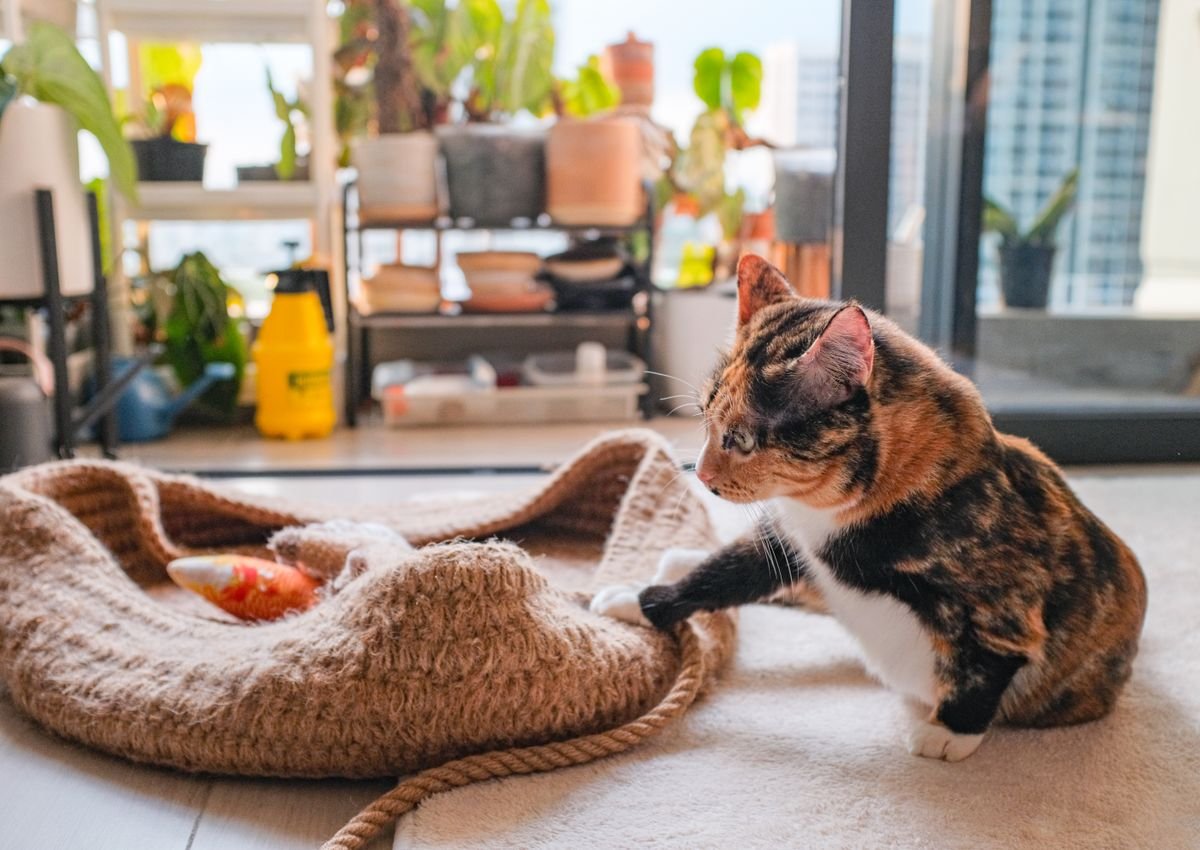
An indoor cat can be safe from traffic, predators and infectious disease while still becoming under-stimulated. Boredom is not a diagnosis, and many behaviors people call “bored” can also come from pain, anxiety, conflict or illness. The useful approach is to look for a pattern: has the cat lost healthy outlets for stalking, climbing, scratching, exploring and social interaction?
For the wider behavior framework behind play, scratching, hiding and stress signals, see the Cat Behavior guide. This page focuses specifically on under-stimulation and enrichment.
Repeated attention-seeking can be one clue
A cat that constantly interrupts work, vocalizes for activity or repeatedly brings toys may simply be social and engaged. But if the behavior has increased and daily play is minimal, adding predictable activity can help.
Destructive scratching may increase when choices are limited
Scratching is normal. Problems are more likely when the home offers too few attractive scratching surfaces or when they are placed where the cat rarely spends time.
Our cat scratching guide explains how to redirect the behavior without punishment.
Nighttime zooming is not automatically boredom
Cats naturally show bursts of activity, especially around dawn and dusk. A young cat racing through the home at night may need better timing of play and feeding, but a sudden change in activity or vocalization deserves closer attention.
Overeating can become part of a low-activity routine
When every calorie arrives in a bowl with no hunting or foraging component, some cats eat quickly and then have little to do. That does not mean every overweight cat is bored, but food delivery can be made more engaging.
Our food enrichment guide covers puzzle feeding, scatter feeding and simple foraging games.
Overgrooming is not a boredom diagnosis
Excessive licking can occur with allergies, parasites, pain, skin disease and stress. Do not treat hair loss or skin damage as an enrichment problem until medical causes have been considered. See our cat overgrooming guide for the health and behavior differential.
A cat may stop engaging with toys that never change
Leaving every toy on the floor all day can make them part of the furniture. Rotation can restore novelty without requiring constant buying. Our cat toy rotation guide explains a practical schedule.
Window watching can be enrichment—but it needs balance
A secure window perch can provide movement, sound and visual interest. For some cats, however, seeing unfamiliar outdoor cats can increase territorial stress. Watch body language rather than assuming every window view is relaxing.
Climbing opportunities matter
Cats use vertical space for movement, observation and social distance. A home with floor-level resources only can feel restrictive, especially in multi-cat households. Cat trees, shelves and secure elevated resting spots create more usable territory.
Short hunting-style play often works better than random toy waving
Move wand toys like prey: away from the cat, around corners, under objects and with pauses. Let the cat stalk, chase and catch. Our indoor cat exercise guide gives additional movement ideas.
Use several small play sessions
Many cats prefer short, successful play periods rather than one long session. The cat’s age, health and individual interest matter more than forcing a fixed number of minutes. For timing guidance, see how much daily playtime a cat may need.
Independent play should still be safe
Some toys are appropriate to leave out; others, such as string-like toys that can be swallowed or entangle a cat, are better used under supervision. Our cat toy safety guide separates interactive toys from safer independent options.
Social boredom and social stress are different
Adding another cat is not an automatic solution for a bored cat. Some cats enjoy feline companionship; others find a new cat stressful. Enrichment should improve the existing cat’s environment before another animal is introduced for entertainment.
Make daily life predictable enough to feel safe
Enrichment works best when the cat can also rest. Constant novelty, frequent rearrangement and forced interaction can become stressful. Keep core resources stable while rotating optional activities.
When to involve a veterinarian
Contact a veterinarian when a behavior change is sudden or comes with reduced appetite, weight change, altered litter-box use, vomiting, mobility problems, excessive grooming, hiding or other health signs. Older cats in particular may become less active because of arthritis or other disease rather than boredom.
A simple enrichment reset
- add one secure elevated resting place;
- provide at least one good vertical or horizontal scratcher;
- schedule two or three short play opportunities;
- rotate a few toys rather than replacing everything;
- make part of the daily food ration require light foraging;
- offer quiet hiding places;
- watch what the cat actually chooses.
Boredom usually shows up as a pattern, not one behaviour
A single torn sofa or midnight sprint does not diagnose under-stimulation. Look for several changes together: repetitive attention-seeking, little independent exploration, overeating, destructive use of the environment and a daily routine with very few outlets.
First ask whether anything medical changed
Pain, thyroid disease, cognitive change, urinary problems and skin disease can all alter activity or vocalisation. A sudden behaviour change in an adult or senior cat deserves medical consideration before it is labelled boredom.
Map what the cat actually does all day
For one or two days, notice where the cat sleeps, when it becomes active, which windows or rooms it uses, when it seeks attention and whether toys are touched without prompting. This simple observation often shows where enrichment is missing.
Use the cat’s hunting sequence
Good play has pauses, stalking, pursuit and a successful catch. A toy waved constantly in the cat’s face may be less engaging than one that disappears behind furniture and behaves like prey.
Rotate access instead of buying more toys
Keep a small selection available and put the rest away. Reintroduce them later. Novelty can return without adding clutter or spending money every week.
Make vertical space usable, not decorative
A tall cat tree is useful only if the cat likes its location and can reach the platforms comfortably. Place vertical resources near windows, family areas or travel routes the cat already values.
Scratching is enrichment too
Provide both vertical and horizontal options if the cat uses both. Scratching supports stretching, marking and normal claw maintenance. Place scratchers near sleeping areas and existing furniture targets.
Food can become an activity
Use part of the normal ration in a simple puzzle, scatter feed or several small feeding stations. Our food enrichment guide explains how to avoid adding extra calories.
Boxes and paper can be enough
Enrichment does not need to be expensive. Cardboard boxes, packing paper without staples, tunnels and rearranged safe furniture can create exploration opportunities.
Use scent carefully
Some cats respond to catnip or silver vine, while others do not. Offer small amounts occasionally and observe the reaction. Avoid essential oils and concentrated fragrance products around cats.
Window enrichment needs a safety check
Secure screens and stable perches matter. If outdoor cats cause staring, tail lashing or redirected aggression, the view may be stressful rather than enriching.
Multi-cat homes need individual enrichment
One confident cat may monopolise the best perch or puzzle feeder. Provide duplicated resources and separate play opportunities so quieter cats are not excluded.
Older cats still need stimulation
Senior cats may prefer shorter, slower sessions rather than no play at all. Our senior-cat play guide shows how to adapt movement for mobility changes.
Kittens need more frequent outlets
Young cats often cycle between intense activity and sleep. Several short play opportunities usually fit better than one long session. See our kitten playtime guide.
Do not add another pet as an enrichment product
A second cat can create companionship or conflict. Add another animal only because the household can support that animal, not because the first cat seems bored.
Use success, not effort, to judge enrichment
The best activity is one the cat voluntarily uses. If a complicated puzzle is ignored while a cardboard box is visited daily, keep the box. Enrichment should fit the cat rather than impress the owner.
A seven-day reset can reveal preferences
Offer one small change each day: a new box arrangement, a different wand pattern, a food puzzle, a rotated toy, an accessible perch, a paper bag without handles, or a short scent game. Note which options the cat returns to without prompting.
When boredom is probably not the whole story
If the cat is hiding more, losing weight, drinking differently, eliminating outside the box, vomiting, overgrooming or showing mobility changes, involve a veterinarian. Enrichment can support wellbeing, but it should not be used to explain away illness.
Bottom line
Possible boredom signs include repeated attention-seeking, low engagement, destructive use of the environment and a daily routine with few opportunities to stalk, climb, scratch, forage or explore. But boredom is a pattern, not a diagnosis. Start with our broader indoor cat enrichment guide, add activities the individual cat actually uses, and investigate medical causes when behavior changes unexpectedly.
0 comments