
Dog Enrichment Food Ideas for Lick Mats and Puzzle Toys
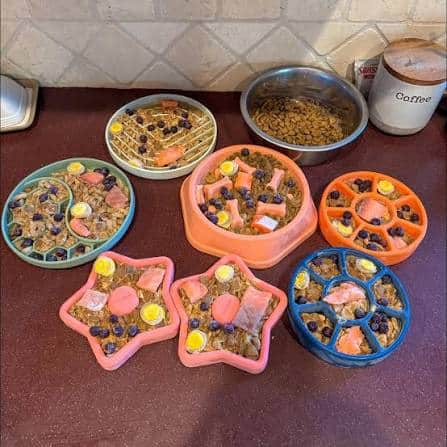
Food enrichment can turn part of a dog’s normal meal into sniffing, licking, chewing and problem-solving time. It does not need elaborate recipes or expensive ingredients. In many homes, the safest and most nutritionally predictable filling is simply the dog’s usual food presented in a different way.
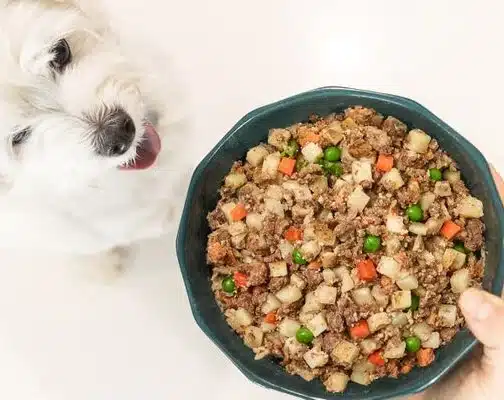
The purpose of food enrichment is not to create a second diet. It is to change how the dog gets some of the calories it already needs. That distinction matters because lick mats, stuffed toys and puzzle feeders can quietly add hundreds of extra calories if every activity is filled with peanut butter, cheese and treats.
Start with the dog’s normal daily food
Before adding anything special, set aside part of breakfast or dinner. Kibble can be scattered, hidden, softened with warm water or packed into a toy. Wet food can be spread thinly over a lick mat or placed in a puzzle designed for soft food.
This keeps the nutritional balance predictable and makes it easier to control weight. The AAHA nutrition guidelines emphasize limiting treats and extras so that complete and balanced food remains the main source of calories.
How to choose an enrichment filling
A good filling should meet three tests: your dog tolerates it, the amount fits the daily calorie budget, and the texture works safely with the toy. A healthy adult dog may tolerate a tiny amount of plain banana or yogurt, while a dog with pancreatitis, diabetes, kidney disease, food allergy or a prescription diet may need to use only approved foods.
If your dog has a medical condition, ask your veterinarian before adding human-food ingredients. Enrichment is still possible on a therapeutic diet; you simply use part of that prescribed food in a different format.
12 simple enrichment combinations
These are starting ideas, not nutritional prescriptions. Keep portions small and use ingredients your dog has already eaten safely.
- Soaked kibble: cover part of the normal ration with warm water, allow it to soften, then pack it into a suitable toy.
- Wet food smear: spread a thin layer of the dog’s usual canned food across a lick mat.
- Kibble-and-water freeze: combine measured kibble and water in a toy, then freeze if your dog handles frozen enrichment calmly.
- Banana and kibble: mix a teaspoon-sized amount of mashed ripe banana with regular food for a larger dog, or less for a small dog.
- Plain pumpkin and kibble: use plain pumpkin puree, not sweetened pie filling.
- Cooked carrot mash: add a little plain cooked carrot for texture.
- Green bean pieces: mix plain, unsalted green beans among kibble.
- Apple and kibble: hide tiny seedless, core-free apple pieces for dogs that tolerate apple.
- Cucumber pieces: use small plain pieces for texture with relatively few calories.
- Cooked egg: add a small amount of plain, fully cooked egg and count it as an extra.
- Plain yogurt: use only a small amount for dogs that tolerate dairy and avoid products containing artificial sweeteners.
- Single-food puzzle: skip the extras entirely and use the dog’s normal kibble in a snuffle mat, scatter game or commercial puzzle.
Peanut butter requires an ingredient check
Peanut butter is popular because it is sticky, but it deserves caution. Some products can contain xylitol, a sweetener that is dangerous to dogs. Always read the full ingredient list before offering any peanut butter product. Even xylitol-free peanut butter is calorie-dense, so a thin smear is plenty.
If you want a lower-calorie option, soften the dog’s kibble with water and mash it into a paste. The dog still gets the licking and problem-solving experience without a large calorie increase.
Foods that do not belong in dog enrichment
Do not use chocolate, grapes, raisins, currants, onions, garlic, chives, macadamia nuts, alcohol, raw yeast dough or products containing xylitol. Avoid cooked bones and items likely to splinter, crack teeth or become lodged in the digestive tract.
The FDA lists several common household items that can endanger pets, and our dog toxic-food guide gives a practical kitchen reference.
How to use a lick mat safely
A lick mat should encourage calm licking, not chewing the mat itself. Spread food thinly so the dog can access it without tearing at the material. Supervise the first several uses. If the dog flips, shreds or bites pieces from the mat, switch to a sturdier format.
Freezing a lick mat can make it last longer, but harder is not always better. Some dogs become frustrated when the food is inaccessible. Start with a normal room-temperature mat and increase difficulty only if the dog remains relaxed.
How to use a stuffed toy
Choose a toy sized for your dog and inspect it for damage. Begin with loose kibble or a lightly packed mixture so the dog learns that persistence pays off. Later, you can pack more firmly or freeze part of the filling.
For dogs that are new to enrichment, make the first few sessions almost too easy. If the toy repeatedly rolls under furniture or the opening is too small for the dog to succeed, the activity may create frustration rather than enrichment.
Puzzle feeders should match the dog
A puzzle that is enjoyable for one dog may be stressful for another. Watch the dog’s body language. Productive problem-solving usually looks focused but flexible: sniffing, pawing, changing strategies and returning to the task. Frustration may look like frantic barking, chewing the puzzle itself, abandoning it quickly or guarding it intensely.
If the dog struggles, simplify the puzzle. Remove covers, leave drawers partly open or scatter some food around the device so success comes quickly.
Enrichment for fast eaters
Some dogs benefit from slowing meals, but a puzzle is not automatically the right tool for every fast eater. Dogs that become highly aroused around food may need simple slow-feeding options rather than complicated challenges.
Divide meals into two or three activities instead of loading one huge toy. A small scatter, a short training session and a simple feeder can provide variety without making the dog work intensely for every calorie.
Enrichment for puppies
Puppies are still growing, so most of their calories should come from a diet formulated for growth. Use part of the measured puppy ration in toys rather than building recipes around human foods.
Supervision is particularly important because puppies explore with their mouths. Cardboard, fabric and rubber toys can all become swallowing hazards if a puppy starts dismantling them. For general feeding decisions, see our puppy food guide.
Enrichment for senior dogs
Older dogs may enjoy food puzzles but need easier access. Arthritis, neck pain, dental disease, reduced vision or cognitive changes can make low-to-the-ground or very hard puzzles unpleasant. Choose stable toys, non-slip flooring and soft foods when appropriate.
If an older dog suddenly loses interest in food enrichment that it previously loved, consider whether pain, dental problems, nausea or another health issue may be involved.
Non-food enrichment matters too
Not every activity needs calories. Sniff walks, cardboard exploration, simple training, toy searches and safe digging opportunities add variety without extra food. Our DIY dog enrichment guide includes activities that rely more on scent, movement and choice.
A simple weekly rotation
You do not need a new activity every day. Rotate a few predictable options: kibble scatter on Monday, stuffed toy Tuesday, training with part of dinner Wednesday, cardboard search Thursday, lick mat Friday. Repetition is not a problem if the dog enjoys the activity.
In fact, familiar games can be calming because the dog understands how to succeed. Novelty is useful, but constant novelty is not a welfare requirement.
Bottom line
The best dog-enrichment “recipe” is often the food your dog already eats, presented in a way that encourages sniffing, licking or problem-solving. Add human foods sparingly, check every ingredient for safety, keep the difficulty appropriate and count all extras toward the daily calorie total. Enrichment should leave the dog satisfied, not overfed or frustrated.


0 comments