
Affordable Dog Food: How to Compare Quality on a Budget

An affordable dog food does not have to be judged by price alone, and an expensive bag is not automatically a better choice. The most useful comparison starts with whether the food is nutritionally appropriate for your dog, whether the manufacturer can answer basic quality questions, and whether the cost fits your budget over time.
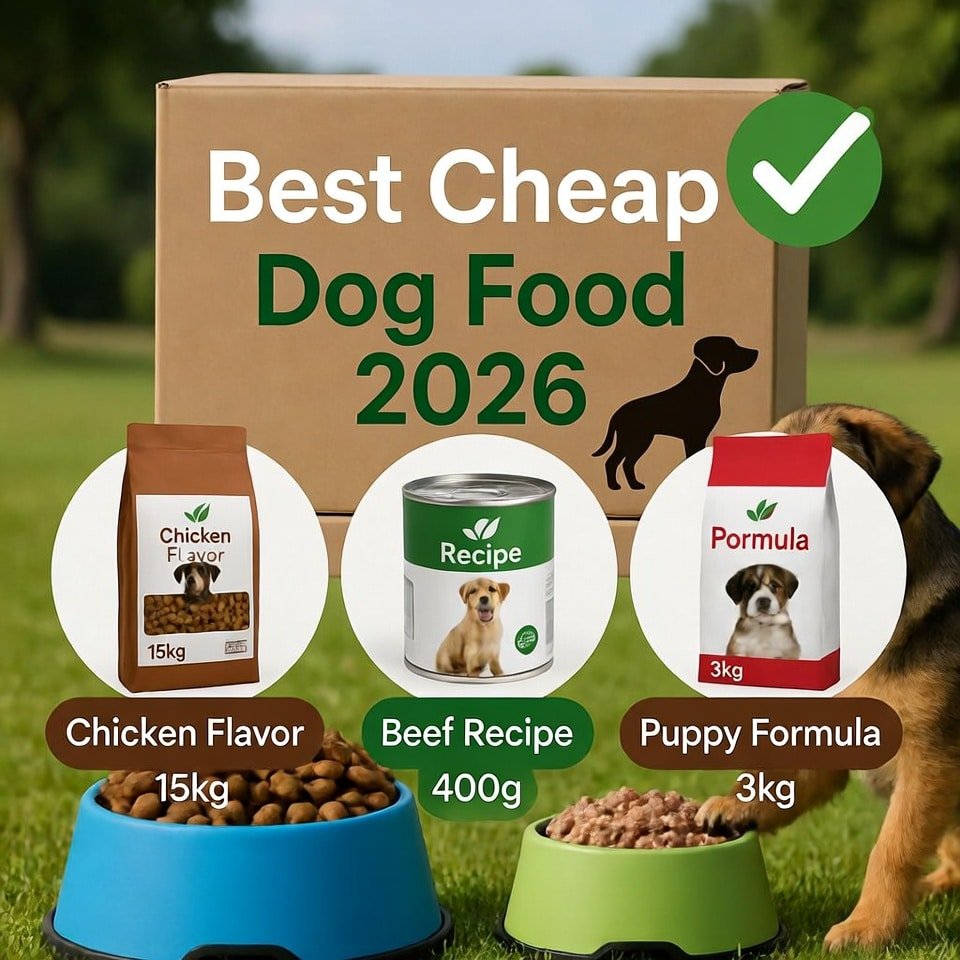
PetsFilled’s approach to dog-food comparisons
PetsFilled does not claim laboratory testing, feeding trials or veterinary review unless that work is explicitly documented. We therefore avoid declaring one commercial brand “best” for every dog. Instead, we focus on public label information, nutritional adequacy, manufacturer transparency and practical cost.
1. Find the nutritional-adequacy statement
AAFCO explains that the nutritional-adequacy statement is one of the most important parts of a pet-food label. It tells you whether the food is intended to be complete and balanced and for which life stage.
An adult maintenance food is not the same as a growth food for puppies. A puppy expected to become a large adult dog may need a diet appropriate for large-size growth.
2. Do not let marketing words make the decision
Terms such as “premium,” “holistic” and similar front-of-bag language can sound meaningful without telling you whether the diet meets your dog’s nutritional needs. WSAVA’s nutrition resources encourage owners to look beyond ingredient-list marketing and ask more useful questions about formulation and quality control.
3. Compare cost per day, not just bag price
A larger bag may cost more at checkout but less per day. Different foods also have different calorie densities, so comparing equal cup volumes can be misleading.
To estimate daily cost:
- Find the calories per cup, can or kilogram on the label.
- Estimate your dog’s daily calorie requirement with veterinary guidance.
- Calculate roughly how much of the product the dog would eat each day.
- Divide the package price by the number of feeding days.
Actual needs can differ substantially from label estimates, so monitor body condition and adjust.
4. Ask what the company can tell you
WSAVA suggests asking whether the manufacturer employs qualified nutrition expertise, how the diet is formulated, what quality-control processes are used and whether the company can provide nutrient information beyond the minimum label.
A brand does not receive a scientific endorsement simply because it appears on a checklist. The point is to evaluate the quality of the information available.
5. Consider your dog’s medical needs
A bargain is not a bargain if it is inappropriate for the dog. Puppies, pregnant or nursing dogs, dogs with food-responsive disease, dogs with pancreatitis, kidney disease or other medical conditions may require a more specific diet. Therapeutic veterinary diets should not be replaced with a cheaper alternative without discussing it with the treating veterinarian.
6. Budget for the whole feeding plan
Toppers, treats, supplements and chews can quietly add substantial cost and calories. If the main food is already complete and balanced, extra supplements are not automatically beneficial. Treats should generally stay at 10% or less of daily calories.
7. Watch recall and safety information
No brand has a permanent “safe” or “unsafe” status. Formulas, manufacturing and recalls can change. For current U.S. safety notices, check the FDA’s animal-food recalls and advisories rather than relying on an old static blacklist.
Our dog food safety evaluation guide explains why we do not maintain a sensational permanent list of “worst brands.”
Affordable-food checklist
- Complete and balanced for the correct life stage
- Calorie information available
- Feeding amount affordable for your actual dog
- Manufacturer contact and product information available
- No medical conflict with your dog’s veterinary plan
- Dog maintains a healthy body condition and tolerates the diet
Sources and further reading
- AAFCO: Selecting the Right Pet Food
- WSAVA: Global Nutrition Guidelines
- FDA: Animal Food Outbreaks and Advisories
Prices and product formulations change. This article explains how to compare foods rather than endorsing a permanent brand ranking.



0 comments