
How to Prevent Mats in Cat Fur: A Practical Routine for Long-Haired Cats
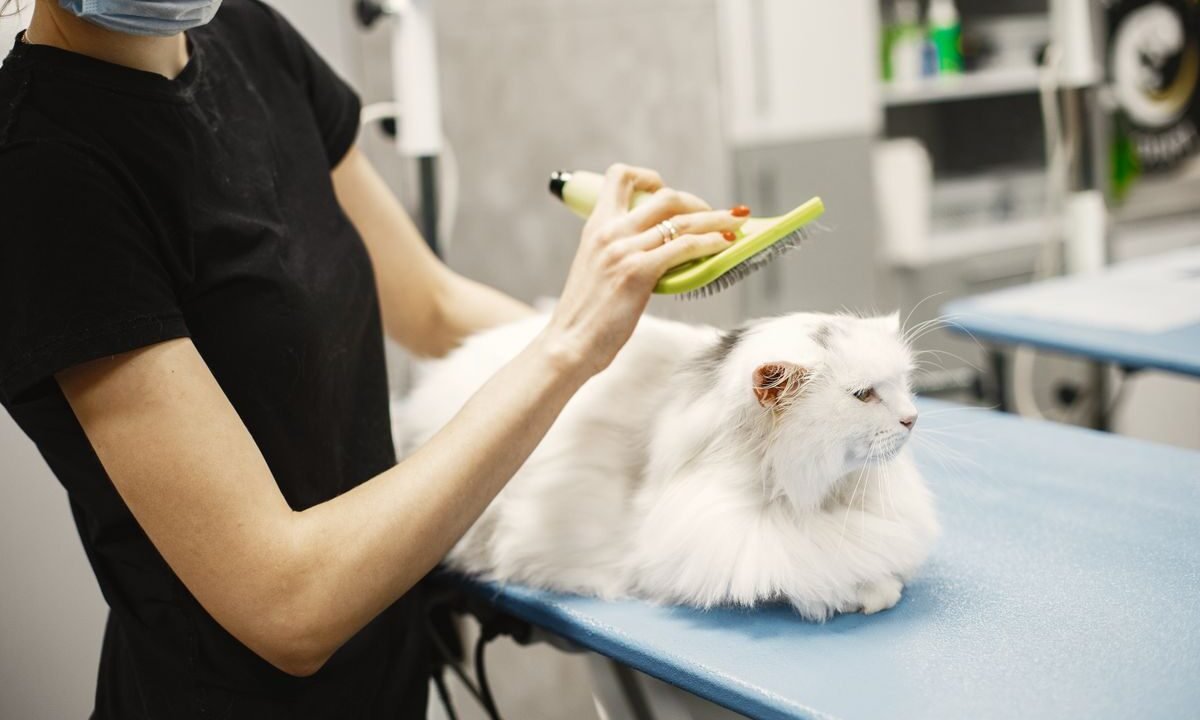
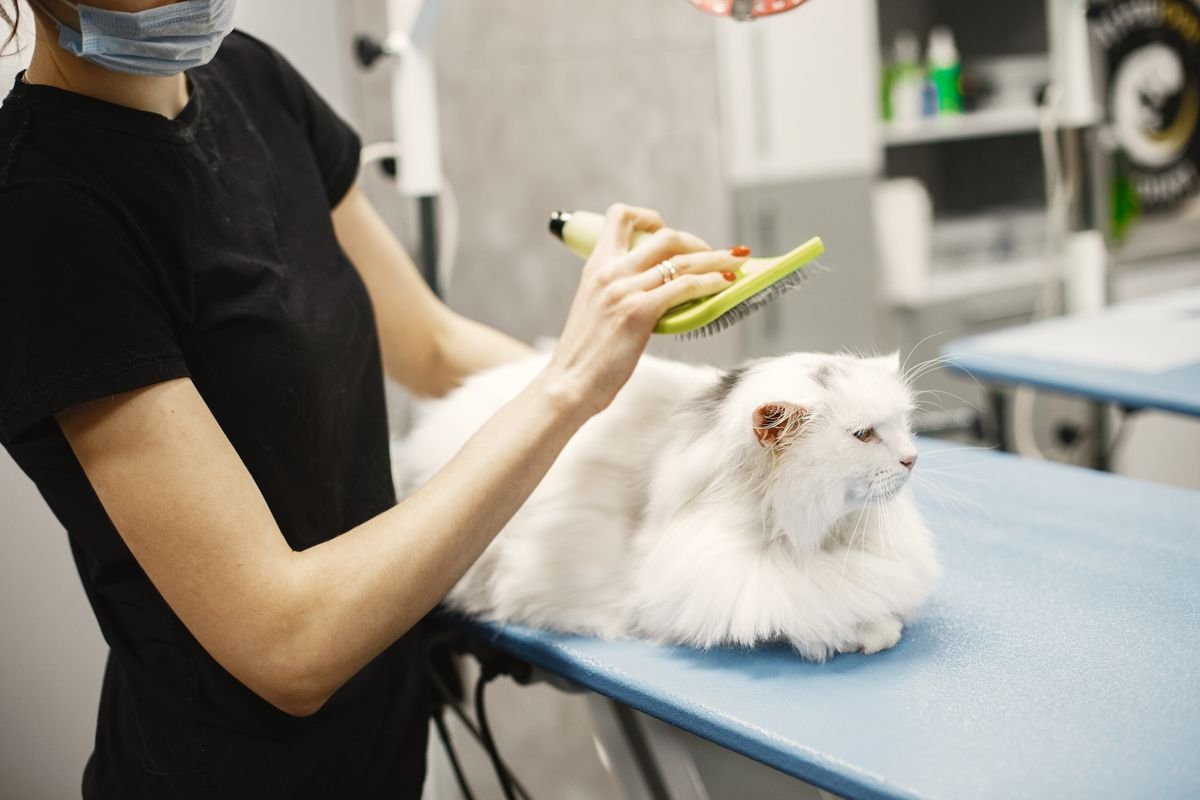
Preventing mats is much easier than removing them. The goal is not endless brushing; it is regularly finding loose undercoat and small tangles before they tighten against the skin.
Use a comb, not only a surface brush
A brush can make the top of a long coat look smooth while tangles remain underneath. VCA recommends long-toothed metal combs or brushes with offset tines for medium and long-haired cats because they can reach loose undercoat more effectively.
Check the high-risk areas first
Mats commonly form behind the ears, under the front legs, around the groin, along the back legs and anywhere friction repeatedly twists the coat. Spend a few seconds checking these areas whenever you groom.
Brush often enough for the individual coat
Some long-haired cats need daily combing; others stay comfortable with several sessions each week. Coat density, seasonal shedding and the cat’s own grooming ability all matter. See our long-haired cat brushing guide for frequency guidance.
Keep sessions short and cooperative
Ten calm minutes are usually better than forcing a long grooming session after the cat has had enough. Work on one area, reward cooperation and stop before handling becomes a fight.
Do not bathe a matted coat first
Water can tighten existing tangles as the coat dries. If mats are present, address them before bathing unless a veterinarian or professional groomer advises otherwise.
Watch body condition
Overweight cats may struggle to reach the lower back and hindquarters. Weight management and environmental changes that support comfortable movement can improve self-grooming as well as overall health.
Consider pain when grooming declines
Arthritis, dental pain and other health problems can reduce grooming. A sudden decline in coat condition deserves attention, especially in a senior cat. Our cat arthritis guide explains common subtle mobility changes.
Deal with tiny tangles early
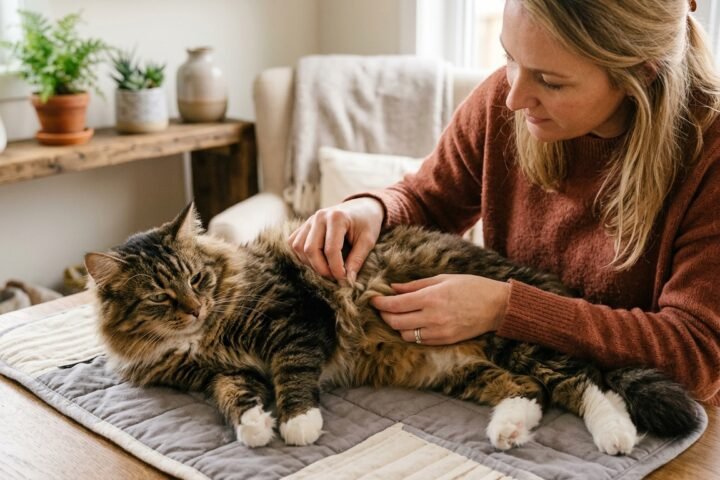
If you find a loose tangle, gently tease it apart from the ends while supporting the hair near the skin. Do not keep pulling if the cat reacts or the skin moves with the knot.
Do not cut mats with household scissors
Cat skin can be pulled up into a mat and cut accidentally. Tight mats are safer in the hands of a groomer or veterinary team using appropriate clippers and handling.
Choose grooming tools by coat type
A long-toothed comb may suit a silky coat, while a denser undercoat may need a different comb or de-shedding tool. There is no single best brush for every cat.
Use grooming time as a health check
Part the fur and look for skin redness, scabs, fleas, lumps, wounds and sensitivity. Grooming is valuable because it helps you notice change, not simply because it makes the coat look neat.
Make prevention part of a normal routine
Mat prevention works best when grooming is predictable and brief. Pick a time when the cat is already relaxed, such as after a meal or during a quiet evening. Start with easy areas the cat enjoys having brushed, then check high-friction zones before ending the session.
Behind the ears, armpits and back legs deserve extra attention
VCA recommends regular coat checks, especially around the ears, armpits and backs of the legs, because long and silky coats can tangle quickly in those areas.
Run your fingers through the coat before using a comb. Tiny tangles are easier to feel than to see.
Separate surface fluff from undercoat tangles
A cat can look beautifully brushed on top while the undercoat underneath is beginning to knot. Long-toothed combs are useful because they reach deeper than many soft brushes. Work in small sections and make sure the comb can pass through without pulling.
Seasonal shedding can change how often grooming is needed
Some cats shed more heavily at certain times of year. During those periods, loose undercoat can accumulate faster and grooming may need to become more frequent for several weeks.
Increase frequency gradually rather than extending one session until the cat is frustrated.
Static, dryness and coat friction can make tangles worse
Dry indoor air, dense undercoat and friction from collars or harnesses can all encourage tangling. Keep grooming gentle and ask a veterinarian or professional groomer before using conditioners or sprays, because cats will lick products from the coat.
Watch collars and harness contact points
Hair can tangle beneath a collar or around harness straps, especially in long coats. Remove and inspect those areas regularly. The equipment should fit correctly and should not rub continuously against dense fur.
Keep the hindquarters clean
Long-haired cats can develop tangles around the back legs and tail if stool, urine or litter sticks to the coat. Persistent soiling deserves attention because diarrhea, obesity, arthritis or urinary problems may be contributing.
Weight and flexibility affect self-grooming
An overweight cat may be physically unable to reach the lower back and hindquarters. A cat with arthritis may avoid twisting or lifting a leg. If matting repeatedly appears in areas the cat used to keep clean, think beyond the coat itself.
Dental pain can reduce grooming too
Cats groom with the mouth as well as the tongue. Painful teeth or gums can make normal grooming uncomfortable. A sudden decline in coat quality can therefore be one of several subtle signs that a health check is worthwhile.
Do not wait for a knot to become a solid mat
A loose tangle may take seconds to tease apart. A dense mat can pull continuously on the skin, trap moisture and hide irritation. The earlier you find it, the more likely the solution is simple and comfortable.
Know when home grooming should stop
If the cat reacts strongly, the skin is being pulled, the mat is broad or tight, or you cannot clearly see where the skin lies, stop. VCA advises using clippers rather than scissors for mats and recommends professional help for severe tangling.
Our safe mat-removal guide explains the distinction between loose tangles and mats that should not be handled with household scissors.
Build positive associations with grooming tools
Leave the comb nearby, offer a treat after a few strokes and end while the cat is still calm. For cats that dislike brushing, our cat hates being brushed guide explains how to reduce handling pressure.
Keep sessions short enough to succeed
Five calm minutes every day can be more effective than one stressful 30-minute session each weekend. If the cat walks away, let that be the end rather than turning grooming into a chase.
Use grooming to notice health changes
Part the fur and look for redness, scabs, fleas, wounds, lumps and areas that feel warmer or more sensitive than surrounding skin. Regular grooming gives you a reason to notice small changes earlier.
A simple prevention checklist
- feel behind the ears and under the front legs;
- comb through to the undercoat rather than brushing only the surface;
- increase grooming during heavy shedding;
- check collar and harness contact areas;
- keep the hindquarters clean and dry;
- stop before the cat becomes distressed;
- investigate sudden changes in self-grooming.
When a professional groom may be useful
Some cats have coats that are difficult to maintain even with good home care. A cat-experienced groomer can help with coat management and show you tools or techniques suited to that individual coat.
If the skin looks inflamed, infected or painful, veterinary care should come before cosmetic grooming.
Bottom line
Preventing mats means checking the coat frequently, combing through to the undercoat, paying extra attention to high-friction areas and addressing small tangles early. If a cat suddenly stops maintaining its coat, look for pain, mobility problems or illness instead of assuming the cat has become lazy.

0 comments