
Hamster Scratching a Lot: Mites, Dry Skin, Bedding and When to See a Vet

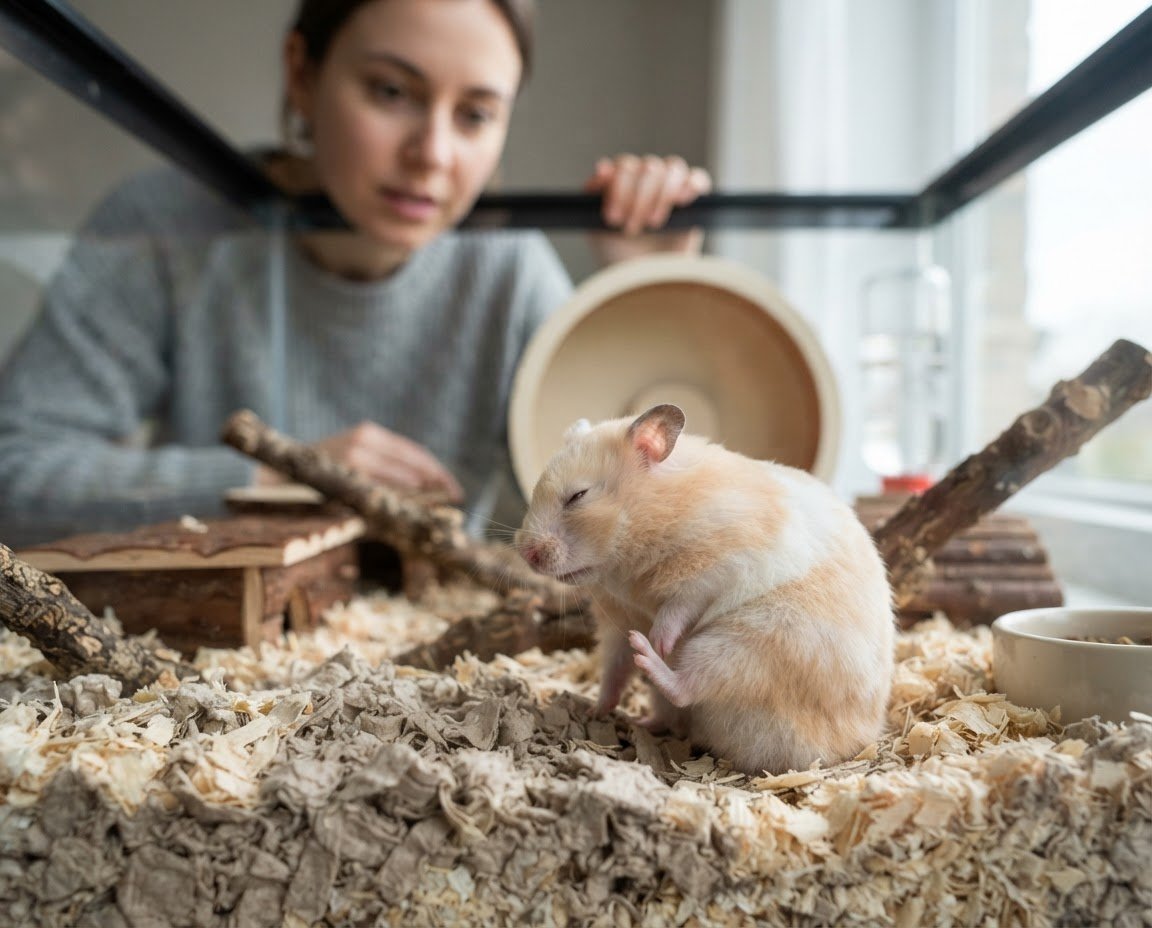
Hamsters scratch occasionally as part of normal grooming. The concern is a clear increase: repeated scratching that interrupts eating or exploring, scratching that creates bald patches or scabs, or a hamster that seems unable to settle because the skin is constantly irritated.
The strongest clue is not the scratching alone. Look at the skin, the coat and the environment together.
First decide whether the scratching is actually excessive
Normal grooming can involve quick scratching movements with a hind foot. If the hamster scratches briefly and then returns to normal activity, there may be nothing wrong.
Repeated episodes throughout the active period, intense chewing at the skin or obvious hair damage deserves closer inspection.
Part the fur and inspect the skin gently
Look for redness, flaky skin, crusts, scabs, wounds or small bald patches. Check the back, face, behind the ears and around the shoulders without repeatedly restraining the hamster.
Do not scrape the skin or pick off crusts at home.
Mites are one important possibility
Hamsters can develop mite problems, including Demodex-associated skin disease. Heavy infestations may cause hair loss, scaling and irritation.
Mites cannot be diagnosed reliably by sight alone
Some mites are microscopic. A veterinarian may need a skin scraping or other test to confirm the cause.
Do not use dog, cat or livestock mite products on a hamster unless a veterinarian has prescribed the exact product and dose.
Ringworm can also cause itching and hair loss
Fungal skin disease may create scaly, crusted or bald patches and can spread between animals and people.
If the hamster has suspicious circular patches or another household pet has a skin lesion, mention that when arranging veterinary care.
Dusty bedding can irritate the skin and respiratory tract
Very dusty substrate may contribute to itching and can also trigger sneezing. Replace visibly dusty bedding with a low-dust option while preserving some clean familiar nesting material.
Our hamster sneezing guide explains how environmental irritation can affect the airway too.
Scented bedding and fragrance are unnecessary
Strongly scented bedding, room sprays and fragranced cleaners can irritate a small animal’s skin and respiratory system.
Choose unscented bedding and mild cleaning products instead.
Bathing dust can worsen irritation
Some fine powders are too dusty for routine hamster use. If the hamster scratches more after using a dust bath, remove it and switch to an appropriate low-dust sand if your species benefits from a sand area.
Dry-looking skin is a clue, not a diagnosis
Flaking can happen with environmental dryness, parasites, fungal disease or other skin problems. Do not respond by applying human moisturiser or oil.
Anything placed on the coat is likely to be licked during grooming.
Hair loss helps show how severe the problem is
Repeated scratching can break hair or expose skin. Our hamster hair loss guide explains how friction, parasites, fungal disease and systemic illness can create different patterns.
Check for a rubbing point in the enclosure
A hamster squeezing through a narrow tunnel or rubbing against one rough edge can create a local irritated patch.
Look for sharp surfaces, rough openings and repeated contact points before assuming parasites.
Do not over-clean the enclosure
Frequent complete cleaning can remove familiar scent and create stress. Strong disinfectants can also irritate the skin if surfaces are not rinsed well.
Spot-clean wet areas and use mild unscented cleaning routines.
Stress can increase grooming behaviour
A frightened or unsettled hamster may groom more, but stress should not be used to explain visible skin damage without checking for medical causes.
Watch whether scratching happens around one body area
Persistent scratching around one ear, eye or wound may point toward a local problem rather than generalized skin irritation.
A swollen or watery eye, for example, deserves separate assessment. See our hamster eye guide.
Weight and appetite still matter in a skin problem
A hamster with mites or another systemic illness may start losing weight or eating less. Skin disease that appears alongside a broader decline deserves faster veterinary attention.
Use our hamster weight-loss guide if the body condition is changing.
Do not bathe the hamster
Water bathing can chill and stress the animal and does not treat mites, ringworm or allergy-like irritation.
If the coat is contaminated with a chemical or sticky substance, contact a veterinarian for cleaning advice.
Do not apply essential oils
Tea tree oil and other concentrated oils should not be used on hamster skin or added to bedding. “Natural” is not the same as safe.
Do not use flea products meant for cats or dogs
Species and dose matter. A product that is safe for a cat or dog can be dangerous to a hamster.
What a veterinarian may check
The vet may examine the skin, perform a skin scraping, test for fungal disease and review bedding, diet and housing.
If the skin looks normal but scratching remains intense, other causes may need investigation.
When a brief environmental adjustment may be reasonable
If scratching started immediately after a visibly dusty new bedding and the skin is otherwise normal, replace the bedding and observe closely for improvement.
If scratching continues, spreads or causes skin damage, do not keep changing products indefinitely.
When to see a veterinarian promptly
Arrange veterinary care when scratching is frequent, there are bald patches, scabs, redness, wounds, spreading hair loss or the hamster also has weight loss, poor appetite or unusual inactivity.
When it becomes urgent
Heavy bleeding, severe swelling, collapse, breathing difficulty or a rapidly deteriorating hamster needs urgent care.
What to record before the appointment
- when the scratching increased;
- which body areas are affected;
- whether the skin is red, flaky or crusted;
- recent bedding or sand changes;
- weight and appetite;
- whether another animal in the home has skin disease;
- any new cleaning or fragrance products.
Recovery should improve the skin as well as the scratching
After the cause is treated, scratching should reduce and the skin should become less inflamed. Hair regrowth may take longer.
If itching improves briefly and returns, update the clinic rather than repeatedly reusing leftover medication.
Frequent hamster scratching is best approached as a skin-health clue. Check for visible irritation and environmental triggers, but avoid home pesticides, oils and creams. Persistent itching or skin damage needs a veterinary diagnosis so the hamster receives treatment for the actual cause.
Check whether one new product appeared before the itching
A new sand, bedding, cleaner or scented room product can help explain a sudden increase in scratching. Write down what changed and when rather than replacing everything at once.
Repeated self-biting is more concerning than an occasional scratch
If the hamster chews at one body area, creates a wound or repeatedly interrupts normal activity to scratch, the irritation is significant enough to justify veterinary assessment.
Look for symmetry and spread
A tiny local irritated area near a rough enclosure edge suggests something different from several patches appearing across the back or face. Photograph the skin in good light so you can see whether the affected area is expanding.
Do not treat the enclosure for mites before the hamster is diagnosed
Throwing away all bedding, spraying the cage with pesticides or repeatedly disinfecting everything can create more stress and exposure without confirming the cause. Ask the veterinarian what environmental cleaning is actually needed if mites or fungal disease is diagnosed.
A practical decision rule
- brief occasional scratching with normal skin: usually normal grooming;
- itching after an obvious dusty product, skin still normal: remove the irritant and observe;
- persistent scratching with redness, scaling or hair loss: arrange veterinary care;
- scratching with wounds, rapid decline or breathing problems: seek prompt or urgent care.



0 comments