
Hamster Drinking More Water: What Increased Thirst Can Mean
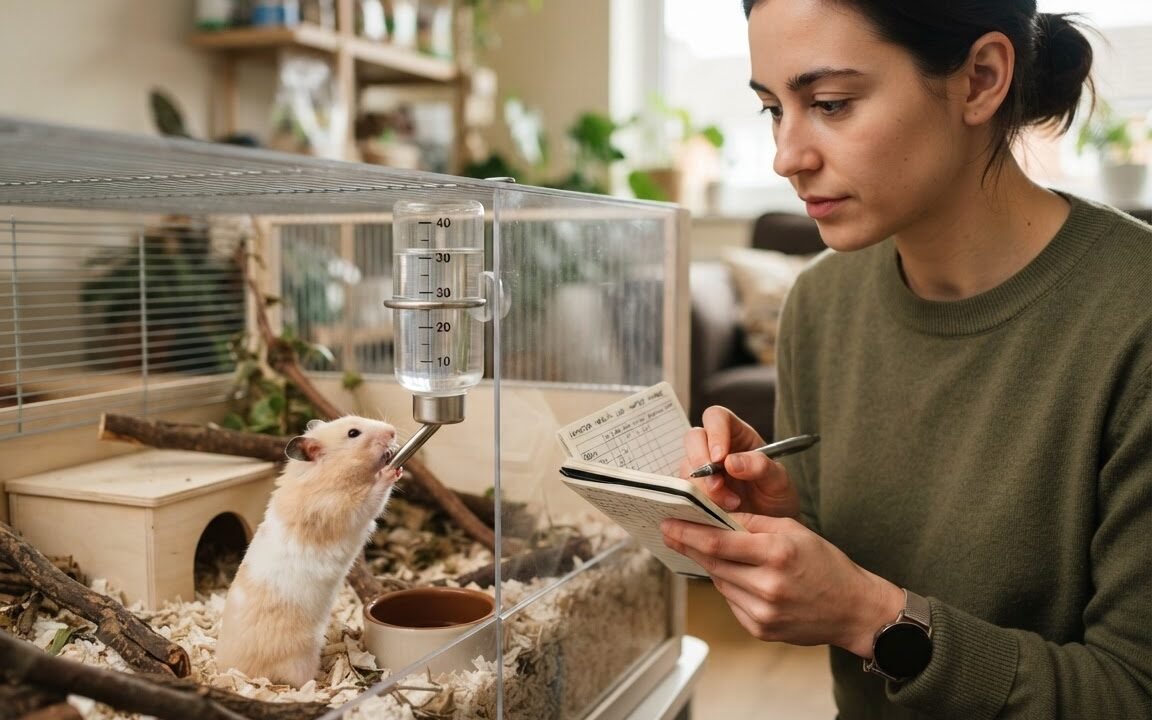
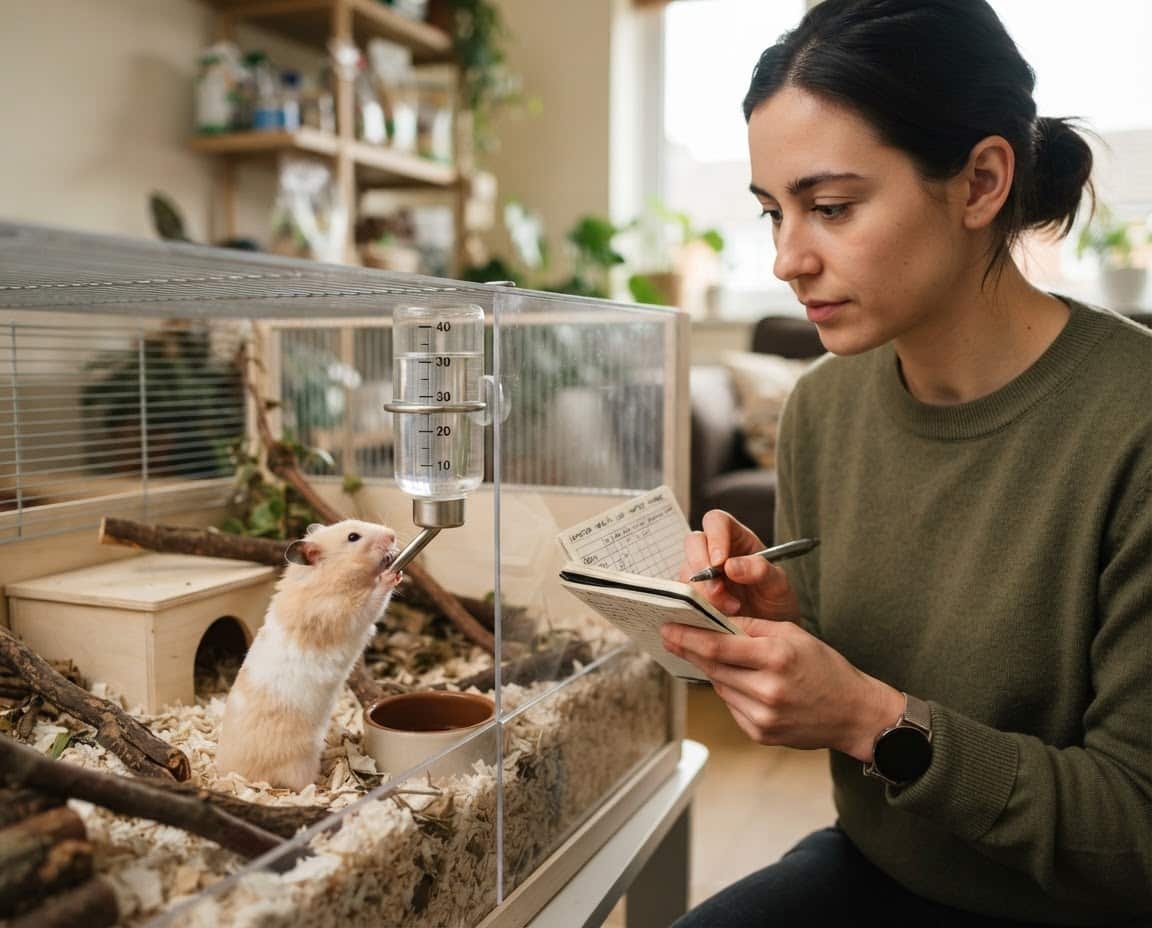
If a hamster suddenly seems to be drinking much more water, confirm that the change is real before assuming illness. A leaking bottle can empty quickly and soak bedding, creating the appearance of increased thirst when the hamster has not actually consumed the extra water.
Once a leak is ruled out, increased drinking becomes useful health information—especially when it appears with weight loss, more urine, poor appetite or reduced activity.
Start with the water bottle itself
Check whether the bottle is dripping into the bedding. Press the ball tip gently and watch whether water flows normally. Look underneath for a wet patch that is larger than usual.
If you use a bowl, check whether bedding is being kicked into it or whether the hamster is tipping it and forcing you to refill more often.
Measure rather than guess
Fill the bottle to a marked level and note the time. Recheck it over the next 24 hours while watching for leakage.
You do not need laboratory precision. The goal is to establish whether the hamster is genuinely consuming more than its normal pattern.
Room temperature can influence drinking
A warmer environment may increase water intake. Check whether the enclosure has moved nearer a radiator, sunny window or warm appliance.
Correct excessive heat, but do not withhold water in an attempt to see whether the hamster “really needs it.” Fresh water should remain available at all times.
Diet can change water needs
A hamster eating more dry food and fewer moisture-rich fresh foods may drink more. A recent diet change is worth noting.
That does not mean increased thirst should automatically be dismissed as diet-related when weight or urine patterns are also changing.
Look at the enclosure for increased urination
A hamster drinking more may also produce more urine. Look for larger or more frequent wet areas in the bedding.
Increased drinking and increased urination together are more informative than either observation alone.
Weight loss makes increased thirst more concerning
Use a gram scale to monitor the trend. Our hamster weight-loss guide explains how to track change consistently.
Kidney disease is one possibility, not the only possibility
Increased thirst does not diagnose kidney disease. Other medical problems can alter drinking and urination, and environmental factors can change intake too.
The veterinarian may need to examine the hamster and consider urine, blood or imaging tests depending on the pattern.
Older hamsters deserve closer trend monitoring
Age-related changes can be subtle. Owners may notice a wetter cage before they notice visible weight loss or weakness.
If an older hamster’s bottle is consistently emptying faster and body weight is drifting down, arrange a veterinary check rather than waiting for more dramatic signs.
Appetite adds important context
A hamster that drinks more but eats normally and remains active is a different situation from one that drinks more while eating less and losing weight.
Our hamster not eating guide explains how to distinguish food hoarding from genuine reduced intake.
Urine colour and straining matter
Blood, repeated straining, very small amounts of urine or obvious discomfort deserves prompt veterinary attention.
Do not press the abdomen to try to feel the bladder at home.
Wet bedding can create a second health problem
Whether the moisture comes from urine or a leaking bottle, remove soaked substrate. Persistently damp bedding can irritate skin and make the enclosure unhealthy.
Replace only the wet area when possible so the hamster keeps some familiar clean bedding.
Do not restrict water to test the hamster
Never remove the water source to see whether thirst improves. If the hamster is drinking because of a medical problem, water restriction can worsen dehydration and illness.
A leaking bottle still needs immediate correction
Even when there is no medical problem, a leak can soak the nest and reduce access to clean water. Replace or reposition the bottle if it cannot maintain a reliable seal.
Check the nozzle height
The hamster should reach the bottle comfortably without stretching excessively or crouching awkwardly. A poorly positioned nozzle can make drinking inefficient.
Look for other subtle illness signs
Hunched posture, rough coat, reduced wheel use, hiding longer than usual, eye discharge or altered droppings can indicate a broader problem.
Our hamster pain-signs guide covers subtle behavioural clues that owners may otherwise miss.
Breathing changes should not be grouped under “thirst”
A hamster that is drinking more and also breathing rapidly or with effort needs faster assessment. Our hamster breathing guide explains urgent respiratory signs.
What to record for the veterinarian
- how quickly the bottle level is changing;
- whether leakage has been ruled out;
- how much wetter the bedding is;
- recent body weights;
- appetite and food stores;
- activity and wheel use;
- urine colour or straining;
- recent diet or room-temperature changes.
What a vet may investigate
The examination may include body weight, hydration, abdominal palpation and a review of diet and water intake. Depending on age and other signs, urine testing, blood work or imaging may be useful.
The purpose is to identify why drinking changed rather than treating thirst itself.
When monitoring is reasonable
If you discover an obvious leak, correct it and watch whether the bottle now behaves normally. If the room recently became much warmer, restore a stable safe temperature and observe.
If there is no clear environmental explanation, or if increased thirst continues, contact a veterinarian.
When to call sooner
Arrange prompt care when increased drinking appears with weight loss, reduced appetite, marked lethargy, blood in the urine, straining, a swollen abdomen or a major increase in urination.
Severe weakness, collapse or breathing difficulty is urgent regardless of the water intake.
Good routine care makes changes easier to spot
Checking the bottle daily, weighing periodically and knowing where the hamster usually urinates makes it much easier to notice a genuine shift.
Our hamster care guide covers the daily setup, while the hamster health hub connects drinking changes with weight, appetite, skin, breathing and movement.
A hamster drinking more water is not a diagnosis. First make sure the water source is not leaking, then look for increased urination, weight change and other signs that can help your veterinarian decide what needs investigating.
Keep the same bottle while measuring when possible
Different bottles can drip at different rates, which makes comparison confusing. If the current bottle is reliable, mark the level and use it consistently while you are confirming whether intake has genuinely changed.
Check whether fresh foods recently decreased
If the hamster previously received small amounts of moisture-rich vegetables and those were removed, drinking may rise modestly. That context is useful, but it should not be used to explain away a large sustained change in water intake.
Body weight and thirst should be read together
A stable weight with a small increase in drinking is different from ongoing weight loss plus a wetter enclosure. Record both so the veterinarian can judge the trend rather than one isolated observation.
Do not add supplements to the water without advice
Vitamin drops, glucose products or flavourings can change how much the hamster drinks and may alter water quality. Plain fresh water is the safest default unless a veterinarian has prescribed something specific.
Recovery means the pattern should move back toward normal
If an underlying problem is treated, continue to track bottle level, urine and weight. Persistent excessive drinking or continued weight loss is a reason to update the clinic rather than assuming treatment simply needs more time.
0 comments