
Hamster Blood in Urine: Causes, Warning Signs and When It Is Urgent
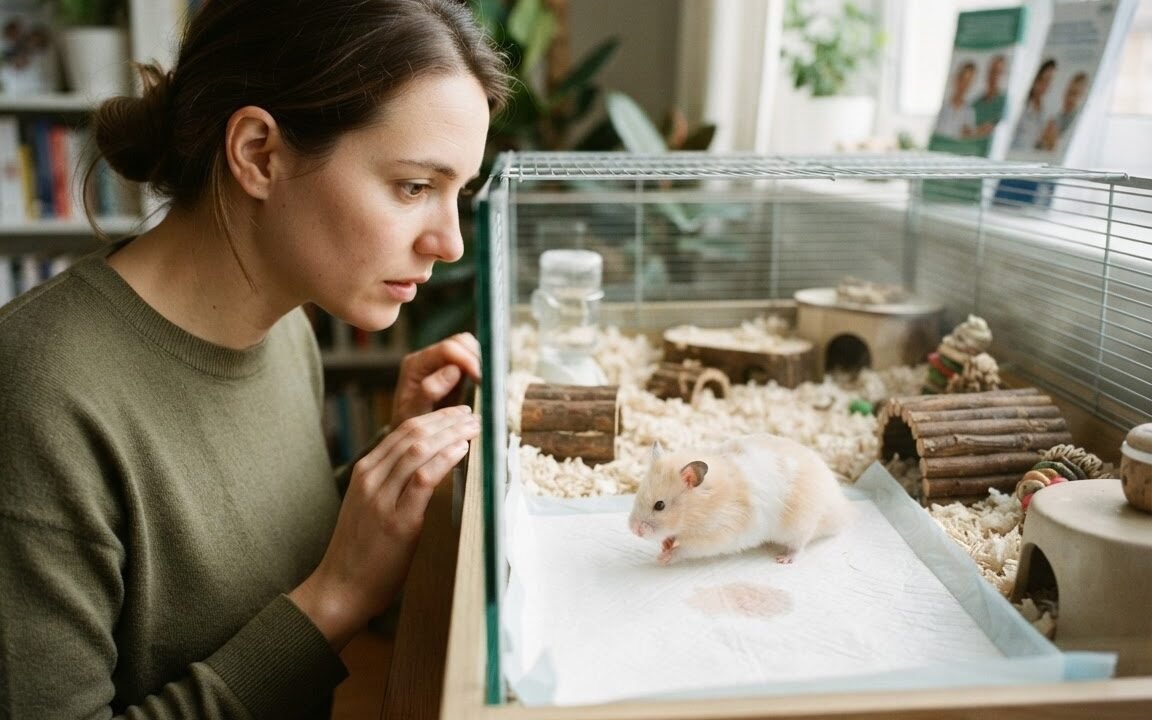
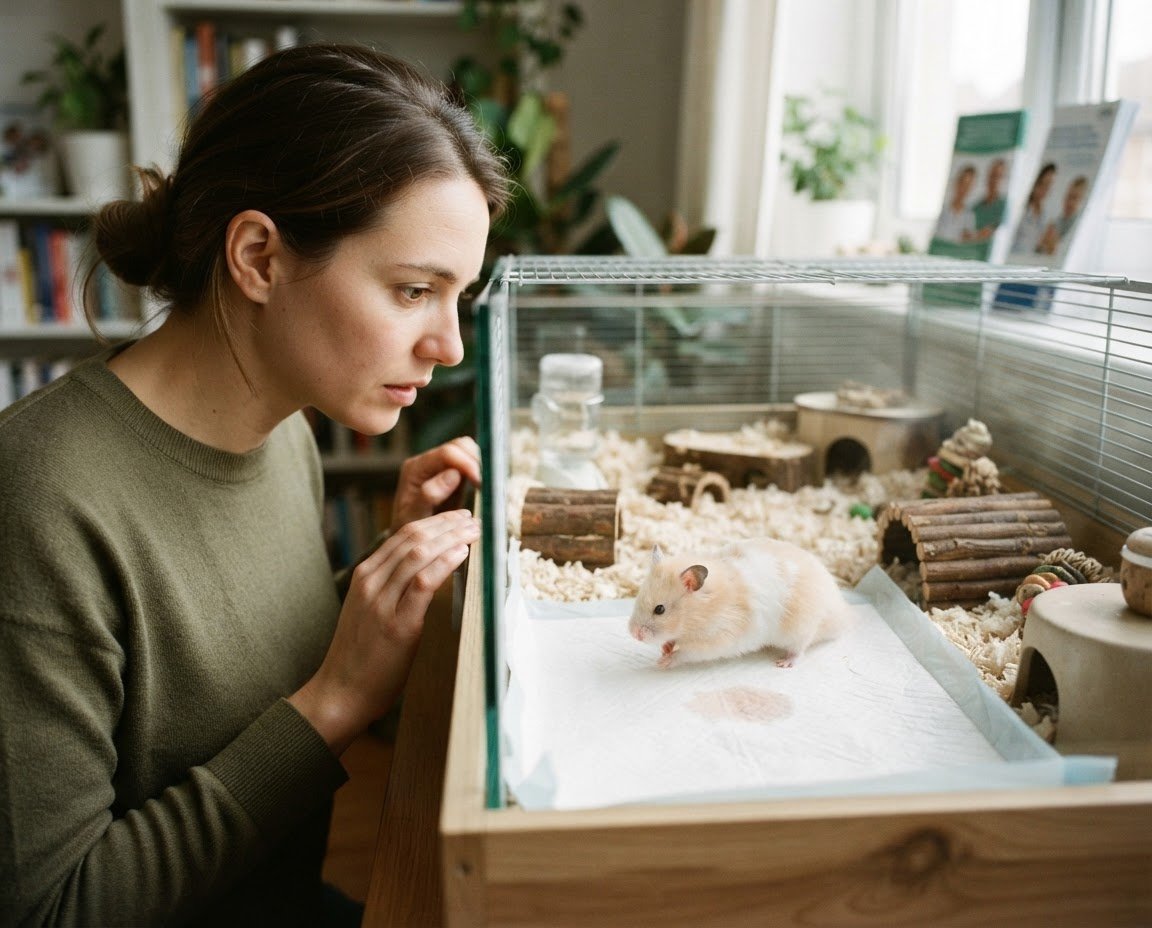
Red or pink staining in a hamster’s bedding can be alarming, but the first task is to work out whether the colour is really coming from urine. Some foods and pigments can alter urine colour, while blood may also come from the reproductive tract, skin or a wound.
If you repeatedly see pink, red or brown urine, visible blood, straining or discomfort, treat it as a medical sign rather than waiting for the bedding to return to normal on its own.
Confirm where the colour is coming from
Place a small piece of plain white paper towel in a commonly used toilet area for a short period. This can make urine colour easier to see than dark bedding.
Do not force the hamster to urinate, press on the abdomen or keep the animal on bare paper for long periods just to obtain a sample.
Food can sometimes change urine colour
Certain vegetables and pigments can temporarily alter the colour of urine or bedding. That is one reason a single unusual spot should be interpreted alongside appetite, behaviour and repeated observations.
Visible clots, persistent red staining, straining or pain should not be dismissed as food pigment.
Urinary infection is one possibility
Inflammation or infection of the urinary tract can cause blood, discomfort, increased frequency or straining. A hamster may visit the toilet area repeatedly and produce small amounts.
A veterinarian may need a urine sample or other tests to distinguish infection from stones, kidney disease or reproductive bleeding.
Bladder stones can irritate and obstruct
Mineral stones can cause bleeding and painful urination. A hamster may become restless, strain, lick the genital area or produce only tiny amounts.
Do not assume the problem can be solved by changing water or adding supplements. Stones may require imaging and veterinary treatment.
Very little urine with repeated straining is more urgent
A hamster that keeps trying to urinate but produces almost nothing may have severe inflammation or obstruction. That pattern deserves prompt veterinary assessment.
Increased drinking and wet bedding add useful context
Blood in urine accompanied by increased thirst or a much wetter enclosure may point toward broader urinary or kidney disease.
Our hamster increased-thirst guide explains how to confirm whether water intake has really changed.
Weight loss makes the pattern more concerning
A hamster that is losing weight while producing abnormal urine may be dealing with more than a local irritation.
Use our hamster weight-loss guide to track trends on a gram scale.
Female hamsters can bleed from the reproductive tract
Blood near the genital area may come from the uterus or reproductive tract rather than the bladder. Discharge, abdominal enlargement, weakness or appetite loss in an intact female deserves prompt veterinary evaluation.
Reproductive disease cannot be distinguished safely from urinary disease just by looking at stained bedding.
Check for wounds around the rear
A cut, bite, irritated skin or rectal bleeding can also leave red stains. Gently inspect the fur and skin without squeezing the abdomen or forcing the hamster onto its back.
Diarrhea can complicate what you see
A wet, soiled rear can mix urine and stool, making the source of colour difficult to judge. Persistent diarrhea is itself a reason to seek veterinary care.
Our wet tail guide explains emergency signs in young hamsters with severe diarrhea.
Do not give cranberry products or human urinary medicines
Human supplements and urinary remedies are not proven treatments for hamster urinary disease and may complicate diagnosis.
Do not start antibiotics left from another pet. Some antibiotics are unsafe for hamsters, and treatment depends on the cause.
Keep water freely available
Never restrict water because the hamster is urinating frequently. Dehydration can worsen illness.
Check that the bottle is functioning and not leaking.
Keep the toilet area clean enough to monitor
Remove heavily soiled bedding and replace it with clean familiar substrate. This makes new staining easier to notice and reduces prolonged contact with wet bedding.
Do not strip the entire enclosure unless there is a specific reason to do so.
Appetite is an important severity clue
A hamster with a local urinary problem may still eat, but reduced appetite, lethargy or rapid weight loss indicates a more systemic problem.
See our hamster not eating guide if the normal ration is being left behind.
Pain may show up as posture or handling sensitivity
A hamster in urinary discomfort may sit hunched, become defensive when the abdomen is touched or move less than usual.
Our hamster pain-signs guide covers subtle behaviour changes worth recording.
What a veterinarian may check
Depending on the hamster and the signs, the vet may examine the abdomen, inspect the genital area, test urine or use imaging to look for stones, masses or reproductive disease.
Merck describes urinary and reproductive disease among health problems seen in hamsters, which is why the source of bleeding matters.
What to bring to the appointment
A photo of the stained bedding can be useful. If the clinic requests a urine sample, follow their instructions rather than trying to obtain one through stressful restraint.
When brief monitoring may be reasonable
If there is a single mildly coloured spot immediately after a strongly pigmented food and the hamster is otherwise completely normal, watch closely for recurrence.
If red staining appears again, or you cannot confidently explain it, contact a veterinarian.
When to arrange veterinary care promptly
Persistent blood, repeated straining, frequent small urinations, increased thirst, weight loss, abdominal swelling or reduced appetite deserves veterinary assessment.
When it is urgent
Severe weakness, collapse, obvious pain, a swollen abdomen, heavy bleeding or repeated attempts to urinate with almost no output should be treated as urgent.
What to record
- how often red staining appears;
- whether the hamster strains;
- urine amount and frequency;
- water intake;
- recent body weight;
- appetite;
- abdominal enlargement;
- sex and approximate age;
- recent foods that may change urine colour.
Do not wait for a large amount of blood
A small hamster can become ill before bleeding looks dramatic. Repeated abnormal urine is enough reason to seek help, especially when other signs are present.
Use the hamster health hub for broader illness monitoring and the hamster care guide for daily husbandry that makes changes easier to spot.
Blood in hamster urine should be treated as a clue that needs context. Confirm the source as best you can without stressing the hamster, keep water available, document the pattern and involve a veterinarian when bleeding persists or comes with pain, straining, weight loss or weakness.
Straining deserves attention even before you see obvious blood
Repeated squatting, genital licking or frequent attempts to urinate can appear before red staining becomes easy to see. Do not wait for dramatic blood if the hamster is clearly uncomfortable or producing very little urine.
Age and sex help the veterinarian narrow the problem
An older hamster with increased thirst and weight loss presents differently from a young female with discharge and abdominal enlargement. Record sex and approximate age because urinary and reproductive conditions overlap in the way they can stain bedding.
Do not press the bladder to “help” urine come out
Abdominal pressure can be painful and may worsen an obstruction or internal problem. Let the veterinarian assess the bladder safely.
Recovery should include easier urination
After treatment, improvement should mean less straining, more normal urine output, better appetite and stable weight. Continued red staining or difficulty urinating is a reason to contact the clinic again.
A practical decision rule
- one questionable coloured spot after pigmented food, hamster otherwise normal: monitor closely;
- repeated red urine or staining: arrange veterinary assessment;
- blood plus straining, pain or weight loss: seek prompt care;
- repeated attempts with almost no urine, collapse or severe weakness: urgent veterinary care.

0 comments