
Ferret Care Guide: Diet, Housing, Enrichment and Health
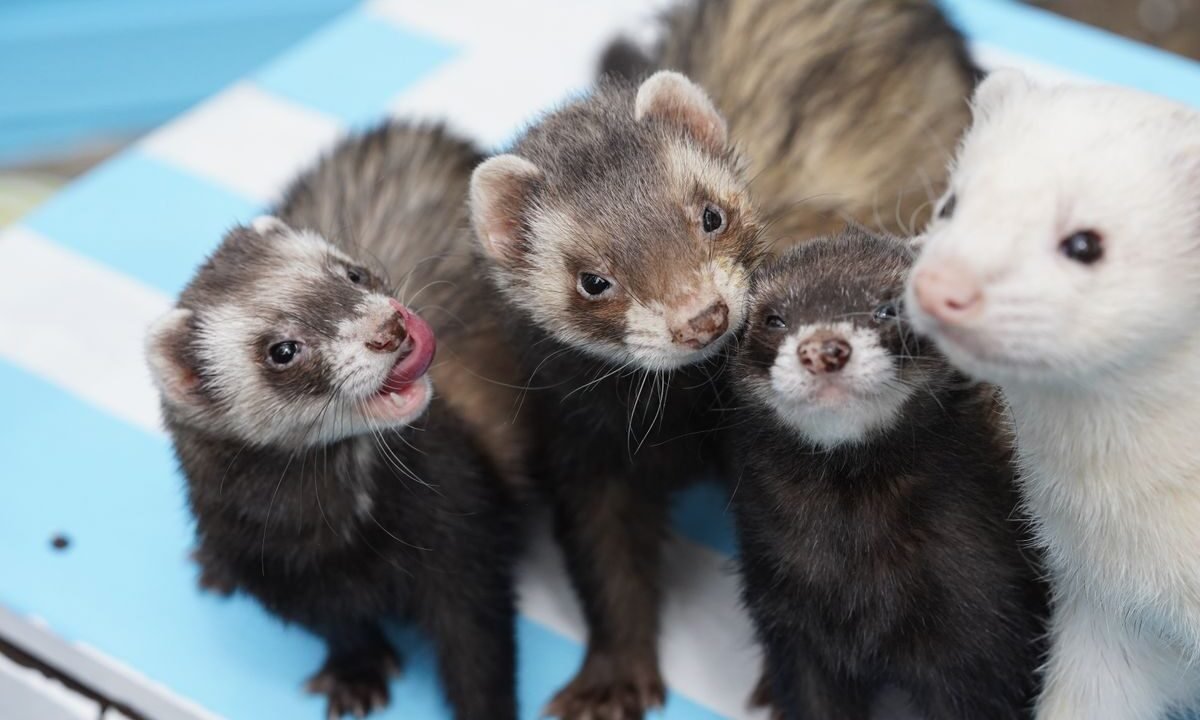

Ferret care is built around species-specific diet, safe housing, play and heat management
Ferrets are curious, social carnivores with a short digestive tract, high activity level and a remarkable ability to squeeze into unsafe spaces. They are not simply small cats, and their care should not be based on dog or cat assumptions. If you are considering feline food as a substitute, read Can Ferrets Eat Cat Food? before treating the two species’ diets as interchangeable.
The Merck Veterinary Manual emphasizes frequent feeding, constant access to fresh water, heat sensitivity, supervised exercise and ferret-proofed living areas. This guide provides the broad care framework, while PetsFilled’s existing ferret pages handle narrower feeding questions in more depth.
Ferret care quick-check tool
Swipe horizontally to view the full table.
| Area | What to provide |
|---|---|
| Diet | High-protein, meat-based ferret food with low carbohydrate and low fibre. |
| Feeding pattern | Frequent small meals or access to suitable food through the day. |
| Housing | Secure resting area plus daily supervised time in a ferret-proofed space. |
| Temperature | Cool, well-ventilated conditions; avoid heat and humidity. |
| Enrichment | Tunnels, digging, exploration, toys and social interaction. |
| Veterinary care | A ferret-experienced vet identified before illness occurs. |
Diet: ferrets are obligate carnivores
Ferrets require animal-based protein and fat and relatively little carbohydrate or fibre. Merck’s veterinary guidance describes ferrets as carnivorous animals that require high protein levels and low fibre.
PetsFilled’s ferret food guide explains how to evaluate an everyday diet and why food formulated specifically for ferrets is usually the strongest starting point.
Feed little and often
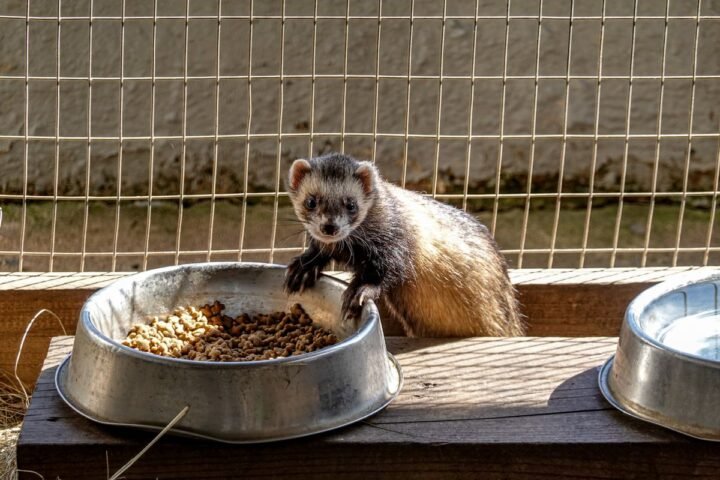
Ferrets have a high metabolism and short digestive tract. Merck notes that food and fresh water should be available consistently because ferrets need to eat frequently.
PetsFilled’s ferret feeding-frequency guide explains why a little-and-often pattern fits their physiology better than a strict twice-daily schedule designed for another species.
Foods to avoid
Sugary foods, fruit-heavy treats and high-carbohydrate snacks are poor choices for ferrets. Dairy can also cause digestive upset. Merck specifically warns against sugary and carbohydrate-rich foods in routine ferret feeding.
PetsFilled’s foods ferrets should avoid guide gives a practical list and safer alternatives.
Treats should not undermine the main diet
Treats should stay small and meat-based. Freeze-dried meat, tiny pieces of cooked meat or suitable ferret treats are usually more appropriate than biscuits, fruit or sweet products.
PetsFilled’s ferret treats guide explains how to choose rewards without turning them into a large part of daily calories.
Housing is a base, not the whole life
A cage or enclosure can provide a safe sleeping, feeding and litter area, but ferrets need substantial time outside it. Merck recommends daily time in a supervised or carefully ferret-proofed area.
Choose sturdy doors and latches. Ferrets are persistent problem-solvers and can exploit surprisingly small gaps.
Ferret-proofing is essential
Block access behind appliances, inside recliners, under kitchen units and into wall cavities. Protect electrical wires and remove small objects that can be swallowed. Foam, rubber and soft plastic can be especially tempting for some ferrets and may cause gastrointestinal obstruction if eaten.
Always check laundry, bedding piles and furniture before sitting, folding or operating machines. Ferrets often sleep in hidden spaces.
Heat is a major safety issue
Ferrets tolerate cool conditions better than heat. Merck notes that they are sensitive to heat and humidity and do not have sweat glands that allow efficient cooling.
Keep housing away from direct sun, hot windows and poorly ventilated rooms. A ferret that is panting, weak, collapsing or unusually hot needs urgent cooling and veterinary advice.
Litter training is possible, but perfection is unrealistic
Ferrets often choose corners for toileting, which makes litter boxes useful. Place boxes in several preferred corners rather than expecting one box to serve an entire room.
Use a low-entry box with a safe, non-clumping litter. Clean frequently because ferrets may avoid heavily soiled boxes.
Exercise and play
Ferrets are active and inquisitive. Tunnels, boxes, dig areas, chase games and supervised exploration can provide better enrichment than a cage full of static toys.
Rotate items so novelty remains meaningful. Avoid toys with pieces that can be chewed off and swallowed.
Social needs
Many ferrets enjoy living with compatible ferrets, but introductions should still be observed. Play can look rough, so learn the difference between normal wrestling and sustained fear or aggression.
A single ferret can still do well when owners provide enough daily social interaction and enrichment.
Handling and bite prevention
Young ferrets can be mouthy during play. Use toys and calm redirection rather than rough punishment. If a ferret bites when handled in one particular way, consider fear or pain as well as training.
Children need close supervision. Ferrets are quick, flexible animals and can be injured by grabbing, dropping or being stepped on.
Grooming basics
Ferrets generally do not need frequent bathing. Overbathing can dry the skin and may worsen body odour rather than solving it. Check nails regularly and clean ears only when necessary and with an appropriate technique.
Dental care also matters. Merck recommends regular veterinary oral assessment and notes that ferret teeth and gums should be examined routinely.
Find a ferret-experienced veterinarian early
The Merck Veterinary Manual’s routine-health guidance recommends establishing a relationship with a veterinarian experienced in ferrets before illness occurs. This matters because not every general practice sees ferrets frequently.
Know the after-hours emergency option too.
Vaccination and preventive care
Vaccination recommendations depend on country, disease risk and product availability. Merck’s ferret health guidance discusses routine preventive examinations and vaccination planning, including the need to monitor for vaccine reactions in susceptible animals.
Do not copy a dog vaccination schedule onto a ferret. Ask a ferret-experienced veterinarian what is appropriate locally.
Routine health observation tool
- Is appetite normal?
- Is the ferret drinking?
- Are stools normal in amount and consistency?
- Is activity normal for that individual?
- Has body weight changed?
- Is breathing quiet?
- Are there new lumps, hair loss or skin changes?
- Is the ferret chewing or swallowing inappropriate objects?
When reduced appetite is urgent
Because ferrets have a high metabolic rate, a ferret that stops eating can deteriorate quickly. Reduced appetite, repeated vomiting, severe diarrhea, weakness or collapse needs veterinary attention.
Do not force-feed a sick ferret without guidance if an obstruction is possible.
Common health concerns owners should know about
Ferrets can develop endocrine disease, insulinoma, dental disease, gastrointestinal obstruction and other conditions that require veterinary diagnosis. This pillar is not meant to turn those diseases into home diagnoses; its job is to help owners notice changes early and seek appropriate care.
Seasonal coat and body changes
Ferrets can show seasonal changes in coat density and body weight. That makes it useful to know your individual ferret’s normal pattern rather than reacting to every small change. Sudden hair loss, marked weight loss, weakness or behaviour change still deserves veterinary assessment.
Travel and carriers
A secure hard-sided carrier works well for many veterinary trips. Include familiar bedding, avoid overheating in cars and never leave a ferret unattended in a warm vehicle.
Longer travel may require additional planning for food, water, litter, temperature control and destination regulations.
Legal and local considerations
Ferret ownership rules vary by location. Before acquiring one, check local laws, housing rules and veterinary availability. This is especially important when moving or travelling across jurisdictions.
What new ferret owners should avoid
- High-sugar or fruit-based treats.
- Housing in hot rooms or direct sun.
- Long confinement with little supervised exercise.
- Loose access to foam, rubber or swallowable household objects.
- Assuming cat or dog foods are automatically appropriate.
- Waiting until an emergency to find a ferret-experienced veterinarian.
The practical bottom line
Ferret care is easiest to understand as a system: species-appropriate meat-based nutrition, frequent feeding, secure housing, daily supervised exploration, heat protection and early veterinary planning. Use this page as the broad ferret-care hub, then follow the linked feeding guides for deeper help with everyday food, feeding frequency, treats and unsafe foods.
0 comments