
How Often Should You Feed a Ferret? Why Little-and-Often Feeding Works
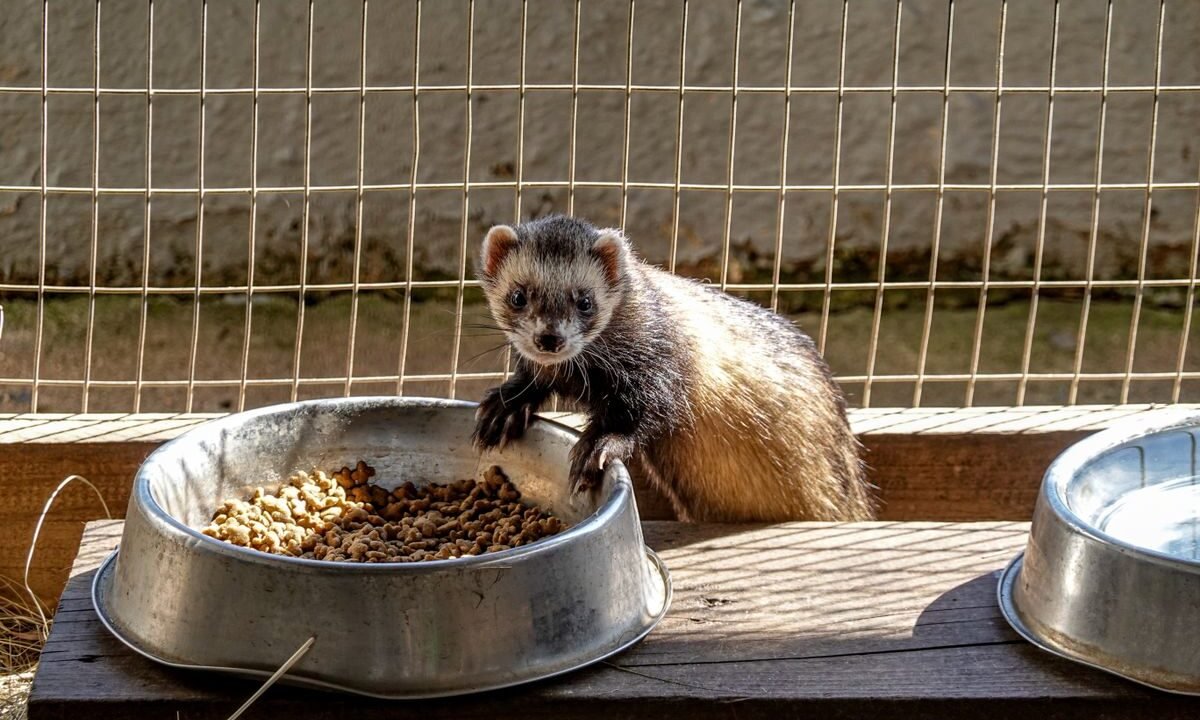
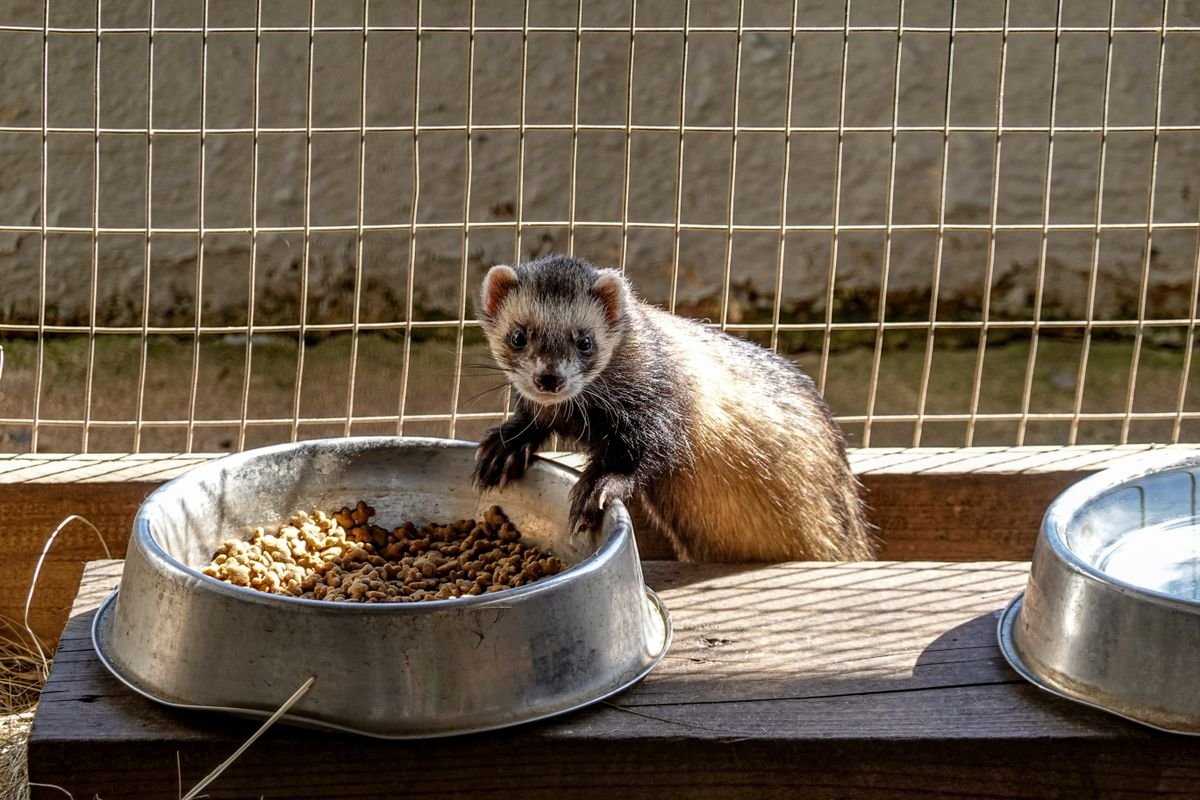
How often should you feed a ferret? Unlike many dogs that can comfortably eat one or two scheduled meals, ferrets are designed to eat small amounts frequently. Their digestive tract moves food quickly, and current veterinary guidance recommends several small meals through the day. For many healthy ferrets eating an appropriate dry diet, the simplest method is to keep suitable food available so they can graze.
Ferrets digest food quickly
VCA’s current ferret-feeding guidance says the gut transit time is only about three to four hours. That short passage time helps explain why ferrets seem to eat and defecate frequently. It also means long fasting periods are not a normal feeding pattern for the species.
Several small meals are more natural than one large meal
VCA recommends several small meals throughout the day and says this is often easiest to achieve by leaving an appropriate dry ferret food available 24 hours a day. The RSPCA reaches a similar conclusion, advising that ferrets need to feed little and often and should have food available throughout the day.
Free access does not mean ignoring body condition
Some ferrets can overeat, particularly when activity is low or food is extremely calorie-dense. VCA notes that ferrets spending excessive time eating may become obese and may need measured portions. Weigh your ferret regularly and ask a veterinarian what healthy body condition looks like for that individual.
The amount depends on the food, not only the clock
A concentrated dry diet and a higher-moisture diet deliver calories differently. Follow the manufacturer’s feeding instructions as a starting point and adjust with veterinary advice for body weight, age, activity, reproductive status and health.
Growing kits may need more energy
Young ferrets are growing rapidly and have different nutritional needs from stable adults. VCA notes that diets are available for growing ferrets, pregnant or lactating jills and geriatric animals. Do not simply feed every life stage the same quantity because the bag happens to say “ferret.”
Older ferrets may need closer monitoring
Older ferrets have a higher risk of illnesses that affect appetite, weight and blood sugar. A ferret that suddenly sleeps through normal feeding times, eats much more or less than usual, loses weight or appears weak should be examined rather than having the food schedule changed blindly.
Insulinoma makes long fasting especially concerning
VCA notes that many aging ferrets develop pancreatic tumors that can produce excess insulin and contribute to hypoglycemia. This is one reason regular access to food is important. A diagnosed ferret may need a specific medication and feeding plan from the treating veterinarian.
Food availability should be checked in multi-ferret homes
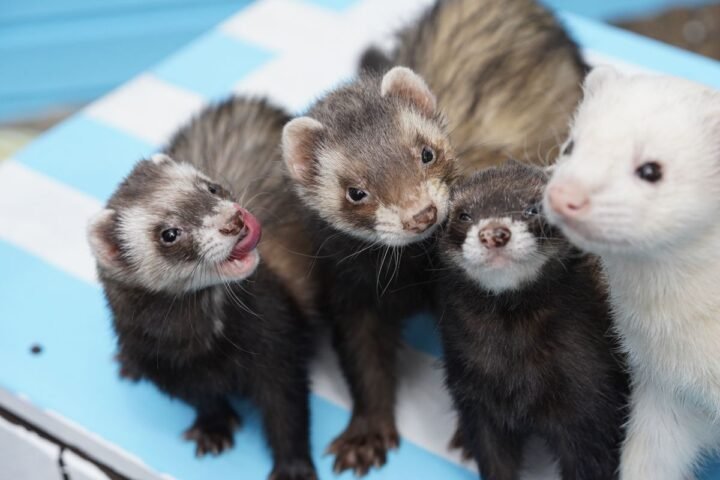
The RSPCA advises monitoring whether all ferrets are eating enough when they live together. One ferret can dominate a preferred bowl or feeding area without an obvious fight. Multiple feeding stations can help you see whether each animal has comfortable access.
Do not keep topping up stale food
“Available all day” still means fresh. Wash bowls regularly, remove spoiled or contaminated food and store dry food properly. If you use wet or fresh meat-based food, follow safe handling instructions and do not leave perishable food at room temperature for long periods.
Fresh water should be available continuously
Both VCA and the RSPCA recommend constant access to clean water. Check bottles and bowls at least daily; the RSPCA advises checking the water supply twice a day. A bottle can look full while the nozzle is blocked, and ferrets are good at tipping light bowls.
Treats should not interrupt the feeding pattern
If a ferret eats multiple treats and then leaves the complete diet, treats are too large or too frequent. Keep rewards tiny and meat-based. Our ferret food guide explains the nutritional pattern the everyday diet needs to maintain.
A change in appetite is health information
RSPCA guidance advises contacting a veterinarian when a ferret’s eating or drinking habits change. Appetite changes can accompany dental pain, gastrointestinal problems, endocrine disease and other conditions. Do not solve a sudden loss of appetite by offering only favorite treats for several days.
Sick ferrets may need a different schedule
Merck’s guidance for sick ferrets describes much more frequent assisted feeding in some medical situations, but that is not a home routine for a healthy animal. If your ferret cannot eat normally, follow a veterinarian’s instructions on food type, amount and frequency.
Use a routine you can actually monitor
A bowl that is always full makes it harder to notice who stopped eating in a group. Check and refresh food at predictable times even when the food remains available between checks. That lets you notice changes in consumption early.
Little and often is the pattern to remember
For many healthy ferrets, several small meals achieved through access to a suitable dry diet works well. The details should still reflect body condition, life stage, health and the specific food being used.
0 comments