PetsFilled Us
You Are Reading
Anatolian Shepherd vs Kangal (2025 Powerful Guardians, Not for Beginners)
0
Dog, Dog care, Dogs

Anatolian Shepherd vs Kangal (2025 Powerful Guardians, Not for Beginners)

Anatolian Shepherd vs Kangal (2025 Powerful Guardians, Not for Beginners)

Anatolian Shepherd vs Kangal: The Ultimate 2025 Breed Comparison Guide

Choosing between an Anatolian Shepherd Dog and a Kangal Dog is one of the most significant decisions a prospective livestock guardian owner can make. These majestic Turkish titans are often confused, but they are distinct breeds with deep histories and specialized traits. This confusion leads to critical questions: Are Anatolian Shepherds and Kangals the same? What are the key differences between the Kangal and Anatolian Shepherd temperament, size, and purpose?

his definitive 2025 guide, backed by official breed standards and expert insights, cuts through the misinformation. We provide a detailed side-by-side analysis, a crucial suitability quiz, and essential care facts to determine which powerful guardian is the right protector for your land, livestock, and lifestyle.


A Tale of Two Titans: Origins & History Unpacked

Understanding the deep historical roots of these breeds is key to understanding their modern behavior and needs. Both hail from the ancient, rugged landscape of Anatolia (modern-day Turkey), where they were developed over millennia to protect flocks from formidable predators like wolves, bears, and jackals without direct human guidance.

  • The Anatolian Shepherd Dog: This breed represents a regional variant type that evolved across the broader Anatolian plateau. Western fanciers imported and selectively bred dogs from various Turkish regions to create a more standardized type, which was recognized by the American Kennel Club (AKC) in 1996. As a result, the modern Anatolian Shepherd may display more variation in coat color and build, representing a broader genetic pool from the region. This process of breed development is not unique; you can see similar regional distinctions in our guide to Japanese Dog Breeds.

  • The Kangal Shepherd Dog: The Kangal is a distinct, pure landrace breed originating specifically from the Sivas province, particularly the Kangal district. For centuries, they were carefully isolated and bred by shepherds for specific working traits, leading to a highly consistent type. The Kangal is recognized as the national dog of Turkey and is fiercely protected by the Turkish government. Internationally, it is recognized by the United Kennel Club (UKC) and the Fédération Cynologique Internationale (FCI), but not the AKC, which considers it a type of Anatolian Shepherd—a point of significant contention among enthusiasts and a primary source of the Anatolian vs Kangal confusion.

Anatolian Shepherd vs Kangal: Head-to-Head Comparison

While they share a common mission, the critical differences that define the right choice for you are in the details of appearance, drive, and temperament.

Anatolian Shepherd vs Kangal (2025 Powerful Guardians, Not for Beginners)
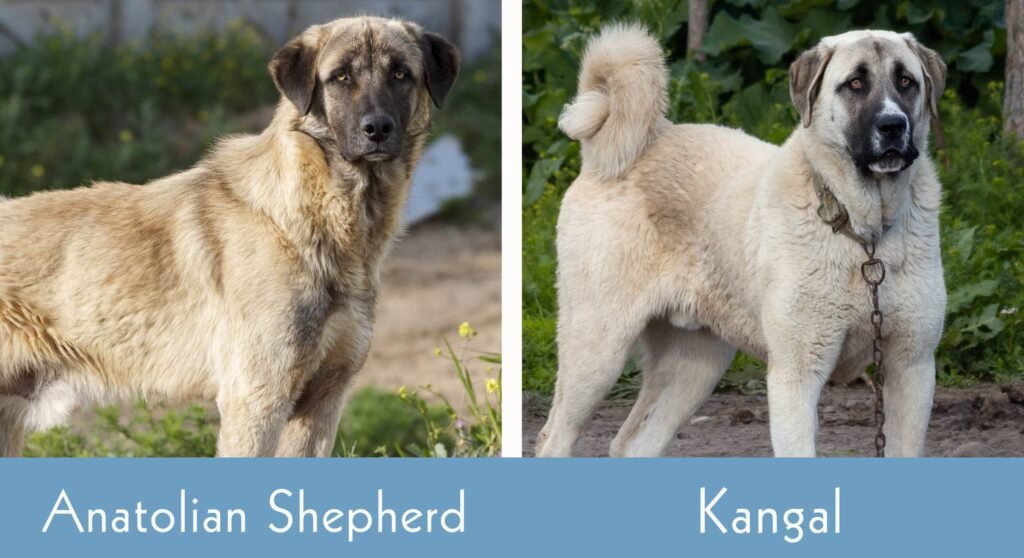
Anatolian Shepherd vs Kangal (2025 Powerful Guardians, Not for Beginners)|Anatolian Shepherd vs Kangal comparison – Image Credit – Hepper.com

1. Physical Characteristics & Appearance

TraitAnatolian Shepherd DogKangal Shepherd Dog
Size & BuildVery large, powerful, and muscular. Can be slightly more rangy or varied due to broader genetic origins.Very large, but often displays a more athletic, leaner, and agile build, honed for speed and confrontation.
Weight & HeightHeight: 27-29 inches. Weight: 80-150 lbs. A greater size and weight range is acceptable.Height: 28-32 inches. Weight: 90-145 lbs. Often notably taller with a more standardized build.
Coat & ColorShort to rough double coat. All color patterns accepted (pinto, brindle, white, fawn).Short, dense double coat. Color is strictly fawn to dun with a black mask. No white markings on the body are permitted in the breed standard.
Head & ExpressionBroad skull with a strong muzzle. Expression can vary, but is always intelligent and alert.The distinctive black mask is a non-negotiable, defining breed hallmark. The head is powerful but may appear more refined and “cleaner” in outline.

2. Temperament & Working Style: The Core Difference

This is the most critical Kangal vs Anatolian Shepherd distinction for potential owners. Both are profoundly loyal, intelligent, and independent, but their approach to guardianship differs, reflecting their specialized development.

  • Anatolian Shepherd Temperament: They are renowned for their calm, observant, and highly independent nature. An Anatolian often prefers to assess a threat from a distance, using its imposing size and deep, intimidating bark as a primary deterrent. Their protective instinct is deeply territorial. They can be slightly more adaptable to different family situations but maintain a strong, reserved wariness of strangers. This independent thinking requires an owner who understands working dog psychology.

  • Kangal Temperament: The Kangal is often described as more alert, agile, and decisively reactive. Historically bred to directly confront wolves, their protective response can be more immediate. They are known for their lightning-fast reflexes and immense courage. They tend to form an even tighter bond with their specific flock (animal or human) and can be more single-minded in their protective focus. As with all powerful guardian breeds, proper, consistent training is non-negotiable; the principles of leadership and respect outlined in our Belgian Malinois Training Guide are highly applicable here.

3. Trainability & Socialization Needs

  • Trainability: Both breeds are highly intelligent but not traditionally biddable. They are independent thinkers bred to make life-or-death decisions without waiting for a human command. This means they can be stubborn and unresponsive to repetitive, forceful, or punitive training methods. Success is found in training based on mutual respect, unwavering consistency, and positive reinforcement. They are categorically not suitable for first-time or timid dog owners.

  • Socialization: Early, extensive, and ongoing socialization is absolutely non-negotiable. From puppyhood, they must be positively and carefully exposed to a wide variety of people, animals, sounds, and environments in a controlled manner. The goal is to build a confident, discerning dog, not a fearful or overly aggressive one. Without this critical investment, their natural protectiveness can become generalized and unmanageable. The importance of this behavioral foundation is emphasized by veterinary professionals, as noted in our article on the importance of regular Vet Visits for preventative care.

4. Exercise, Space & Lifestyle Requirements

Forget apartment or even standard suburban living. These are dogs of epic landscapes with a deeply ingrained purpose.

  • Space: An absolute minimum of a large, securely fenced yard (at least 6 feet high, with dig-proof barriers) is required. Their ideal environment is a working ranch, farm, or very large rural property with a clear job to do. They are perimeter patrollers by nature.

  • Exercise: Their exercise needs are often misunderstood. They are not endurance runners like huskies. They require ample space to patrol and roam at their own pace, combined with moderate daily walks to maintain joint and mental health. Their primary “exercise” is their vigilant work of watching their territory. A dog like this can never be fully “exercised” in a small area.

  • Lifestyle Fit: They are low-energy indoors (often called “rug potatoes”) but are constantly “on duty” when outside. They are best suited to a rural lifestyle with an experienced owner. Boredom and confinement are a recipe for escape attempts, destructive behavior, and nuisance barking. Ensuring their safety outdoors on such property is a primary concern.

5. Health & Lifespan Considerations

Both are generally healthy, robust breeds forged in a harsh environment, but like all large dogs, they are prone to specific conditions. Responsible ownership starts with a quality diet; our guide to Best Dog Food for Skin Allergies highlights the importance of nutrition for overall health, which is critical for giant breeds.

  • Common Health Concerns: Hip and Elbow Dysplasia (screening is mandatory from reputable breeders), Bloat (Gastric Dilatation-Volvulus or GDV)—a life-threatening stomach condition requiring immediate emergency care, and Entropion (an eyelid issue). Regular vet care is crucial for monitoring these risks.

  • Lifespan: Both typically live 10-13 years with exceptional care, which includes a high-quality, large-breed appropriate diet, proper exercise, and proactive veterinary medicine.

  • Key Health Difference: Due to its historically closed and rigorously selected gene pool, the Kangal is often noted for its overall robust health and may have a slightly lower incidence of hip dysplasia, but this is entirely dependent on ethical, health-focused breeding practices. The broader gene pool of the Anatolian can be an advantage for genetic diversity if managed responsibly.

The Guardian Breed Suitability Quiz: Anatolian, Kangal, or Neither?

Anatolian Shepherd vs Kangal (2025 Powerful Guardians, Not for Beginners)
Anatolian Shepherd vs Kangal (2025 Powerful Guardians, Not for Beginners)|Kangal vs Anatolian Shepherd differences. Image Credit – arloren.com

Answer these questions honestly before considering either breed. This self-assessment is the most important step in preventing a tragic mismatch.

  1. Environment: Do you have a minimum of 2+ securely fenced acres in a rural or semi-rural area, with fencing designed to contain a powerful, determined dog?
  2. Experience: Do you have significant, proven experience training and living with independent, large guardian or working breeds (e.g., Livestock Guardians, Mastiffs, Caucasian Shepherds)?
  3. Purpose: Are you seeking a dog for active livestock protection or as a vigilant family and property guardian on substantial acreage, not as a casual companion?
  4. Time & Socialization: Can you commit to years of consistent, confident leadership, daily interaction, and lifelong managed socialization?
  5. Tolerance: Are you prepared for a dog that is reserved or aloof with strangers, may bark to warn at night, sheds heavily, and has a strong prey drive towards intruding animals?
  6. Commitment: Are you ready for a 10+ year commitment that will significantly influence where you can live, travel, and socialize?
  • Answered YES to all 6: You have the foundational requirements to responsibly research one of these breeds. Your next step is deep due diligence in finding a reputable breeder.
  • Answered NO to even one question: These breeds are likely a poor and potentially dangerous fit. Your honesty will prevent heartache. Consider a less intense guardian breed or a different type of working dog altogether. A well-trained family dog of a different breed may be a far better match for your lifestyle.

First-Year Care Blueprint for a Livestock Guardian Puppy

If your quiz results point to suitability, this is your critical path for the first year, which sets the foundation for the next decade.

  • Months 2-4: The Socialization Imperative. This is your most important and time-sensitive task. Under the guidance of a trainer experienced with guardian breeds, expose your puppy positively to every possible sight, sound, surface, person (of all ages and appearances), and safe animal. Enroll in puppy socialization classes that use positive reinforcement methods. Prevent any traumatic experiences during this period.

  • Months 4-12: Foundational Training & Boundary Setting. Establish basic commands (come, sit, leave it, quiet) using exceptionally high-value rewards. Begin boundary training for your property. If for livestock, introduce to animals under strict, calm supervision. This is when their independence will test your leadership. Consistency is paramount. The foundational principles in our guide on How to Train a Dog are essential reading.

  • Ongoing & Critical Infrastructure: Secure fencing (6ft minimum, with dig-proof aprons or wire laid underground along the perimeter), a high-quality large-breed puppy food to support controlled growth, scheduled vet checks for vaccinations, and planning for future joint health screenings. A proper outdoor shelter where they can perform their watchful role is a must, not an option.

Anatolian Shepherd vs Kangal: Your Top Questions Answered

Which breed is better with children?

Both can be excellent, gentle giants with their own family children when raised with them from puppyhood. They are often incredibly patient and protective of “their” kids. However, their size and power are immense, and they may instinctively place themselves between children and any perceived threat, including visiting friends. They are not “playmate” dogs for roughhousing. Constant, proactive adult supervision during all interactions is absolutely mandatory. Their size alone can accidentally knock over a small child.

Are Anatolian Shepherds and Kangals aggressive?

No. Properly bred, socialized, and managed, they are confidently protective, not inherently aggressive. Their default is to deter and warn through presence, barking, and posturing. True aggression is a failure of breeding, training, or management. However, their protective instincts are so powerful that in the hands of an unprepared owner, their behavior can become dangerously unpredictable. This is why the suitability quiz above is vital.

Can they live as family pets without livestock?

Yes, but with major, non-negotiable caveats. They can thrive as family guardians if given a clear “job” (watching and protecting the property and family) and massive amounts of secure space to patrol. They are not urban or standard suburban pets. Boredom and pent-up energy in a confined space will inevitably lead to severe problem behaviors, including destructive escaping, excessive barking, and the development of neuroses. They need a territory to guard.

Which breed has stronger protective instincts: Kangal or Anatolian?

The Kangal is often cited by breed experts and shepherds as having a more intense, direct, and physically reactive protective drive, honed specifically for confronting and deterring large predators like wolves. The Anatolian Shepherd may exhibit a more territorial, observant, and slightly more adaptable style of protection, sometimes using its bark and size as a first deterrent before physical engagement. While individual variation exists, the historical breeding purpose points to this general distinction in their guardian dog approach.

How do I find a reputable Anatolian or Kangal breeder?

Avoid pet stores, online marketplaces (like Craigslist, Kijiji, or Hoobly), and any breeder who has multiple litters available at once or who does not ask you detailed questions. A reputable breeder is a mentor, not a salesman. They should:

  1. Prioritize Health: Provide official OFA/PennHIP hip & elbow scores, eye exam certifications from a veterinary ophthalmologist, and any relevant genetic test results for the parents.
  2. Focus on Temperament: Breed from stable, confident, proven working lines (not just show/conformation lines). They should be able to discuss the temperaments of several generations.
  3. Be Knowledgeable & Transparent: Ask you far more questions than you ask them. They should welcome visits, show you where the dogs live, and be a resource for the life of the dog. They will have a contract that includes a health guarantee and requires you to return the dog to them if you cannot keep it.
  4. Are Club-Affiliated: Be active members of national breed clubs dedicated to preservation and ethics, such as the Anatolian Shepherd Dog Club of America (ASDCA) or the Kangal Dog Club of America (KDCA). These clubs uphold strict codes of ethics.

Anatolian Shepherd vs Kangal -The Final Verdict: Choosing Your Ultimate Guardian

Anatolian Shepherd vs Kangal (2025 Powerful Guardians, Not for Beginners)
Anatolian Shepherd vs Kangal (2025 Powerful Guardians, Not for Beginners)| Which is bette,r Anatolian or Kangal

The choice between an Anatolian Shepherd dog and a Kangal dog is not about which is superior, but which is the correct specialist tool for your specific environment, experience, and expectations.

  • Choose an Anatolian Shepherd if: You seek a formidable, intelligent, and adaptable guardian with a more varied appearance for a large property. You appreciate their deep history as a regional type and need a versatile protector whose style emphasizes imposing presence, territorial deterrence, and a keen, observant intelligence.

  • Choose a Kangal Shepherd Dog if: You are an exceptionally experienced handler on very large acreage (often with active livestock) and require the pinnacle of focused, reactive, and athletic guardian instinct. You are prepared for a dog with a singular, ancient purpose, the physical power and speed to back it up, and you value the breed’s historic purity, consistency, and status as a national treasure.

  • Consider neither if: Your life lacks the vast space, rural setting, or requisite hands-on experience with dominant working breeds. The commitment to either breed is monumental—a 10+ year responsibility that will dictate major life choices. For most homes, a different type of protective but more biddable dog is a safer and happier option.

The Anatolian Shepherd and Kangal are living legends, embodiments of centuries of selective breeding for courage, independence, and resilience. Bringing one into your life is not simply adopting a pet; it is entering a solemn partnership with a powerful, ancient lineage. It requires the owner to be a true steward. Do so with the utmost respect, thorough preparation, and radical honesty about your ability to meet their profound needs. For the select few who can provide the right environment and leadership, the reward is the ultimate in canine loyalty, quiet companionship, and awe-inspiring protection.

Interested in other breeds with formidable drives and high intelligence that channel their energy differently? Explore our in-depth guide to the Belgian Malinois, a breed that exemplifies intense focus and trainability for active work and sport.

About Author

Smith Sam brings research expertise to the PetsFilled team, specializing in pet behavior and naming trends. With a background in scientific communication, Smith translates animal behavior research into practical guidance for pet owners.

At PetsFilled, Smith leads naming trend analysis and contributes to comprehensive pet care guides. Their work involves analyzing naming data from shelters nationwide, researching name choices' impact on training, and interviewing veterinary behaviorists.

All articles undergo PetsFilled's editorial review and are vetted by our veterinary advisory board.