
Hamster Sleeping More Than Usual: Normal Rest, Age or Illness?
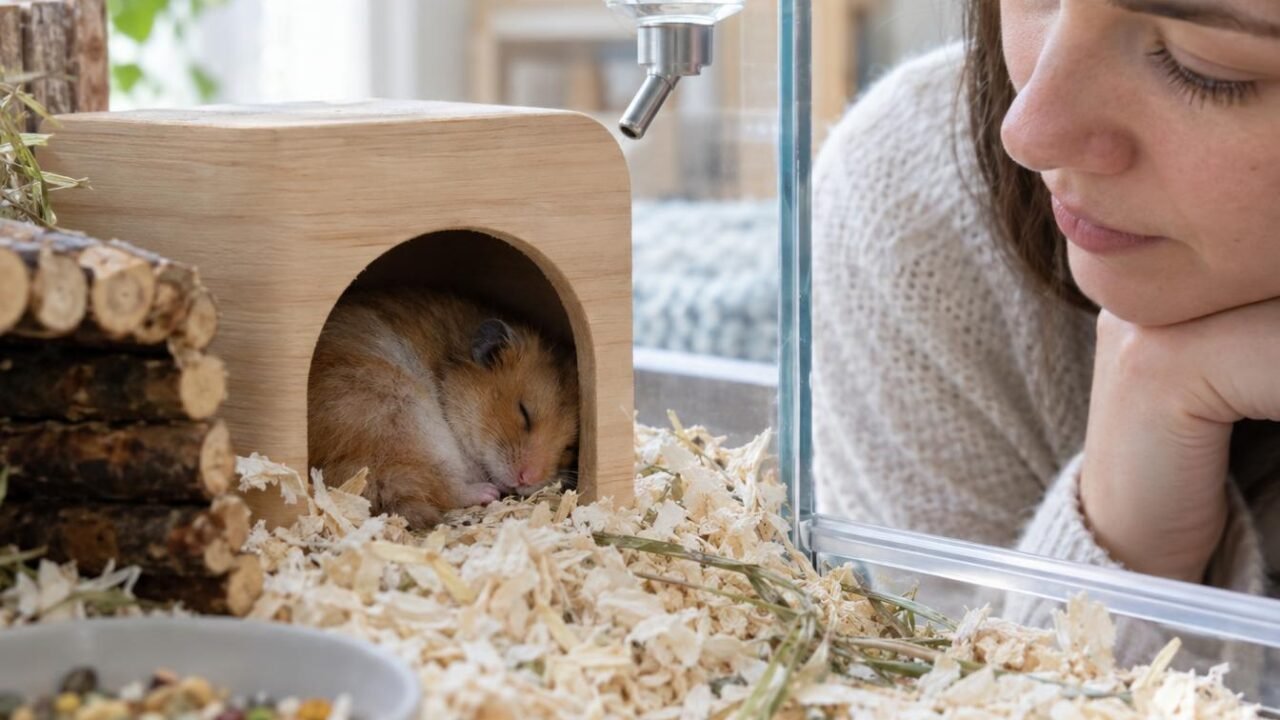
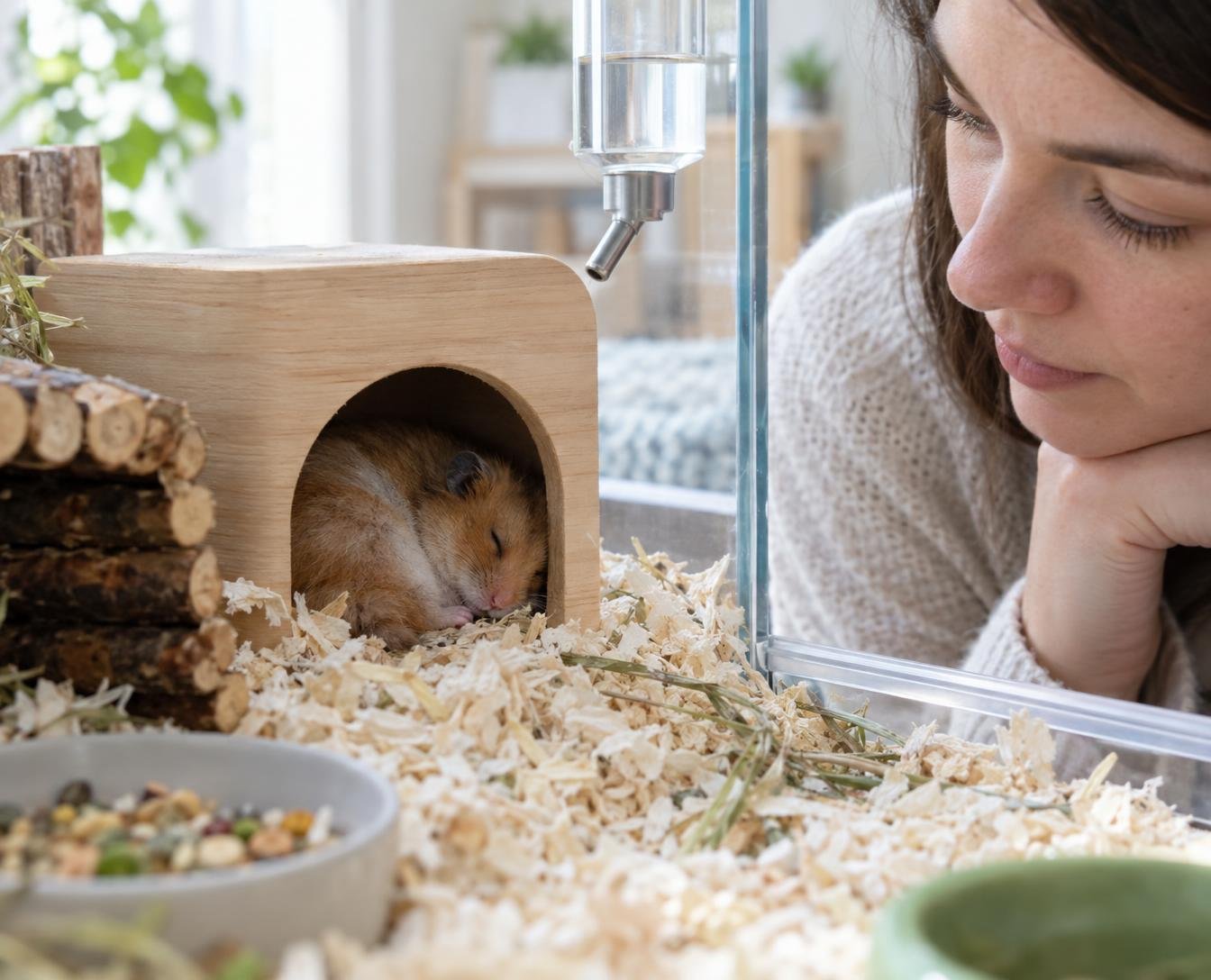
Hamsters sleep a lot, so “sleeping more than usual” only becomes meaningful when it is compared with that individual hamster’s normal pattern. A healthy hamster may spend most daylight hours asleep and then become active after dusk. The concern is a hamster that starts missing its usual active period, no longer uses the wheel, stops foraging, or is difficult to rouse when it would normally be awake.
The most useful question is not how many hours a hamster sleeps. It is whether the hamster’s entire daily rhythm has changed.
Know the normal pattern first
Most hamsters are more active in the evening and overnight. During the day they may remain hidden in a nest for long stretches.
If your hamster has always slept through the afternoon and wakes at 9 p.m., that is different from a hamster that used to emerge at 9 p.m. but now stays hidden until morning.
Use the active period as your comparison point
Watch what happens during the hours when the hamster normally wakes. Is food being collected? Is the wheel being used? Does the hamster investigate the enclosure and groom normally?
A hamster that still completes its usual nighttime routine is less concerning than one that remains inactive through the normal waking period.
Older hamsters may sleep more, but age is not the whole explanation
Senior hamsters can become less active and may spend more time resting. The change should usually be gradual.
A sudden shift in sleep, especially with weight loss, increased drinking, poor appetite or difficulty moving, should not be dismissed as “just old age.”
Cold can make a hamster unusually inactive
Check the room temperature and enclosure location. A cage beside a drafty window, air-conditioning vent or cold exterior wall can become much cooler than the rest of the room.
If the hamster is cold, minimally responsive or unusually still, use our hamster torpor guide. Do not aggressively heat a cold hamster with direct hot water bottles or uncontrolled heating pads.
Pain can look like extra sleep
A hamster with pain may remain in the nest because movement hurts. Dental disease, abdominal pain, an injured leg or another painful condition can all reduce activity.
Our hamster pain-signs guide explains subtle clues such as hunched posture, reduced wheel use and new handling intolerance.
Appetite tells you whether the hamster is simply resting or becoming unwell
Check whether the normal ration is disappearing and whether the hamster is still hoarding food. A full-looking cache does not prove that the hamster is eating enough now.
If food intake is down, use our hamster not eating guide and arrange veterinary advice sooner rather than later.
Weight is more reliable than appearance
Thick fur can hide loss of body condition. A gram scale can show whether “sleeping more” is part of a broader decline.
Our hamster weight-loss guide explains how to track a trend under similar conditions.
Breathing changes raise the urgency
A hamster that sleeps more and also breathes rapidly, clicks, wheezes or uses the abdomen strongly needs prompt veterinary assessment.
See our hamster breathing guide for emergency respiratory signs.
Watch the coat and eyes when the hamster wakes
A healthy hamster should generally groom and appear alert during the waking period. A rough coat, half-closed eyes, discharge or poor grooming can support concern that the hamster feels unwell.
More sleep after a stressful event can be temporary
Moving house, enclosure changes, loud household activity or repeated handling can alter a hamster’s routine for a short period.
Give the hamster predictable quiet time, but do not use stress as an explanation if appetite, weight or breathing also changes.
A new hamster may hide and sleep more while settling in
Recently adopted hamsters often spend extra time in the nest during the first days because the environment is unfamiliar.
A safe first week should focus on food, water, quiet observation and minimal handling. Our hamster trust-building guide explains how to avoid pushing interaction too quickly.
Do not wake the hamster repeatedly to test whether it is sick
Constantly opening the nest or picking the hamster up can create stress and disrupt normal sleep.
Instead, observe during the usual active period and look for objective changes in eating, weight, movement and breathing.
Check the wheel and enrichment setup
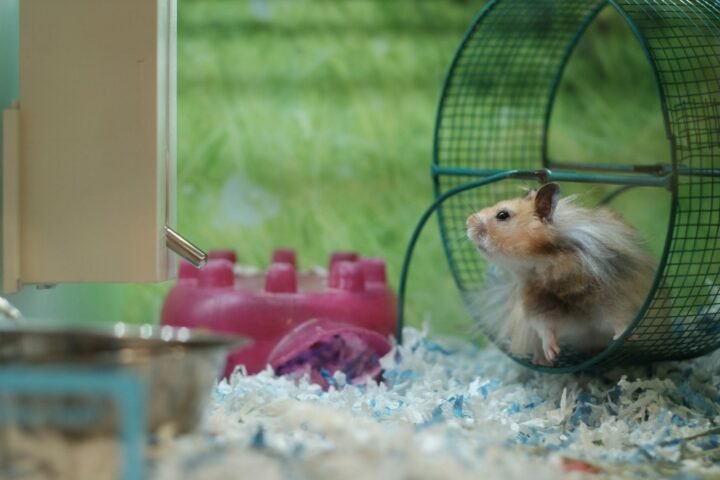
A hamster may appear less active if the wheel is jammed, too small, unstable or newly uncomfortable. Make sure it turns freely and the hamster can run with a neutral back.
Our hamster wheel guide explains how to judge fit.
Injury can reduce nighttime activity
If the hamster is sleeping more and moving differently when awake, inspect for limping, swelling or reluctance to use one leg.
Our hamster limping guide covers injury warning signs.
Increased thirst is another useful clue
More sleep plus a bottle that is genuinely emptying faster can point toward a broader medical issue, especially in an older hamster.
See our hamster increased-thirst guide for how to rule out leaks and monitor the pattern.
What short-term monitoring should include
If the hamster otherwise looks normal, monitor during the next active period rather than simply counting daytime sleeping hours.
- Does the hamster emerge at the usual time?
- Is normal food being eaten?
- Is water intake roughly normal?
- Are droppings present?
- Is the wheel still being used?
- Does the hamster walk normally?
- Is breathing quiet and easy?
When to call a veterinarian
Arrange a veterinary check when the hamster repeatedly misses its normal active period, stays hidden much longer than usual, eats less, loses weight, drinks much more, moves abnormally or has discharge or breathing changes.
When it is urgent
Severe weakness, open-mouth breathing, collapse, seizure-like activity, inability to walk or a hamster that remains cold and poorly responsive needs urgent veterinary care.
Record the change rather than relying on memory
Write down the time the hamster normally wakes, the time it actually emerged, body weight, food intake and any other changes. A two- or three-day pattern can be much more informative than “seems sleepier.”
Recovery should look like a return to the hamster’s own baseline
If the cause is temporary stress, sleep disruption or a mild environmental issue, the hamster should return toward normal evening activity, eating and movement. If that does not happen, reassess rather than continuing to wait.
Hamsters are supposed to sleep during much of the day. The warning sign is a meaningful change from the animal’s own routine—especially when extra sleep comes with appetite loss, weight change, pain, abnormal breathing or reduced movement during the hours the hamster would normally be awake.
Look at the difference between sleep and lethargy
A sleeping hamster should still rouse during its normal active period, respond to familiar sounds or food, and move with normal coordination once awake. Lethargy is different: the hamster may remain hunched, move slowly, ignore food or return immediately to the nest after minimal activity.
Check whether the hamster is still maintaining its normal nest
A healthy hamster often continues moving bedding, storing food and maintaining a preferred sleeping area even if daytime sleep is long. A hamster that stops organising the nest, leaves food untouched and no longer performs normal routines may be showing a broader decline.
Do not judge by one quiet evening
Activity naturally varies from day to day. One unusually quiet night can follow stress, disturbance or a change in routine. The concern rises when the pattern repeats, especially alongside measurable changes such as weight loss or reduced food intake.
Use several signs together
Extra sleep is more meaningful when it appears with another change. Sleeping longer plus normal appetite, normal weight and normal movement is less concerning than sleeping longer plus weight loss, increased drinking or difficult breathing.
A practical decision rule
- normal daytime sleep with normal nighttime activity: usually expected;
- one quieter-than-usual evening but normal eating and movement: observe;
- repeatedly missing the normal active period: arrange a veterinary check;
- extra sleep with poor appetite, weight loss, pain or breathing changes: seek prompt care;
- poor responsiveness, collapse or open-mouth breathing: urgent care.

0 comments