
Cat Mats Under the Front Legs: Why Armpit Mats Form and How to Handle Them Safely
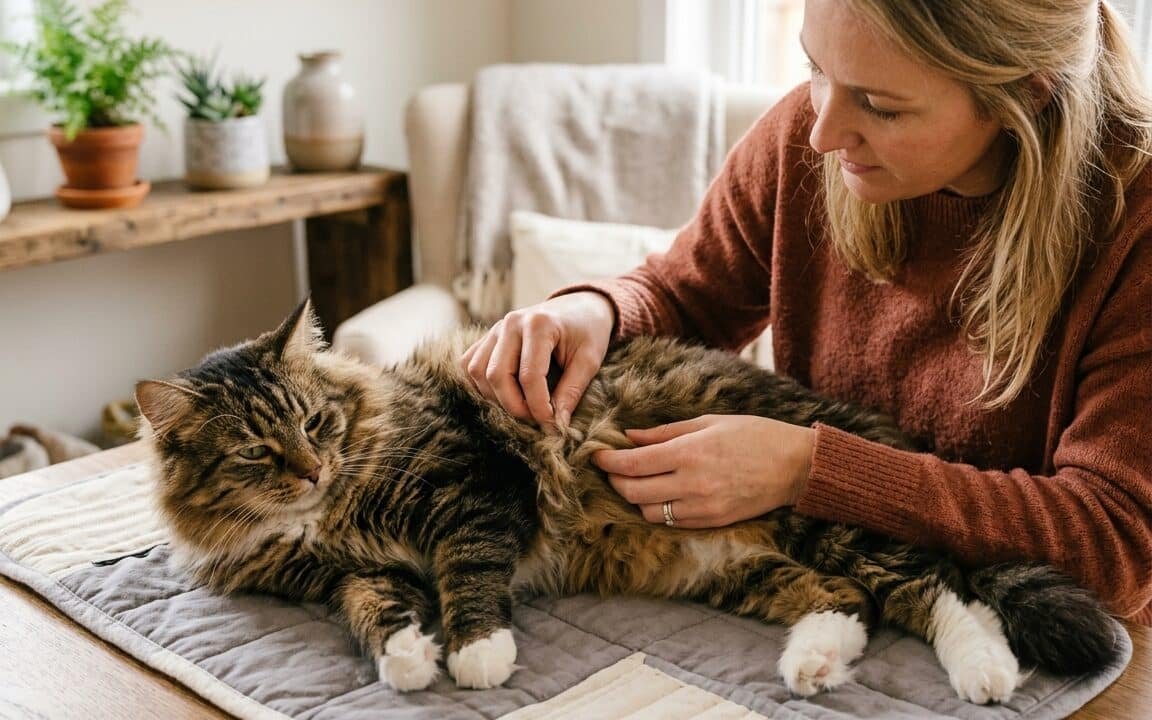
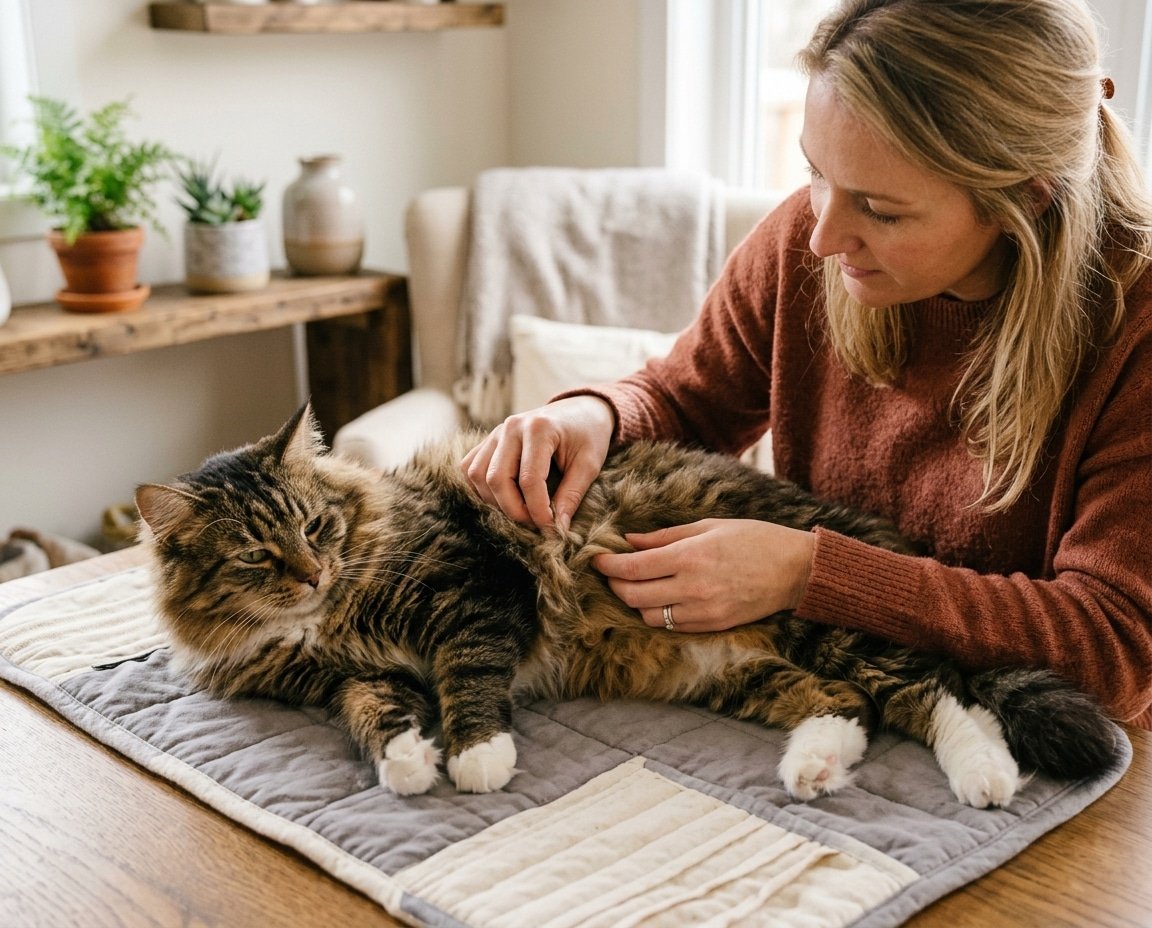
Mats under a cat’s front legs can become surprisingly tight because the area moves every time the cat walks, stretches or grooms. Fine hair, loose undercoat and friction all meet in the same place, and the skin in the armpit is thin and easy to nick.
If you discover a lump of tangled fur there, the first question is not “How fast can I cut this out?” It is “How close is this mat to the skin, and can the cat tolerate careful handling?”
Why this area mats so easily
The inside of the front legs is a high-friction zone. Long-haired and dense-coated cats are especially prone, but any cat can develop a knot if grooming declines or the coat stays damp.
Senior cats, overweight cats and cats with arthritis may also struggle to reach the area comfortably. A new mat can therefore be a grooming problem and a clue that the cat is moving differently.
Check the mat without pulling
Use your fingers to feel around the edges. If the knot lifts away from the skin and you can clearly see where the skin ends and loose hair begins, it may still be manageable with gentle combing.
If the mat feels flat, hard or tight against the body, stop. Cat skin can be drawn up into the tangle.
Do not put scissors under a tight armpit mat
Household scissors are risky here because the skin is flexible and hidden. A cat may also move suddenly when the leg is extended. Our safe cat mat-removal guide explains when clippers or professional help are the safer choice.
Loose tangles can sometimes be worked apart
For a small, superficial tangle, hold the fur near the skin so you are not tugging on the cat. Work from the outer edge with a wide-toothed comb rather than dragging through the whole knot in one pass.
Stop if the cat flinches, growls, twists away or the skin starts moving with the mat.
Professional grooming may be the kindest option
A cat-experienced groomer can often clip a localized mat safely if the cat tolerates handling. If the mat is very tight, the skin looks inflamed or the cat is painful, a veterinary team may be more appropriate.
Look underneath after the mat is gone
Tight mats can hide redness, moisture, scratches, flea dirt, sores or infection. Do not assume the job is finished just because the hair is removed.
Repeated armpit mats mean the routine needs changing
Check this area during normal grooming instead of waiting until you feel a solid knot. Our cat mat prevention guide covers the broader routine, including high-risk areas and brushing frequency.
What if the cat suddenly starts matting?
A cat that kept its coat tidy for years and then begins developing mats deserves a closer look. Arthritis, obesity, dental pain, skin disease and other illness can reduce self-grooming.
For older cats, our senior cat grooming guide explains how mobility changes can affect coat care.
The safest rule for armpit mats is simple: loose tangles can be approached gently; tight mats close to the skin should not become a home scissor project.
Armpit mats often start where you cannot easily see them
The inside of the front leg is partly hidden when a cat is standing normally. That means a small tangle can grow unnoticed until it feels like a solid lump. During grooming, gently lift the leg only as far as the cat comfortably allows and feel the fur rather than relying on sight alone.
Friction makes this area different from the back or sides
Every stride moves the skin and hair under the front legs. Harness straps, dense undercoat and a long silky coat can add even more friction. A mat here may therefore tighten faster than one on a flatter area of the body.
Do not force the leg into an unnatural position
Some cats dislike having the front leg extended, and cats with arthritis or shoulder pain may find it uncomfortable. Keep the limb close to its normal range and stop if the cat stiffens, pulls away or vocalises.
Use fingers first, then a comb
For a tiny loose tangle, separate the surrounding coat with your fingers and support the hair close to the skin. If the knot loosens, use a long-toothed comb from the outer edge inward. Do not start by pulling the comb through the entire mat from the skin.
Why scissors are especially dangerous here
The armpit has loose, thin skin that can be pulled upward into the mat. Because the skin can disappear inside the tangled hair, it is easy to mistake skin for the base of the coat. VCA advises using clippers rather than scissors for mats and recommends professional help when tangles are severe.
Do not use a de-matting blade blindly
Bladed de-matting tools can also cut skin or pull painfully if used close to the body. They are not a safe shortcut for a dense armpit mat unless you have been shown how to use them and can clearly separate the skin from the tangle.
Skin irritation may be hiding underneath
After a mat is removed, inspect the area for redness, moisture, scabs, odor, flea dirt or broken skin. A tight mat can trap sweat and debris and can hide irritation until the hair is gone.
Repeated mats may point to reduced self-grooming
Arthritis, obesity, dental pain and illness can reduce how effectively a cat grooms the chest and underarms. If a cat that previously stayed tangle-free suddenly develops several mats, consider a health check rather than treating every knot as an isolated coat problem.
Harnesses deserve a fit check
A harness that rubs behind the front legs can worsen tangling in long fur. Check that straps lie flat, fit correctly and do not pinch or constantly twist the coat. Remove the harness when it is not needed if the design allows.
Keep the area dry
Damp fur tangles more readily. If the cat gets wet, gently dry and comb high-friction areas after the coat has partially dried. Do not scrub the armpit vigorously with a towel.
What if there are several mats under both front legs?
That usually calls for a broader grooming reset rather than removing one knot at a time over many stressful sessions. A cat-experienced groomer or veterinarian can assess whether clipping is kinder and whether the skin is healthy underneath.
When sedation may be the safer option
Extensive mat removal can be painful and requires precise clipper work near delicate skin. If the cat cannot be handled safely, veterinary sedation may be less stressful than prolonged restraint.
Preventing the next armpit mat
Run your fingers under the front legs during every grooming session. A few seconds of checking can catch a tangle while it is still soft. Our cat mat prevention guide covers a full routine for long-haired cats.
Check the chest and belly at the same time
Once you are already handling the front-leg area, feel the chest and belly for other tangles, lumps or sore spots. Do not turn the session into a long examination if the cat is becoming restless.
If grooming itself has become a battle
Some cats need gradual reintroduction to brushing after a painful mat-removal experience. Keep sessions extremely short, use high-value rewards and stop before the cat begins resisting.
Our cat brushing-aversion guide explains how to rebuild tolerance without force.
A simple decision rule
- Loose, superficial tangle: gently separate and comb if the cat is comfortable.
- Dense mat pulling the skin: stop home detangling.
- Red, moist or painful skin: involve a veterinarian.
- Repeated widespread mats: investigate grooming ability and health.
- Cat cannot be handled safely: use professional help.
Armpit mats are easy to underestimate because they sit in a hidden, high-friction area. The safest approach is to catch them early, avoid scissors, and treat repeated matting as information about both coat care and the cat’s overall comfort.
0 comments