Save for reference or share with pet sitters
What’s in This Dog Guide
Tip: Click any section to jump directly there.
The #1 Fact Most Dog Owners Get Wrong: Your Dog’s True Phylum
The simple question, “What is the phylum of a dog?” opens a door to a deeper understanding of your canine companion. While many search for this basic fact of dog taxonomy, the true answer connects your family pet to a vast, ancient biological legacy. It’s not just a label; it’s the key to understanding the scientific classification of a dog and its place in the web of life.
When you search for the phylum of a domestic dog, your intent goes beyond a one-word answer. You’re likely seeking context: What does this classification mean? How does it relate to other animals? This definitive guide is designed to satisfy that full search intent.
We will immediately provide a clear, direct answer regarding the dog’s phylum and then comprehensively unpack the entire taxonomic hierarchy of Canis lupus familiaris. From Kingdom to Subspecies, you’ll discover not only what the phylum of a dog is, but also what each level of its scientific classification reveals about its evolution, biology, and its incredible journey from wild wolf to beloved household companion.
The Direct Answer: A Member of Phylum Chordata
The domestic dog (Canis lupus familiaris) belongs to the phylum Chordata. This is the same phylum that includes all vertebrate animals—from fish and birds to humans. Members of this phylum are united by key features present at some stage of their development:
A dorsal nerve cord (which becomes the spinal column)
A flexible, rod-like notochord for support
Pharyngeal slits in the throat region
A post-anal tail
So, when you look at your dog, you are looking at a fellow chordate. This shared blueprint is a legacy of an evolutionary journey spanning over 500 million years.
The Complete Taxonomic Classification of the Domestic Dog
Phylum is just one level in the eight-tiered scientific system used to classify all living things. This system, called taxonomy, acts like a precise biological address. Here is the complete classification for the domestic dog:
| Taxonomic Rank | Classification | What It Tells Us About Dogs |
|---|---|---|
| Domain | Eukarya | Complex cells with a nucleus. |
| Kingdom | Animalia | Multicellular, mobile organisms that consume organic matter. |
| Phylum | Chordata | Possesses the defining chordate structures (notochord, nerve cord). |
| Class | Mammalia | Warm-blooded, has fur, females produce milk, and has a complex brain. |
| Order | Carnivora | Dentition and digestive system adapted for meat (though omnivorous). |
| Family | Canidae | The dog family includes wolves, foxes, and coyotes. |
| Genus | Canis | The “true dog” genus comprises wolves, coyotes, and jackals. |
| Species | Canis lupus | The Gray Wolf. The dog is a subspecies of this species. |
| Subspecies | Canis lupus familiaris | The scientific name for the modern domestic dog. |
Understanding the Levels: The Story in Each Rank
1. Kingdom Animalia
This separates dogs from plants, fungi, and bacteria. It confirms they are complex, motile organisms that must ingest other life forms for energy.
2. Phylum Chordata
This is the core answer to the search query. Belonging to Chordata means your dog’s body plan is built around a central nervous system protected by a bony spine. This successful design is shared with cats, horses, and even birds, as seen in diverse species from Japanese dog breeds to the parrots in our guide to fun facts about parrots.
3. Class Mammalia
This class speaks to the warm, nurturing nature of dogs. Like all mammals—from the whales we discuss in whale eyes dog behavior comparisons to the cats in our essential cat hygiene guide—dogs have hair, nourish their young with milk, and possess a neocortex for complex thought and emotion.
4. Order Carnivora
While modern dogs thrive on balanced diets (like those in our best dry dog foods guide), their biological order tells an ancestral story. Their sharp teeth and shorter digestive tract are legacies of a meat-eating past, a trait they share with other Carnivora, like the feline subjects of our science of cat behavior article.
5. Family Canidae
This is the dog’s immediate family. All canids share a common ancestor and key traits like a long muzzle and keen senses. Understanding this family helps explain deep-seated social and communicative behaviors.
6. Genus, Species, and Subspecies: Canis lupus familiaris
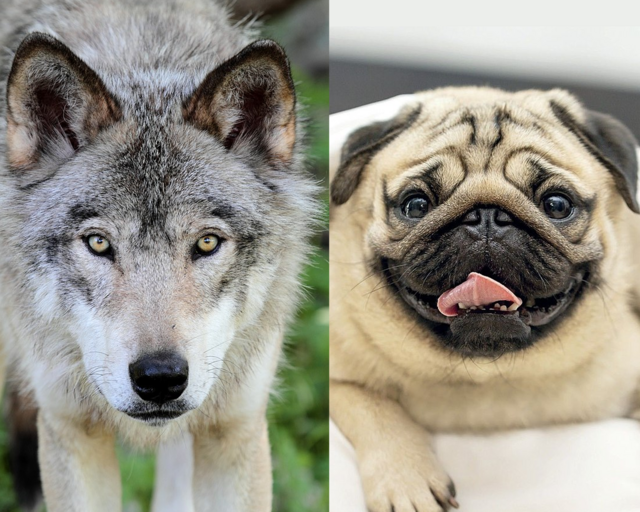
This is the most critical revelation. The domestic dog is a subspecies of the Gray Wolf. They are the same species and can interbreed. The classification Canis lupus familiaris is a powerful testament to domestication, which transformed wolves into everything from a tiny Cavapoo to a powerful Belgian Malinois.
Comparative Taxonomy: How Does a Dog Compare?
To fully grasp classification, it helps to see where dogs diverge from other familiar animals. The journey from Kingdom to Phylum shows deep connections, while the later ranks reveal unique evolutionary paths.
Why This Scientific Classification Matters for Dog Owners
This isn’t just academic. Knowing your dog’s taxonomy provides a foundation for better care:
Informs Nutrition: Their Carnivora biology suggests a need for high-quality protein, even in their omnivorous diet. Choosing the right food is crucial, whether for puppies or dogs with skin allergies.
Explains Behavior: Their Canidae heritage explains social pack instincts, communication styles, and prey drive. Training a dog effectively, as in our Belgian Malinois training guide, works with these innate traits.
Guides Health Care: Their Mammalian traits dictate common health concerns, reproductive cycles, and the importance of preventative care, like regular vet visits and proper dog hygiene.
What is the phylum of a dog? The Frequently Asked Questions
What is the kingdom, phylum, and class of a dog?
Kingdom: Animalia
Phylum: Chordata
Class: Mammalia
Are dogs and wolves the same species?
Yes. The primary biological definition of a species is the ability to produce fertile offspring. Wolves and dogs can interbreed successfully, confirming they are the same species (Canis lupus), with the dog being a domesticated subspecies (familiaris).
Is a dog’s phylum the same as a cat’s?
Yes. Both belong to Chordata and Mammalia. They diverge at the Order level (Carnivora) into different families: Canidae (dogs) and Felidae (cats).
How does this relate to dog breeds?
All dog breeds, from a Staffordshire Bull Terrier to a Whippet, are the same subspecies: Canis lupus familiaris. “Breeds” are a human-made distinction created through selective breeding within the subspecies.
Conclusion: More Than a Label – Understanding Your Dog’s Place in Nature
Asking “What is the phylum of a dog?” does more than provide a textbook answer. It opens a window to a deeper truth: your dog is a living link in the vast story of life on Earth. The journey from the single term Chordata through its full scientific classification reveals a creature of remarkable connection.
Your companion is an Animalia, Chordata, Mammalia, a complex, warm-blooded vertebrate. It is Carnivora, Canidae—a descendant of intelligent, social hunters. Most significantly, it is Canis lupus familiaris. This final piece of dog taxonomy is not just a label; it is the scientific testament to an unparalleled partnership. The domestic dog is a subspecies of the gray wolf, shaped over millennia through the process of domestication into the most diverse companion species on the planet.
This knowledge transforms understanding into better care. It explains why nutrition suited to its Carnivoran biology is crucial and why training that aligns with its Canid social instincts is so effective. For those inspired to delve deeper into the precise genetic and hierarchical data that defines Canis lupus familiaris and all life, the authoritative resource is the National Center for Biotechnology Information (NCBI) Taxonomy database.
So, the answer to the initial question is Chordata. But the real discovery is this: understanding your dog’s phylum and full scientific classification is the first step in appreciating the magnificent, evolved creature that shares your home and your life.