
Puppy Training for Beginners: A Reward-Based Foundation
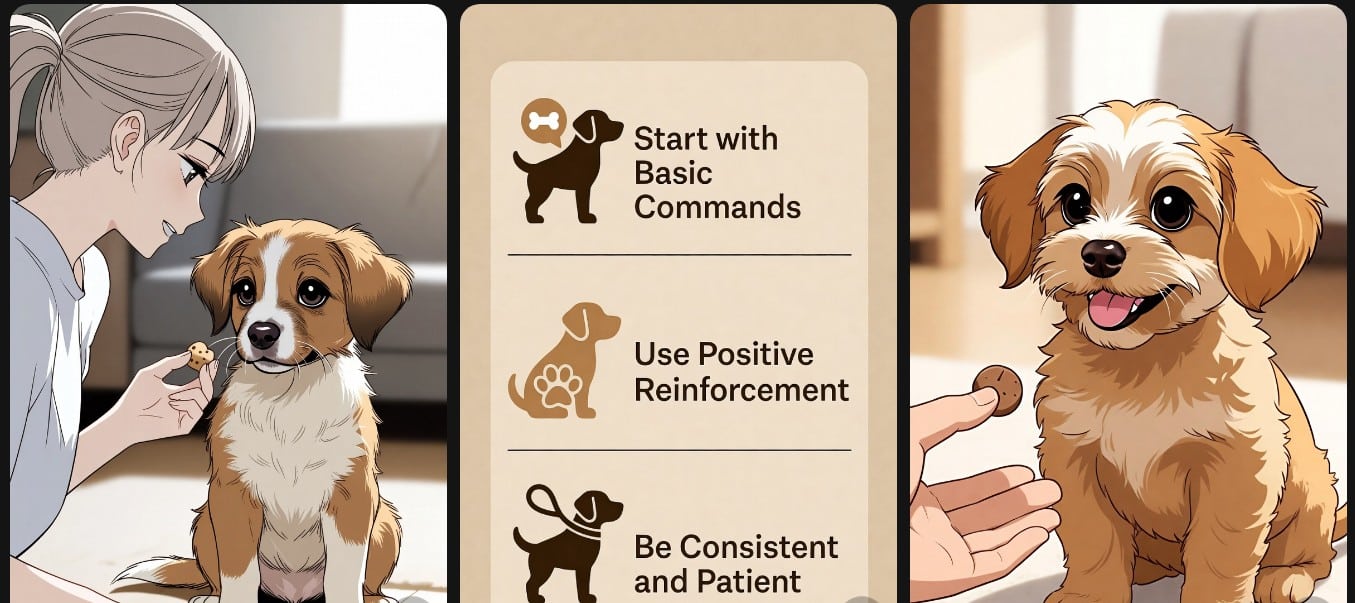
Puppy training is not a 30-day test that a puppy either passes or fails. Learning continues through adolescence and adulthood. The goal of the first weeks is to build safe routines, teach useful skills and help the puppy experience people, places, sounds and handling without overwhelming them.
Use rewards to teach the behavior you want
The American Veterinary Society of Animal Behavior recommends reward-based training for dog training and behavior modification. Rewards can include food, play, access to sniffing, praise or another outcome the puppy values. Avoid intimidation, physical punishment, leash corrections and aversive collars.
Keep sessions short
Puppies learn throughout the day. A few successful repetitions during normal life are often more useful than one long drill. Stop while the puppy is still engaged and make the next step easier if frustration rises.
Start with these everyday skills
Name response
Say the puppy’s name once, then reward orientation toward you. The name should predict useful information, not repeated scolding.
Recall
Practice at very short distances in low-distraction settings. Reward generously when the puppy comes. Use a leash or long line where required for safety; do not test an unreliable recall near traffic or other hazards.
Settling
Reward calm lying on a bed or mat. This becomes useful during meals, visitors and other household activity.
Leave it and trade
Teach the puppy that moving away from an item or releasing it leads to something worthwhile. Chasing a puppy to take things away can turn stealing into a game or contribute to guarding.
Housetraining is management plus reinforcement
Provide frequent outdoor opportunities, supervise indoors and reward toileting in the right place. Do not punish accidents. If progress suddenly reverses, our potty-training regression guide explains how to reset the plan and when to consider a medical cause.
Crate training should be gradual
A crate can be useful for travel and management when the puppy has learned to feel safe there. Build positive associations with the door open first. Do not use the crate as punishment or expect a young puppy to remain confined for unrealistic periods.
Socialization means positive exposure, not forced interaction
AAHA and AVSAB guidance emphasizes early, positive social experiences. Socialization does not require the puppy to greet every dog or person. Calm observation, different surfaces, household sounds, handling and controlled experiences all count.
Ask your veterinarian how to balance early social exposure with infectious-disease risk in your local area and the puppy’s vaccination status.
Teach cooperative handling
Pair gentle touches of paws, ears, collar and mouth area with rewards. Stop if the puppy is frightened. These small sessions can make grooming and veterinary care easier later.
Manage biting and chewing without punishment
Puppies explore with their mouths. Redirect to suitable toys, pause interaction when play becomes too rough, provide rest when the puppy is overtired and keep tempting household objects out of reach. Persistent or intense biting that appears fear-related deserves professional guidance.
Sleep matters
Overtired puppies can become more frantic and mouthy. Provide quiet opportunities to rest throughout the day instead of trying to exhaust the puppy continuously.
When to get help
Ask for veterinary or qualified behavior support for repeated freezing, extreme fear, guarding, aggression, panic when alone, inability to recover from ordinary events, or any sudden behavior change accompanied by illness or pain signs.

0 comments