
Hamster Sneezing: Dust, Respiratory Infection and When to See a Vet
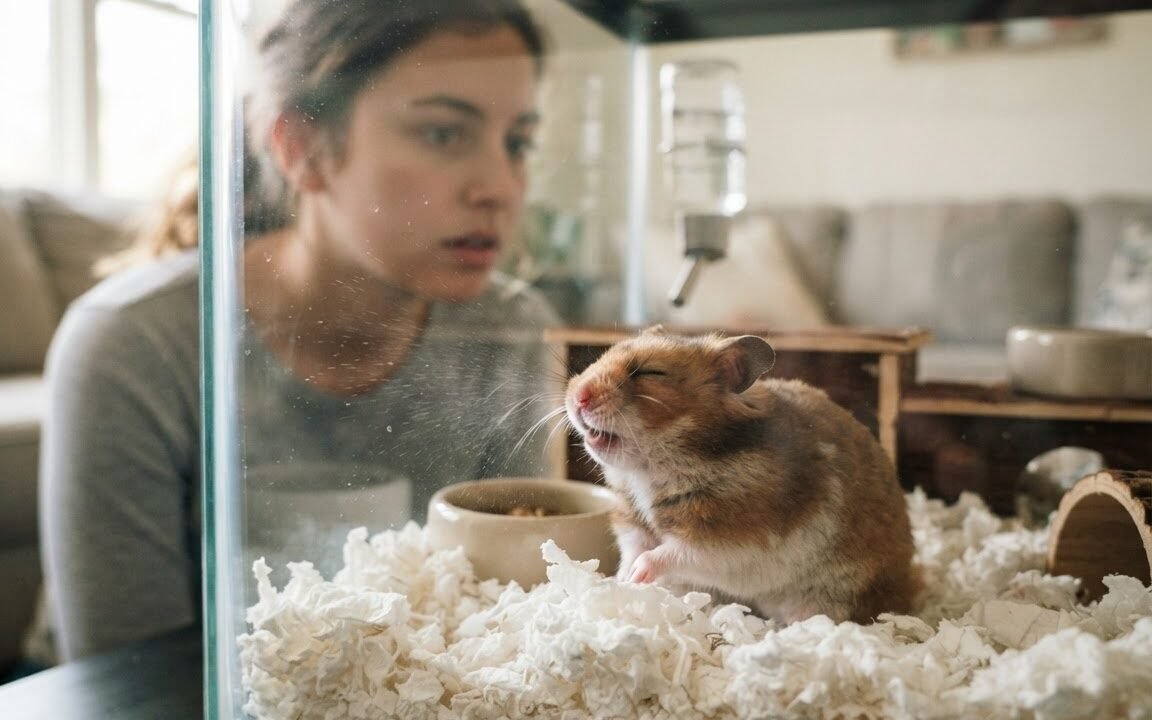
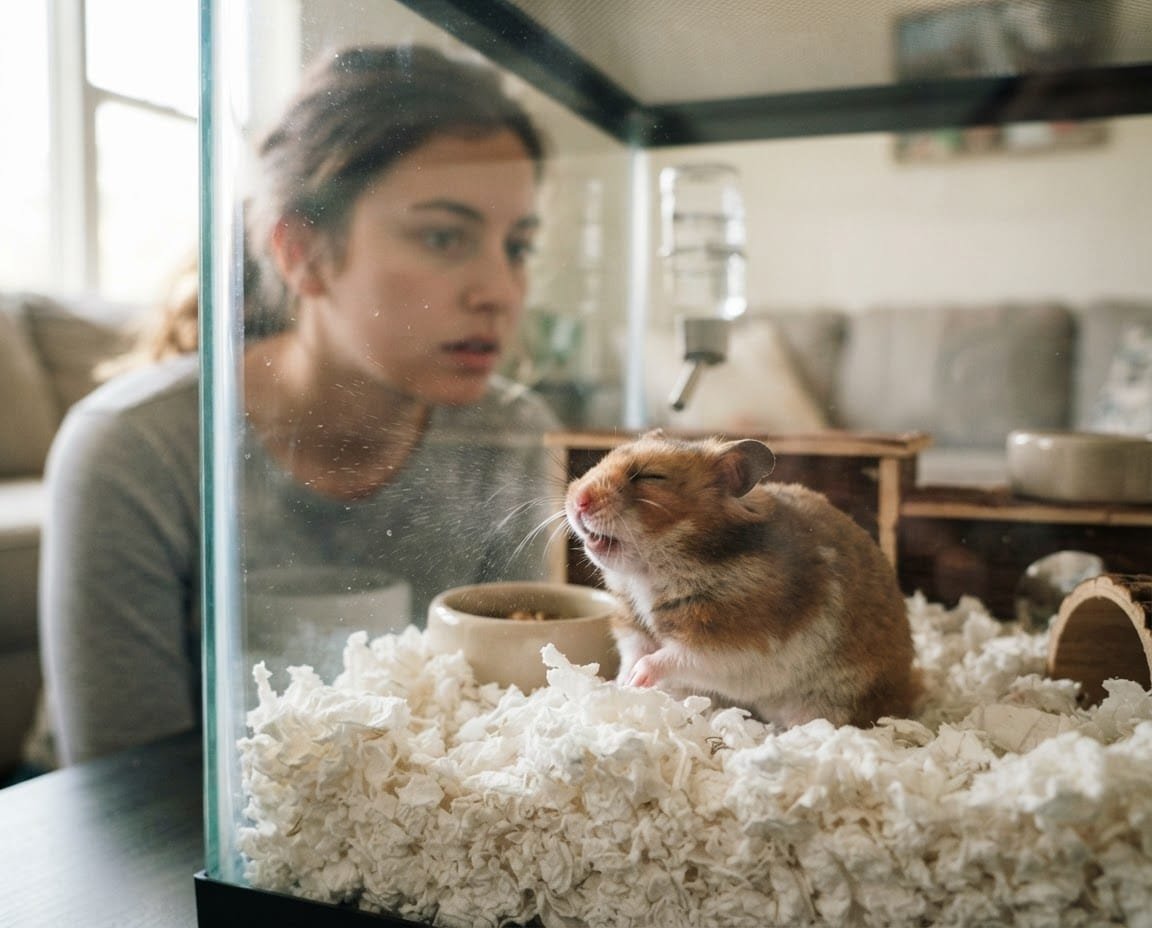
A hamster may sneeze once after digging through bedding and then carry on normally. Repeated sneezing is different. When sneezing continues, happens at rest, or appears with eye or nasal discharge, reduced appetite or breathing effort, the concern shifts from a momentary irritant to a possible respiratory problem.
The useful first step is to look at the whole hamster and the enclosure at the same time. Dust, fragrance and poor ventilation can irritate the nose, while viral or bacterial disease can also cause nasal signs. The pattern matters more than the sound alone.
Start by asking whether the sneezing is occasional or persistent
One or two sneezes after burrowing may not mean illness. A hamster that sneezes repeatedly over several hours, wakes to sneeze, or continues for more than a short period deserves closer attention.
Record when it happens. Does sneezing start after the hamster enters a sand bath? After bedding was changed? Only while eating? Or throughout the active period regardless of location?
Dusty bedding is a common environmental suspect
Fine dust can irritate the nasal passages. Look at the bedding bag and the enclosure floor. If a visible cloud appears when bedding is moved, switch to a lower-dust substrate.
Do not remove all bedding and leave the hamster on a bare floor. Replace the irritating material with a safe low-dust option while preserving some clean familiar nesting material where possible.
Bathing dust can be too fine
Hamsters that use a sand area should have an appropriate low-dust sand rather than very fine powder. Dust products intended for chinchillas can create more airborne particles than many hamsters tolerate well.
Fragrance can irritate too
Scented bedding, room sprays, perfume, incense, smoke and strong cleaners can all increase airborne irritation. Keep the enclosure away from aerosols and fragrance products.
“Natural” does not automatically mean safe for a small animal’s respiratory system. Avoid essential-oil diffusers near the cage.
Check ventilation without creating a draft
Solid-sided tanks and modified bins need a broad ventilated area rather than a few tiny holes. At the same time, the enclosure should not sit directly under an air-conditioning vent or fan.
Good ventilation means fresh air exchange without strong cold airflow over the hamster.
Nasal or eye discharge changes the picture
Merck notes that hamster respiratory disease can include nasal or eye secretions, breathing difficulty, reduced appetite and low activity. Sneezing paired with discharge deserves more concern than sneezing alone.
Look for moisture or crust around the nostrils and eyes. Do not pick aggressively at crusts or put human nose drops into the nostrils.
Breathing effort is more urgent than the sneeze itself
A hamster that is breathing rapidly at rest, wheezing, clicking, using the abdomen strongly or opening the mouth to breathe needs prompt veterinary attention.
Our hamster breathing guide explains which respiratory signs are emergencies.
Loss of appetite can signal a more serious illness
Respiratory disease can reduce interest in food, and a small hamster has limited reserves. Check actual intake rather than assuming a food-filled cache means the hamster is eating normally.
Our hamster not eating guide explains how to check food stores, droppings and body weight.
Use weight to catch deterioration early
Weigh on a gram scale under similar conditions. A falling trend alongside sneezing and reduced activity suggests the problem is affecting more than the upper airway.
See our hamster weight-loss guide for a practical monitoring routine.
Cold stress can make a sick hamster cope poorly
Keep the enclosure at a stable comfortable room temperature. Do not place the cage beside cold windows or direct drafts.
At the same time, avoid overheating. A sick hamster should not be placed directly on a hot pad without veterinary guidance.
Do not use steam, menthol or human cold remedies
Human respiratory products can irritate a hamster’s airway or create toxic exposure. Do not use vapor rubs, menthol, essential oils or decongestants in or near the enclosure.
Antibiotics should come from a veterinarian
Some antibiotics are inappropriate or dangerous for hamsters. Leftover medication from another pet is not a safe treatment plan.
A veterinarian needs to decide whether the problem is infectious and which drug, if any, is appropriate.
Keep handling minimal if breathing is affected
A hamster that is struggling to breathe should not be repeatedly picked up to “check” whether the noise is still there. Observe from outside the enclosure and prepare transport.
Sneezing after a bedding change is useful information
If symptoms begin soon after introducing a new substrate, remove the new material and return to a previously tolerated low-dust option. That timing is worth telling the veterinarian if signs persist.
Sneezing after cleaning can point to chemical irritation
Strong cleaners, bleach fumes and fragranced sprays can remain in the air or on cage surfaces. Use mild unscented cleaning methods, rinse thoroughly and allow surfaces to dry before the hamster returns.
Other hamsters can matter
If more than one hamster develops respiratory signs, infection or a shared environmental irritant becomes more important to consider. Sick animals should be separated when appropriate and veterinary advice sought.
Syrian hamsters should be housed alone regardless.
What to check before calling the vet
- how often the hamster sneezes;
- whether there is nasal or eye discharge;
- whether breathing is faster or noisier than usual;
- current appetite and water intake;
- recent weight trend;
- new bedding, sand or cleaning products;
- room temperature and ventilation;
- whether another hamster is showing similar signs.
When a brief environmental trial is reasonable
If sneezing is mild, the hamster otherwise looks completely well and the timing clearly follows a dusty new bedding or sand product, correcting the irritant and watching closely for a short period can be reasonable.
If sneezing continues after the irritant is removed, do not keep cycling through home remedies.
When to see a veterinarian promptly
Arrange veterinary care when sneezing is persistent, discharge appears, appetite falls, the hamster becomes inactive, weight drops or breathing becomes noisy or difficult.
Open-mouth breathing, severe weakness or obvious respiratory effort should be treated as urgent.
Transport with the respiratory system in mind
Use a small secure carrier with familiar low-dust bedding. Keep the temperature stable and avoid scented products in the vehicle.
Our hamster vet transport guide covers carrier setup in more detail.
Prevention is mostly clean air and good husbandry
Low-dust bedding, stable temperature, good ventilation, clean dry substrate and a smoke-free environment reduce avoidable irritation. They cannot prevent every infection.
Use the hamster care guide for the broader housing routine and the hamster health hub when sneezing appears alongside other illness signs.
Hamster sneezing is most useful when interpreted in context. A single sneeze after digging may mean very little; persistent sneezing with discharge, appetite change or breathing effort deserves veterinary assessment.
What if the sneezing stops after bedding is changed?
That is reassuring, but continue watching for a day or two because an infection and an environmental irritant can occur at the same time. If discharge, poor appetite or breathing changes appear later, the improvement after a bedding change should not delay a veterinary check.
Watch the nose between sneezing episodes
A hamster with a respiratory problem may groom discharge away before you see it clearly. Check for damp fur around the nostrils, staining above the nose or crust that returns after cleaning itself.
Use video if the sound is intermittent
Respiratory noises sometimes disappear in the clinic because the hamster is quiet or stressed. A short video recorded from outside the enclosure can help the veterinarian hear the sneeze, click or wheeze you noticed at home.
Do not keep changing several things at once
If you replace bedding, sand, food and cleaning products on the same day, you may never know which change mattered. Correct the most likely irritant first while keeping the rest of the routine stable, unless a veterinarian advises otherwise.
Recovery should mean more than fewer sneezes
After treatment, look for normal appetite, activity, breathing and weight as well as reduced sneezing. A hamster can sneeze less but still be unwell if food intake and energy remain poor.
0 comments