
Budgie Signs of Illness: Small Changes That Should Not Be Ignored
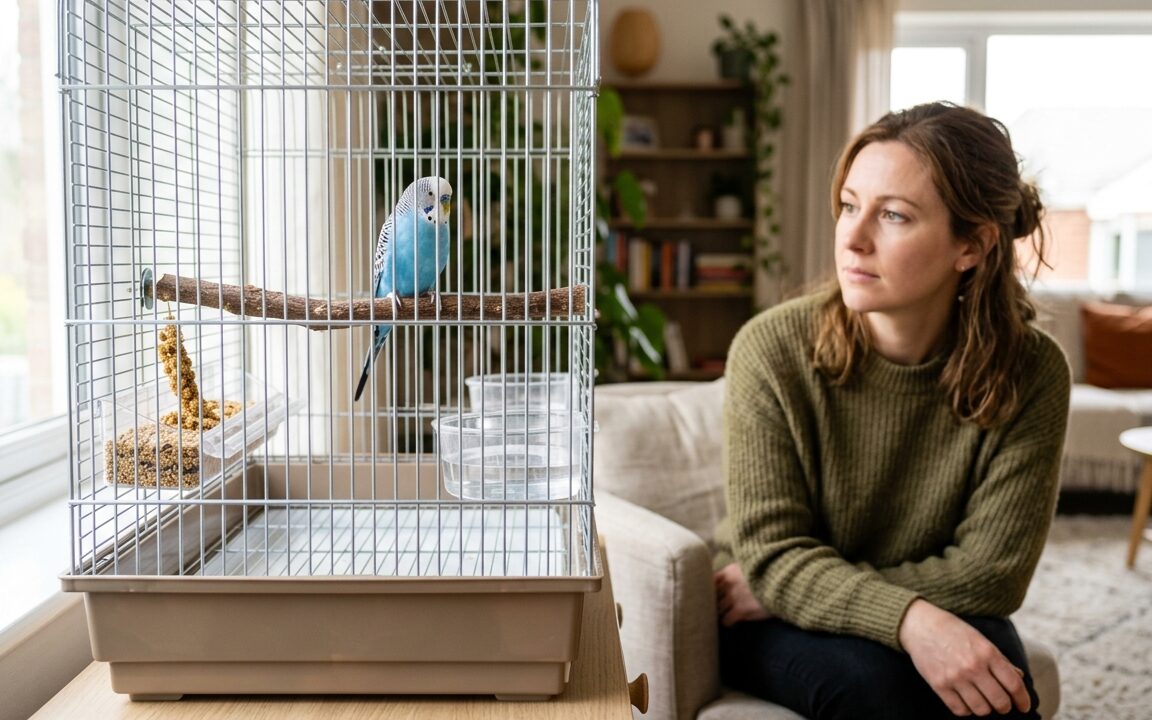
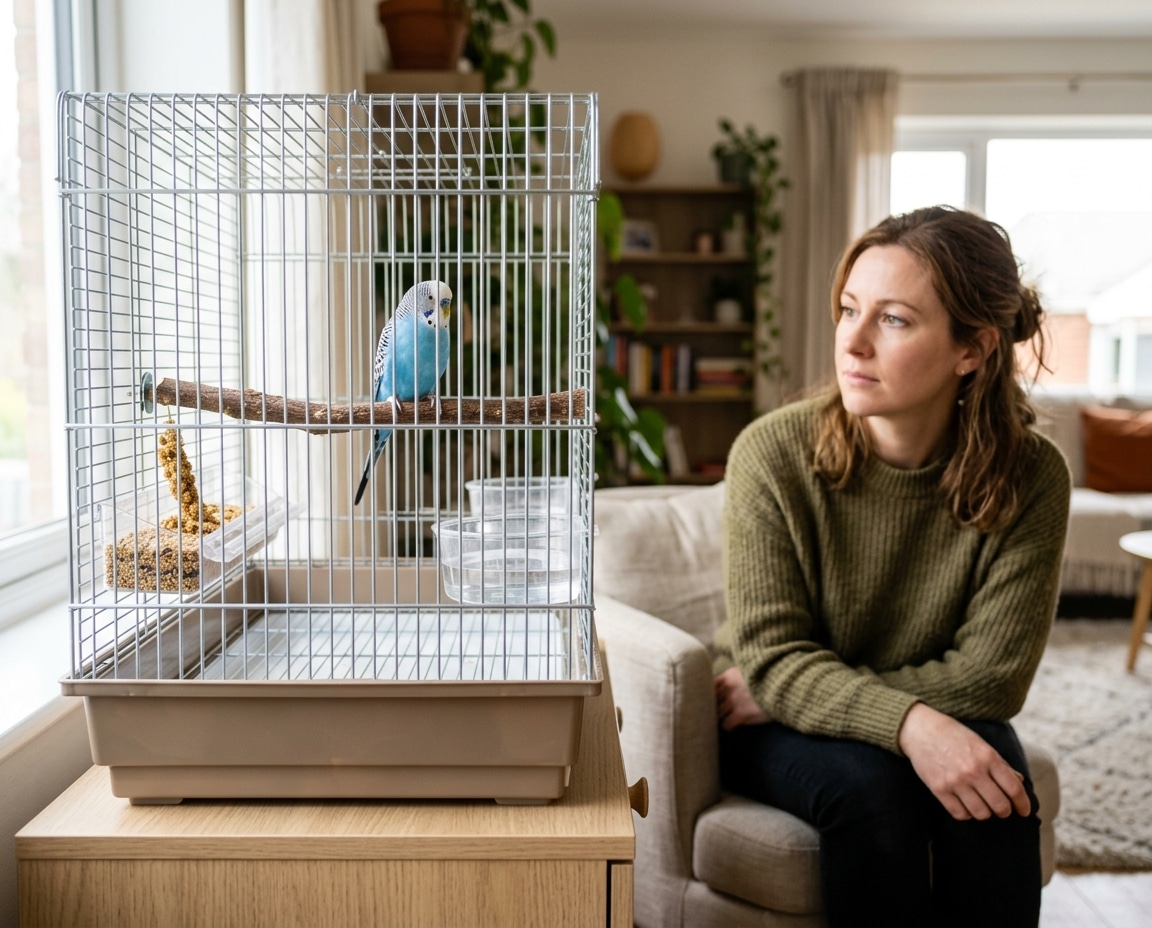
A sick budgie does not always look dramatically ill. Birds are good at hiding weakness, so the earliest clue may be something ordinary that has changed: less chatter, a different perch, food left behind, more sleep or a small drop in weight.
VCA’s guidance on illness in pet birds stresses that by the time obvious symptoms appear, a bird may already have been unwell for days or longer.
Know your budgie’s normal pattern first
Notice when the bird normally wakes, how much it vocalises, which perches it uses, what the droppings usually look like and how eagerly it approaches food. “Different from this bird’s normal” is often more useful than a generic symptom list.
Reduced appetite matters
A budgie that stops eating, spends time at the bowl without actually consuming food or drops food repeatedly may be ill. Do not wait several days to see whether a small bird “gets hungry enough.”
Weight change can appear before obvious sickness
Because feathers hide body condition, visual inspection is poor at detecting gradual weight loss. Weighing on a gram scale at a consistent time can reveal a trend.
Our pet bird weighing guide explains how to track weight without stressful restraint.
Fluffed feathers are meaningful when they persist
A budgie may fluff briefly while resting or keeping warm. Persistent fluffing combined with inactivity, poor appetite or sitting low in the cage is different.
Watch breathing closely
Open-mouth breathing, obvious effort, wheezing, wet breathing or the tail moving markedly up and down with each breath can signal respiratory distress. VCA includes tail bobbing and laboured breathing among important illness signs in birds.
A quiet budgie can be telling you something
Some budgies are naturally less vocal than others. What matters is a sudden change in a normally chatty bird, especially when paired with sleepiness or reduced activity.
Droppings are a daily health clue
Changes in colour, volume, consistency or the amount of urine around the fecal portion can reflect diet, stress or disease. One unusual dropping is not automatically an emergency, but a persistent pattern deserves attention.
Our bird droppings guide explains what owners can record before a veterinary visit.
Sitting on the cage floor is concerning when it is new
A budgie that normally perches but spends prolonged periods on the cage floor may be weak, injured or ill. A bird that cannot perch normally should be assessed promptly.
Changes around the cere, beak or feet can matter
Crusting, abnormal overgrowth, swelling or new lesions deserve attention. Budgies can develop conditions such as scaly-face mites, and reproductive or systemic disease can also alter appearance.
One-sided lameness is not always a simple foot injury
VCA notes that budgies are predisposed to several conditions, including kidney and reproductive tumours that can sometimes affect the nerves serving a leg. Persistent lameness therefore deserves an avian veterinary examination rather than repeated home treatment for a presumed sprain.
Vomiting is different from courtship regurgitation
Budgies may regurgitate during social or reproductive behaviour, but true vomiting can scatter material around the head and cage. If you are unsure which you are seeing—especially when the bird also looks unwell—contact an avian veterinarian.
Do not medicate from a human medicine cabinet
Small body size makes dosing errors dangerous, and the correct treatment depends on the cause. Antibiotics, pain medication or supplements should not be guessed.
When should you seek urgent help?
Breathing difficulty, collapse, repeated vomiting, seizures, severe weakness, inability to perch, active bleeding or sudden neurological signs need prompt veterinary attention.
The Association of Avian Veterinarians’ signs-of-illness guidance recommends warmth, quiet and minimal handling while veterinary care is being arranged for an ill bird.
Prepare useful information for the vet
Bring the recent weight record if you have one. Photograph abnormal droppings. Note when appetite, voice, activity or breathing changed. If there may have been a toxin exposure, bring the product name or appliance information.
Do not wait for a budgie to look “very sick”
Small birds have limited reserves. The safer habit is to respond to meaningful change early, especially when more than one sign appears together.
For broader husbandry that supports health between veterinary visits, use our Budgie Care Guide.
Change in voice can be an early clue
A budgie that normally chatters through the morning but suddenly becomes quiet deserves attention, particularly when appetite or posture changes too. The opposite can also matter: unusual repetitive calling may reflect distress.
Watch how the bird uses the perch
Budgies often hide weakness until perching becomes difficult. Gripping less firmly, sitting lower than usual, shifting weight constantly or choosing the cage floor can all be significant when they are new.
Tail bobbing needs context
A small amount of tail movement can occur with normal breathing, but pronounced bobbing with each breath—especially alongside open-mouth breathing or wheezing—can indicate respiratory effort.
PetsFilled already has a dedicated bird breathing-problems guide for this symptom cluster.
Watch the nostrils and cere
Discharge, crusting, blocked nostrils or changes around the cere can accompany respiratory or other disease. Do not pick aggressively at crusts or put medication into the nostrils without veterinary guidance.
Feather position tells only part of the story
Budgies fluff when resting, sleeping or keeping warm. The concern is persistent fluffing combined with reduced activity, poor appetite, abnormal droppings or sitting low.
Feet and joints deserve a look
Redness, swelling, sores, favouring one leg or difficulty gripping a perch can indicate foot or joint problems. A bird with persistent lameness needs an avian veterinary examination.
Weight monitoring makes vague concern measurable
Weighing at the same time and on the same gram scale gives you an objective trend. A small bird can lose a meaningful percentage of body weight before the change is obvious through feathers.
Our bird weight-loss guide explains how to interpret a downward trend.
Watch food behaviour, not just the bowl
A budgie can sit at the food dish, crack seeds or scatter pellets without eating enough. Check actual intake and the number and size of droppings.
Not eating is urgent in a small bird
Loss of appetite plus lethargy can indicate serious illness. Do not wait several days for a budgie to become hungry enough to resume eating. Contact an avian veterinarian promptly.
Vomiting and regurgitation are not always the same
Regurgitation can occur as part of courtship behaviour, while true vomiting is more likely to be messy and may leave food or mucus on the head and cage. If you cannot tell the difference and the bird also seems unwell, veterinary assessment is appropriate.
Changes in droppings should be interpreted as a pattern
Diet can temporarily affect colour and water content. Persistent black, bloody, very watery or dramatically reduced droppings are more concerning, especially with other illness signs.
Excessive sleeping outside normal rest periods
A sick budgie may spend more of the day with eyes closed, feathers fluffed and activity reduced. Compare with the bird’s established schedule rather than treating all daytime naps as abnormal.
Sudden behaviour change can precede obvious physical signs
A social bird may stop interacting, or a normally calm bird may become irritable. These changes are nonspecific but useful when they appear alongside weight, appetite or breathing changes.
What to do while arranging veterinary care
Keep the bird quiet, minimise handling and make food and water easy to reach. The Association of Avian Veterinarians advises warmth and minimal stress for an ill bird while care is arranged, while also avoiding overheating.
Do not force medication or food without instruction
Small birds can aspirate material placed into the mouth incorrectly. Human medicines and leftover antibiotics are not appropriate substitutes for an avian diagnosis.
Prepare a useful history
Record when the change began, recent weights, diet, droppings, activity and possible toxin exposure. Take a photo of unusual droppings or a short video of breathing if it can be done without delaying care.
Know which signs are emergencies
Open-mouth breathing, collapse, seizures, inability to perch, active bleeding, repeated vomiting, severe weakness or major trauma need urgent veterinary attention. Our bird emergency warning-signs guide covers immediate triage.
Early action matters because budgies are small
Budgies have limited reserves and can decline quickly once they stop eating or become seriously ill. Waiting for unmistakable symptoms can lose valuable time. A meaningful change from normal is enough reason to call an avian clinic and describe what you are seeing.
0 comments