
How Many Litter Boxes for Two Cats? Why Three Is a Useful Starting Point
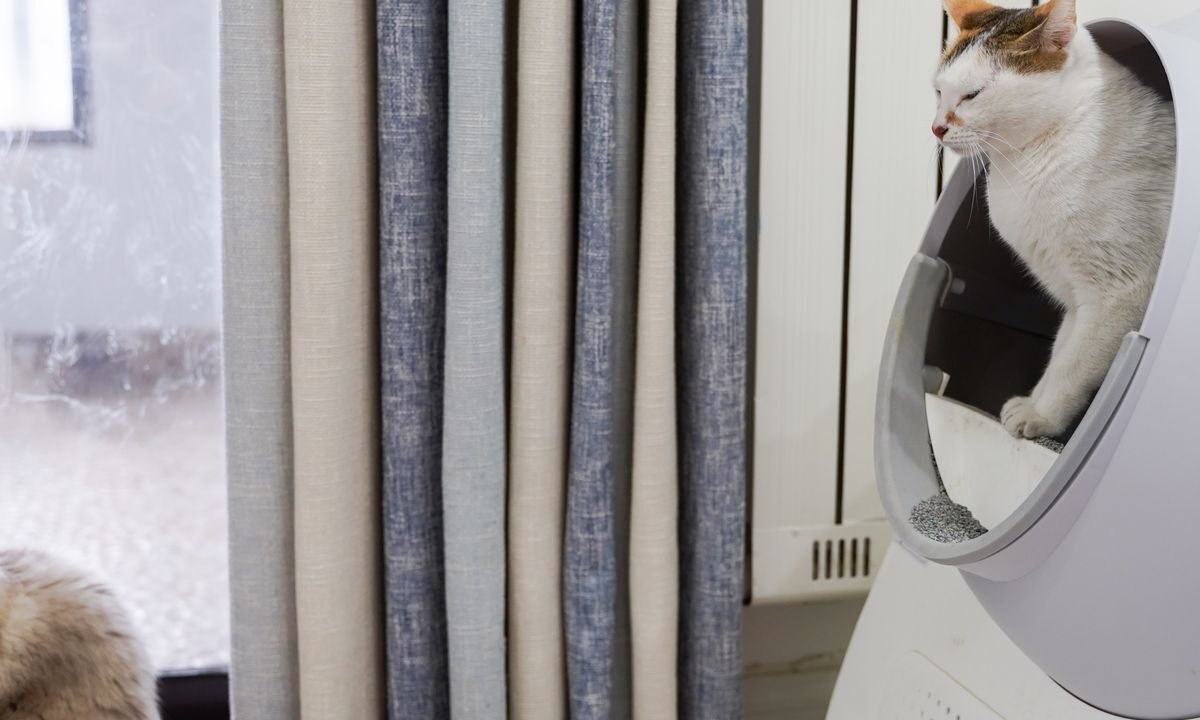
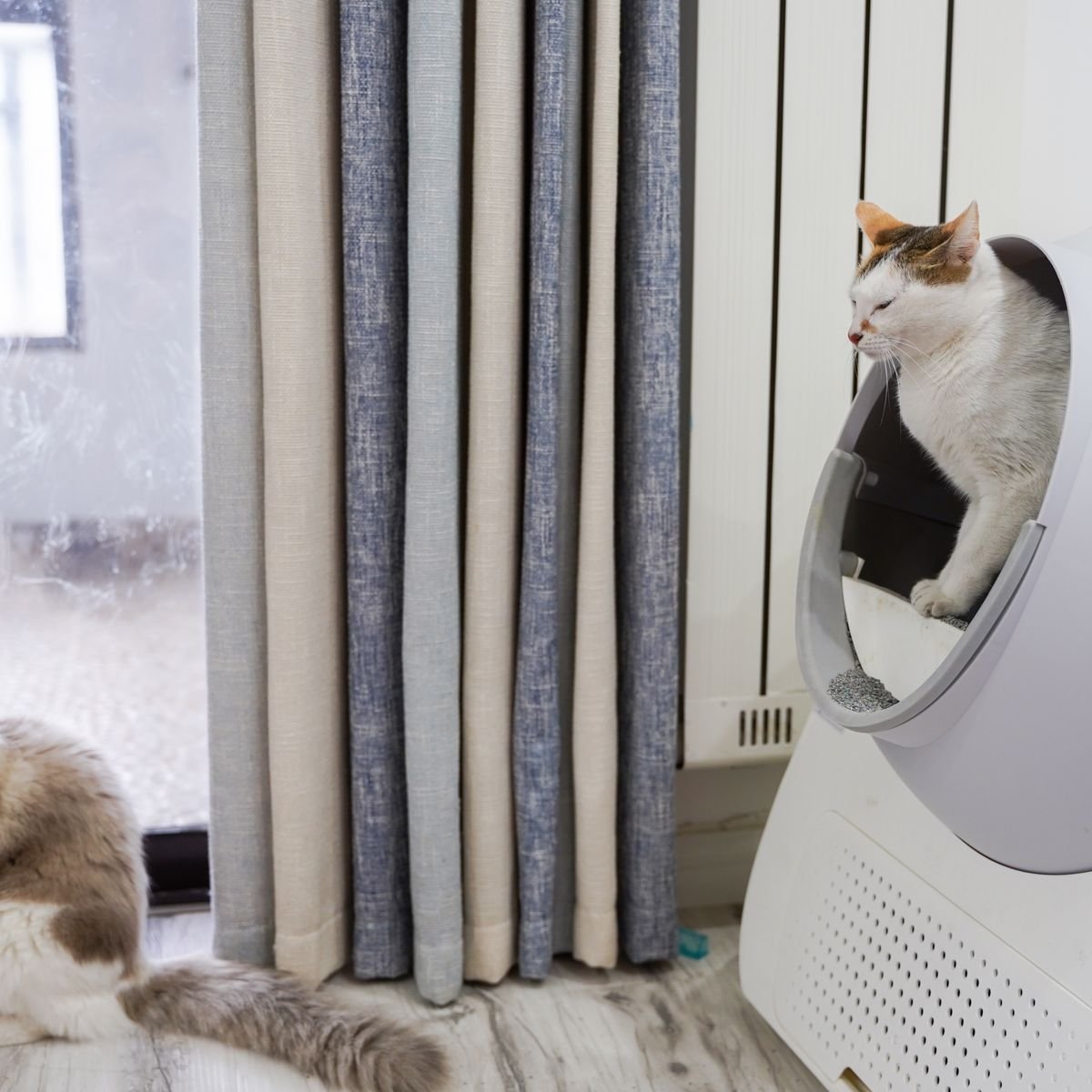
If you have two cats, a practical starting point is three litter boxes: one for each cat, plus one extra. That familiar rule is not arbitrary. It gives cats more choice, reduces competition and makes it less likely that one blocked, dirty or poorly placed box becomes the only option.
But the number alone is not the whole answer. Two cats that sleep together, groom each other and comfortably share resources may use the same boxes without conflict. Two cats that merely tolerate each other may need greater separation between boxes. The useful question is not only “How many boxes?” but also “Can each cat reach a clean, safe box without passing through another cat’s territory?”
Start with three boxes for two cats
The AAHA/AAFP feline life-stage guidance describes a common rule of thumb: one litter box per cat plus one additional box, or one box per social group plus one extra when the household’s social groups are known.
For two cats, that usually means three boxes. For three cats, it usually means four. Treat that as a starting framework rather than a mathematical law.
Three boxes in one room may function like one resource
If all three boxes sit side by side in the same laundry room, a nervous cat may still have only one usable toilet area. Another cat can block the doorway, wait nearby, or make the whole location feel unsafe.
Spread boxes across different quiet locations where practical. Cornell’s guidance on feline house soiling similarly recommends multiple boxes in multiple areas, especially when social pressure may be part of the problem.
Watch for subtle blocking between cats
Resource blocking is not always a fight. One cat may sit in a hallway, stare from a doorway, follow the other cat after elimination, or repeatedly occupy the route to the litter area. The second cat may begin waiting too long, rushing in and out, or eliminating elsewhere.
If your household already has a cat avoiding the box, start with our cat litter-box problems guide because medical causes, box size, litter preference and stress all need to be considered.
Put boxes on more than one floor
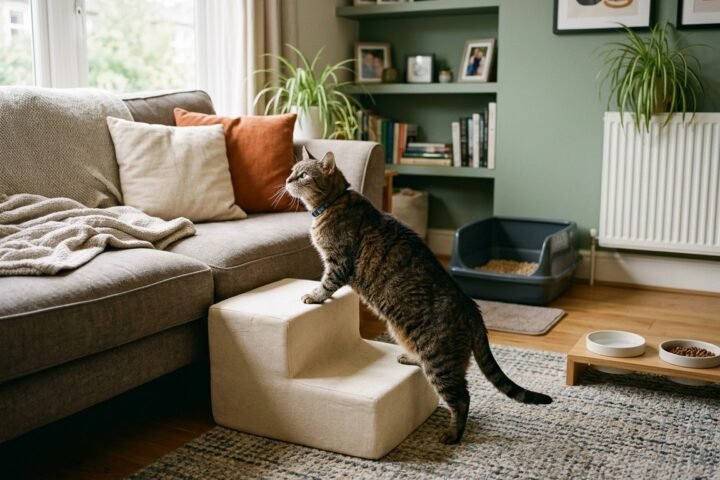
In a multi-level home, keeping every box upstairs can create unnecessary access problems. A cat that is older, recovering from injury or simply caught downstairs should not have to cross the whole home to reach a toilet.
Multiple floors become especially important for senior cats and cats with arthritis. Our senior cat care guide explains why reducing travel distance can improve everyday comfort.
Do not make one cat pass another to reach every box
A good box location has an easy approach and, ideally, more than one escape direction. Avoid trapping a box deep inside a dead-end cupboard, narrow utility room or location where one cat can control the only exit.
Box size still matters
Three tiny boxes are not necessarily better than two generous boxes plus a third backup. Large cats need enough room to enter, turn and dig without balancing on the edge. Kittens and older cats may need a lower entry.
Keep them clean enough to remain separate choices
If one box becomes dirty quickly, both cats may avoid it and concentrate use in the remaining boxes. Scoop at least daily and more often when needed. Our cat litter replacement guide separates daily scooping, top-ups and full litter changes.
Should every box use the same litter?
Usually, consistency helps when the cats already have a litter they accept. If you are testing a new material, offer it in a separate box instead of changing all boxes at once. That gives the cats a genuine choice and makes preference easier to interpret.
For material comparisons, see our cat litter alternatives guide.
When two boxes may appear to work
Some two-cat households use two boxes successfully for years. That does not mean a third box is useless. An extra box creates resilience if one cat becomes ill, one box is temporarily inaccessible, visitors change household traffic, or the relationship between the cats changes.
When you may need more than three
Add options when:
- the cats avoid each other or belong to separate social groups;
- one cat guards hallways or doorways;
- the home has several floors or a large footprint;
- a senior or disabled cat cannot easily travel;
- one cat has urinary, bowel or mobility problems;
- a cat repeatedly eliminates near—but not inside—the available boxes.
A practical two-cat setup
A simple arrangement might be one box near the main living area, one in a quiet bedroom-side location and one on another floor or in a second low-traffic area. Keep food and water well away from litter and avoid noisy appliances that can start suddenly.
Do not ignore sudden changes
If a cat that previously used the box normally begins straining, urinating frequently, producing little or no urine, crying, defecating outside the box or abruptly avoiding litter, do not assume the problem is territorial. Medical disease can change litter behavior quickly.
Repeated straining with little or no urine is especially urgent in male cats because urinary obstruction can be life-threatening.
Social groups matter more than the household headcount
Two cats can live in the same home without functioning as one social group. Cats that sleep touching, groom each other and seek each other out may share resources more comfortably than cats that simply avoid conflict.
Boxes should not all share one doorway
If every tray is in the same utility room, one cat can control access by sitting in the hall. Spread boxes so one social bottleneck cannot remove all choices at once.
Use different floors when the home has them
A box on each frequently used level protects access if a door closes, one cat blocks the stairs or a senior cat becomes less mobile.
Do not assume identical boxes are always necessary
Consistency is useful, but individual preference can differ. One cat may like a large open tray while another prefers a different shape. If both cats use their boxes reliably, there is no need to force perfect uniformity.
Watch which box each cat chooses
A simple camera or observation log can reveal whether both cats are using all boxes or whether one cat has effectively claimed a location. That information is more useful than assuming equal sharing.
Cleaning frequency rises with shared use
A heavily used box can become unacceptable before the end of the day. Scoop according to actual use, not a fixed once-daily rule if two cats repeatedly choose the same tray.
Do not place every tray beside noisy equipment
Three boxes beside a washer are still three boxes exposed to the same sudden noise. Distribute them across genuinely different environments.
Kittens and seniors may need different entries
A low entry helps small kittens and cats with arthritis, while higher walls elsewhere can reduce scatter. Mixed-age households may benefit from boxes with different accessibility features.
Medical problems can change the required number
A cat with diarrhea, constipation, urinary disease or mobility problems may need a box closer to resting areas. Temporary extra boxes can be useful during recovery.
What if one cat refuses a box the other uses?
Do not force sharing. Check location, cleanliness, litter texture and whether the other cat guards the route. Add a new option in a different area and watch whether the reluctant cat adopts it.
What if the cats have used two boxes successfully for years?
You do not need to create panic. Adding a third box is a resilience measure, not proof the existing household is failing. It becomes especially useful as cats age or social relationships change.
Review the setup after household changes
Moving, adding a pet, renovating or changing work schedules can alter traffic and territorial patterns. A box arrangement that worked before may need adjustment afterward.
Use elimination behaviour as feedback
Rushing out, hovering near a box, repeated sniffing without entering or choosing the floor beside the tray can all suggest the setup deserves review. Do not wait for frequent accidents before responding.
A useful two-cat checklist
- three boxes as a starting point;
- different useful locations;
- more than one floor when relevant;
- large enough for each cat to turn comfortably;
- easy entry for kittens or seniors;
- daily or more frequent scooping based on use;
- no dog or cat blocking the route;
- medical review for sudden elimination changes.
Bottom line
For two cats, three litter boxes in separate useful locations is a sensible starting point. Then watch the cats. Cleanliness, accessibility, box size, social relationships and escape routes matter just as much as the number written on a checklist.

0 comments