
Common Kingfisher (Alcedo atthis): Identification, Hunting and Habitat

Alcedo atthis, the Common Kingfisher, is small enough to disappear against a shaded riverbank and bright enough to look electric when it flies. In Britain and much of Europe, the quickest clue is often not a perched bird but a low, fast blue flash following the water.
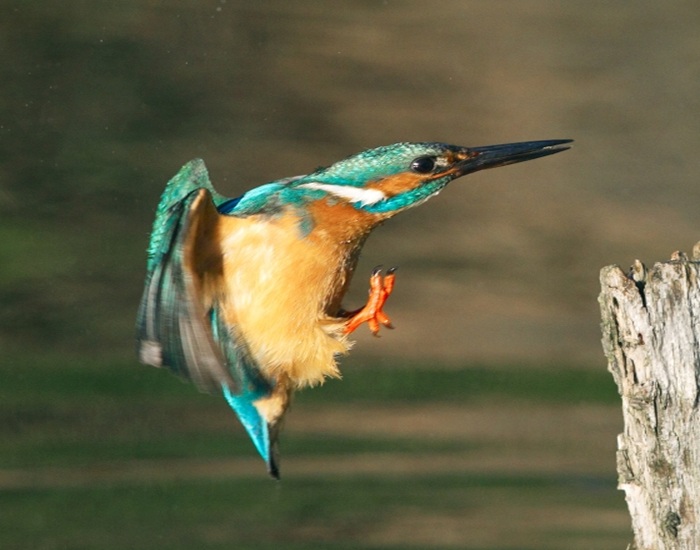
How to identify a Common Kingfisher
The RSPB describes the species as a small blue-and-orange bird of slow-moving or still water. Up close, the upperparts can show turquoise, blue and green tones, while the underparts are warm orange. The bill is long and dagger-like.
Male and female bill color
Adults are similar, but females usually show orange-red coloring on the lower mandible, while an adult male’s bill is generally darker. Light, distance and age can make this harder to see in the field.
How kingfishers hunt
A bird may watch from a branch or reed, then dive into the water for small fish and aquatic prey. The RSPB also records hovering as part of their hunting behavior. After capture, prey is often handled on a perch before swallowing.
Why clean, structured waterways matter
Kingfishers need more than fish. They also rely on suitable perches and banks where nesting tunnels can be excavated. Channelization, bank removal, pollution and poorly managed waterways can reduce habitat quality even when open water remains.
Nesting underground
Unlike many familiar garden birds, kingfishers nest in burrows excavated into vertical or steep earth banks. That makes seemingly untidy natural riverbanks valuable habitat.
Hard winters can affect populations
Frozen water restricts access to fish, and prolonged cold can be difficult for a small bird with high energetic demands. Local numbers can therefore fluctuate after severe winters.
How to watch without disturbance
Stay back from likely nesting banks and use established paths or hides. Repeatedly standing close to a nest entrance can interrupt feeding trips.
Size and shape in the field
Common Kingfishers are compact, short-bodied birds with a disproportionately long bill. The combination of small size, bright upperparts and a low direct flight path helps distinguish them from larger blue birds or from flashes of color caused by reflections on water.
Why the blue can look different from one sighting to another
Much of the vivid blue appearance is structural rather than simply pigment. Angle and light can shift the apparent tone from turquoise to deep blue or greenish blue, which is why photographs of the same species can look surprisingly different.
The call is often the first clue
A high sharp whistle can announce a kingfisher seconds before the bird streaks past. Learning the call is especially useful on narrow rivers where vegetation hides perches and the bird may be visible for only a moment.
Perches are hunting infrastructure
Overhanging branches, reeds, posts and exposed roots give kingfishers places to watch the water. Removing every branch from a managed waterway can reduce useful hunting structure even when fish remain abundant.
Water quality influences prey
Kingfishers depend on small fish and aquatic animals, so pollution that reduces prey or water clarity can make a site less useful. Good habitat management therefore involves the whole aquatic food web, not only preserving nesting banks.
Nest tunnels need suitable bank structure
A vertical or steep earth face allows the birds to excavate a tunnel ending in a nest chamber. Hard engineered banks, constantly collapsing edges or heavy disturbance can all reduce nesting opportunities.
Floods can destroy nests
Because nests are close to waterways, sudden high water can inundate burrows or erode banks. Pairs may attempt another nesting effort if conditions allow, but repeated flooding can reduce local breeding success.
Winter survival depends on open water
When ponds and slow rivers freeze, prey becomes harder to access. Birds may move to faster-flowing sections, estuaries or other unfrozen water. Severe winters can therefore cause sharp local population declines even when habitat is otherwise suitable.
Young kingfishers can disperse widely
After fledging, juveniles do not necessarily remain beside the natal bank. Dispersal helps reduce competition and can bring young birds to new waterways, including urban canals and managed lakes.
How to improve your chances of seeing one
Find a quiet stretch of water with exposed perches, then wait rather than walking continuously along the bank. Repeated flight paths often reveal a favored hunting circuit. Remaining still also reduces the chance of pushing the bird farther downstream.
Territories follow usable water, not map boundaries
A kingfisher may patrol a stretch of river that includes several bends, pools and perches. The useful territory is shaped by food and nesting opportunities rather than by an even distance in every direction.
Bank maintenance can accidentally remove nesting habitat
Engineering projects that smooth or armor riverbanks may protect infrastructure but eliminate the vertical earth faces kingfishers need. Where possible, habitat design can include safe natural or artificial nesting banks away from heavy disturbance.
Fish size changes through the year
Young-of-the-year fish can provide abundant small prey at some times, while winter conditions may make suitable fish less accessible. Seasonal prey size and visibility can influence where birds hunt.
Perch height affects hunting angle
Low perches over shallow water and higher branches over deeper pools can both be used. A bird may repeatedly return to the same perch if it provides a good view and clear dive path.
Urban waterways can support kingfishers
Canals and restored rivers in towns can hold fish and suitable banks. Clean water, reduced disturbance and retained vegetation can make surprisingly urban sites valuable.
Winter territories can differ from breeding territories
Outside the breeding season, birds may use different stretches of water depending on food and freezing conditions. A site that is productive in summer may be poor in winter.
Bank vegetation provides more than cover
Roots can stabilize soil, overhanging vegetation can provide perches and intact margins support aquatic insects and fish. Removing every plant from a bank can simplify the entire feeding system.
Disturbance can alter hunting routes
Frequent walkers, dogs or anglers close to favored perches may push a bird toward quieter but less productive water. Watching from one fixed point is usually better than following the bird downstream.
Repeated sightings can reveal a territory
If a kingfisher passes the same bend or perch repeatedly, you may be watching part of a regular feeding circuit. Recording those routes from a distance can be more informative than trying to approach the bird directly.
Habitat quality can change quickly
Dredging, bank clearance, pollution or a sudden loss of small fish can make a previously reliable stretch of water far less useful. Local presence is therefore sensitive to practical waterway management.
Observation improves when you learn the regular perch network
Kingfishers often rotate among a small set of useful perches. Once those points are known, waiting quietly nearby can reveal more natural hunting behavior than walking the bank continuously.
Patient observation from one quiet position usually produces better views and less disturbance than following a bird along the bank throughout the day or crowding its favored perches repeatedly nearby for long periods.
Good kingfisher habitat combines fish, perches, intact banks, clean water and enough undisturbed space for feeding and nesting.
For another fish-focused bird with a completely different hunting style, compare the kingfisher with our osprey feeding guide.
0 comments