
Carrion Crow (Corvus corone): Identification, Intelligence and Everyday Behavior

Corvus corone, the Carrion Crow, is one of Europe’s most adaptable corvids. It can live in farmland, woodland edges, towns and coastal areas, and its success comes less from one specialized trick than from behavioral flexibility.
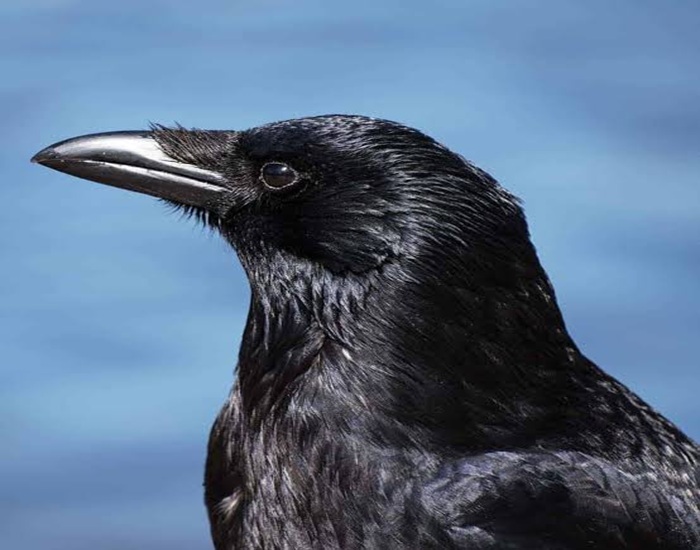
How to identify a Carrion Crow
The RSPB describes Carrion Crows as large, all-black birds with a heavy blunt bill. They are usually seen alone or in pairs more often than Rooks, though groups can form around food or during winter.
Carrion Crow vs Rook
A Rook often shows a paler bare area around the base of the bill as an adult and is strongly associated with social colonies. Carrion Crows keep a feathered face and are commonly more solitary. Shape and behavior together are more useful than color alone.
Carrion Crow vs Hooded Crow
These closely related birds replace each other across parts of Europe. Carrion Crows are black overall; Hooded Crows have a grey body with black head, wings and tail. Hybrid-looking birds can appear near contact zones.
What do Carrion Crows eat?
The diet is broad: carrion, insects, seeds, fruit, human scraps, eggs and small animals can all be taken. That flexibility allows crows to move between fields, shorelines and urban spaces as food availability changes.
Intelligence without mythology
Corvids are known for flexible problem-solving, memory and learning. It is reasonable to call Carrion Crows intelligent, but claims that every crow plans like a human or understands human motives go beyond what field observations alone can show.
Why they watch people closely
Crows learn which places and routines are associated with food or danger. A bird returning when a garden becomes quiet may be responding to experience rather than acting “fearless.”
Nesting
Pairs build substantial stick nests in trees and sometimes on structures. During nesting season, adults may become more defensive around the immediate area.
Living around crows
Voice and posture help identification
Carrion Crows often give a rough, repeated caw and carry themselves with a heavy, deliberate look. In poor light, sound and behavior can be more useful than trying to judge subtle feather details from a distance.
Pair bonds and territories
Breeding pairs can hold territories for long periods. Outside breeding, birds may still join loose feeding groups, particularly where a temporary food source appears. Seeing several crows together therefore does not make them Rooks automatically.
Problem-solving is context-dependent
Corvids can learn quickly, but performance changes with motivation, prior experience and the task itself. A crow opening a container does not prove that every individual will solve the same problem or that the bird understands the mechanism in a human-like way.
Memory helps with food and danger
Crows can remember productive feeding sites and repeat routes that worked before. They may also learn which people or places are associated with disturbance. This makes urban crows look “streetwise,” but the behavior develops through experience.
Scavenging has an ecological role
By consuming carrion and food waste, crows help remove organic material from the environment. The same flexibility can create conflict around bins and picnic areas, which is why secure waste management works better than repeated attempts to scare birds away after food is available.
Diet changes by season
Invertebrates and eggs may be more important at some times of year, while seeds, fruit and carrion become more available at others. Urban birds can add human food to that seasonal mix, though highly processed food should not be intentionally provided.
Nest defense can look aggressive
Adults may call, follow or make close passes near people or animals that approach a nest. Giving the area more space is usually the simplest response. Persistent conflict around a public site may need local wildlife guidance rather than retaliation against the birds.
Juveniles can look clumsy without being abandoned
Young crows may spend time on the ground or low branches while adults remain nearby. Unless a bird is injured or in immediate danger, observing from a distance is often better than removing it because it appears awkward.
Why feeding large amounts causes problems
Regular heavy feeding can concentrate birds, increase waste and create dependence on one predictable site. If you enjoy watching crows, habitat observation is more informative than turning a garden into a feeding station.
How to watch everyday crow behavior
Note whether a bird is alone, paired, feeding, carrying nest material, mobbing a predator or caching food. Repeated observations across weeks reveal more about local crow life than one dramatic encounter.
Crows learn from one another
A bird discovering a new food source or danger can influence others nearby. Social learning helps information spread through local populations without every individual having to discover the same thing independently.
Mobbing behavior can look dramatic
Crows may gather around raptors, owls or other perceived threats and call loudly. The goal is often to monitor or drive the predator away, not to hunt it.
Roads create both food and risk
Roadkill and discarded food can attract crows to dangerous locations. Their ability to exploit these resources shows flexibility, but vehicle collisions remain a cost of urban and roadside foraging.
Breeding success depends on more than nest placement
Food supply, weather, disturbance and predation all affect whether chicks survive. A large secure-looking nest does not guarantee a successful season.
How to reduce nuisance without harming birds
Secure bins, remove food waste and avoid predictable feeding. Changing the resource is usually more effective than frightening birds after they have learned that a site is profitable.
Individual birds differ in boldness
Some crows approach people and novel objects quickly, while others remain cautious. Those differences can persist and influence how each bird uses urban spaces.
Breeding pairs can recognize repeated disturbance
Birds nesting near busy areas may learn which routines are harmless and which people or animals repeatedly approach the nest. Familiarity can reduce alarm in some contexts without making the birds tame.
Seasonal food abundance changes movement
Harvested fields, beach strandlines and temporary waste sources can create short-lived concentrations. Large numbers at one site may therefore reflect food opportunity rather than permanent population growth.
Local familiarity can be useful for identification
Watching the same neighborhood birds over months helps you notice pair bonds, favored perches and seasonal changes. Long-term observation often teaches more than isolated encounters because context becomes visible.
Conflict prevention is mostly about resources
Where crows repeatedly gather around one house or business, the cause is often accessible food. Secure waste, pet food and compost before considering deterrents.
Context matters when interpreting bold behavior
A crow walking close to people in a park may be exploiting food opportunities, while the same individual could remain cautious near a nest or unfamiliar object. Boldness is situational as well as individual.
Long-term observation is the best way to separate normal crow behavior from one dramatic event that may be unusual, temporary or highly context-specific in daily life and season over time locally.
Flexible behavior explains much of the species’ success around farmland, coasts, towns and other human-modified environments.
Do not intentionally create conflict by leaving unsecured waste or feeding large amounts. If you enjoy observing corvid behavior, compare Carrion Crows with our Eurasian Magpie guide, another member of the crow family with very different plumage and social behavior.
0 comments