
Grey Heron Behavior: Hunting, Nesting and Life in a Heronry
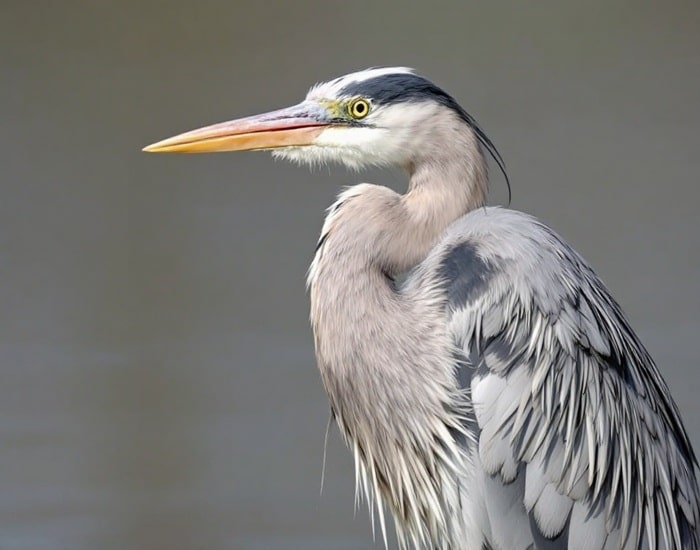
This page focuses on what Grey Herons do rather than basic identification. Their still hunting posture, sudden spear-like strike and large communal nest sites make them one of the easiest wetland birds to watch behaviorally.
They are patient ambush hunters
A Grey Heron may stand almost motionless at the edge of water, then extend the neck rapidly to seize prey. This stillness is not inactivity; it is a hunting strategy that reduces unnecessary movement while the bird watches for an opportunity.
Fish are important—but not the whole diet
The RSPB lists fish as a major part of the Grey Heron’s diet, but also notes amphibians, small mammals and even small birds. Herons may also forage in fields, especially where rodents become exposed.
Why the neck looks different in flight
Grey Herons fly with the neck pulled back into an S-shape rather than stretched straight ahead. That silhouette is one of the easiest ways to distinguish a flying heron from cranes and some storks.
Heronries can persist for decades
Many Grey Herons breed in colonies called heronries. In a 2026 explanation, the RSPB notes that Grey Herons often reuse nesting sites year after year, and some heronries remain active at the same location for decades.
Where are the nests?
Large stick nests are commonly placed high in trees, sometimes with several nests in the same tree. In some habitats, Grey Herons also nest lower or in reedbeds. Nest placement therefore reflects local structure rather than one universal rule.
Breeding starts surprisingly early
Grey Herons can begin breeding while winter still feels present. The RSPB reports that breeding activity can begin from around February in Britain, with chicks appearing in spring.
Do they defend feeding territories?
Individual herons may chase competitors from productive feeding spots, while at other times several birds forage relatively close together. Behavior changes with food availability, breeding status and local density.
Urban herons
Parks, ornamental lakes and canals can provide suitable feeding habitat. A bird becoming accustomed to people does not mean it should be hand-fed. Human food can distort normal foraging and encourage risky close contact.
Watch without disrupting feeding
Approach slowly, stay on established paths and stop before the bird repeatedly moves away. A telephoto view is better than forcing a feeding bird to relocate.
For identification, range, size and habitat basics, use our separate Grey Heron species guide. For comparison with another fish-eating bird, see our osprey diet guide.
0 comments